


Today in Israel - and what it all means for the business community at home and abroad.
TV10 Global Editorial · Monday, October 26, 2026
Quick takes
Real Estate: Residential developer Aura agreed to buy 100% of senior-living operator Beit BeKfar for about ₪1.7 billion, roughly ₪1.15 billion in cash and ₪550 million in Aura shares.
Macro: Israel’s seasonally adjusted unemployment rate rose to 3.0% in September from 2.8% in August, while labor-force participation increased to 62.2%, the Central Bureau of Statistics reported.
Energy & Infrastructure: NewMed Energy initialed a fiscal agreement with Egypt that exempts its Aphrodite gas field from a broad range of Egyptian taxes, pending parliamentary approval.
Real Estate

Aura, the residential developer led by Yaakov Atrakchi, will acquire 100% of the senior-living chain Beit BeKfar for about ₪1.7 billion, paid in cash and shares. According to TV10 reporting, about ₪1.15 billion is cash and about ₪550 million is newly allotted Aura shares, at a company valuation of ₪5.5 billion. The selling Blushtein family becomes an Aura shareholder and has agreed not to compete.
Beit BeKfar, founded in 1988, runs five senior-living complexes with 975 occupied units. For 2025 it reported revenue of about ₪109.6 million, net operating income (NOI) of about ₪72.4 million and funds from operations (FFO) of about ₪31.7 million.
The deal adds a pipeline of 884 units: 249 in Be’er Ya’akov, 300 in Modi’in and 335 in Kibbutz Usha, which still awaits planning approval. Aura expects its equity to exceed ₪2.5 billion once the deal closes.
Original (Hebrew): אאורה רוכשת את רשת “בית בכפר” ב-1.7 מיליארד שקל
Our take: This is a shift from building and selling apartments to owning an operating, income-producing business. That changes how investors can judge Aura: less by project margins, more by steady income from occupied units. The price is the open question, since buyers will compare ₪1.7 billion with the ₪72.4 million of NOI the chain reported for 2025. How Aura funds the cash portion will likely show how smoothly the new segment fits.
Macro
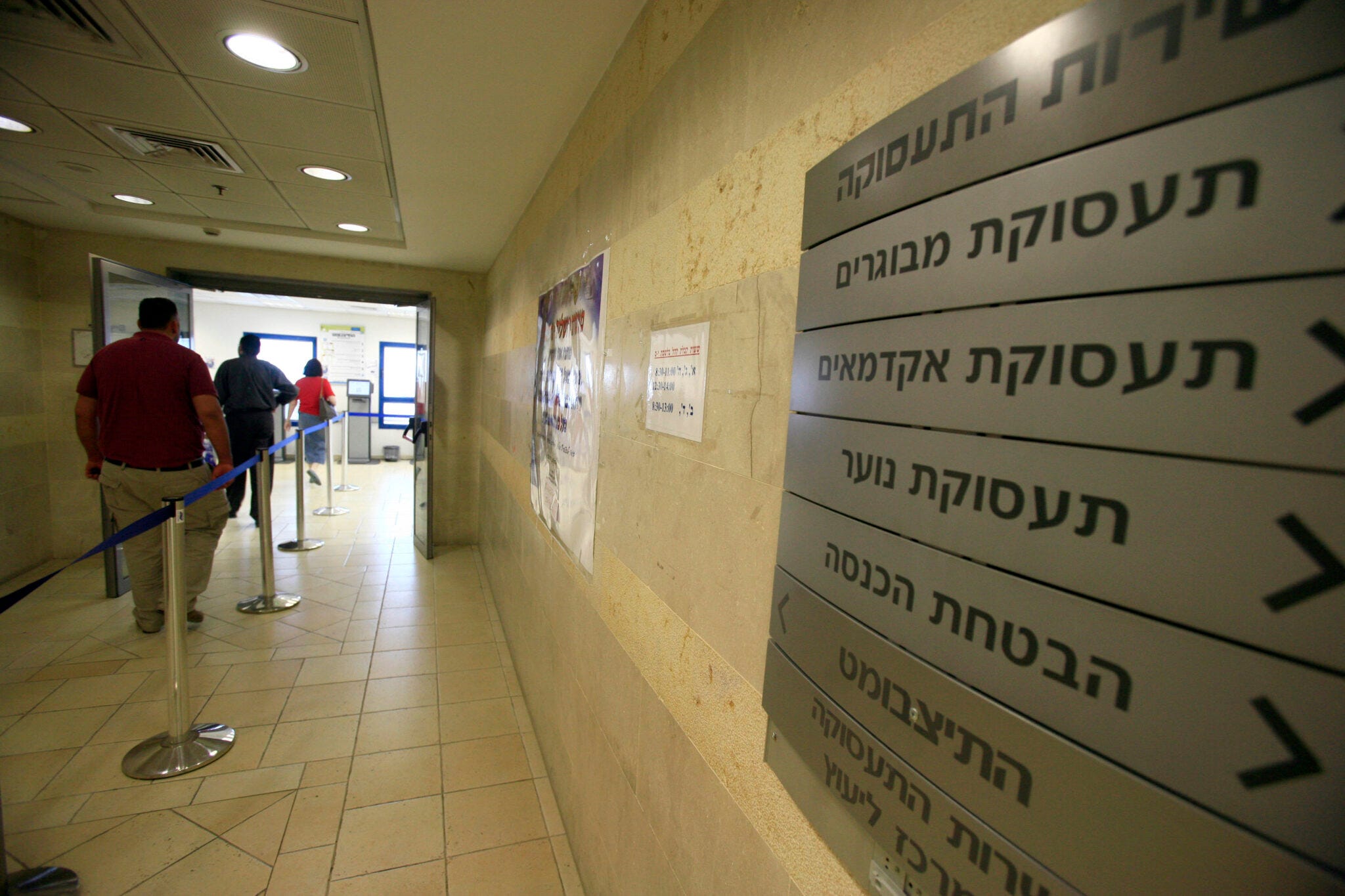
Israel’s seasonally adjusted unemployment rate rose to 3.0% in September from 2.8% in August, even as participation and employment both increased, according to the Central Bureau of Statistics (CBS) labor force survey published Monday. Participation among those 15 and older reached 62.2% (61.8% in August) and the employment rate 60.3% (60.0%). About 4.403 million people were employed.
The rise came mainly from women, whose unemployment jumped to 3.2% from 2.7%; men’s stayed at 2.9%. A broader measure, which adds people temporarily absent for economic reasons, those laid off in the past two years and discouraged workers, rose to 4.4%, or about 203,800 people. Discouraged workers climbed to 23,000 from 14,000.
High-tech salaried employees rose to about 460,000 from 447,000, or 12.1% of all employees. The share of men absent all week for reserve duty fell to 7.4% from 11.0% (unadjusted data). The CBS noted that a special statistical correction was applied because the Tishrei holidays caused volatility.
Original (Hebrew): שוק העבודה מתרחב - האבטלה מזנקת בקרב נשים
Our take: At 3.0%, unemployment is still low, so the headline does not point to a weakening job market. The details are more mixed: the broader measure and the jump in discouraged workers suggest some slack beneath the surface. With the CBS flagging holiday distortions, one month is a weak basis for a trend. For investors, a tight labor market supports consumer demand but also keeps wage pressure on employers, a factor that will likely feature in the Bank of Israel’s reading of the economy.
Energy & Infrastructure

NewMed Energy, the Israeli gas partnership, said it has initialed a fiscal regime agreement with the Egyptian government that exempts its Aphrodite gas field, in Cyprus’s economic waters, from a broad range of Egyptian taxes. NewMed reported the move to the Tel Aviv Stock Exchange and the Israel Securities Authority. The agreement covers the transport of gas and its sale to Egypt’s national gas company, EGAS. Egypt’s Finance Ministry will pay the income tax on the covered activities directly, and the rights holders are exempt from tax on dividends and transfers of funds out of Egypt, and from most VAT. Employee taxes and service fees are not exempt.
A clause protects the partners from future tax increases. Egypt may impose general foreign-exchange restrictions only in a fiscal emergency, for up to 45 days a year.
It takes full effect only after full signatures and Egyptian parliamentary approval within six months of the host government agreement initialed last April; otherwise NewMed may cancel that agreement. The company expects both within weeks. Talks continue on a binding gas sales agreement with EGAS. Aphrodite is owned by Chevron (35%, operator), BG Cyprus (35%) and NewMed (30%).
Original (Hebrew): מצרים וניו-מד מקדמות את פיתוח “אפרודיטה”
Our take: The pattern here is risk being removed before revenue is secured. Tax certainty, currency convertibility and a clear route to take cash out of Egypt all lower the political and regulatory risk of selling gas into that market. They are not income, though. The binding sales agreement with EGAS is still being negotiated, and parliament has not yet approved the deal. For investors in NewMed, the next filings on both points will likely matter more than the tax terms themselves.
If you enjoyed this update, forward it on.

X · Instagram · Threads · YouTube · TikTok · Podcast · Newsletter · tv10.co.il
Share your thoughts with us: global@tv10.co.il
Disclaimer: This brief is for informational purposes only and does not constitute investment advice. All data current as of publication date.