
🍿 Get our coverage on Spotify, and Youtube, too. Want to join the conversation? We’re on X
Quick takes:
Monetary Policy: The Bank of Israel cuts its baseline interest rate by 0.25% to 3.75%.
Macro & Fiscal Policy: The Knesset aggressively advances a transformative corporate credit database to break the grip of the entrenched Israeli banks; The Tax Authority rolls out targeted compensation tracks for northern businesses battered by ‘Operation Roaring Lion’; The Ministry of Justice doubles credit and debit limits for individuals under legal guardianship to ₪10,000.
Real Estate: The Ministry of Interior upgrades Givat Ze’ev to full city status, signaling massive infrastructure expansion in the Jerusalem envelope.
Monetary Policy
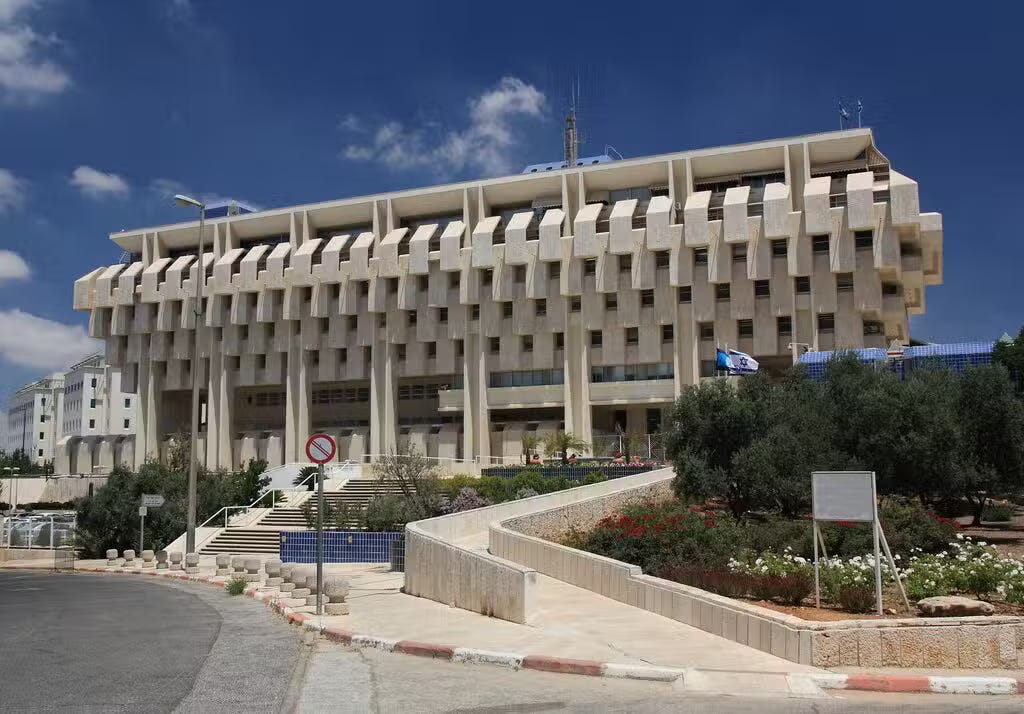
The Bank of Israel's Monetary Committee officially cut the baseline interest rate by 0.25% today, bringing it down to 3.75%. The central bank cited a moderating inflation environment, anchored precisely at the 1.9% midpoint of its target range over the past 12 months, and a rapidly strengthening currency as primary catalysts.
Since the last rate decision, the Shekel has surged 8.3% against the US Dollar and 7.2% against the Euro, providing a crucial buffer against imported inflationary pressures. Despite Q1 2026 National Accounts data revealing an annualized GDP contraction of 3.3% due to ‘Operation Roaring Lion,’ the BOI noted that the economic fallout was milder than initial forecasts, with current indicators pointing to a swift recovery.
Broad unemployment has dropped significantly to 5.9%, and the absentee rate due to military reserves plummeted to 1.2% in April. While housing prices ticked up 0.3% between February and March, the trailing annual metric remains 1.2% lower. Nevertheless, the central bank issued a stark forward-looking warning: geopolitical uncertainty and the high probability of structural expansions to the national defense budget keep local and global fiscal risks elevated.
Our take: The BOI’s 25-basis-point rate cut is a highly calculated act of monetary arbitrage against the US Federal Reserve’s ‘higher-for-longer’ stance. Governor Amir Yaron is deftly leveraging the Shekel’s sharp appreciation as a temporary inflationary shield, utilizing the currency strength to inject critical liquidity and financial oxygen into a suffocating real economy. This move immediately lowers direct financing costs, offering vital yield relief to Israel’s heavily leveraged real estate and construction sectors, which absorbed severe shocks during ‘Operation Roaring Lion.’
However, for foreign institutional investors, this early easing cycle introduces a highly complex risk profile. While falling unemployment and returning reserve forces demonstrate underlying structural resilience, the fiscal pressures are relentless. Should the narrowing yield differential with the US halt the Shekel’s upward momentum, Israel risks importing commodity and energy inflation directly into a decelerating economy. The friction between massive impending defense expenditures and premature monetary easing could generate stagflationary pressures, ultimately forcing institutions to demand a much higher risk premium on Israeli sovereign debt over the medium term.
Macro & Fiscal Policy
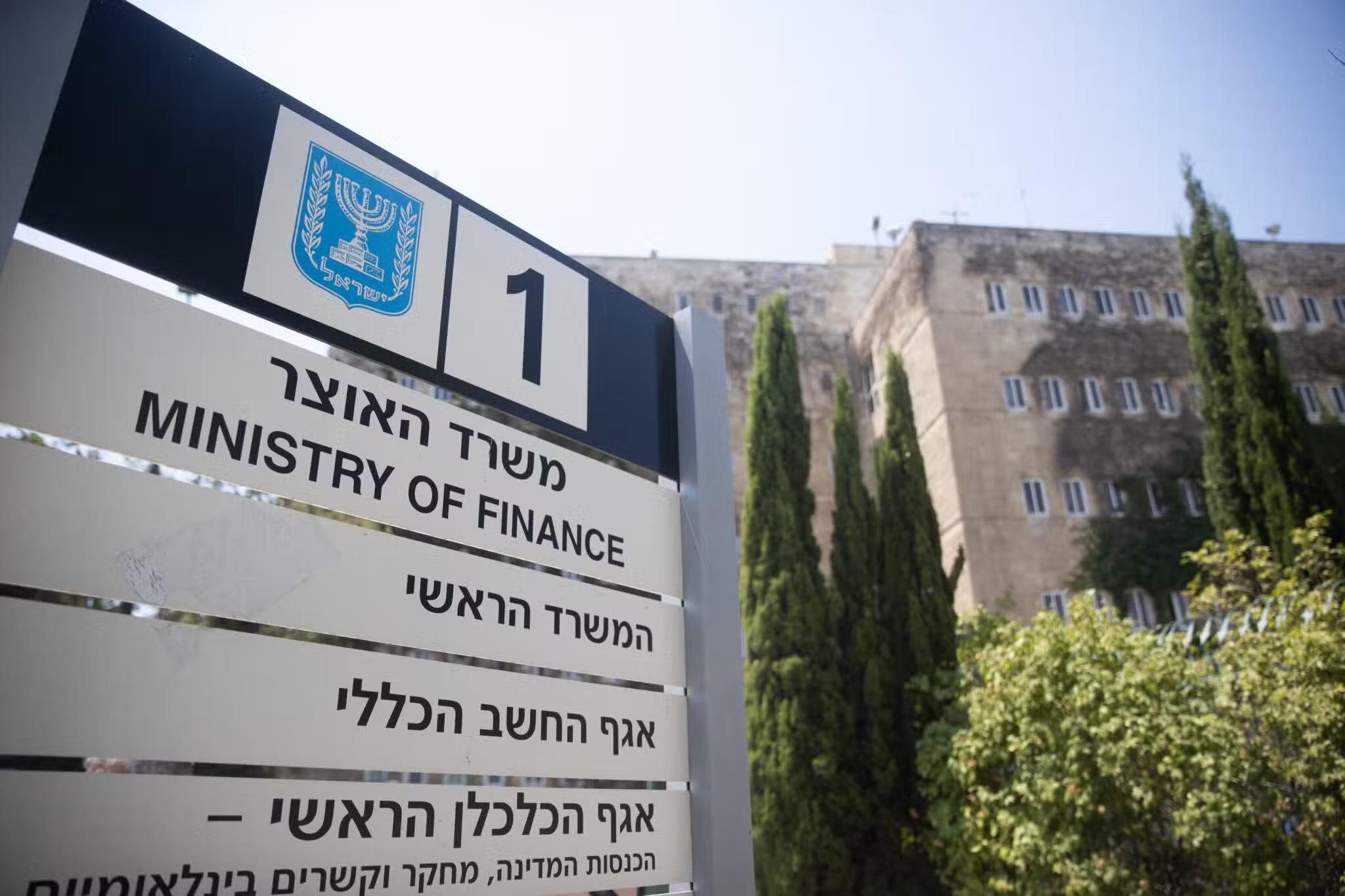
The Knesset’s Economic Committee has officially approved the Ministry of Finance’s landmark Corporate Credit Database for its second and third readings. Currently, 92% of Israeli SMEs rely on traditional banks for credit, with 83% acting as ‘captive clients’ borrowing exclusively from the institution holding their primary accounts. By opening access to reliable financial data for non-bank lenders, the Treasury projects the new database will inject massive competition into the market, generating an estimated ₪1.5 billion in annual savings for SMEs. Concurrently, the legislation shortens the retention period for negative credit data from three years to a single year.

On the fiscal relief front, the Israel Tax Authority activated its online compensation portal specifically targeting businesses in northern conflict zones (Upper Galilee, Golan Heights, Katzrin) impacted by ‘Operation Roaring Lion.’ The relief packages feature multiple tracks, including revenue replacement, a payroll track compensating employers ₪550 per day for absent workers, and an agricultural track offering ₪13,615 per farmworker. Claims must be filed by September 24, 2026.
Our take: The legislative authorization of the Corporate Credit Database is a lethal blow to the institutional resistance of Israel’s financial oligopoly. For decades, legacy banks have weaponized information asymmetry to extract an excess yield premium from captive SME clients. By commoditizing corporate credit data, the state is actively removing the friction that has historically locked out alternative credit funds and institutional non-bank lenders, paving the way for aggressive margin compression in commercial banking.
Meanwhile, the dual deployment of the credit database and the northern compensation tracks illustrates a macro economy operating on two distinct fronts. While the central government attempts to modernize structural credit markets for long-term efficiency, it is simultaneously forced to continuously socialize the acute geopolitical costs of the northern conflict. However, the mandate to erase negative credit history after just 12 months threatens to distort baseline risk models, potentially forcing lenders to price this newfound data opacity into higher aggregate interest rates across the board.

The Administrator General, operating under the Ministry of Justice, has also issued new regulatory guidelines expanding credit and debit facilities for the approximately 50,000 Israeli citizens under legal guardianship. Designed to reduce bureaucratic friction for appointed caretakers while fostering financial independence for represented individuals, the directive doubles the default monthly debit and credit card limits from ₪5,000 to ₪10,000. Crucially, the new framework mandates that banks permit the wards themselves to independently hold and utilize debit or prepaid cards within these monitored thresholds.
Real Estate
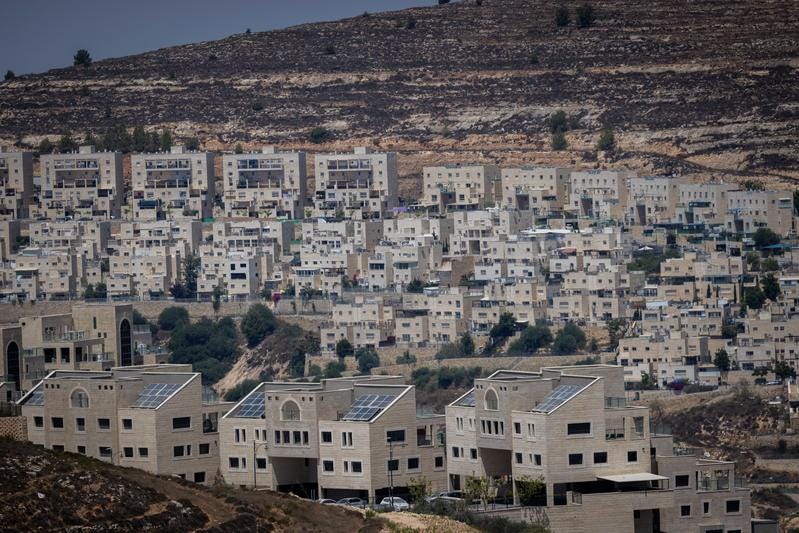
The Ministry of Interior has officially adopted the Geographic Committee's recommendation to upgrade the municipal status of Givat Ze'ev from a local council to a full municipality (city). The town, situated in the Jerusalem envelope, currently boasts a rapidly expanding population of approximately 25,000 residents and exhibits clear urban characteristics marked by aggressive future zoning plans and high-density residential construction. Director General of the Ministry of Interior, Yisrael Ozan, stated the upgrade will drastically enhance local development capabilities. The final execution of this municipal shift remains subject to the formal signature of the IDF Central Command.
Our take: Elevating Givat Ze’ev to city status is far more than a bureaucratic reshuffle. It is a profound macroeconomic and geopolitical market signal. Municipal status fundamentally unlocks larger state budgets, enhanced debt-issuance capabilities, and streamlined commercial zoning approvals. For domestic real estate developers, this significantly reduces bureaucratic friction, transforming a bedroom community into a highly lucrative hub for yielding commercial and retail assets in the Jerusalem periphery.
However, for foreign institutional investors, this development introduces acute compliance complexities. As Givat Ze’ev is located beyond the Green Line, the rapid expansion and capital allocation toward its new municipal infrastructure will undoubtedly trigger ESG and geopolitical friction for international funds heavily exposed to the Israeli market. Domestic capital, unburdened by these mandates, is positioned to monopolize the arbitrage on the resulting land valuation bumps.
TASE snapshot for Monday, May 25, 2026
TA-35 Index (TASE:TA35): 🟢 +3.06%
TA-90 (TASE:TA90):🟢+3.58%
TA-125 (TASE:TA125): 🟢 3.22%
If you enjoyed this update, forward it on.
TV10 Global | Israel for Investors
Bringing you the top stories from the Israeli business community, by Israel’s only business and finance network.
Share your thoughts with us via: global@tv10.co.il or the Newsroom WhatsApp: +972-55-994-5851.
📧 Subscribe to this newsletter! And follow the daily conversation on 𝕏 @tv10global.
Disclaimer: This brief is for informational purposes only and does not constitute investment advice. All data current as of publication date.