
🍿 Get our coverage on Spotify, and Youtube, too. Want to join the conversation? We’re on X
Quick takes:
Macro & Policy: The Tax Authority opens compensation claims for indirect SME damages from Operation Roaring Lion; lawmakers push to shorten negative credit history stains to a single year to ease consumer friction.
Banking & Regulation: The BOI Supervisor targets legacy banks following record 2025 profits, harnessing structural reforms to allow non-bank entities to capture deposits.
Capital Markets: Tidhar Group targets a massive ₪7.5B valuation in its upcoming IPO; Discount Bank and FIBI post mixed Q1 results with slipping ROE, while Victory Supermarkets sees net profit skyrocket 784%.
Macro & Policy

Israel’s Tax Authority has officially launched its online compensation portal to deploy fiscal relief for domestic enterprises suffering indirect financial damages from the March-April fallout of ‘Operation Roaring Lion.’ Under the approved framework, eligible businesses established prior to February 27, 2026, with a 2025 annual turnover ranging from ₪12,000 to a ceiling of ₪400 million, can file for relief via the qualifying expenses track. To secure this state-backed capital, applicants must demonstrate a minimum 25% revenue contraction relative to their baseline period and validate their claims by submitting correlating periodic VAT and employee withholding tax reports.
The Knesset's Economic Committee, spearheaded by Chairman David Bitan, is aggressively advancing legislation to shorten the punitive ‘stain’ period of negative consumer credit data from three years to a single year. Designed to mitigate systemic friction for retail borrowers rejected by traditional banking channels, the reform aims to prevent distressed consumers from bleeding into the unregulated grey market. The proposed amendment to Chapter 18 of the 2026 Economic Plan will also establish a comprehensive corporate credit database, overriding fierce institutional resistance from the insurance sector. Insurance lobbyists argued that large-scale corporate borrowers should be exempt to preserve structural confidentiality, a demand flatly rejected by the committee to ensure market transparency.
Our take: The state’s dual approach to economic stabilization highlights a fascinating tension between short-term crisis management and structural credit reform. The swift rollout of the Tax Authority’s compensation portal provides necessary liquidity to mitigate systemic friction for SMEs operating under the shadow of geopolitical volatility, effectively socializing the localized costs of ‘Operation Roaring Lion’ to protect the broader national supply chain.
However, the legislative push to erase negative credit history after just 12 months presents a double-edged sword for the domestic macroeconomy. While it reduces immediate retail friction and stimulates velocity for marginalized consumers, it fundamentally distorts baseline risk pricing for financial institutions. Lenders may be forced to price this newfound data opacity into higher aggregate interest rates across the board, inadvertently punishing prime retail and corporate borrowers to subsidize the rehabilitation of distressed capital.
Banking & Regulation
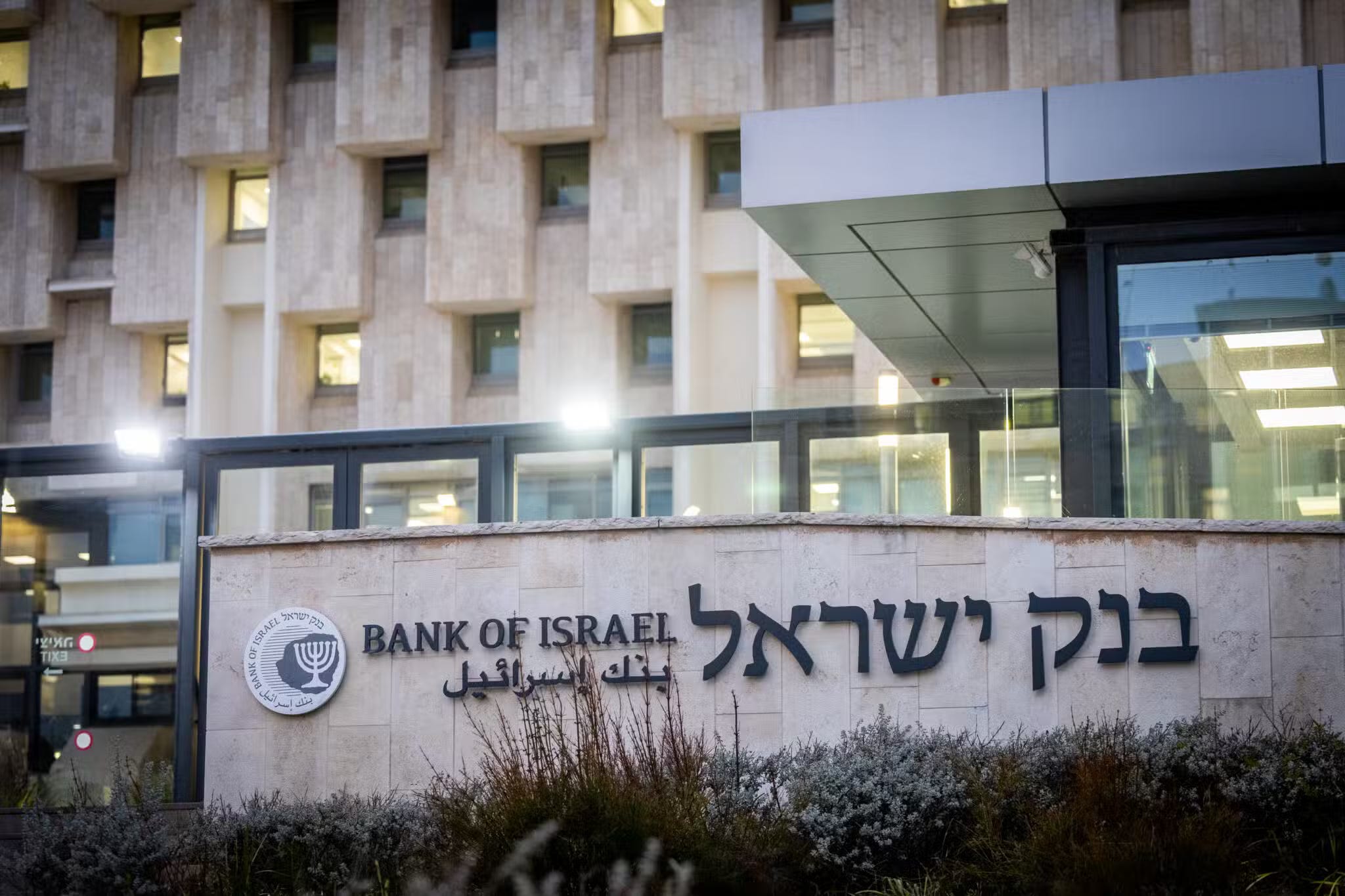
The Bank of Israel's 2025 Supervisory Review paints a picture of staggering wartime profitability for Israeli lenders, with the sector's aggregate balance sheet swelling 9.8% to a historic ₪2.97 trillion and bank equities surging 60% YoY. In response to this widening divergence between consumer strain and corporate windfall, Supervisor Daniel Hahiashvili is launching an aggressive regulatory assault on the sector's historical concentration. By leveraging the sweeping 2026 Competition Law, the central bank is actively dismantling barriers to entry, legally empowering insurance firms and investment houses to operate as nimble, deposit-taking entities. To catalyze this transition, the BOI is deploying proportional regulation, shielding nascent digital banks and non-bank lenders from the crushing compliance costs levied on Tier-1 legacy institutions.

Our take: We are witnessing a watershed moment as the BOI finally moves to break the institutional resistance of Israel’s entrenched financial oligopoly. For decades, the lack of yield competition on retail deposits allowed legacy banks to engineer record Returns on Equity (ROE) simply by parking cheap capital. The regulatory pivot to allow institutional investors to capture deposits fundamentally rewires the Israeli credit market.
By actively facilitating market entry for non-bank entities and shielding them with proportional compliance frameworks, the BOI is forcing an end to this lazy arbitrage. Institutional investors tracking the TA-Banks index may want to prepare for medium-term margin compression across the ‘Big Four.’ These legacy institutions will be forced to compete aggressively on deposit yields and digital customer acquisition, rather than relying on historical inertia, driving up their cost of funds and challenging the sustainability of their current dividend payout ratios.
Capital Markets

Real estate titan Tidhar Group is advancing a blockbuster IPO on the Tel Aviv Stock Exchange, targeting a massive ₪7.5 billion pre-money valuation. Backed by an unprecedented ₪50 billion project backlog, with ₪14.5 billion slated for realization by 2030, the firm posted 2025 pro-forma revenues of ₪2.63 billion and a net profit of ₪211 million. Ahead of the public float, Tidhar is aggressively restructuring its corporate governance, executing a comprehensive buyout of Tidhar Harel Yielding Properties and liquidating legacy management agreements with controlling shareholders. This pre-IPO corporate cleanup is designed to streamline operations and maximize institutional appeal. Furthermore, the prospectus revealed a highly lucrative compensation package for CEO Uri Levin, formerly of Discount Bank, totaling nearly ₪18 million for 2025. This compensation is overwhelmingly tethered to equity performance, granting Levin up to a 1.5% stake in the firm and tightly aligning executive incentives with future shareholder value as Tidhar transitions to public markets.
Israel's legacy banking sector exhibited clear signs of margin fatigue in Q1, with both Discount Bank and the First International Bank of Israel (FIBI) reporting significant profit contractions.

Discount Bank (TASE: DSCT) posted a 10.2% drop in net profit to ₪930 million, dragging its Return on Equity (ROE) down to 10.9% as credit loss provisions spiked to ₪182 million amid macroeconomic deterioration. To defend operational efficiency, Discount is executing a strategic, three-year headcount reduction targeting 600 employees.
Similarly, FIBI (TASE: FIBI) saw its net profit slide 9.4% to ₪480 million and gross profit contract 4.7%, prompting IBI Investment House to downgrade its price target to ₪280. Despite FIBI's client assets crossing the historic ₪1.17 trillion threshold, both institutions are struggling with interest rate headwinds and aggressive deposit repricing. In response to these structural margin pressures, both Discount and FIBI have officially launched artificial intelligence divisions aimed at rapidly compressing backend operational costs and accelerating digital transformation.

Bucking the downward trend seen in traditional yield-bearing equities, retail operator Victory (TASE: VCTR) Supermarkets delivered a record-shattering first quarter, reporting a phenomenal 784% surge in net profit to ₪18.6 million. The grocer’s top-line revenue expanded by 25% to a historic high of ₪755.8 million, driven by the strategic integration of consumer electronics and home appliances alongside standard grocery staples.
This high-margin product pivot significantly boosted the company's operational leverage, propelling operating profit up 153.6% to ₪37.6 million. Furthermore, Victory successfully expanded its digital footprint, with online sales surging 20.5% year-over-year to capture 7.5% of total revenue. Armed with a highly positive working capital position and a robust quarterly cash flow of ₪103.5 million, the board has authorized a ₪15 million dividend distribution for June. The firm is actively leveraging this low-leverage liquidity to fund immediate physical expansion, aggressively targeting new storefronts in Afula, Tel Mond, and Beersheba to capture trapped domestic consumer spending.
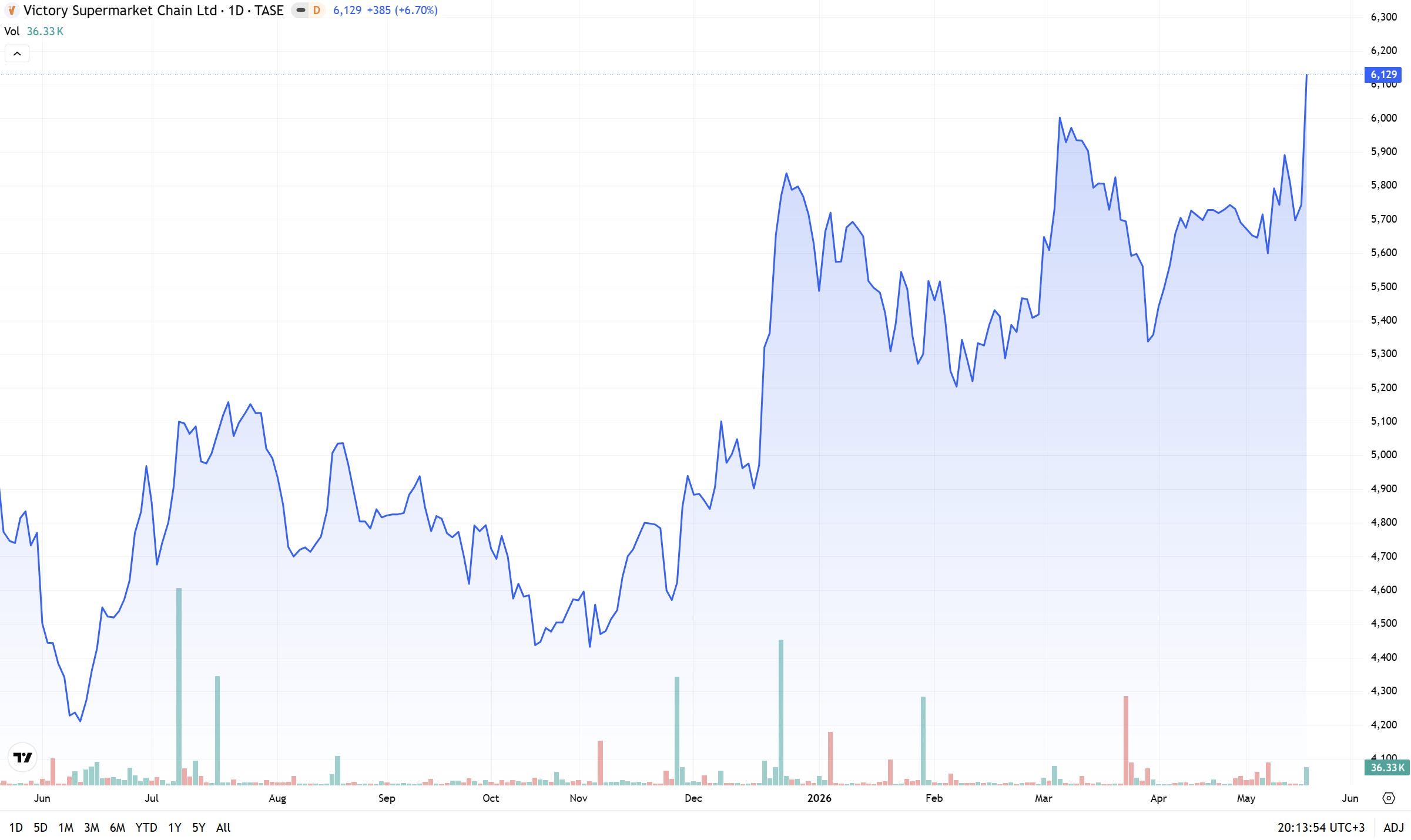
TASE snapshot for Tuesday, May 19, 2026
TA-35 Index (TASE:TA35): 🔴 -0.08%
TA-90 (TASE:TA90): 🟢 +0.24%
TA-125 (TASE:TA125): 🔴 -0.05%
If you enjoyed this update, forward it on.
TV10 Global | Israel for Investors
Bringing you the top stories from the Israeli business community, by Israel’s only business and finance network.
Share your thoughts with us via: global@tv10.co.il or the Newsroom WhatsApp: +972-55-994-5851.
📧 Subscribe to this newsletter! And follow the daily conversation on 𝕏 @tv10global.
Pings available via WhatsApp Channel.
Disclaimer: This brief is for informational purposes only and does not constitute investment advice. All data current as of publication date.