
🍿 Get our coverage on Spotify, and Youtube, too. Want to join the conversation? We’re on X
Quick takes:
Macro & Regulation: The Bank of Israel cut rates to 3.5% amid easing 1.9% inflation but warned of severe deficit risks tied to defense spending; meanwhile, the Health Ministry unveiled sweeping deregulation for the ₪50 billion hospitality sector.
Capital Markets: The Electricity Authority imposed a 140-day freeze on new data center grid connections due to unprecedented demand, tanking Mega Or shares; conversely, Elbit Systems surged on a $370 million US border security contract.
Macro & Regulation
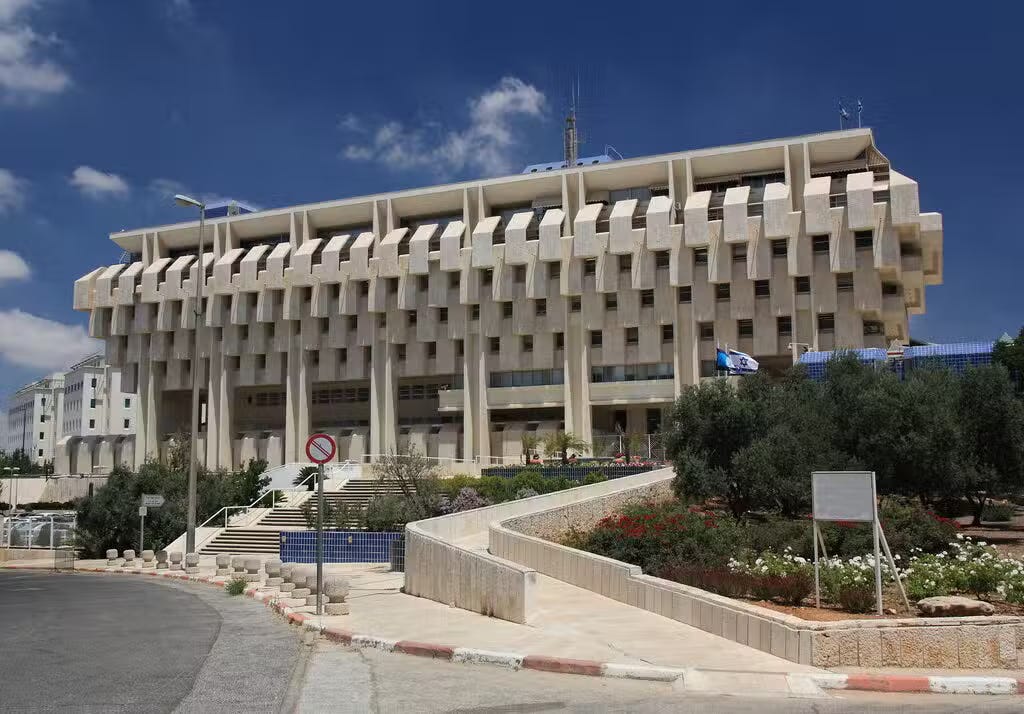
The Bank of Israel released its H1 2026 Monetary Policy Report, outlining a cautiously optimistic yet fragile macroeconomic landscape. Aided by the Shekel's 10% appreciation against the dollar earlier this year and a moderation in the annual inflation rate to 1.9%, the Monetary Committee successfully executed three 25-basis-point rate cuts, bringing the benchmark interest rate to 3.5%. Despite a 3.8% annualized contraction in Q1 GDP due to ‘Operation Roaring Lion,’ Q2 indicators point to rapid recovery, leading the central bank to project 4.0% GDP growth for 2026. However, officials issued a stark warning regarding fiscal policy. The baseline deficit is projected at 4.9% of GDP, but any unmitigated increase to the defense budget could drive the deficit to 5.5%, unleashing fresh inflationary pressures.
On the microeconomic front, the Ministry of Health announced a sweeping regulatory overhaul targeting the ₪50 billion food and hospitality sector. Designed to ease the establishment and operation of Israel's 23,500 restaurants and cafes, the reform eliminates archaic infrastructure mandates, such as rigid kitchen-to-seating ratios and minimum dining area requirements, in favor of a risk-management supervision model. The move is expected to generate billions of shekels in operational savings, significantly reducing the bureaucratic friction that has long stifled small-business creation and margins.
Our take: The Bank of Israel’s H1 report highlights a delicate macroeconomic balancing act. While Governor Amir Yaron has successfully anchored inflation within the target range through aggressive monetary management, the true threat remains government fiscal indiscipline. The explicit warning regarding the defense budget ballooning the deficit to 5.5% of GDP underscores the severe structural friction between military necessities and macroeconomic stability. If sovereign borrowing costs rise to fund this shortfall, the resultant yield curve will crowd out private investment precisely when the economy requires liquidity for post-conflict recovery.
In stark contrast to fiscal expansion, the Health Ministry’s deregulation of the food and hospitality sector is a rare, tangible victory against Israel’s notorious regulatory layering. Moving to a risk-based model removes significant deadweight loss and lowers the barrier to entry for entrepreneurs previously blocked by arbitrary physical mandates. This arbitrage between rigid, top-down macroeconomic risks and localized micro-deregulation reveals an economy desperately attempting to unshackle its domestic growth engines from institutional resistance and the entrenched pricing power of local real estate and distribution oligopolies.
Capital Markets
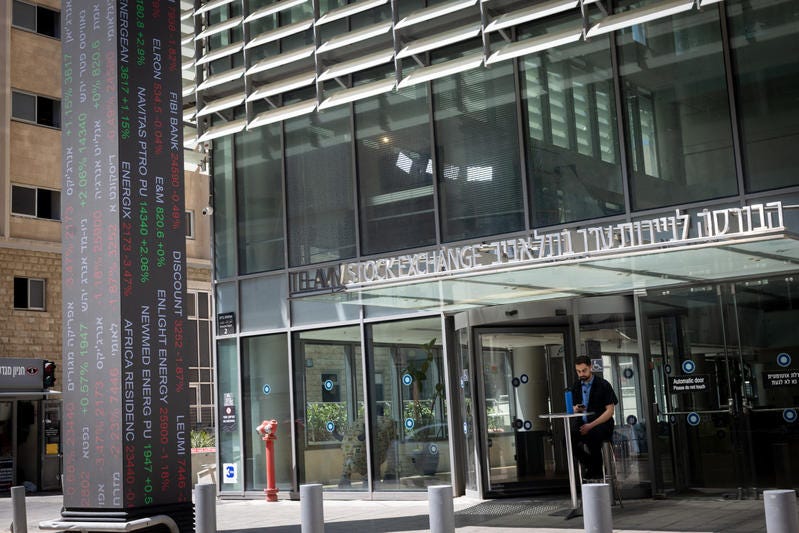
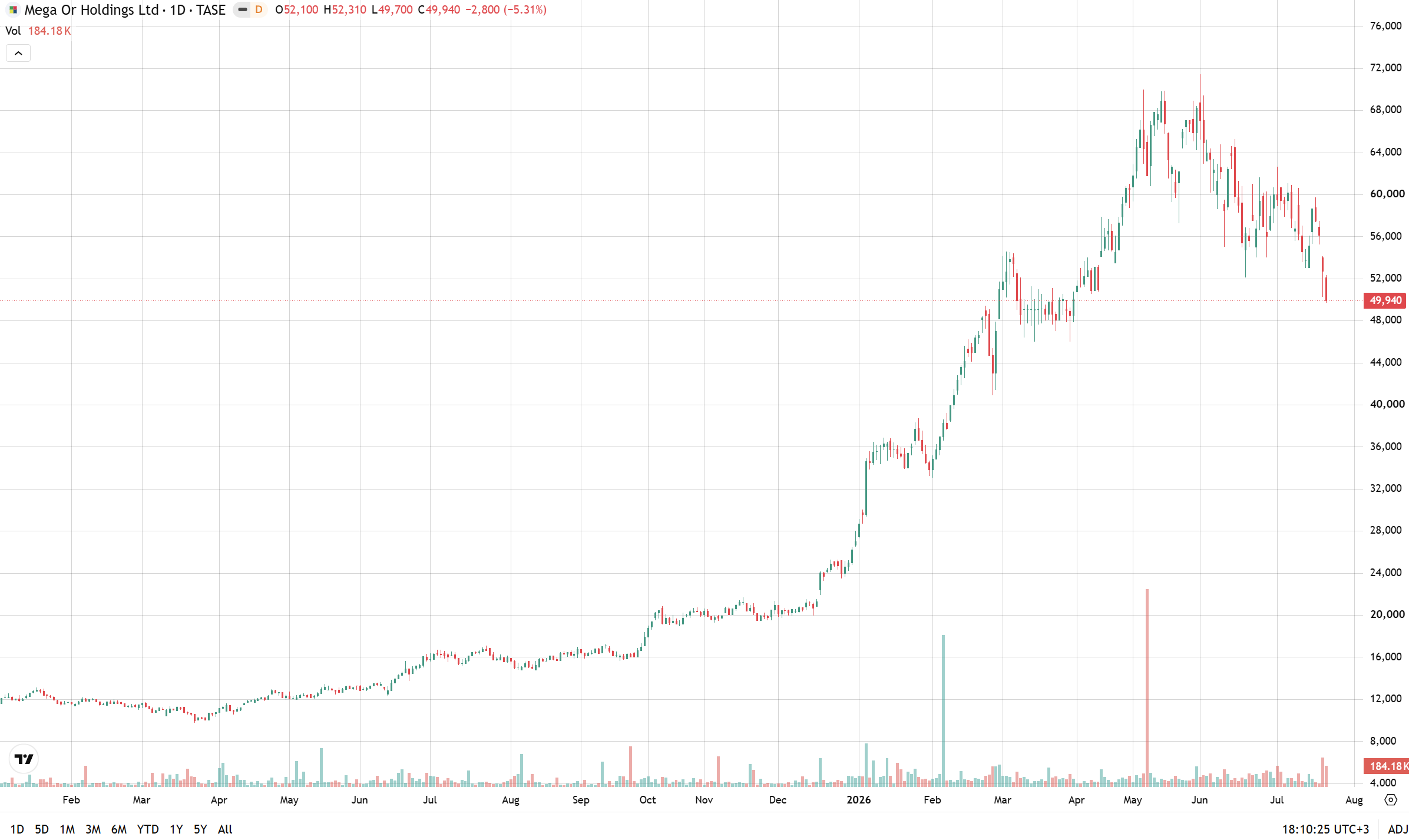
Electricity Authority has issued a severe 140-day freeze on all new grid connection approvals for server farms and data centers, citing an unsustainable surge in demand. Developers have submitted applications totaling an unprecedented 27,000 megawatts (MW), triple the current average electricity consumption of the entire Israeli economy (9,000 MW). Without this moratorium, the Noga Independent System Operator warned that grid stability would be critically compromised. The regulatory halt immediately reverberated through the Tel Aviv Stock Exchange, sending shares of real estate giant Mega Or (TASE:MGOR) plunging 6% to 8%, as data centers constituted a primary growth engine projected to generate ₪500 million in annual NOI by 2027.
Simultaneously, the broader market absorbed the geopolitical impacts of regional escalation, which pushed global oil prices up 3%, sending Brent crude above $91 per barrel.
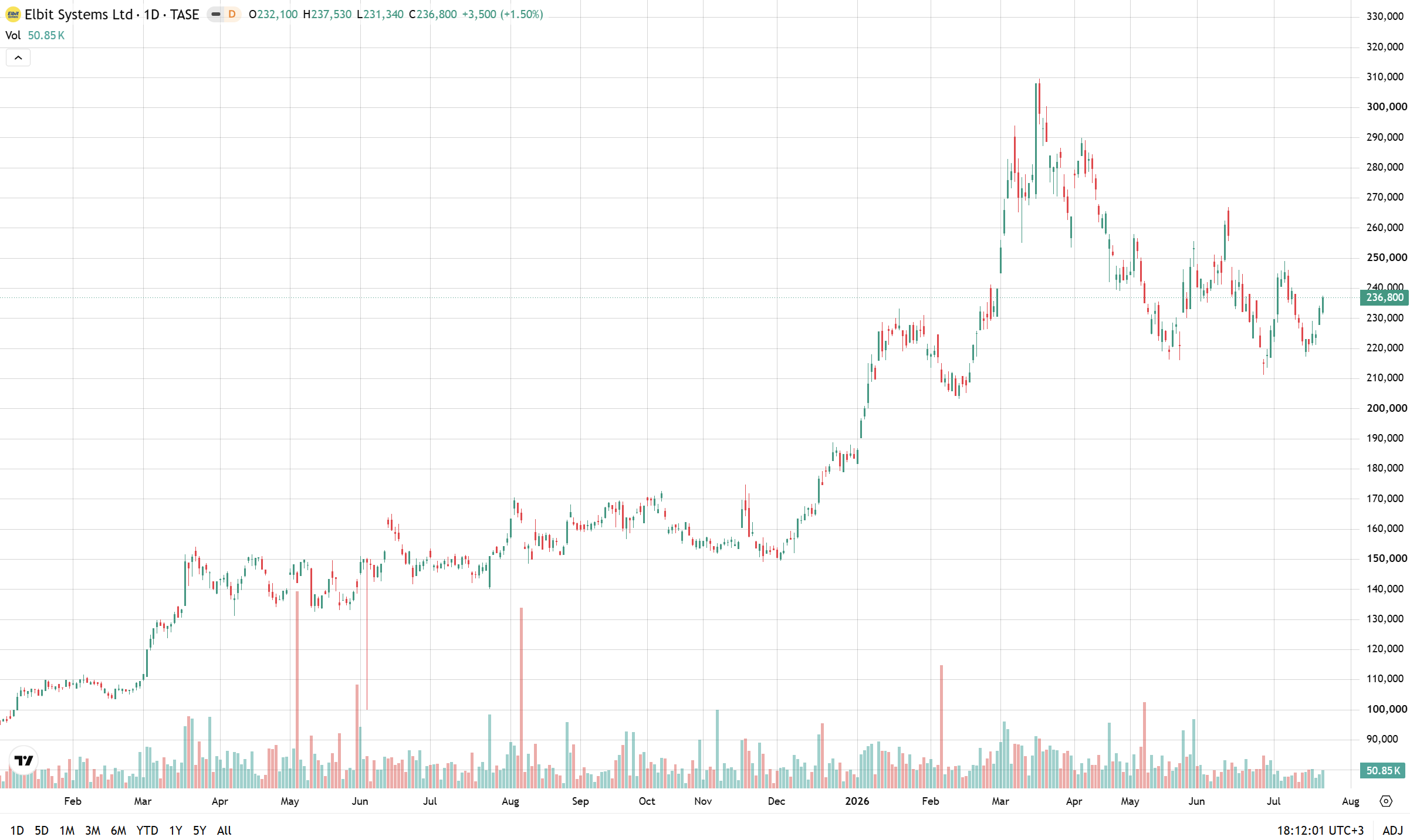
Amidst this volatility, Israeli defense contractor Elbit Systems (TASE:ESLT) stood out as a major beneficiary, jumping 3% after its US subsidiary secured a series of contracts totaling $370 million from US Customs and Border Protection. The agreements, slated for execution through May 2029, will provide advanced technological solutions to bolster American national security infrastructure.
Our take: The Electricity Authority’s moratorium on new server farm connections is a profound indictment of Israel’s sovereign infrastructure deficit. The state has fostered a world-class technology sector but failed completely to scale the physical power grid required to sustain it. This energy bottleneck is actively capping domestic tech growth, as evidenced by the immediate market repricing of Mega Or. The inability to integrate AI and data center expansion into the national grid forces developers to face severe execution risks, ultimately incentivizing them to offshore their capital to global markets with superior energy portability. It is a textbook example of how state-level institutional resistance stifles private-sector yield.
Conversely, Elbit Systems’ $370 million US contract win demonstrates the immense arbitrage Israeli defense firms extract from global geopolitical friction. While domestic infrastructure crumbles under regulatory and capacity limits, Israel’s military-industrial complex thrives as an indispensable export node for Western security architecture. The divergence is absolute: industries tethered to the local physical grid are suffocating under bureaucratic myopia, while those exporting sovereign defense technology are capitalizing on an era of relentless global instability.
TASE snapshot for Tuesday, July 21, 2026
TA-35 Index (TASE:TA35) 🟢 +1.39%
TA-90 (TASE:TA90):🟢 +0.59%
TA-125 (TASE:TA125): 🟢 +1.17%
If you enjoyed this update, forward it on.
TV10 Global | Israel for Investors
Bringing you the top stories from the Israeli business community, by Israel’s only business and finance network.
Share your thoughts with us via: global@tv10.co.il or the Newsroom WhatsApp: +972-55-994-5851.
📧 Subscribe to this newsletter! And follow the daily conversation on 𝕏 @tv10global.
Disclaimer: This brief is for informational purposes only and does not constitute investment advice. All data current as of publication date.