
🍿 Get our coverage on Spotify, and Youtube, too. Want to join the conversation? We’re on X
Quick takes:
Capital Markets: Tel Aviv equities flashed a sharp sectoral split as a 1.96% plunge in the TA-90 index dragged it into negative territory for the year.
Energy & Infrastructure: Nofar Energy executed a $145 million engineering agreement for a massive 225-megawatt solar project in Texas.
Macro: The Israeli economy contracted by an annualized 3.8% in Q1 2026 as domestic capital fled, with citizens shifting $26 billion into foreign bank deposits.
Technology & Artificial Intelligence: Legendary AI architect Noam Shazeer abandons Google for OpenAI less than two years after a $2.7 billion acquisition.
TASE snapshot for Monday, June 22, 2026
TA-35 Index (TASE:TA35): 🟢 +0/09%
TA-90 (TASE:TA90): 🔴 -1.96%
TA-125 (TASE:TA125): 🔴 -0.35%
Capital Markets
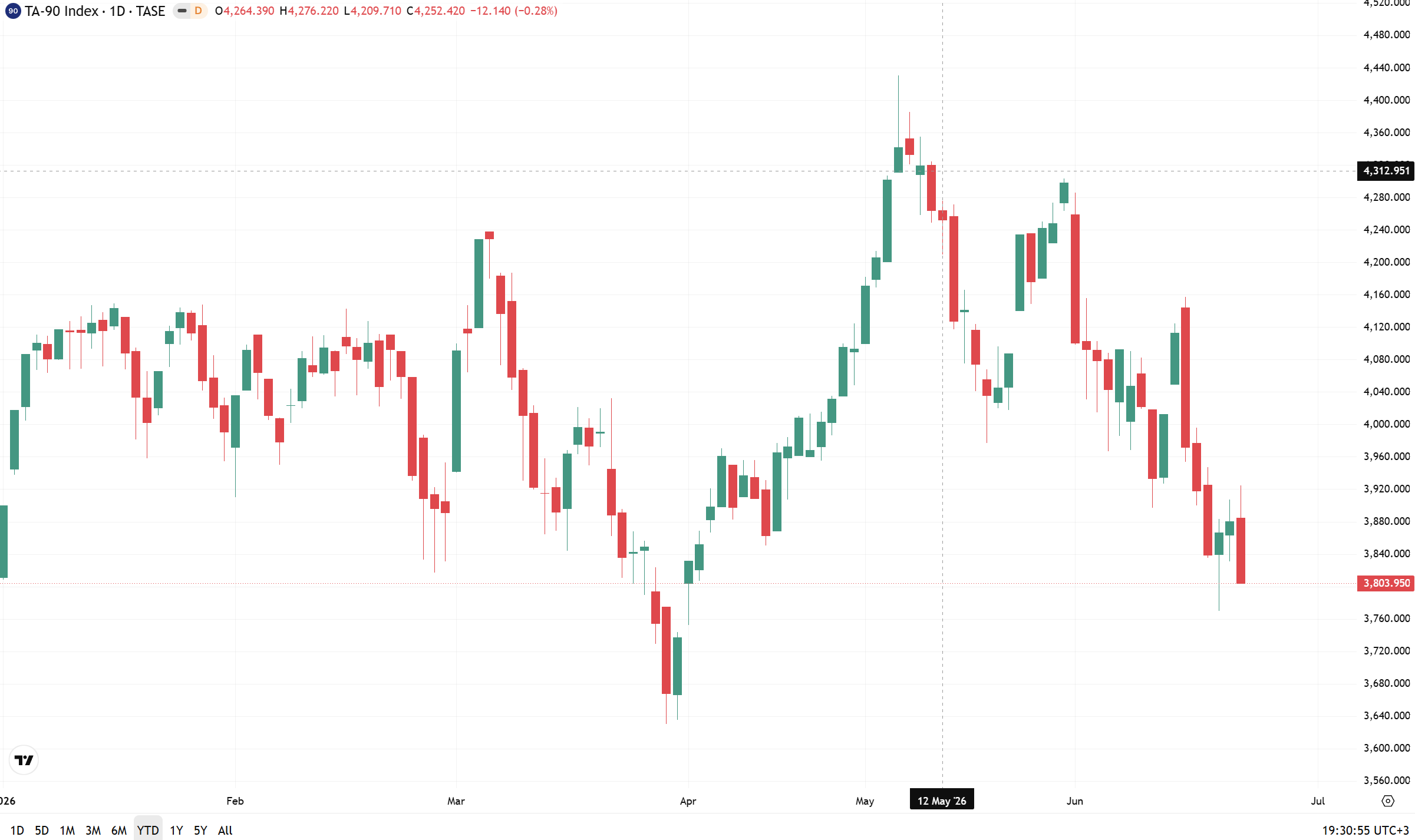
The TASE Research Unit summarizes the trading day on the Tel Aviv Stock Exchange, which was characterized by a mixed trend on Monday. After bank stocks fell by about 3.5% on Friday and dragged the market down, today they posted slight gains and acted as a balancing factor, with trading volume in bank stocks remaining high. The TA-90 index, which rose on Friday against the trend, recorded a sharp decline today and moved into negative territory for the year, completing an 11.51% drop since the beginning of June and a 0.12% decline since the start of 2026.
Summarizing the performance of the main equity indices, the TA-35 index (TASE:TA-35) rose by 0.09%, whereas the TA-125 (TASE:TA-125) index fell by 0.35% and the TA-90 index (TASE: TA-90) a drop of 1.96%. The sectoral indices saw mixed movement. Notable gainers included the Biomed index, which rose by 0.98%, the Technology index , which added 0.19%, and the Banks-5 index (TASE:TA-BANKs5), which posted a slight gain of 0.12%.
Conversely, notable decliners included the TA-Defense index, which fell by 2.71%, the TA-Food index, which lost 2.58%, and the TA-Consumer index, which dropped by 2.4%.
Daily trading volumes stood at approximately ₪5 billion in the equities market, ₪5.8 billion in government bonds and Makam (T-bills), and ₪864 million in corporate bonds.
The bond market saw price declines today in both the government and corporate sectors, with the Tel-Gov General index dropping by 0.06%, the Tel-Bond 60 CPI-Linked index falling by 0.07%, and the Tel-Bond Shekel index recording a 0.07% decline.
Energy & Infrastructure
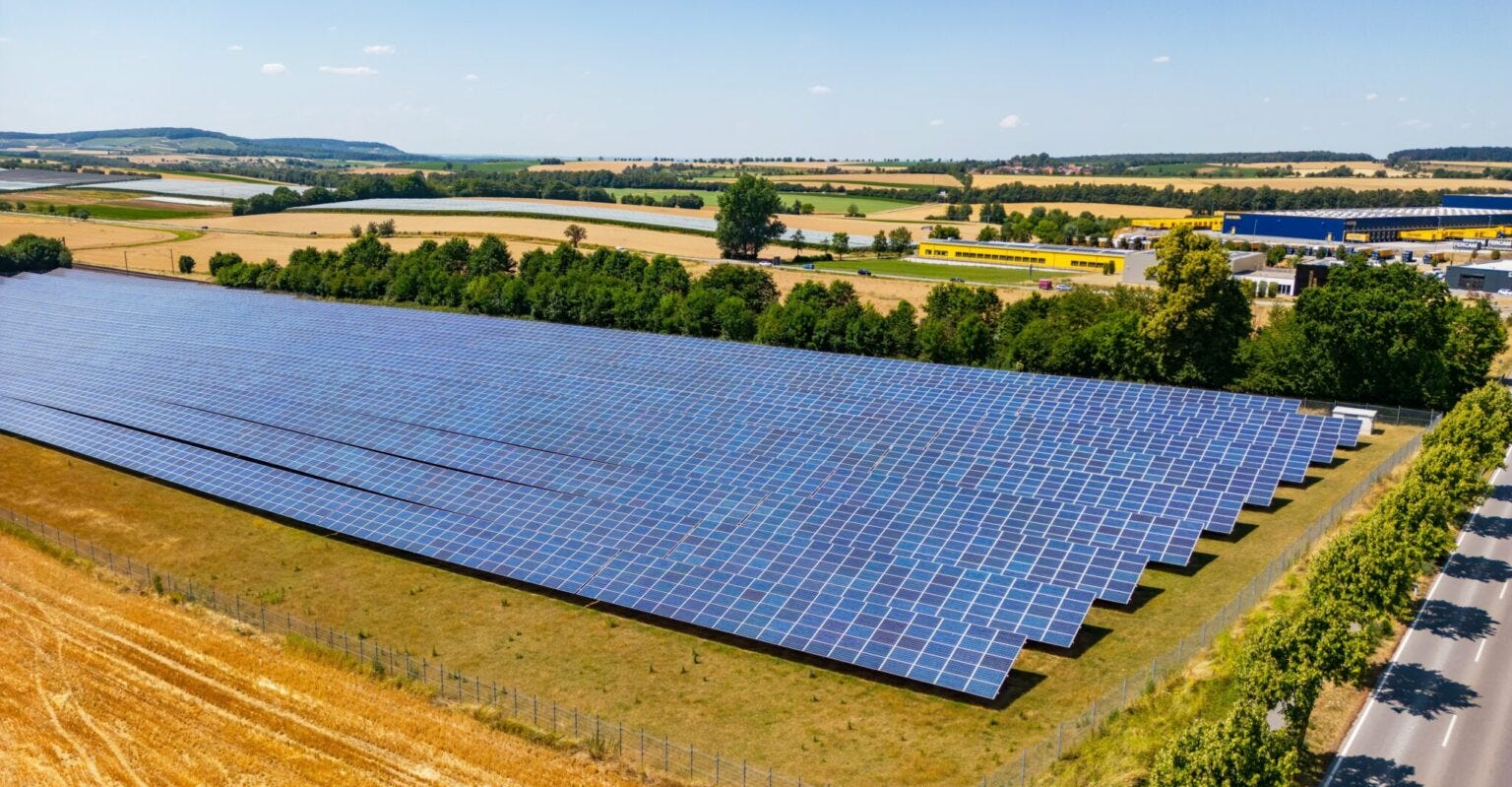
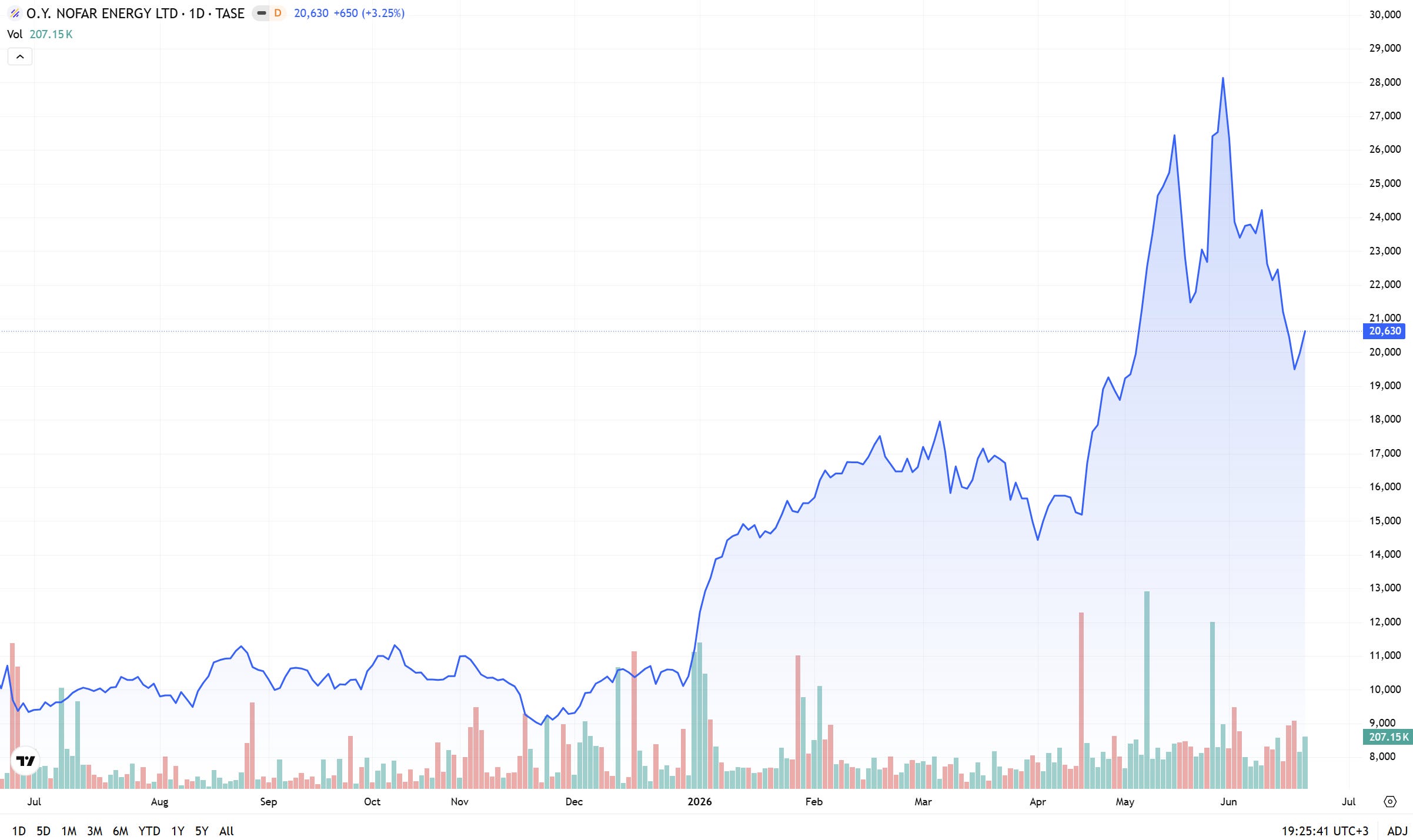
Nofar Energy (TASE:NOFR) executed a $145 million engineering, procurement, and construction (EPC) agreement for its 225-megawatt ‘Lavender’ solar facility in Texas. Slated for completion in Q2 2028, the massive infrastructure project will be self-funded directly from the company’s balance sheet until dedicated project financing or a US Equity Tax deal is secured. The market rewarded the strategic pivot, pushing Nofar’s shares up 3.25% following the announcement, validating the firm’s aggressive expansion into the American renewable sector.
Our take: Nofar’s pivot to Texas perfectly illustrates the corporate response to Israel’s macroeconomic stagnation. Local energy champions are increasingly exporting their capital expenditure to markets devoid of Israel’s debilitating grid monopolies and zoning friction. In Texas, Nofar captures pure margin and streamlined interconnectivity; at home, comparable projects bleed yield against deep institutional resistance and an outdated grid architecture.
This transaction underscores a broader, troubling trend for the Israeli domestic economy. When local infrastructure firms are forced to seek viable ROE abroad, the domestic market is left starved of critical system assets and scale. Nofar is simply recognizing the structural reality: building heavy infrastructure in Israel has become an exercise in fighting the state, whereas deploying capital in the OECD yields predictable, sustainable returns.
Macro

The Bank of Israel's Q1 2026 data revealed a sharp 3.8% annualized contraction in GDP, compounded by severe domestic capital flight. Israeli residents shifted an unprecedented $26 billion into foreign bank deposits, driving a 13% spike in offshore ‘other investments.’ Concurrently, foreign investors liquidated $23 billion in Israeli equities, dragging the total value of foreign-held domestic securities down 4.5%. Despite this massive wave of realization, total foreign direct investment (FDI) actually climbed by $16 billion, and the aggregate value of foreign holdings on the Tel Aviv Stock Exchange (TASE) swelled to $145 billion, insulated largely by domestic equity price appreciation.
Our take: This $26 billion domestic exodus is capital arbitrage. Israeli liquidity is actively escaping domestic structural friction, seeking the higher yields and regulatory safety of dollar-denominated offshore deposits. The simultaneous $23 billion foreign equity liquidation highlights a profound reassessment of Israel’s geopolitical and structural risk premium. While the headline TASE valuation remains nominally supported by price inflation, the underlying mechanics reveal an economy suffocating under severe institutional resistance.
Investors are aggressively rebalancing away from a domestic market trapped by protectionist policies and rigid capital controls. As the state’s gross external debt-to-GDP ratio climbs to 27%, the government is effectively borrowing to mask the bleeding. As mentioned in our weekly newsletter, until Jerusalem dismantles the regulatory layering that strangles domestic business creation, the smart money may continue to leverage its portability.
Technology & Artificial Intelligence
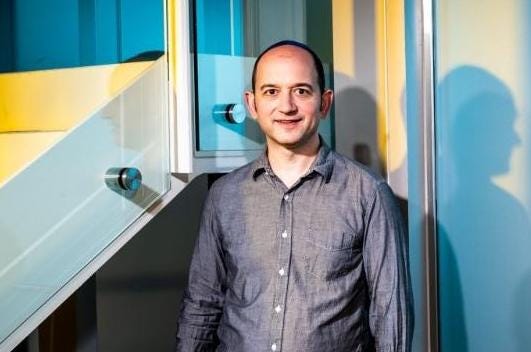
Elite Israeli engineer Noam Shazeer announced his departure from Google to join rival OpenAI. Shazeer, a co-author of the foundational 2017 Transformer architecture paper and creator of the Meena chatbot, returned to Google less than two years ago after the tech giant paid a staggering $2.7 billion to re-acquire him and his Character.AI research team. His exit leaves Google scrambling to defend its position in the increasingly concentrated AI landscape.
Our take: While Shazeer’s defection is a Silicon Valley headline, the macroeconomic implications echo loudly through the Herzliya tech corridor. The $2.7 billion effectively paid for one engineer’s retention highlights the extreme talent premium characterizing the current AI oligopoly. For Israeli venture capital and local deep-tech incubators, this signals that the M&A ceiling has vanished for foundational AI architectures.
However, it also serves as a stark warning: the friction of competing against these trillion-dollar balance sheets is insurmountable for independent players. Early-stage Israeli AI startups are being forced to position themselves entirely as acquisition targets rather than standalone, revenue-generating enterprises, effectively serving as outsourced R&D for American tech giants rather than building domestic, generational IP.
If you enjoyed this update, forward it on.
TV10 Global | Israel for Investors
Bringing you the top stories from the Israeli business community, by Israel’s only business and finance network.
Share your thoughts with us via: global@tv10.co.il or the Newsroom WhatsApp: +972-55-994-5851.
📧 Subscribe to this newsletter! And follow the daily conversation on 𝕏 @tv10global.
Disclaimer: This brief is for informational purposes only and does not constitute investment advice. All data current as of publication date.