
🍿 Get our coverage on Spotify, and Youtube, too. Want to join the conversation? We’re on X
Quick takes:
Macro & Governance: The Knesset fast-tracks AI server farms to national infrastructure status; CBS data shows Israeli enterprises aggressively scaling AI integration for operational margins; A massive sting operation in northern Israel targets municipal corruption, seizing millions of shekels in assets tied to tender manipulation.
Financials: Challenger bank One Zero launches direct TA-125 trading, attacking legacy fee models with an aggressive ₪2 flat rate; Rustic Bakery successfully prices its TASE IPO at ₪27.71 per share.
Aviation: The Lufthansa Group officially begins its phased return to Ben Gurion, restoring critical European logistical and corporate connectivity.
Macro & Governance

In a move to secure national technological competitiveness, the Knesset approved a bill, in its first reading, to designate AI server farms as ‘national infrastructure.’ Bypassing labyrinthine local zoning laws, the legislation allows up to 10 compute facilities annually to be expedited through the National Infrastructure Committee. This direct implementation of the 2025 Nagel Committee recommendations is designed to aggressively clear bureaucratic hurdles and prevent a loss of Israel’s technological edge.
This infrastructure push aligns with new CBS data revealing a massive structural acceleration in private-sector AI adoption across 36,551 tracked businesses. Currently, 63% of Israeli enterprises utilize AI for managerial and business operations. The most dramatic YoY growth occurred in industrial sector marketing (surging from 16% to 57%) and strategic planning/HR (climbing from 14% to 52%). Within the high-tech sector itself, 61% of firms now rely on AI for core R&D to boost worker productivity.
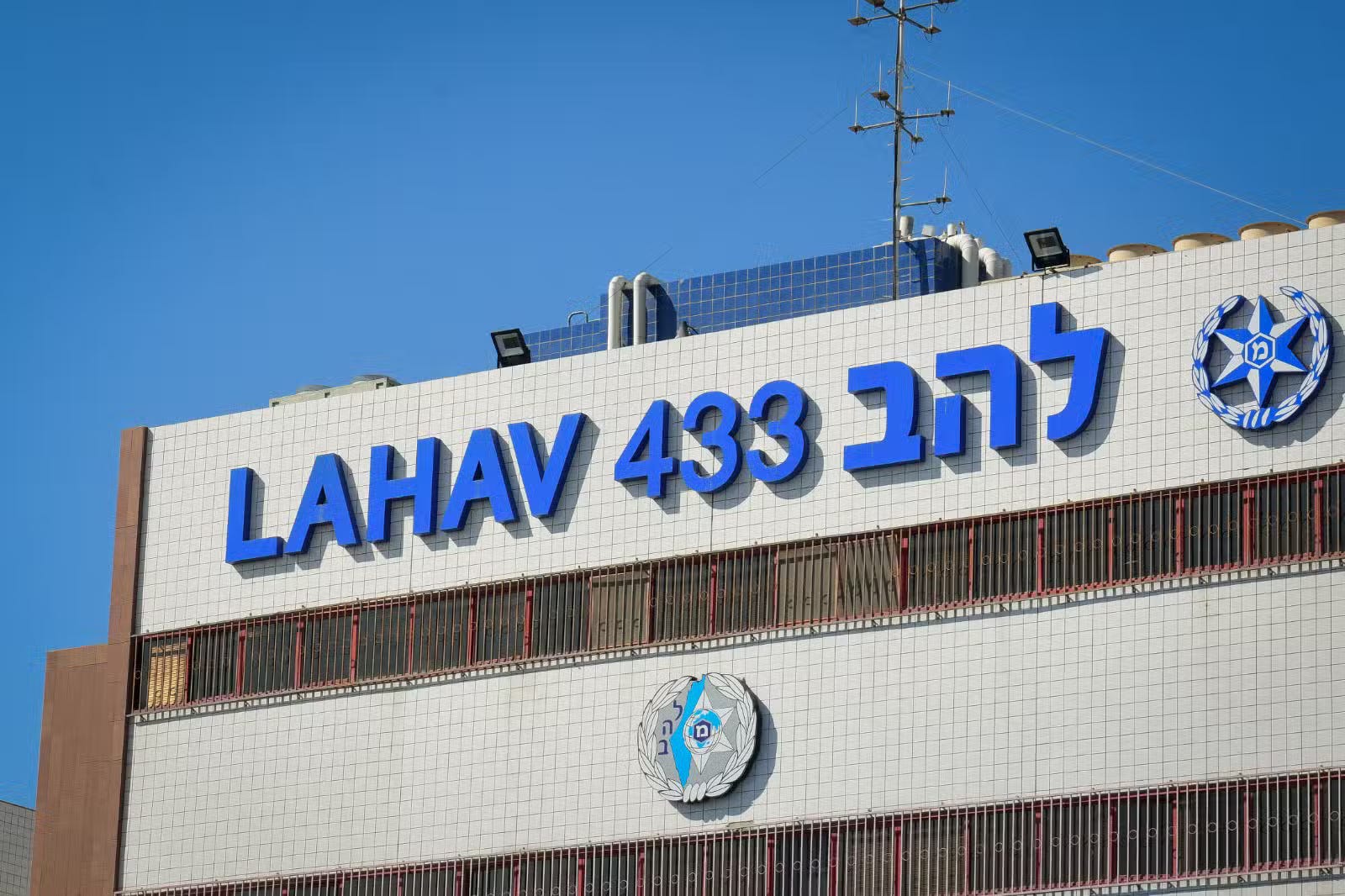
Following a covert year-long investigation, the Lahav 433 national crime unit and the Israel Tax Authority arrested 14 individuals Wednesday morning, including a northern deputy mayor, on suspicion of bribery, bid-rigging, money laundering, and tax evasion.
The raid across 20 locations resulted in the seizure of luxury vehicles, a yacht, and real estate valued at millions of shekels. Authorities allege that organized criminal elements systematically infiltrated key municipal power centers, specifically tender and planning committee, to extract illicit economic gains, lock out competing contractors, and leak proprietary tender data prior to public release.
Our take: The Israeli government’s aggressive classification of compute centers as national infrastructure demonstrates a sophisticated macroeconomic maneuver to bypass administrative stagnation. By slashing regulatory friction, the state is moving to mitigate the risk of intellectual and capital flight in the tech sector, especially as CBS data underscores that rapid AI integration is poised to drastically improve enterprise operational margins and yield.
However, because the immense capital required for these data centers threatens to create domestic market concentration among early movers, capping fast-track approvals at 10 projects per year remains a necessary, delicate regulatory lever.
Conversely, the ongoing municipal corruption sweeps highlight the localized administrative drag on broader economic development. The convergence of localized zoning authority and opaque public tenders creates persistent opportunities for criminal arbitrage. This structural vulnerability artificially inflates regional real estate and development costs, representing a significant ESG hurdle and operating tax for foreign institutional capital eyeing investments outside the core Tel Aviv tech hub.
Financials

Digital challenger One Zero Bank has officially launched a direct retail trading product for the Tel Aviv Stock Exchange (TASE), opening access to equities within the flagship TA-125 index. Breaking from its previous limitation to US markets and local mutual/ETF funds, the bank is introducing a highly aggressive pricing model: a flat minimum fee of ₪2 for domestic trades and $2 for Wall Street transactions. Crucially, the platform continues to operate without the custody or monthly management fees typically levied by traditional Israeli institutions, intensifying the local capital market price war.

In a strong signal of returning institutional risk appetite, Rustic Bakery Ltd. successfully closed its initial public offering (IPO) on the Tel Aviv Stock Exchange, raising a gross ₪200M. Following a 100-for-1 stock split, the offering priced at ₪27.71 per share. The book was heavily oversubscribed by institutional players; of the 92,503 units requested by domestic institutions, the company accepted bids for 60,150. Ultimately, 7.21 million shares were sold, with major allocations dominating the float: institutional insurance bodies absorbed 40% of the offering, while 69 mutual funds secured a combined 32.6%. The company's total paid-up share capital now stands at 34.89 million shares, with regular trading having been set to commence on Wednesday under the ‘Rustic Bakery’ name.
Our take: The successful clearing of the Rustic Bakery IPO is a critical macro barometer for local equity capital markets. The aggressive participation by domestic insurance funds and asset managers indicates a deep pool of institutional capital actively hunting for yield in local consumer defensive sectors. This ₪200M capital raise demonstrates that despite broader macro friction and regional volatility, foundational domestic businesses with clear operational margins can still successfully tap public markets for liquidity, providing a much-needed blueprint and proof of concept for upcoming mid-cap issuers.
Aviation

The Lufthansa Group has initiated its phased reinstatement of Israeli routes, beginning with an Austrian Airlines flight from Vienna that landed at Ben Gurion Airport this morning. Marking a significant step toward restoring normalized international travel capacity, the group will scale up operations throughout the summer. Two daily flights between Frankfurt and Tel Aviv are scheduled to resume on July 1, followed by SWISS reinstating its Zurich-Tel Aviv route on August 1, and Eurowings adding weekly frequencies later in the month.
Our take: The systematic return of major European carriers is a pivotal macro indicator, signaling an implicit stabilization of sovereign risk premiums and easing the severe logistical friction that has hampered both executive business travel and high-value air freight. This renewed European connectivity is essential for maintaining fluid cross-border corporate engagement, ultimately stabilizing the operational yield for Israel's export-driven tech and industrial sectors that rely on frictionless access
TASE snapshot for Wednesday, June 3, 2026
TA-35 Index (TASE:TA35): 🔴 -1.07%
TA-90 (TASE:TA90): 🔴 -0.33%
TA-125 (TASE:TA125): 🔴 -0.91%
If you enjoyed this update, forward it on.
TV10 Global | Israel for Investors
Bringing you the top stories from the Israeli business community, by Israel’s only business and finance network.
Share your thoughts with us via: global@tv10.co.il or the Newsroom WhatsApp: +972-55-994-5851.
📧 Subscribe to this newsletter! And follow the daily conversation on 𝕏 @tv10global.
Disclaimer: This brief is for informational purposes only and does not constitute investment advice. All data current as of publication date.