
🍿 Get our coverage on Spotify, and Youtube, too. Want to join the conversation? We’re on X
Quick takes:
Macro & Fiscal Policy: The trailing 12-month deficit dropped to 3.8% in April; April imports rose 14% to $9.2B.
Financial Regulation & Banking: The Concentration Committee flagged Analyst IMS as a significant financial entity; The Knesset is advancing an SME credit database to break the banking monopoly over commercial data.
Real Estate Finance: Non-bank lender Menif reported a 20.3% YoY net profit.
Macro & Fiscal Policy

The Ministry of Finance reported a sharp nominal improvement in Israel’s fiscal metrics for April 2026. The monthly deficit fell to ₪3.3 billion, down significantly from ₪11.2 billion in April of last year, pulling the 12-month trailing deficit down by 0.4 points to 3.8% of GDP. State revenues for April reached ₪50.6 billion, bringing the year-to-date total to ₪213.1 billion, a 9% YoY increase. However, the Tax Authority cautioned that this spike was heavily distorted by delayed March tax payments rolling into April due to the recent conflict with Iran.
The Customs Authority reported that April imports rose 14% YoY to $9.2 billion. While the headline figure is robust, a deeper look reveals massive volatility. Vehicle imports dropped slightly in April, but year-to-date auto imports have surged an astonishing 57.5% (94,117 vehicles) as consumers and importers front-loaded purchases ahead of sweeping tax hikes on electric vehicles.
Our take: The improvement in the 3.8% deficit masks underlying fiscal friction. The April revenue bump is largely a temporal arbitrage of delayed tax receipts rather than a signal of organic economic velocity. The massive 57.5% YTD spike in auto imports is a classic behavioral response to looming taxation, temporarily inflating government customs revenues. For institutional investors, this means the current fiscal print is artificially sweetened. The structural drag of sustained wartime defense spending remains unresolved, and the Treasury cannot rely on consumer front-loading to plug future budgetary holes.
Financial Regulation & Banking
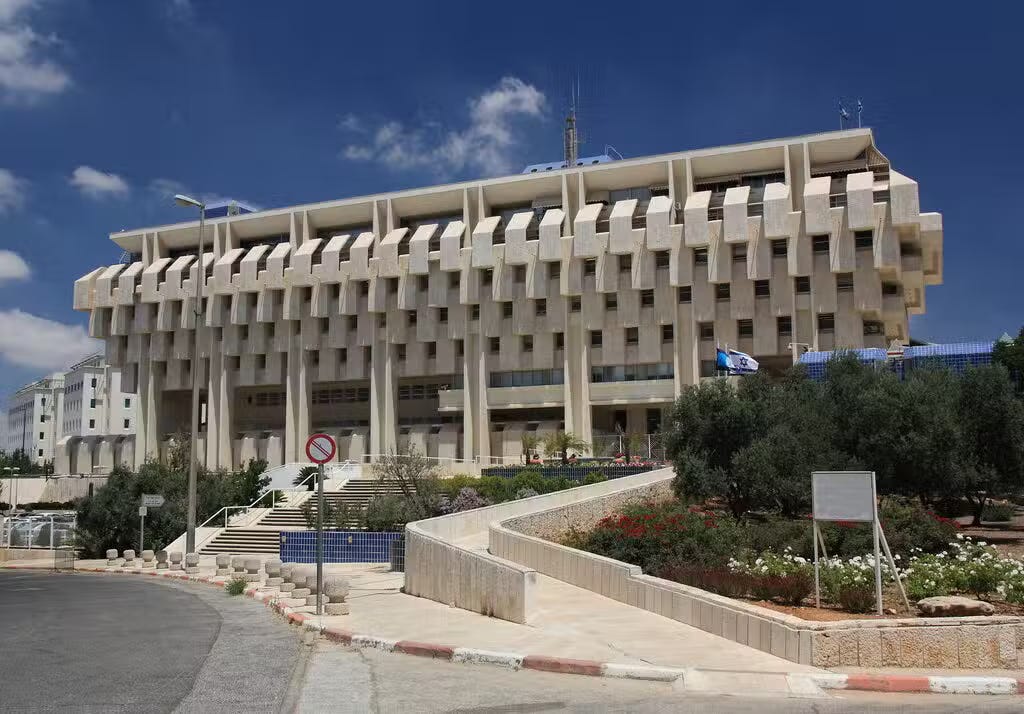
The Committee to Reduce Concentration published its updated 2026 registry, adding Analyst IMS Investment Management to its list of significant financial bodies after its AUM crossed the ₪47.1 billion statutory threshold. Conversely, former controlling shareholders of Phoenix Holdings (TASE:PHOE) (Centerbridge Partners and Gallatin Point Capital) and Bezeq (TASE:BEZQ) (Searchlight Capital) were removed following their divestments. The registry now encompasses 89 groups, which severely limits their ability to bid on state infrastructure or privatizations.
The Knesset Economic Committee has begun advancing the SME Credit Data Law. The legislation aims to establish a dedicated credit database for small and medium enterprises. According to the Treasury, SMEs generate 55% of GDP but receive only 27% of commercial credit, with 83% of businesses captive to their primary bank due to lack of shared data. The Ministry of Finance estimates the database will save SMEs ₪1.5 billion annually in interest costs, though the Bank of Israel warned that establishing the system will face up to two years of technical lead time.
Our take: The legislative push for an SME credit database highlights the profound institutional resistance within Israel's concentrated banking sector. For decades, legacy banks have extracted premium yields from the SME sector by hoarding credit history, rendering the vast majority of small businesses captive to non-competitive pricing. By democratizing this data, the state is attempting to introduce genuine arbitrage into commercial lending, bringing Israel closer to OECD open-banking standards. However, the Bank of Israel's insistence on a two-year timeline signals standard bureaucratic friction.
Real Estate

Non-bank real estate lender Menif Financial Services (TASE:MNIF) posted strong Q1 2026 results, with net profit rising 20.3% YoY to ₪50.4 million. Total revenues grew 4% to ₪126.9 million, and the firm declared a ₪28 million dividend. Despite the macroeconomic headwinds, Menif successfully expanded its credit portfolio by 27.3% to a total of ₪4.75 billion. CEO Maor Duek noted that while the recent Iranian escalation temporarily froze the real estate market and derailed the Bank of Israel's anticipated rate-cutting cycle, the sector is beginning to show renewed signs of transaction velocity heading into Q2.
Our take: Menif’s robust Q1 earnings illustrate the lucrative yield available to non-bank lenders stepping into the void left by highly regulated, risk-averse commercial banks. Despite severe geopolitical friction and a practically frozen housing market in early spring, Menif expanded its loan book by over 27%. This dynamic underscores a structural reality of the Israeli real estate market: underlying demand remains highly inelastic. Developers are willing to absorb higher financing costs from non-bank entities rather than halt construction. If the central bank resumes its rate-cut trajectory later this year, these alternative lenders are perfectly positioned to capture even wider margins as capital deployment accelerates.
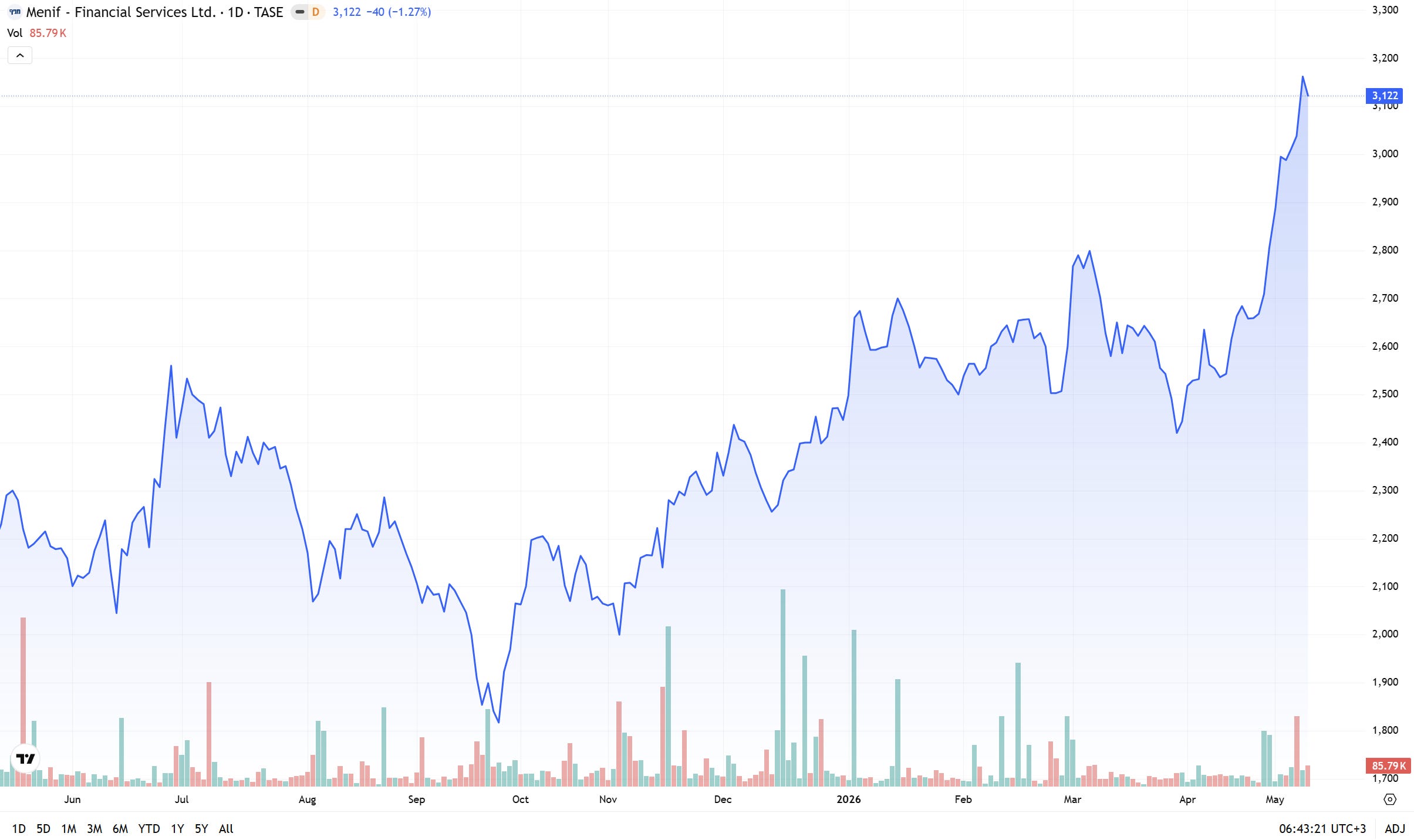
TASE snapshot for Tuesday, May 12, 2026
TA-35 Index (TASE:TA35): 🔴 -0.35%
TA-90 (TASE:TA90): 🔴 -0.28%
TA-125 (TASE:TA125): 🔴 -0.36%
If you enjoyed this update, forward it on.
TV10 Global | Israel for Investors
Bringing you the top stories from the Israeli business community, by Israel’s only business and finance network.
Share your thoughts with us via: global@tv10.co.il or the Newsroom WhatsApp: +972-55-994-5851.
📧 Subscribe to this newsletter! And follow the daily conversation on 𝕏 @tv10global.
Pings available via WhatsApp Channel.
Disclaimer: This brief is for informational purposes only and does not constitute investment advice. All data current as of publication date.