

🍿 Get the Daily on Spotify, too
Quick takes:
Currency record: The USD/NIS exchange rate breached the ₪3.00 support level, hitting a 30-year low of ₪2.99.
Macro: Israel’s March CPI ticked up 0.4% MoM driven by food and rents, even as national housing prices cooled 1.17% YoY; Israel’s Sovereign Wealth Fund posted a striking 18.4% nominal return for 2025; The CBS Business Tendency Survey revealed a severe economic contraction in March; The Accountant General unveiled the state-backed Lion’s Track loan fund, offering critical liquidity and grace periods to SMEs battered by Operation Roaring Lion.
Real Estate: The Israel Securities Authority (ISA) published a sweeping draft directive demanding unprecedented transparency from real estate developers.
Capital Markets: Migdal Insurance successfully raised ₪530 million in Tier-1 capital via institutional subordinated notes.
Foreign Exchange

The USD/NIS exchange rate breached a major psychological barrier today, dropping 0.16% to trade at ₪2.99, marking a 30-year low for the dollar against the Israeli currency. Concurrently, the euro fell 0.81% to ₪3.53.
According to Prof. Asher Blass, former Chief Economist at the Bank of Israel, the movement is less about Shekel strength and more about systemic dollar weakness. Blass attributes the slide to problematic US fiscal management, the Trump administration’s tariff policies, and dovish expectations for upcoming Federal Reserve rate cuts. Locally, the shekel’s appreciation is bolstered by reports of progress toward a US-Iran ceasefire extension, despite the ongoing US naval blockade in the Strait of Hormuz, which has pushed Brent crude up to $95 per barrel.
Macro
The Central Bureau of Statistics (CBS) reported that Israel’s Consumer Price Index (CPI) rose 0.4% month-over-month in March 2026. The increase was primarily driven by fresh vegetables (+5.2%), clothing (+3.0%), and housing costs (+0.5%). Conversely, the housing market showed signs of cooling: national apartment prices dipped 0.1% in the Jan-Feb period, translating to a 1.17% year-over-year decline, with new apartments dropping a steeper 3.9% YoY. However, the rental market continues to run hot; while renewed leases saw a 2.2% bump, tenants signing new leases faced a sharp 5.9% premium.

The Citizens of Israel Fund (Israel’s sovereign wealth fund, managed jointly by the Bank of Israel and the Ministry of Finance) released its 2025 annual report, posting a massive 18.4% nominal dollar return (15.4% real return). Total assets under management (AUM) reached $2.8 billion by the end of the year. During 2025, the fund absorbed $350.7 million in natural resource tax levies while allocating $51.7 million to the state budget.
Bank of Israel Governor Prof. Amir Yaron and Finance Minister Bezalel Smotrich emphasized that the fund is expanding its portfolio into private equities and alternative assets, maintaining a long-term fiscal horizon despite unprecedented wartime expenditures.

According to the CBS Business Tendency Survey for March, Operation Roaring Lion has triggered a sharp contraction across the Israeli domestic economy. While the export-insulated Industry and Services sectors maintained a net-positive balance, the non-tradable sectors cratered.
Construction and Retail trade balances flipped to negative (-0.7 and -0.5, respectively). The security situation was cited as a severe operational constraint by 27% of industrial firms and a staggering 89% of hospitality businesses (up from just 7% in February). The data also highlights a severe size disparity: micro-industrial enterprises (under 10 employees) saw their net balance plummet to -25.7.
Forward-looking April expectations across all sectors, excluding heavy industry, have turned broadly negative, with hotel occupancy expectations plunging to -62.8%.

The Ministry of Finance’s Accountant General, Michal Abadi-Boiangiu, announced a dedicated state-guaranteed loan channel, the ‘Lion’s Track’, to support small and medium-sized enterprises (SMEs) with annual revenues of up to ₪25 million.
Prompted by the economic strain of Operation Roaring Lion, the fund opens April 19 and runs through June 30, 2026. The facility offers loans at Prime + 1.7%, significantly reduced collateral requirements, and a six-month payment deferral (including a three-month full grace period on both principal and interest). This supplements the existing Northern Border Fund, which offers Prime + 0.25% to heavily impacted frontline businesses.
Our take: Today’s macroeconomic data paints a stark picture of a K-shaped, dual-speed economy managing both long-term sovereign wealth and immediate domestic trauma. On one end of the spectrum, the Citizens of Israel Fund’s 18.4% return and disciplined ring-fencing of $2.8 billion in gas windfalls signal robust structural maturity to foreign credit rating agencies, proving the state can execute long-term fiscal strategy even amid unprecedented wartime deficits.
However, the CBS data quantifies the pain on the ground. The domestic, non-tradable consumer economy, specifically retail, construction, and hospitality, is absorbing blunt geopolitical trauma, with micro-enterprise balances plummeting to -25.7. This severe contraction perfectly contextualizes the Treasury’s urgent rollout of the ‘Lion’s Track’ loan fund.
While offering Prime + 1.7% with state guarantees mitigates immediate insolvency risks, the government is essentially racing to front-run a wave of bankruptcies with a debt-driven band-aid. For institutional investors, the takeaway may be: Israel’s sovereign financial anchors remain rock-solid, but accumulating corporate debt and collapsing Q2 expectations in the domestic SME sector will create a prolonged drag on broader GDP growth well into 2027.
Real Estate

The Israel Securities Authority (ISA), led by Chairman Seffy Zinger, released a draft directive drastically tightening prospectus disclosure requirements for publicly traded real estate developers. The new guidelines demand unprecedented transparency on project pricing, explicit reporting on transaction cancellation rates, and the financial implications of modern marketing models.
Furthermore, developers must provide dedicated disclosures outlining the underlying profitability assumptions for early-stage urban renewal projects. Zinger noted that the directive targets the complex, highly creative marketing tactics that have proliferated in the real estate sector, aiming to filter out irrelevant data while exposing the material risks necessary for informed institutional investment.
Capital Markets
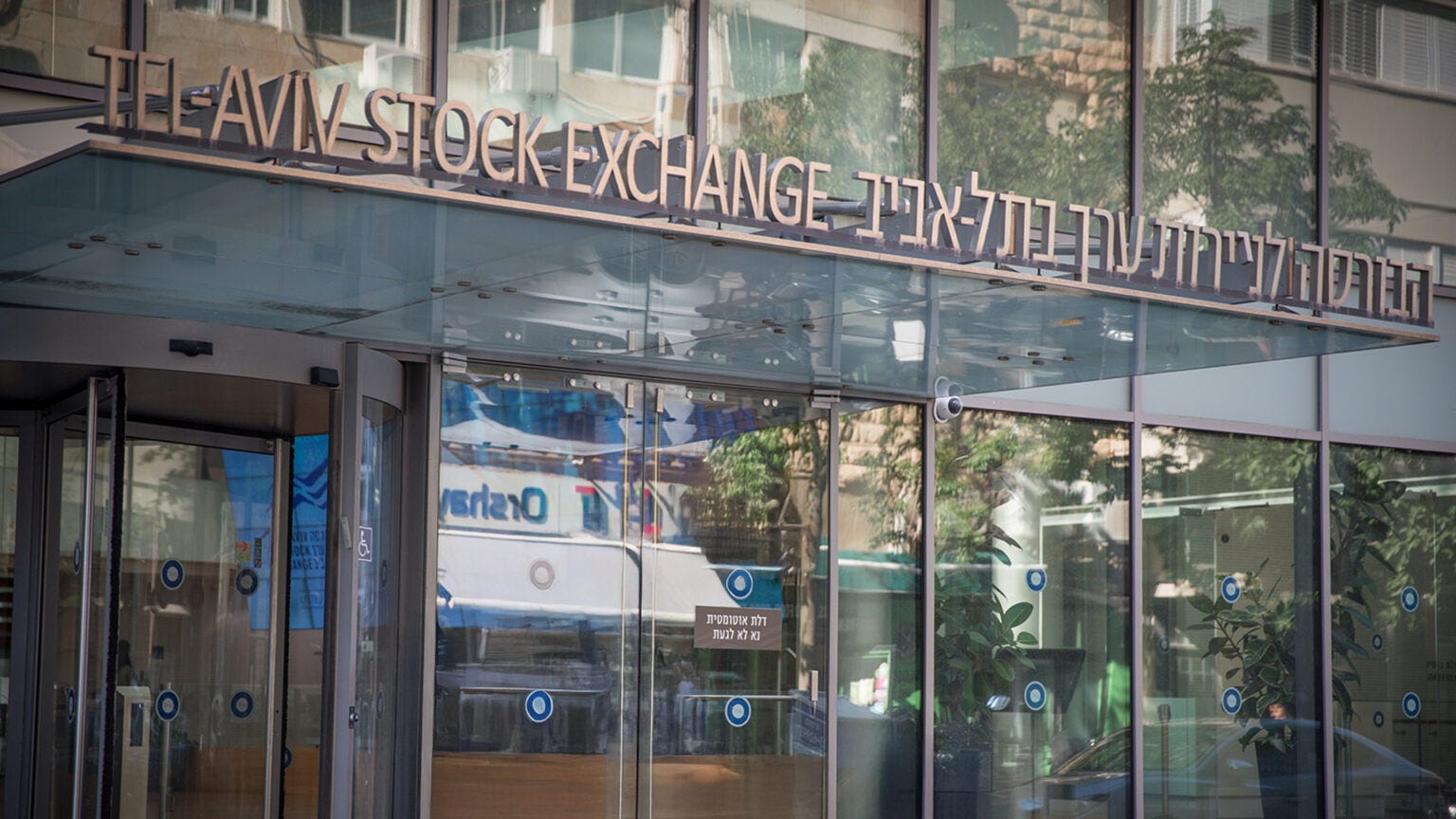
Migdal Insurance and Financial Holdings (TASE:MGDAL) successfully completed the institutional phase of a ₪530 million debt issuance (Series 19 subordinated notes), which will be recognized as Additional Tier 1 capital. The tender generated massive institutional demand, exceeding ₪805 million. Migdal elected to secure an interest rate of 4.92% (an effective yield of 5.10%), representing a tight spread of 108 basis points over equivalent government bonds. The offering was led by Migdal Capital Markets and Discount Capital Underwriting.
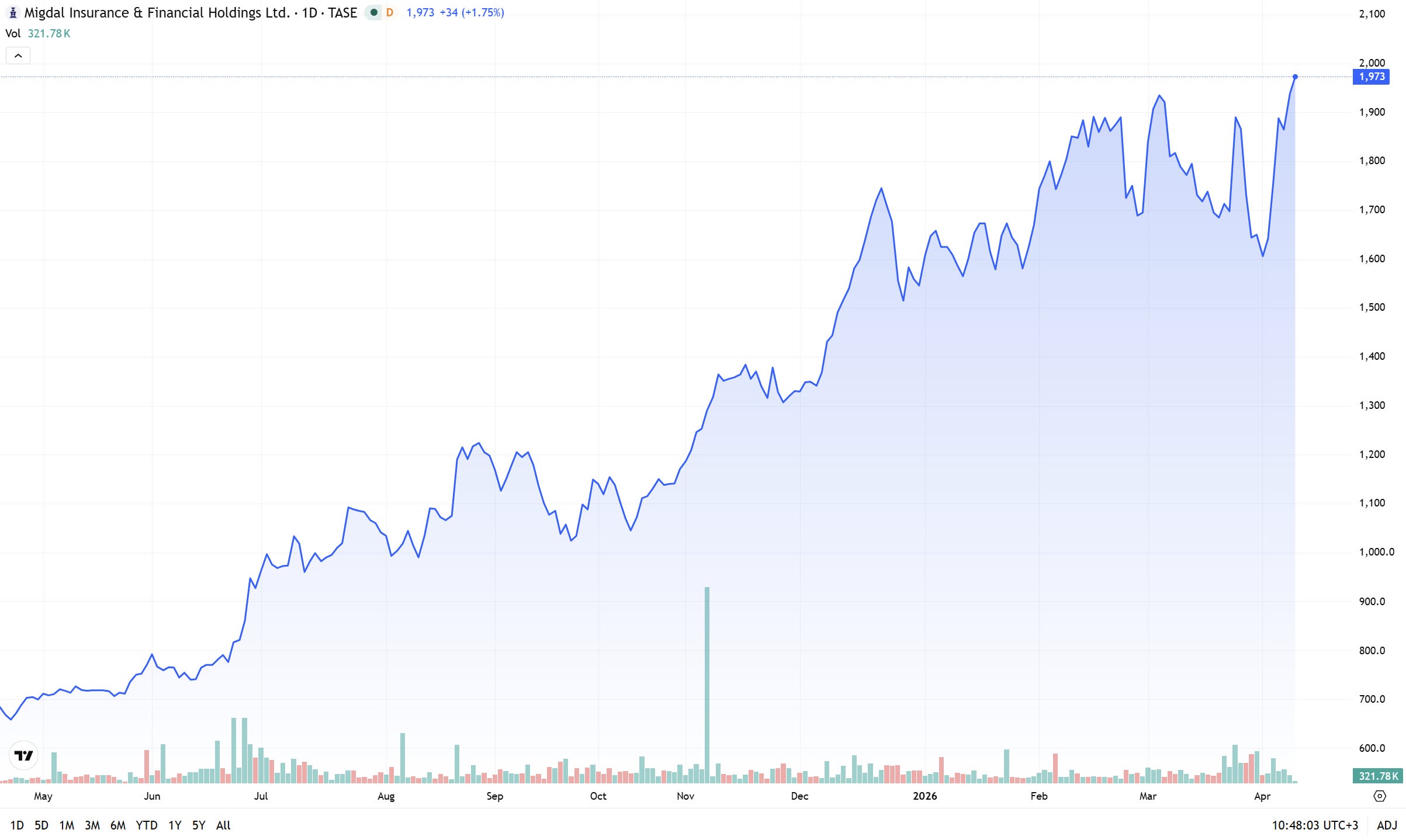
Our take: The overwhelming ₪805 million demand for Migdal’s issuance is a resounding vote of confidence from domestic institutional players in the resilience of Israel’s legacy financial institutions. Locking in a sub-5% rate with a narrow 108 bps spread in the current geopolitical and elevated-rate environment highlights robust systemic liquidity and a steady, ongoing appetite for high-quality domestic corporate credit.
TASE snapshot for Monday, April 15, 2026
TA-35 Index (TASE:TA35): 🔴 -0.50%
TA-90 (TASE:TA90): 🔴 -0.73%
TA-125 (TASE:TA125): 🔴 -0.56%
If you enjoyed this update, forward it on.
TV10 Global | Israel for Investors
Bringing you the top stories from the Israeli business community, by Israel’s only business and finance network.
Share your thoughts with us via: global@tv10.co.il or the Newsroom WhatsApp: +972-55-994-5851.
📧 Subscribe to this newsletter! And follow the daily conversation on 𝕏 @tv10global.
Pings available via WhatsApp Channel.
Disclaimer: This brief is for informational purposes only and does not constitute investment advice. All data current as of publication date.