

Editor’s note:
The Israeli housing market in 2026 is frequently mischaracterized by domestic analysts as a crisis of consumer psychology. We are told that homebuyers are sidelined by uncertainty or paralyzed by the post-2023 interest rate environment. The data tells a different story.
The Israeli consumer is a rational actor trapped in a market that works against them. Across Israel, the cost of housing construction is inflated by a compounding layer of import protection, capital controls, and regulatory friction that drives up the price of everything from raw cement to finished goods.
National homeownership continues to erode, with 29.6% of Israelis in the rental market in 2025. In the Tel Aviv District, that figure surges to 40.4%. In Judea and Samaria, it stands at 23.3%. So when a young family relocates to the heartland today, it may be an ideological statement, a financial calculation, or both.
Last week, that calculus got more interesting. Samaria Governor Yossi Dagan announced the Reconnection Plan: 18 official new towns under construction in northern Samaria, with some residents moving in this summer. In Israel’s heartland, 60% of the land remains undeveloped, while only 4% is developed by Jews and 15% is represented by farms.
In this week’s Deep Dive, we explore how domestic trade policy may become a driver for real estate flight to Israel’s heartland, why developer discounts are retail theater, and what structural deregulation would actually require.
— Sophia Tupolev, TV10 Global Editor
TASE weekly snapshot
The Tel Aviv Stock Exchange closed the week with mixed sentiment.
TA-35 Index (TASE:TA35): 🔴 -0.83%
TA-90 (TASE:TA90): 🟢 +0.10%
TA-125 (TASE:TA125): 🔴 -0.62%
For more, read our daily editions from Monday to Wednesday - and now, get our video and audio updates on Spotify.
Geographic arbitrage and retail theater
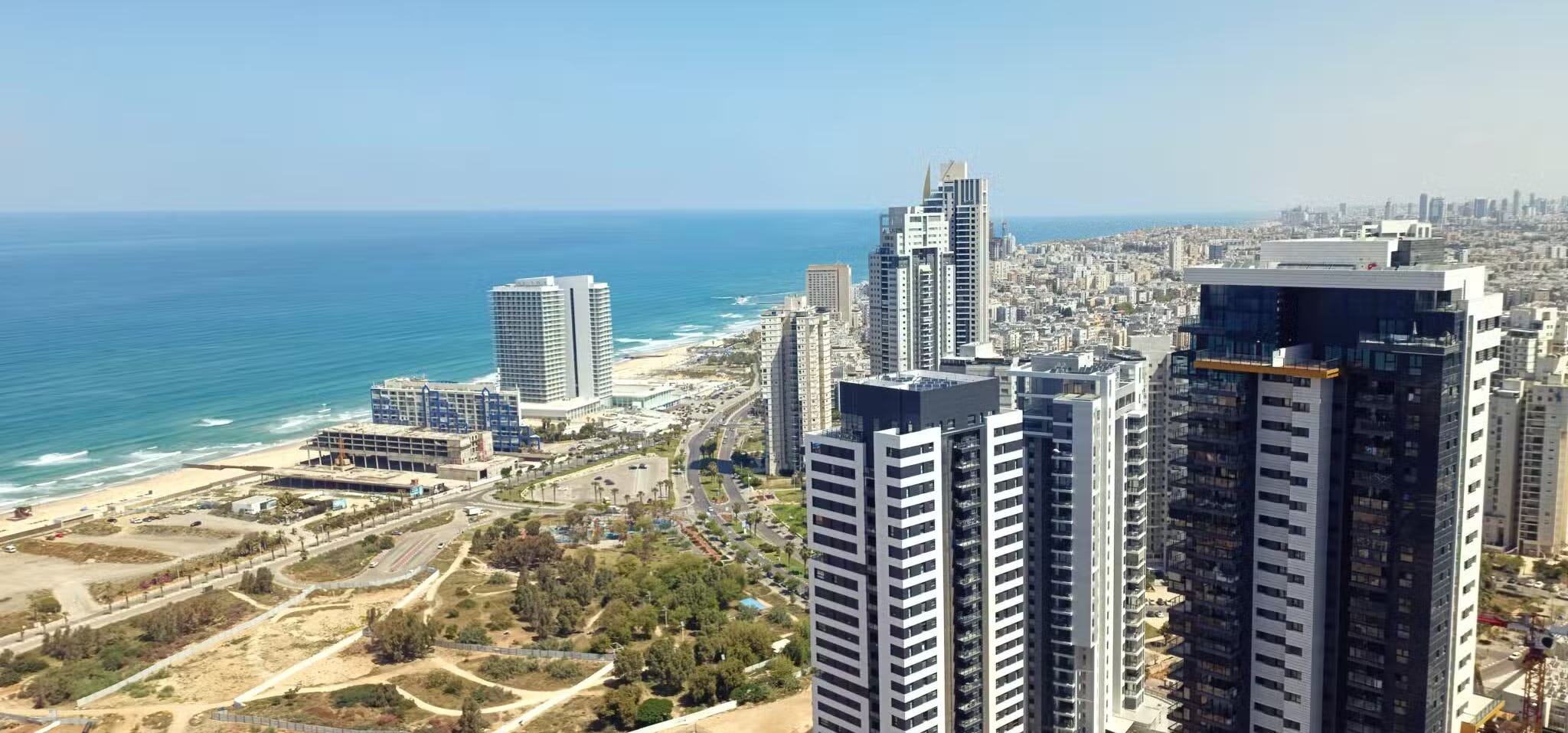
As mortgage rates hover stubbornly between 4.5% and 5.5%, domestic developers operating in the Tel Aviv and Central districts have engaged in aggressive marketing campaigns, offering creative financing and nominal price cuts on ₪4.5 million apartments. But this is performative.
These so-called builder promotions are pure retail theater, designed to mask the fact that core asset prices remain completely detached from the median wage. For the average Israeli buyer, affordability is a mathematical impossibility when average Tel Aviv valuations demand 15 to 18 times annual household income.
According to the CBS, this pricing detachment has resulted in a record-breaking overhang of unsold inventory, with over 85,000 new apartments standing empty in early 2026.
Major urban centers are effectively functioning as ghost towns for new builds; Jerusalem currently holds over 10,300 unsold units, while Tel Aviv hoards nearly 9,600. Yet, nominal prices refuse to crash. The market wheel is spinning superficially by domestic banks, who continuously extend credit lines to contractors unable to sell their inventory. Rather than forcing developers to liquidate assets at market-clearing prices, the financial sector enables them to park empty units on their balance sheets while pushing highly leveraged balloon loans onto desperate retail buyers.
The consumer, recognizing this trap, is voting with their feet and seeking geographic arbitrage. While the Central and Tel Aviv districts suffer from bloated 34-month construction delays and stagnant inventory, Judea and Samaria continues to provide a critical supply vector. For young families, the Israeli heartland represents one of the few remaining zones of housing portability, offering a standard of living and a path to equity that is economically inaccessible in the Gush Dan region.
Meanwhile, the housing pipeline in Judea and Samaria is now expanding at a pace that would have seemed implausible just a few years ago. Under what Governor Dagan calls the “Reconnection Plan,” 18 new towns are being established in northern Samaria, including the revival of four communities forcibly evacuated in 2005: Homesh, Sa-Nur, Ganim, and Kadim.
Gov. Dagan told me,
“The housing market in Israel is small. Every house built in Samaria means one less apartment demanded in Petah Tikva, Kfar Saba, Jerusalem, and Tel Aviv. A construction boom, driven by the establishment of communities in Samaria in general, and Northern Samaria in particular, will undoubtedly lower prices and provide young couples and families with proper, affordable housing in accessible areas. Building communities in Northern Samaria and driving a construction boom throughout the region is a combination of Zionism and security, bringing immense economic value to the housing market and to the State of Israel as a whole.”
The plan, developed in coordination with the Israeli government, Finance Minister Bezalel Smotrich, Defense Minister Israel Katz, and the Amana movement, is part of the broader Samaria Million initiative working on bringing one million residents in the region. Many of the communities have already cleared government approval and expect residents to move in this summer. Each new town represents a zoning decision, an infrastructure commitment, and a housing supply injection.
Yigal Dilmoni, CEO of the American Friends of Judea and Samaria and former CEO of the Yesha Council, told me,
“We built Judea and Samaria for ideological reasons. But the reason that people choose to live here is that life here is good. We have great education, great air quality, and great people. “The distance between Samaria and Tel Aviv is like Brooklyn to Manhattan. People live in the heartland and commute to offices in Tel Aviv or Petah Tikva. We have a lot of traffic on our roads.”
Protecting incumbents through regulatory layering
The cost disparity between central Israel and Judea and Samaria is not merely a function of property values; it is the direct result of deliberate government policy that insulates the construction sector. Developers like Shikun & Binui (TASE:SKBN) and Ashtrom Group (TASE:ASHG) operate in an environment shielded by immense regulatory layering.
Dilmoni tells me that in Judea and Samaria, 25 years ago, there were just 3 real estate developers - but today, there are dozens of regional specialist companies building new real estate, like Harei Zahav and Ofek.
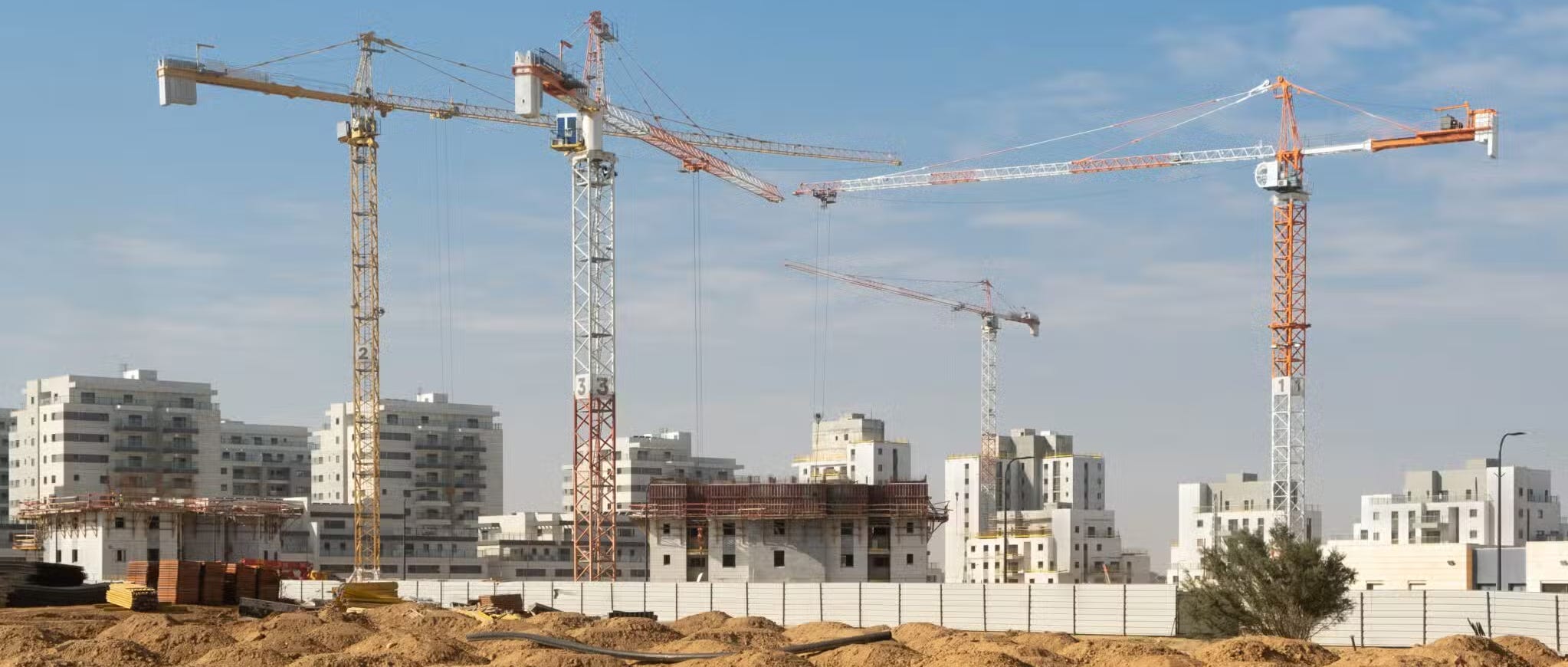
Everywhere in Israel, every stage of construction is burdened by import quotas on basic building materials like steel and ceramics. Even tertiary supply chains are artificially inflated by localized tariffs and the pervasive cost of kashrut compliance economics, which acts as a silent tax on imported finished goods and institutional site operations.
These bureaucratic hurdles effectively grant cartel pricing power to a handful of domestic material suppliers and contractors. Furthermore, capital controls and complex banking regulations restrict the ability of smaller developers to access cheap foreign debt, stifling mid-market competition.
The imperative for structural deregulation
Israel’s housing crisis requires abandoning the illusion that subsidized mortgages or state lotteries can overcome supply-side rot. True stabilization demands the total dismantling of import protection and the aggressive opening of the market to foreign construction conglomerates. If the state were to abolish import quotas on European cement, streamline licensing for international contractors, and strip away the tariffs protecting local monopolies, construction costs per square meter would plummet.
We must also address the severe structural friction in the labor market. While the government increased foreign construction worker quotas to offset the absence of ‘Palestinian’ labor, execution remains bottlenecked by state-level inefficiencies.
According to the the Central Bureau of Statistics, these frictions drove national housing completions down by 12.3% YoY. Until labor and capital can flow freely across borders, the domestic housing market will remain highly concentrated. Opening the gates to foreign competition would destroy the artificial premiums enjoyed by legacy firms, ultimately reallocating system assets and purchasing power back to the Israeli middle class.
What to watch
In the near term, expect domestic developers to double down on performative interventions, offering 20/80 payment plans and zero-interest loans on the down payment, rather than implementing actual price reductions. Meanwhile, as long as the Bank of Israel holds the base rate steady to combat inflation, the arbitrage opportunity in Judea and Samaria may continue to attract residential migration, irrespective of international political pressure.
The long-term policy thread investors must track is the Bank of Israel’s tightening grip on contractor credit lines and the government’s willingness to reform import mechanisms for building materials. Watch the regulatory filings from major importers and tracking data on foreign contractor permits.
That’s our letter, folks. If you enjoyed this Weekly, forward it to a friend.

The English TV10 newsletter is edited by Sophia Tupolev. We love to hear from you.
TV10 Global | Israel for Investors
Now in English: Bringing you the top stories from the Israeli business community, by Israel’s only business and finance network.
Please share your thoughts with us via: global@tv10.co.il or the Newsroom WhatsApp: +972-55-994-5851.
📧 Subscribe to this newsletter! And follow the daily conversation on 𝕏 @tv10global.
Pings with new editions are also available via our WhatsApp Channel.
Disclaimer: This brief is for informational purposes only and does not constitute investment advice. All data is current as of publication date.