
🍿 Get our coverage on Spotify, and Youtube, too. Want to join the conversation? We’re on X
Quick takes:
Macro: Israel drops to 20th in OECD academic attainment as student growth lags population expansion, highlighting structural demographic friction and shifting yields on higher education.
Aerospace: Israeli eVTOL developer AIR debuted the final production build of its personal electric aircraft AIR ONE at EAA AirVenture in the US, boasting a pre-order backlog of over 4,000 units as it targets manned test flights and FAA federal certification.
Real Estate: Melisron abruptly withdrew its buyout proposal for Rishon LeZion’s Kenyon HaZahav after the Competition Authority signaled an imminent antitrust veto over severe market concentration fears.
Macro
According to a comprehensive report released today by the Chief Economist at the Ministry of Finance, Israel is rapidly losing its historical human capital advantage, plummeting from 3rd to 20th in the OECD rankings for tertiary education attainment among young adults. While the absolute percentage of 25-to-34-year-olds with academic degrees rose from 41% in 2000 to 47% in 2024, this growth severely lags the OECD average. Between 2020 and 2024, the annual growth rate of the student population dropped to a mere 1.1% YoY, significantly trailing the national population growth rate of 1.8% to 2.0%. This mathematical divergence indicates a de facto per-capita decline in domestic academic enrollment.
The data highlights a highly fragmented demographic landscape marked by both stagnation and rapid integration. While university enrollment among non-Haredi Jewish men has flatlined, participation among Arab women has surged dramatically, reaching a peak-age integration rate of 14.8% in 2025, largely closing the gap with their Jewish counterparts due to targeted government funding. Similarly, peak-age participation for Haredi women doubled to over 4.7%. However, the Treasury’s analysis warns that while a definitive wage premium exists for degree holders, particularly in the tech sector, the actual macroeconomic yield on education is increasingly questionable due to lost earning years and a rising prevalence of overeducation in the broader labor market.
Our take: This demographic data exposes a critical macroeconomic vulnerability for the Israeli market: the structural erosion of its foundational human capital advantage. Two decades ago, Israel leveraged the arbitrage of a highly educated immigration wave to build its tech oligopoly. Today, that competitive edge is evaporating. The stagnation among legacy demographic groups points to severe institutional resistance and a rational consumer recalculating the ROI of a university degree. When the yield on human capital flattens and per-capita academic output shrinks relative to OECD peers, foreign investors must take note. If the state cannot dismantle the structural friction preventing faster, broader demographic integration into high-value academic tracks, the premium historically assigned to Israeli R&D and workforce quality will inevitably face a harsh market repricing.
Aerospace

Israeli aerospace startup AIR unveiled the final production configuration of its AIR ONE personal electric aircraft at the EAA AirVenture Oshkosh exhibition in the United States. The dual-seat eVTOL (electric vertical takeoff and landing) vehicle features a structurally redesigned airframe engineered by Germany's EDAG, high-performance NIDEC electric motors, and a Dynon Avionics SkyView HDX flight display. Capable of a one-hour flight time at cruising speeds exceeding 200 km/h, the aircraft utilizes "Fly-By-Intent" technology to simplify piloting for civilian users. Backed by a waitlist of over 4,000 prospective buyers, AIR aims to commence manned test flights later this year as it aggressively pursues federal certification from the US Federal Aviation Administration (FAA).
Our take: AIR’s pivot from experimental prototyping to a production-ready aerospace platform highlights the relentless arbitrage Israeli deep-tech firms execute between domestic innovation and global commercialization. While Israel serves as an unparalleled incubator for autonomous systems, avionics, and dual-use aerospace technology, the domestic market size and regulatory airspace frameworks impose a hard cap on commercial yield. Consequently, achieving FAA certification and establishing a manufacturing footprint for the American market is not merely a strategic expansion; it is an absolute requisite for scaling operations and generating meaningful institutional returns.
The integration of tier-one global suppliers, like NIDEC and EDAG, into the AIR ONE supply chain signals a profound maturation in Israel’s NextGen mobility sector. By embedding itself into the global aerospace manufacturing ecosystem, AIR mitigates the severe localized friction of domestic supply chains. For venture capital and growth equity tracking the space, this milestone validates the thesis that Israeli engineering can successfully transition from software-defined R&D into highly regulated, capital-intensive heavy hardware capable of disrupting global civilian mobility.
Real Estate

Commercial real estate giant Melisron (TASE: MLSR) has officially aborted its planned acquisition of a controlling 51% stake in Kenyon HaZahav (the Gold Mall) in Rishon LeZion, originally valued at ₪818 million. The withdrawal effectively ends months of tense negotiations with the Competition Authority, led by Director General Michal Cohen, who informed the parties of her intent to formally block the merger citing a substantial probability of competitive harm. The collapse of the deal comes shortly after Migdal Insurance, which held 75% of the asset, preemptively acquired the remaining 25% from Gindi Holdings for ₪840 million, recognizing the regulatory roadblocks facing the Melisron transaction.
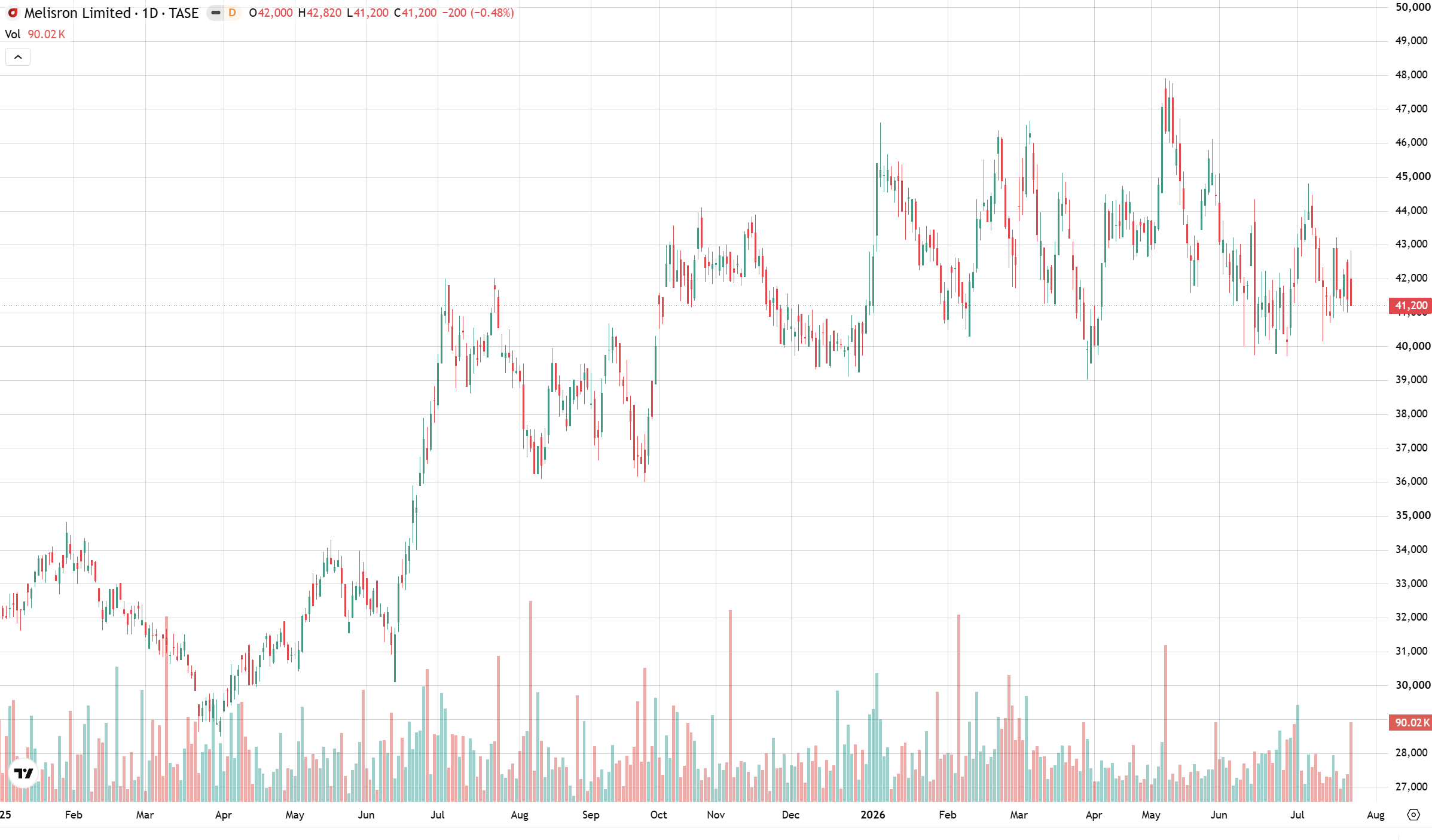
Our take: The collapse of the Melisron-Kenyon HaZahav acquisition is a textbook demonstration of the institutional resistance confronting further consolidation within the Israeli retail real estate oligopoly. The domestic commercial landscape is heavily dominated by a handful of publicly traded behemoths that wield immense localized pricing power over their tenants, effectively dictating the operational margins of the entire consumer retail sector. By explicitly blocking this horizontal integration, the Competition Authority is actively attempting to preserve the fragile remnants of market friction that prevent total rent-seeking dominance in major metropolitan hubs.
For institutional investors holding TASE-listed real estate, this antitrust veto establishes a definitive ceiling on domestic expansion through M&A. The regulatory barricade forces legacy operators to pivot away from inorganic growth and instead focus on asset optimization or international diversification. The inability to deploy capital into highly lucrative, cash-flowing domestic assets without triggering severe antitrust scrutiny underscores the inherent structural limits of a small, hyper-concentrated island economy.
TASE snapshot for Wednesday, July 22, 2026
TA-35 Index (TASE:TA35) 🟢 +0.80%
TA-90 (TASE:TA90):🟢 +0.03%
TA-125 (TASE:TA125): 🟢 +0.67%
If you enjoyed this update, forward it on.
TV10 Global | Israel for Investors
Bringing you the top stories from the Israeli business community, by Israel’s only business and finance network.
Share your thoughts with us via: global@tv10.co.il or the Newsroom WhatsApp: +972-55-994-5851.
📧 Subscribe to this newsletter! And follow the daily conversation on 𝕏 @tv10global.
Disclaimer: This brief is for informational purposes only and does not constitute investment advice. All data current as of publication date.