

🍿 Get our coverage on Spotify, and Youtube, too. Want to join the conversation? We’re on X
Quick takes:
Macro & Policy: The labor market experienced a profound shock in March amid ‘Operation Lion’s Roar,’; Yisrael Malachi is appointed Director General of the Finance Ministry.
Tech: Fifteen mid-stage Israeli startups advance to the Atlas Award finals.
Capital Markets: TASE launches an Equal Weight TA-35 index to dilute top-heavy bank and tech concentration.
Macro & Policy

Israel’s labor market sustained a severe, localized shock in March driven by the kinetic realities of ‘Operation Lion’s Roar.’ According to the Employment Service’s latest pulse report, the number of job seekers spiked by a factor of 2.5, reaching roughly 396,000. The vacancy-to-unemployed ratio collapsed from a historically tight 0.92 in February to just 0.32 in March. The disruption heavily impacted service and physical sectors, with ultra-Orthodox (Haredi) municipalities suffering the sharpest blow, cities like Bnei Brak and Modi’in Illit recorded unprecedented unemployment surges exceeding 500%.
Amidst this macroeconomic turbulence, the Israeli cabinet has officially approved Yisrael Malachi as the new Director General of the Finance Ministry. Malachi, 49, who has served as Deputy Director General for the past three and a half years, brings deep institutional knowledge regarding the rehabilitation of the Gaza Envelope and the northern border regions. His mandate will require steering the Treasury through complex sovereign debt metrics, budgeting wartime contingencies, and coordinating municipal recovery efforts.
Our take: The March employment data visually graphs the immediate economic friction a localized military operation introduces into a physical economy. However, institutional observers should read this spike as a temporary mobility freeze rather than a structural solvency crisis. The acute vulnerability of the Haredi sector underscores the risks inherent in non-remote, lower-wage labor pools, but historical OECD data suggests rapid mean-reversion once hostilities cease.
Malachi’s appointment at the Treasury is a critical stabilization signal to the market. Foreign debt holders have been closely watching Jerusalem’s fiscal discipline. Malachi’s operational background suggests the Finance Ministry is transitioning from deploying emergency liquidity stopgaps to executing long-term structural rehabilitation. His immediate challenge will be closing the arbitrage between essential defense spending and the critical infrastructure investment required to maintain Israel’s sovereign credit ratings.
Tech
The Israeli innovation sector continues to project operational continuity, with 15 growth-stage startups advancing to the finals of the Atlas Award, organized by the Ayn Rand Center in Israel in partnership with TV10. Selected from a pool of roughly 100 applicants, the finalists are mature entities (2 to 8 years post-incorporation) that have already deployed active products and secured substantial venture capital.
Representing highly resilient verticals such as cybersecurity, robotics, and smart agriculture, these companies are vying for global recognition. The competition will culminate in a gala event at the Tel Aviv Stock Exchange on May 12, featuring participation from key institutional investors and U.S. Ambassador Mike Huckabee.
Our take: Despite intense geopolitical headwinds, the Israeli tech sector continues to function as the state’s primary engine for high-yield foreign investment. The Atlas Award finalists highlight a crucial maturation within Silicon Wadi: the era of highly speculative, hyper-inflated seed rounds is yielding to a focus on robust R&D continuity. Institutional capital is increasingly seeking out late-stage startups that have proven their product-market fit and revenue-generating capabilities. This resilience ensures that Israel’s technological export capacity remains largely insulated from the physical friction impacting the traditional domestic economy.
Capital Markets
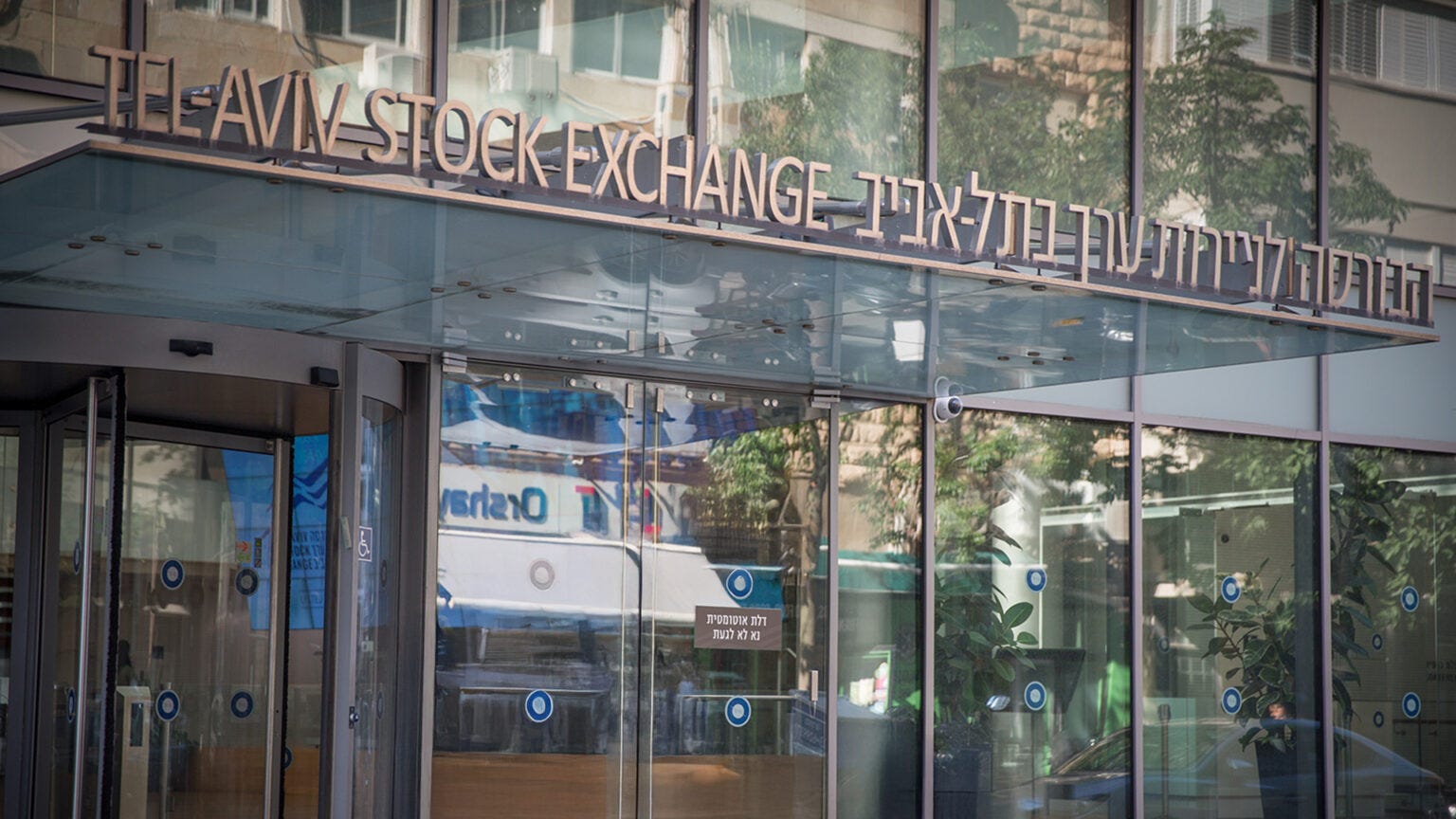
The Tel Aviv Stock Exchange (TASE) has announced a structural overhaul of its index architecture, aimed at aligning the local market with international standards and diversifying investor exposure. Effective May 8, 2026, the bourse will officially launch the TA-35 Equal Weight index. Unlike the traditional TA-35, where the top 10 constituents command roughly 60% of the index weighting, the new model caps each equity at approximately 2.85%. This rebalancing slashes the top-10 concentration to just 28.5%.
Concurrently, TASE is expanding its sector-specific offerings to capture evolving domestic consumption patterns. A new TA-Food index will aggregate 21 equities across the food supply chain, boasting a combined market capitalization of ₪65 billion. Furthermore, the legacy TA-Chain Stores index is undergoing a comprehensive rebranding to the TA-Consumption index, expanding its roster to 50 equities with a collective valuation of ₪108 billion to better reflect retail dynamics.
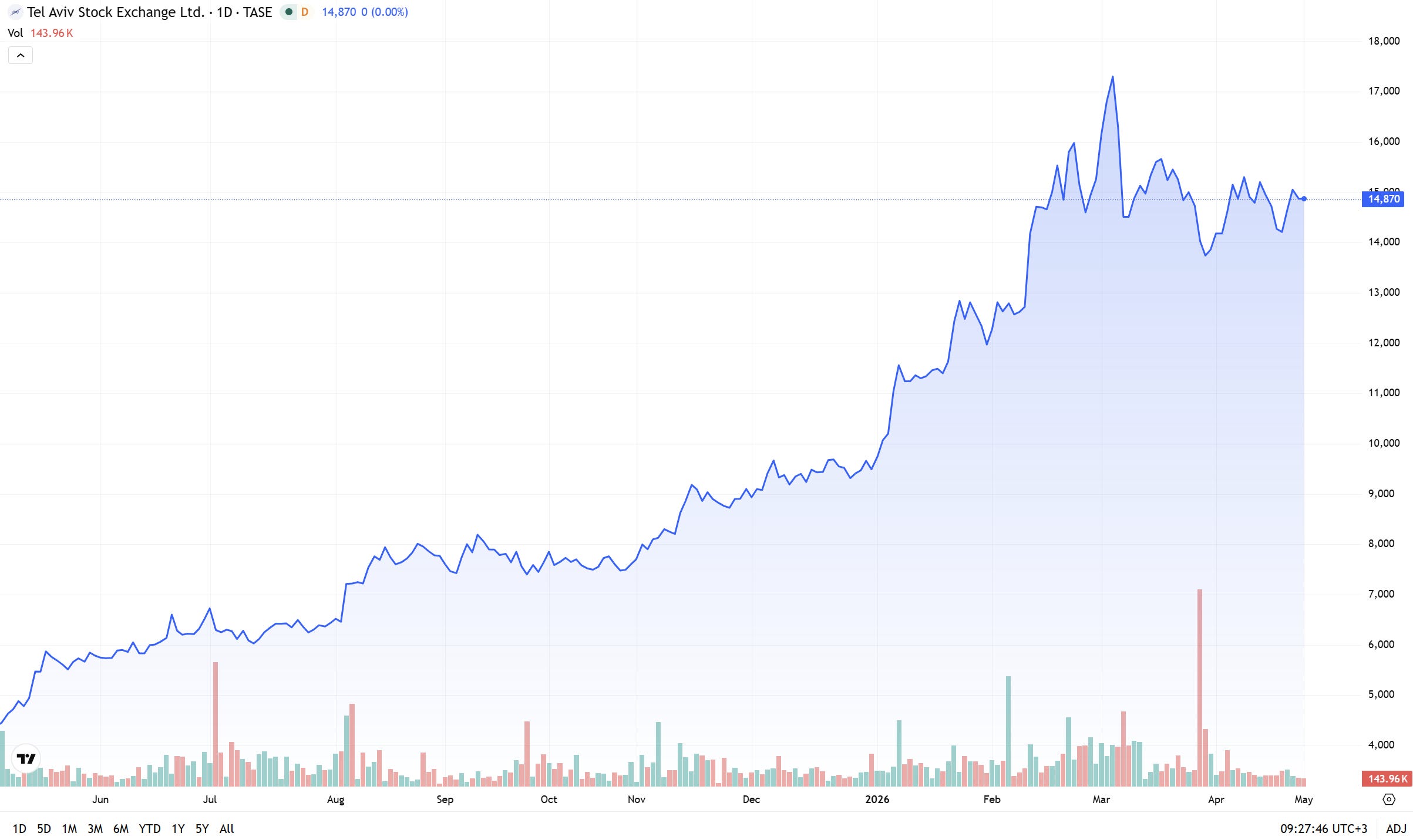
Our take: For institutional investors, the legacy TA-35 has long suffered from structural distortion, effectively acting as a proxy for the domestic banking sector and a handful of legacy tech giants. By introducing an Equal Weight alternative, TASE is eliminating the friction that has historically deterred foreign capital seeking broad-based macroeconomic exposure without severe concentration risk. This structural shift allows passive funds to capture Israel’s inherent corporate yield without being overly indexed to the financial sector’s specific regulatory or interest-rate vulnerabilities.
TASE snapshot for Monday, May 4, 2026
TA-35 Index (TASE:TA35): 🟢 +1.79%
TA-90 (TASE:TA90): 🟢 +0.84%
TA-125 (TASE:TA125): 🟢 +1.58%
If you enjoyed this update, forward it on.
TV10 Global | Israel for Investors
Bringing you the top stories from the Israeli business community, by Israel’s only business and finance network.
Share your thoughts with us via: global@tv10.co.il or the Newsroom WhatsApp: +972-55-994-5851.
📧 Subscribe to this newsletter! And follow the daily conversation on 𝕏 @tv10global.
Pings available via WhatsApp Channel.
Disclaimer: This brief is for informational purposes only and does not constitute investment advice. All data current as of publication date.