
🍿 Get our coverage on Spotify, and Youtube, too. Want to join the conversation? We’re on X
Quick takes:
Macro: The Knesset approved a ₪75 million emergency recovery package for communities surrounding the Gaza envelope.
Financial Services: A landmark Bank of Israel study confirms the 'Click-to-Switch' open banking reform doubled consumer mobility; Bank of Jerusalem posted a 12% profit surge, undercutting the five largest legacy banks on interest rates.
Food Retail: Willi-Food leveraged a strong shekel to grow Q1 sales 8.4% despite ongoing war-related logistics friction.
Macro

The Knesset plenum voted unanimously to approve the first reading of a major rehabilitation bill for the Tekuma region, delivering a critical fiscal injection to communities devastated since the October 7 geopolitical crisis. Pioneered by MK Sasson Guetta, the state-backed legislation will distribute a one-time grant of ₪15 million directly from the national treasury to each of the five local and regional authorities in the Gaza envelope: Sderot, Hof Ashkelon, Sdot Negev, Eshkol, and Sha'ar HaNegev. The ₪75 million aggregate package is explicitly engineered to shore up municipal balance sheets burdened by extended emergency expenditures and severe local tax revenue shortfalls.
Our take: The state's unanimous ₪75 million capitalization of the Tekuma authorities underscores a necessary fiscal stabilization policy. While the sovereign budget is heavily constrained by defense obligations, funding the baseline administrative continuity of these front-line regions prevents a broader localized economic collapse, keeping the regional labor supply intact for critical agricultural and industrial clusters. For institutional observers, this targeted relief serves to maintain sovereign control over regional infrastructure and reduce default risk across localized supply chains, absorbing macro shockwaves before they bleed into the broader domestic credit market.
Financial Services
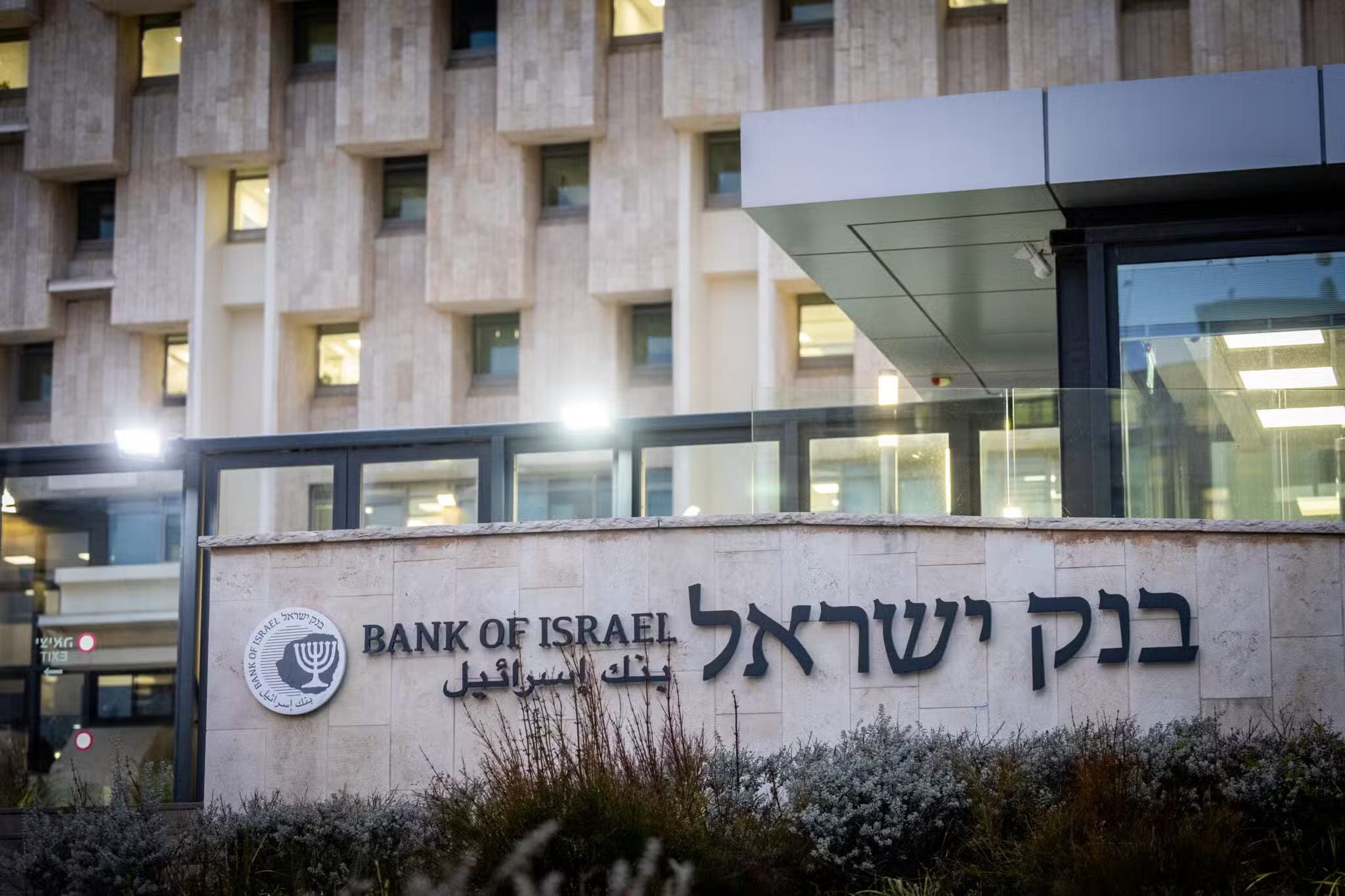
A groundbreaking joint study by the Bank of Israel’s Research Division and Tel Aviv University has confirmed that the state-backed ‘Click-to-Switch’ banking reform has successfully triggered a structural shift in consumer behavior. Analyzing the central bank’s comprehensive credit register, researchers found that the annual probability of retail customers moving between banks more than doubled, climbing from 0.6% pre-reform to 1.4% post-reform.
The competitive pressure was most acute among younger demographics who rapidly adopt digital banking interfaces. Crucially, the reform successfully eroded the historical captive client premium, driving down interest rates on overdraft facilities across the board, even for legacy banking customers who chose not to execute a frictionless digital exit.

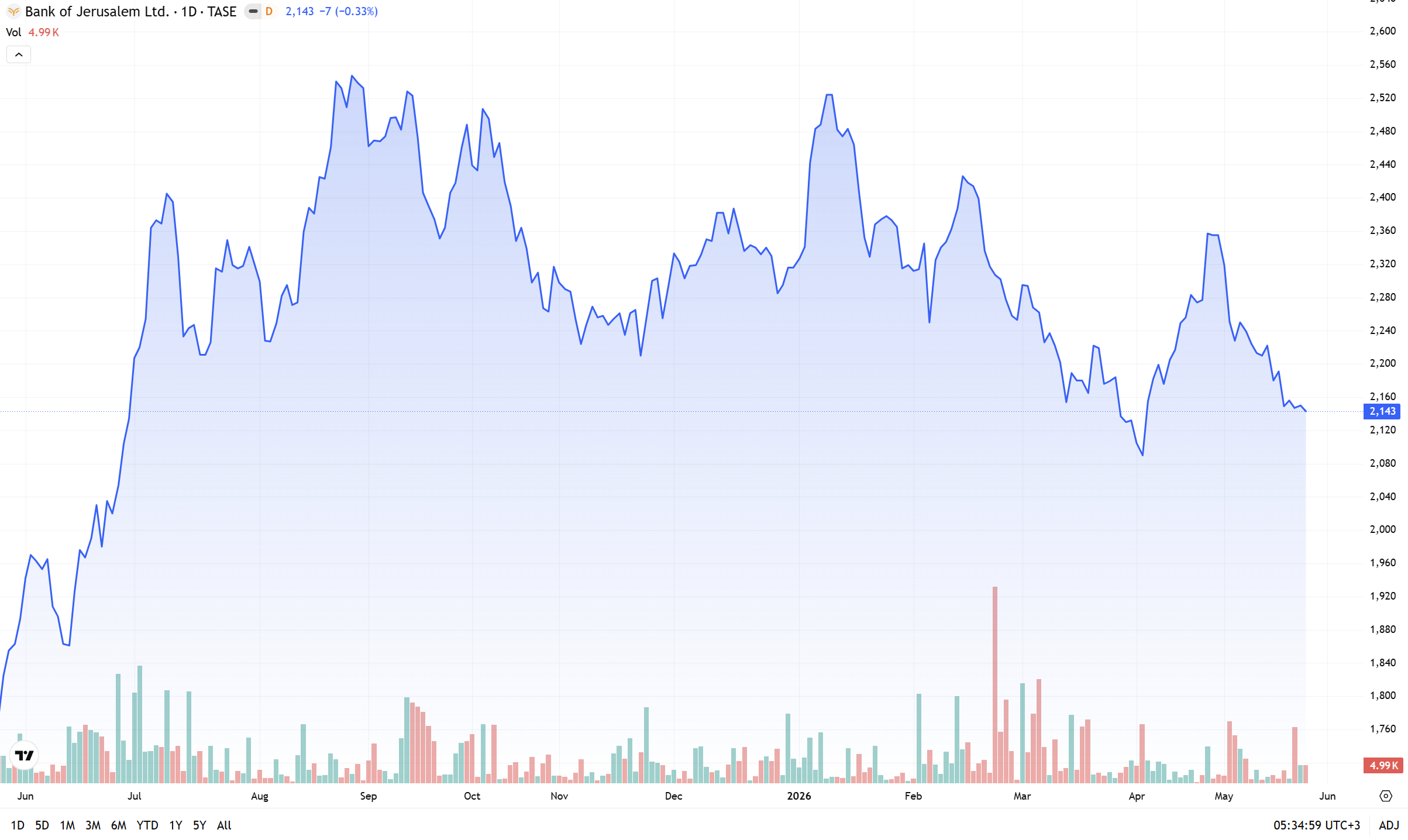
Concurrently, smaller domestic players are actively capitalizing on this regulatory shift to take a swing at the cartel. Bank of Jerusalem (TASE: JBNK) reported a stellar Q1 2026 print, with net profit rising 12% to ₪51.3 million and Return on Equity (ROE) advancing to 12.8%.
While net interest income compressed slightly to ₪162.1 million due to the central bank’s rate cuts, the lender posted a 44% surge in non-interest income to ₪97.1 million, driven by prepaid cards and “Banking-as-a-Service” (BaaS) platforms. The Competition Authority explicitly noted that Bank of Jerusalem’s public interest rate offerings significantly outperformed the best available public quotes from Israel’s five dominant legacy banks.
The Insurance and Savings Authority issued a sweeping regulatory directive forcing non-bank credit operators, including high-growth Buy Now, Pay Later (BNPL) firms, to deploy transparent online customer portals. The regulation mandates that alternative lenders provide full digital accessibility to signed loan agreements, payment schedules, and exact principal-and-interest breakdowns.
Capital Markets Deputy Commissioner Eli Tobul asserted that forcing equivalent digital disclosure is the ultimate key to empowering consumers and scaling a sophisticated alternative lending sector capable of absorbing institutional market share.
Food Retail

Food importer and distributor Willi-Food International (TASE: WLFD) capitalized heavily on macro currency movements to protect its bottom line. The importer reported an 8.4% YoY increase in Q1 2026 sales to ₪156.9 million, while net profit nudged 3% higher to ₪20 million. CEO Yoseph Williger emphasized that the sharp appreciation of the Shekel against both the US Dollar and Euro structurally protected gross profit, which expanded 9.7% to ₪49 million. However, the ongoing regional conflict continues to create operational friction; Willi-Food was forced to push back the completion date for its advanced chilled-logistics fulfillment hub to the fourth quarter of 2026 due to war-induced supply chain disruptions.
Our take: On the corporate front, Willi-Food’s results showcase a brilliant execution of macroeconomic arbitrage. In a high-inflation environment, a supercharged local currency functions as a powerful shield for net importers, allowing them to lower their wholesale cost of goods sold (COGS) and squeeze out market share from domestic producers handcuffed by escalating local overhead.
However, the delayed completion of their new automated logistics center proves that no consumer staple play is entirely insulated from geopolitical friction. Until regional transport and labor supply chains stabilize, domestic operators will continue to face compressed operating margins as they are forced to swap out capital expenditure efficiencies for expensive near-term marketing and advertising outlays.
TASE snapshot for Wednsday, May 27, 2026
TA-35 Index (TASE:TA35): 🔴 -0.96%
TA-90 (TASE:TA90): 🔴 -1.37%
TA-125 (TASE:TA125): 🔴 -1.01%
If you enjoyed this update, forward it on.
TV10 Global | Israel for Investors
Bringing you the top stories from the Israeli business community, by Israel’s only business and finance network.
Share your thoughts with us via: global@tv10.co.il or the Newsroom WhatsApp: +972-55-994-5851.
📧 Subscribe to this newsletter! And follow the daily conversation on 𝕏 @tv10global.
Disclaimer: This brief is for informational purposes only and does not constitute investment advice. All data current as of publication date.