

🍿 Get our coverage on Spotify, and Youtube, too. Want to join the conversation? We’re on X
Quick takes:
Macro & Fiscal Policy: The Knesset codified a permanent 20% employer compensation framework for reservist duty; the Tax Authority granted a penalty-free extension for March corporate tax and VAT filings following state system outages.
Energy: Ashdod Refinery CEO Ronen Yehezkel announced his resignation after steering the company through severe geopolitical and supply chain disruptions.
Real Estate: National rental prices rose 2.1% in March, driven by a 4.9% surge in demand for small apartments equipped with reinforced safe rooms amidst ongoing regional security threats.
Macro

The Knesset officially passed legislation today permanently codifying state compensation to employers for the social benefits of their mobilized reservist employees. By abandoning the government’s previous reliance on a fragile patchwork of temporary emergency orders, this statutory framework provides desperately needed regulatory certainty to the broader market.
The legislation amends the National Insurance Law to guarantee a permanent 20% flat-rate wage subsidy. This mechanism is structurally designed to offset the compounding financial burden shouldered by the private sector since the outbreak of the war on October 7th. This ensures that businesses, particularly SMEs, are no longer financially penalized for maintaining mandatory social safety net contributions, such as pension and severance allocations, while a significant portion of their workforce is deployed to the frontlines.
Highlighted by Dubi Amitai, Chairman of the Presidium of Israeli Business Organizations, this 20% subsidy is now a permanent fixture in Israeli labor law. It will trigger automatically for all reserve duty, completely independent of formal emergency declarations or wartime status, meaningfully altering the risk calculus for employing mobilized citizens.

The Israel Tax Authority has implemented a temporary administrative relief measure regarding March 2026 periodic reporting, following significant systemic outages in the ‘Sha’am’ (Automated Processing Service) online infrastructure. Authority Director Shay Aharonovitch issued an official directive stating that VAT returns and income tax advance payments successfully submitted by Wednesday, April 29, 2026, will be exempt from standard administrative penalties, linkage differentials, and accrued interest.
This technical grace period follows several days of persistent processing disruptions that effectively paralyzed the digital reporting pipeline for both corporate taxpayers and professional financial representatives. While the original statutory deadline was anchored to April 27, this tactical extension serves as a vital buffer to protect corporate liquidity, ensuring that firms are not disproportionately penalized for centralized government infrastructure failures.
Our take: Making the reservist compensation permanent is a fiscal stabilizer for the Israeli economy. By permanently shifting the financial burden of prolonged military mobilizations from the private sector to the state balance sheet, the Finance Ministry is actively preventing a localized corporate credit crunch. This long-term regulatory certainty is vital for foreign investors and multinational corporations operating R&D centers in Israel, as it de-risks the operational friction associated with a highly mobilized workforce and structurally neutralizes the ‘mobilization tax’ on corporate operating margins.
Energy

Ronen Yehezkel, CEO of the Ashdod Refinery, announced his resignation. Yehezkel led the critical energy infrastructure asset through a highly volatile period, including recent military operations (‘Am KeLavi’ and ‘Operation Roaring Lion’) and a major operational crisis involving substandard raw materials from a large international supplier, alongside a tragic fatal lab accident. Despite these severe headwinds, the refinery maintained supply continuity and balance sheet stability. The company’s stock closed up roughly 4% on the news, remaining flat year-to-date.
Our take: Yehezkel’s departure underscores the immense operational strain placed on Israel’s critical downstream energy infrastructure over the past year. Refining margins have been caught in a vice grip between geopolitical supply shocks and wartime domestic demand spikes. For institutional capital tracking Israeli energy assets, the upcoming CEO transition will be closely watched to see if the board prioritizes a defensive, domestic-supply-oriented operator to navigate ongoing security friction, or an executive focused on optimizing export yields in a normalizing Mediterranean market.
Real Estate
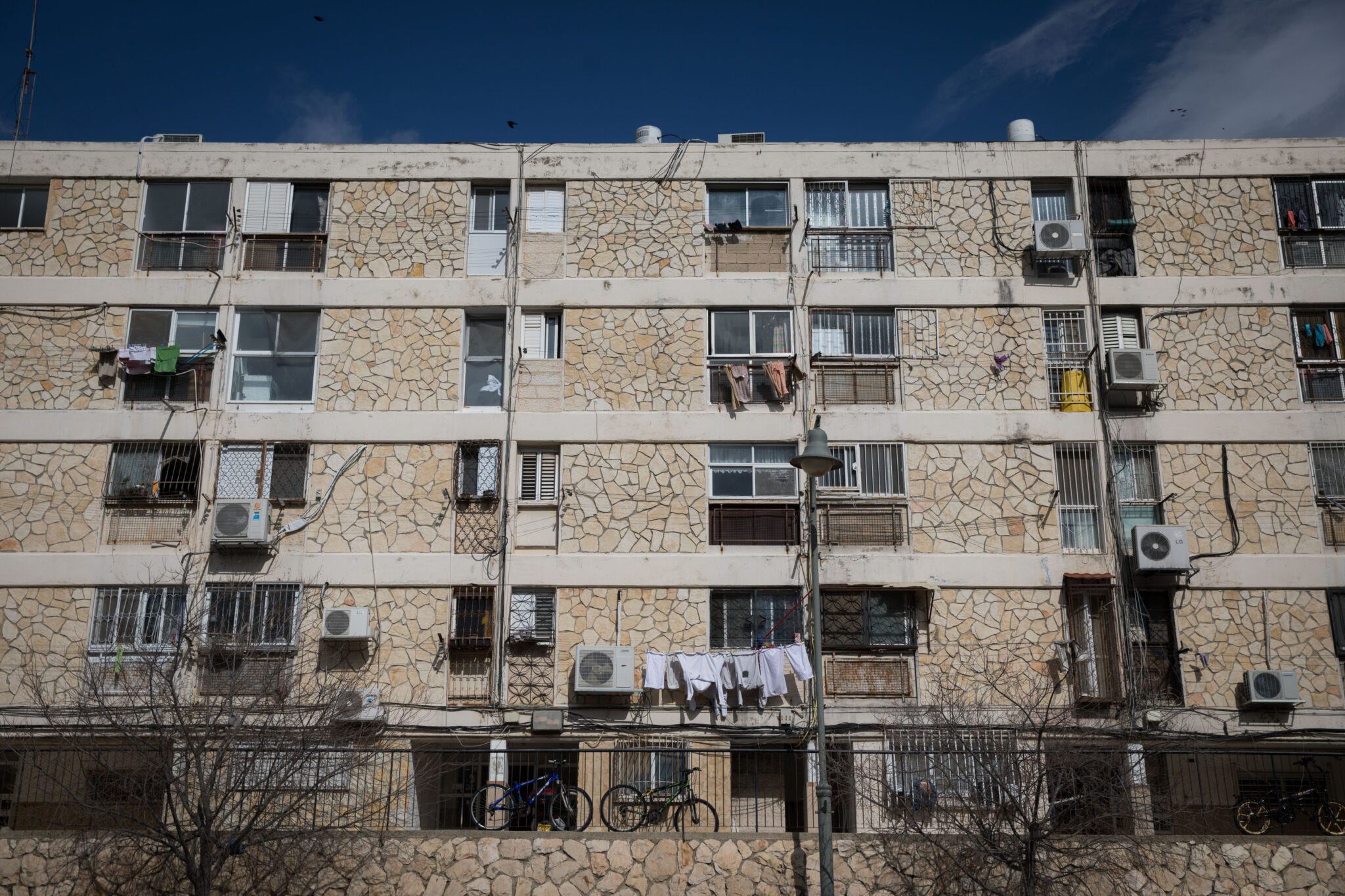
The Israeli rental market continues to heat up, with national average rents climbing 2.1% month-over-month in March to ₪5,041, according to WeCheck data. The figures reveal a ‘security premium’: rental prices for small apartments (1-3 rooms) equipped with a reinforced safe room (Mamad) spiked 4.9% MoM, nearly double the 2.6% increase seen in non-fortified units. Larger apartments (4-5 rooms), which overwhelmingly include safe rooms by default, saw a more moderate 0.9% gain following sharper spikes earlier in the quarter.
Our take: The structural shortage of fortified housing is artificially inflating yields in the residential real estate sector. The 4.9% rent spike for small apartments with safe rooms is not a standard macroeconomic fluctuation; it is a direct pricing of geopolitical risk following escalations with Iran and Hezbollah. This inelastic demand for physical security allows owners of more fortified assets to extract rent premiums. For institutional real estate developers, this data signals that the ‘Mamad’ is a yield-generating amenity in the Israeli residential market.
TASE snapshot for Tuesday, April 28, 2026
TA-35 Index (TASE:TA35): 🔴 -0.63%
TA-90 (TASE:TA90): 🟢 +0.70%
TA-125 (TASE:TA125): 🔴 -0.56%
If you enjoyed this update, forward it on.
TV10 Global | Israel for Investors
Bringing you the top stories from the Israeli business community, by Israel’s only business and finance network.
Share your thoughts with us via: global@tv10.co.il or the Newsroom WhatsApp: +972-55-994-5851.
📧 Subscribe to this newsletter! And follow the daily conversation on 𝕏 @tv10global.
Pings available via WhatsApp Channel.
Disclaimer: This brief is for informational purposes only and does not constitute investment advice. All data current as of publication date.