

Editor’s note:
The International Monetary Fund (IMF) just dropped its 2026 Article IV Consultation report on the Israeli economy, and if you read past the polite, sterilized prose of global diplomacy, it plays out like a scathing indictment of our domestic policy framework.
The headline numbers are bruising: the IMF slashed Israel’s 2026 growth forecast to 3.5% from a pre-war expectation of 4.8%, pinned under the weight of a multi-front conflict, a severely choked labor pool, and a defense budget permanently ballooning to 7.6% of GDP. To patch up a fiscal deficit stalking 6.2%, Washington’s favorite technocrats have offered their standard, uninspired remedy: raise taxes. The report quietly notes that civilian spending is already too threadbare to cut, meaning the state is gearing up to extract even more pound of flesh from a public already gasping under a regime of systemic, government-sanctioned extortion.
Predictably, the usual chorus of local politicians and populist financial analysts are dusting off their favorite parlor trick: blaming the punishing cost of living on the Israeli consumer. They throw around behavioral psychology buzzwords, passive-aggressively accusing the public of ‘complacency’ or a lack of consumer discipline. I reject this. The Israeli consumer is a highly rational economic actor trapped in a completely rigged, uncompetitive matrix. They are held hostage by entrenched government policy designed to shield legacy monopolies via aggressive import protection, rigid import quotas, and an impenetrable fortress of regulatory layering.
This week, we are stripping away the macroeconomic euphemisms masking the IMF report. We will dissect the state’s reliance on protectionist trade barriers, expose the performative theater deployed by local retail and banking giants, and contrast our suffocating physical economy with the borderless, gravity-defying triumphs of Israel’s world-leading AI sector. The path to economic resilience may lead through a sledgehammer to the trade barriers inherent to our system.
— Sophia Tupolev, TV10 Global Editor
TASE weekly snapshot
The Tel Aviv Stock Exchange closed the week on a positive note.
TA-35 Index (TASE:TA35): 🔴 -2.79%
TA-90 (TASE:TA90): 🔴 -3.06%
TA-125 (TASE:TA125): 🔴 -2.78%
Wartime Tax Squeezes and the Mirage of Retail Theater
The IMF report spells out a uncomfortable math problem: when a country permanently anchors its defense spending at 7.6% of GDP while simultaneously choking off its labor supply through military mobilizations and sharp restrictions on non-Israeli workers, the economy’s structural capacity shrinks. While the Bank of Israel keeps its foot on the monetary brakes to pin projected inflation at 2.3%, the actual, lived reality at the checkout counter feels drastically more punitive. This painful disconnect happens because the everyday consumer is forced to underwrite the massive overhead costs of our institutional resistance to open trade.
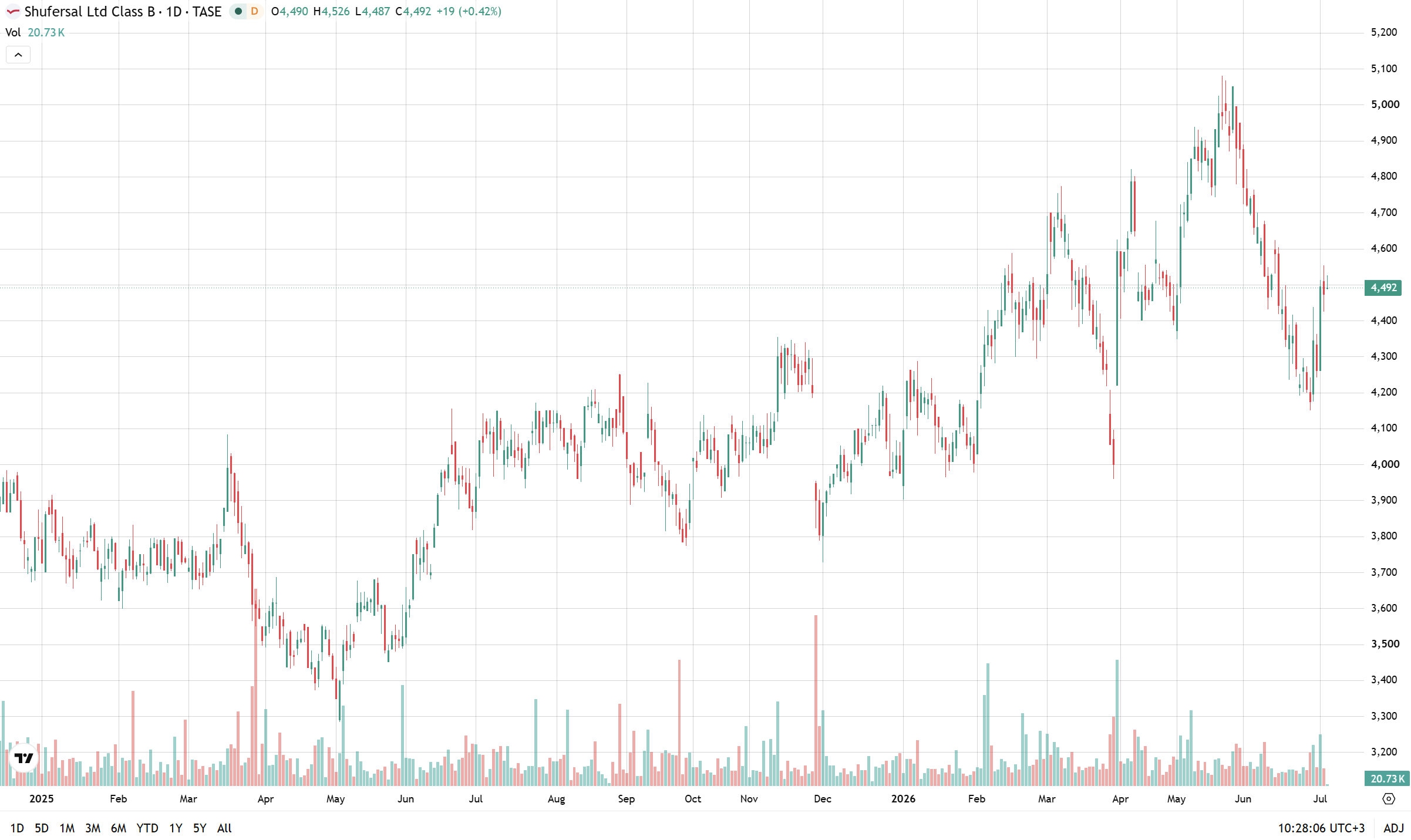
To distract from this structural friction, major food retailers (e.g., TASE:SAE) and legacy financial institutions routinely orchestrate highly publicized “price freezes” or holiday discount campaigns. This is performative intervention doing little to alter the fundamental unit economics of the country. These campaigns are calculated PR exercises designed to project a facade of corporate empathy, all while keeping the underlying cartel pricing power fully intact and safely insulated from foreign competition.
If this corporate script sounds familiar, it’s because it failed spectacularly when the United States tried it in the early 1970s. When the Nixon administration slapped mandatory wage and price freezes on the economy to fight rising costs, it completely ignored the root structural culprits, namely energy shocks and monetary expansion.
Much like the supermarket price freezes seen today, those artificial caps did zero to fix the underlying unit economics of production. Instead of lowering costs, they broke market mechanics, triggered widespread shortages, and sparked an immediate, violent resurgence of inflation the moment the performative controls were lifted. The historical lesson is absolute: without expanding supply through open trade corridors and parallel imports, capping prices merely distorts reality while tax hikes cannibalize what little consumer purchasing power remains.
The Regulatory Moat Protecting Israel’s Cartel Pricing Power

The structural pain points highlighted by the IMF, including persistently depressed labor-market participation among specific demographic groups, are made infinitely worse by a Byzantine domestic regulatory environment. Incumbent conglomerates don’t protect their market share through superior innovation or hyper-efficient capital allocation; they do it by weaponizing regulatory layering.
Take the heavy burden of kashrut compliance economics, a uniquely localized cost driver that functions as an invisible, highly regressive tax across the entire food, logistics, and hospitality supply chain. Combined with draconian agricultural import quotas, this regulatory friction creates an artificial scarcity that guarantees fat margins for domestic producers at the direct expense of a captive public.
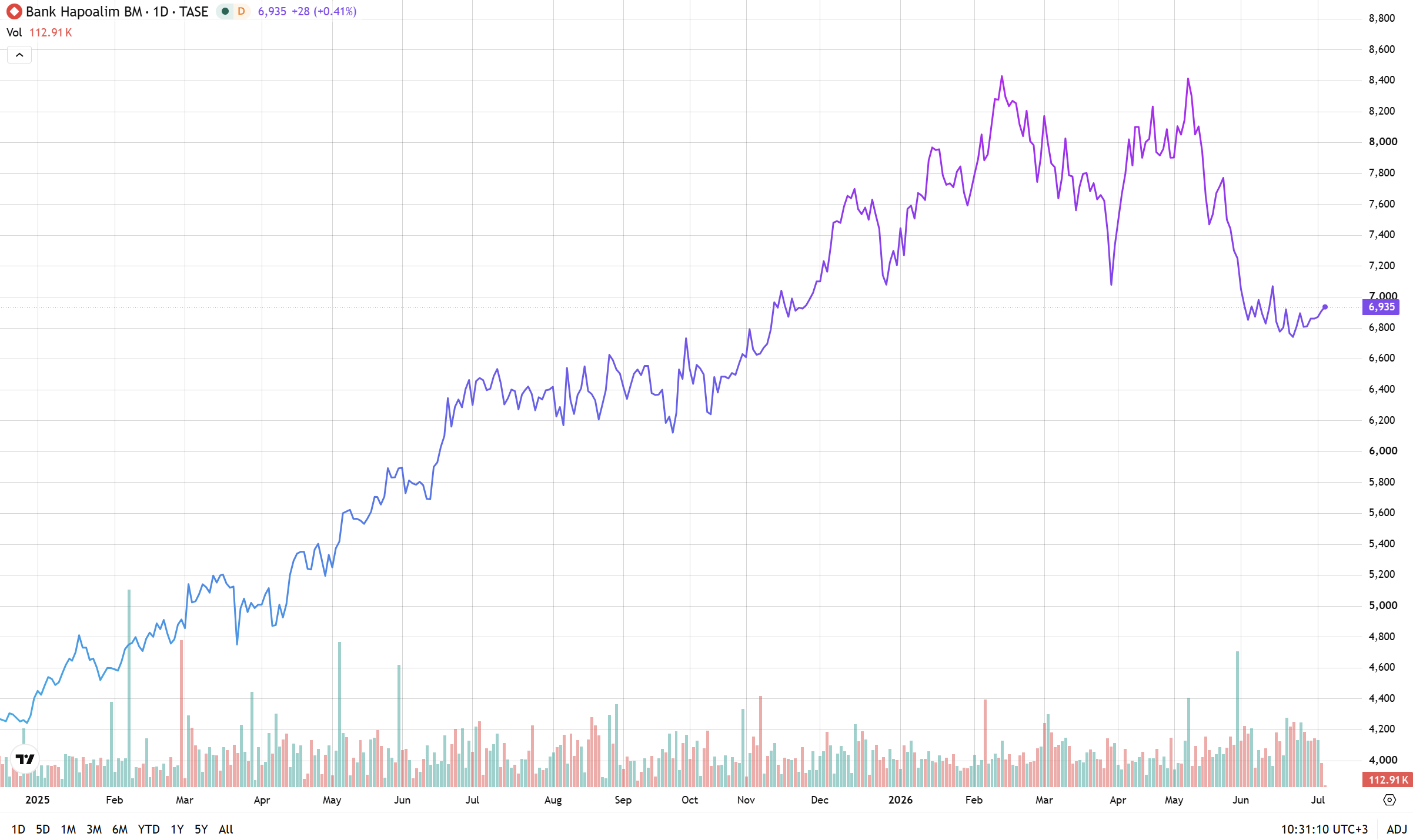
Worse still, the deliberate lack of true portability in banking and retail finance ensures that consumers remain permanently locked inside legacy institutions (e.g., TASE:POLI). Regulators treat these massive incumbents as sacrosanct system assets, effectively insulating them from the cold wind of global capital. By deploying subtle capital controls and intentionally convoluted licensing requirements, the government ensures that foreign disruptors view the Israeli consumer market as too hostile and fragmented to bother entering, preserving the local oligopolies and suffocating any chance of organic price discovery.
This strategy of using regulatory layering to pamper domestic monopolies is ripped straight out of post-war Japan’s playbook. For decades, Tokyo utilized its notorious Large-Scale Retail Store Law alongside hyper-localized compliance mandates to systematically block foreign big-box retailers and cheaper agricultural imports.
This created an artificial, heavily bureaucratic moat that kept inefficient domestic distributors comfortable and isolated from global market realities. While Japanese policymakers wrapped these rules in the noble language of protecting cultural institutions, the actual structural outcome was a captive domestic market where ordinary citizens paid up to three times the global average for basic consumer goods. When non-tariff barriers are weaponized to prevent capital and product portability, the domestic consumer is simply forced to fund the cartel’s inefficiency.
The Borderless AI Blueprint for Slashing Domestic Structural Friction
The single most fascinating part of the 2026 IMF assessment is the wild asymmetry between Israel’s two economies. While the physical economy suffocates under archaic trade barriers, our technology sector is operating in the stratosphere. The IMF ranks Israel 18th globally in AI readiness, and Stanford University’s AI Index places Israel first in the world for private AI investments and new AI startup creation, noting that an astonishing 39% of the local workforce regularly utilizes artificial intelligence in their daily operations.
This spectacular success isn’t some happy geographic coincidence but rather the direct, unvarnished result of operating in a sector completely devoid of import protection, protectionist quotas, and physical tariffs.
Code cannot be held hostage at the port by a regulatory inspector looking for a specific stamp, nor is enterprise software subject to domestic production quotas. The AI sector proves definitively that when Israeli capital and talent are liberated from structural friction and government gatekeeping, they don’t just compete, they dominate the global stage. The real structural fix for our stagnant physical economy requires applying this exact borderless methodology across the board: aggressive deregulation, adopting European product standards by default, and ruthlessly exposing the domestic market to foreign competition.
Look at the economic renaissance of Estonia in the 1990s to see what happens when a country actually has the courage to abandon protectionism. Emerging from the wreckage of a centralized command economy, Estonia instituted a radical trade policy anchored by the unilateral elimination of all tariffs on foreign goods and the total removal of capital controls.
By establishing a frictionless border and prioritizing a digital-first economy, the state forced domestic firms to either achieve global efficiency immediately or get out of the way. The results perfectly mirror Israel’s current AI triumph: foreign direct investment flooded into Estonia’s tech and financial sectors, turning a tiny nation into a global economic dynamo. By erasing the regulatory and physical friction at its borders, Estonia proved that welcoming unhindered foreign competition is the single most potent tool for smashing legacy monopolies and driving real wage growth.
What to watch
In the near term, institutional investors need to keep their eyes on the severe downside scenario modeled by the IMF: a prolonged, wider regional escalation that could crash 2026 growth to 2.75% and cause 2027 growth to collapse to a microscopic 1.5%, all while sending defense expenditures screaming to 9% of GDP. If that grim scenario plays out, the Bank of Israel will have no choice but to keep borrowing costs higher for longer, severely bruising highly leveraged domestic real estate developers (e.g., TASE:AFPR) and triggering a harsh contraction in corporate credit expansion.
The long-term policy thread to track is whether the Ministry of Finance possesses the political backbone to enact genuine, supply-side structural reforms. Watch closely for any real legislative moves to permanently dismantle agricultural tariffs and simplify import standardization. If the government continues to rely exclusively on lazy tax hikes rather than breaking the pricing power of local monopolies, it will signal to global markets that the protectionist regime remains fully entrenched, further suppressing consumer vitality and keeping foreign direct investment locked out of the physical economy.
That’s our letter, folks. If you enjoyed this Weekly, forward it on.

The English TV10 newsletter is edited by Sophia Tupolev. We love to hear from you.
TV10 Global | Israel for Investors
Now in English: Bringing you the top stories from the Israeli business community, by Israel’s only business and finance network.
Please share your thoughts with us via: global@tv10.co.il or the Newsroom WhatsApp: +972-55-994-5851.
📧 Subscribe to this newsletter! And follow the daily conversation on 𝕏 @tv10global.
Pings with new editions are also available via our WhatsApp Channel.
Disclaimer: This brief is for informational purposes only and does not constitute investment advice. All data is current as of publication date.