
🍿 Get our coverage on Spotify, and Youtube, too. Want to join the conversation? We’re on X
Quick takes:
Capital Markets: Pulsenmore skyrockets 225% after securing a strategic US telehealth partnership; Globrands collapses 46% following the termination of its core JTI distribution contract.
Aerospace and Defense: The Israeli government is evaluating US IPOs for state-owned defense contractors IAI and Rafael to bypass domestic transparency friction; autonomous drone developer Cando Drones files for a TASE offering to reverse its negative equity position.
TASE snapshot for Wednesday, June 24, 2026
TA-35 Index (TASE:TA35): 🟢 +0.16%
TA-90 (TASE:TA90): 🟢 +0.53%
TA-125 (TASE:TA125): 🟢 +0.31%
Capital Markets
The Tel Aviv Stock Exchange closed Wednesday with positive momentum, as the TA-35 (TASE: TA-35) advanced 0.16%, the TA-90 (TASE: TA-90) gained 0.53%, and the broad TA-125 (TASE: TA-125) rose 0.31%. Sectoral performance was deeply polarized:
The TA-Biomed index surged 6.16% and TA-Insurance climbed 2.77%, while the TA-Communications and Information Technology index shed 1.24%. The most explosive move of the session belonged to Pulsenmore (TASE:PLSM), a developer of at-home ultrasound technology. The stock achieved a staggering 225.35% intraday surge following the announcement of a strategic joint venture with Ouma Health, a major US virtual maternity care provider.
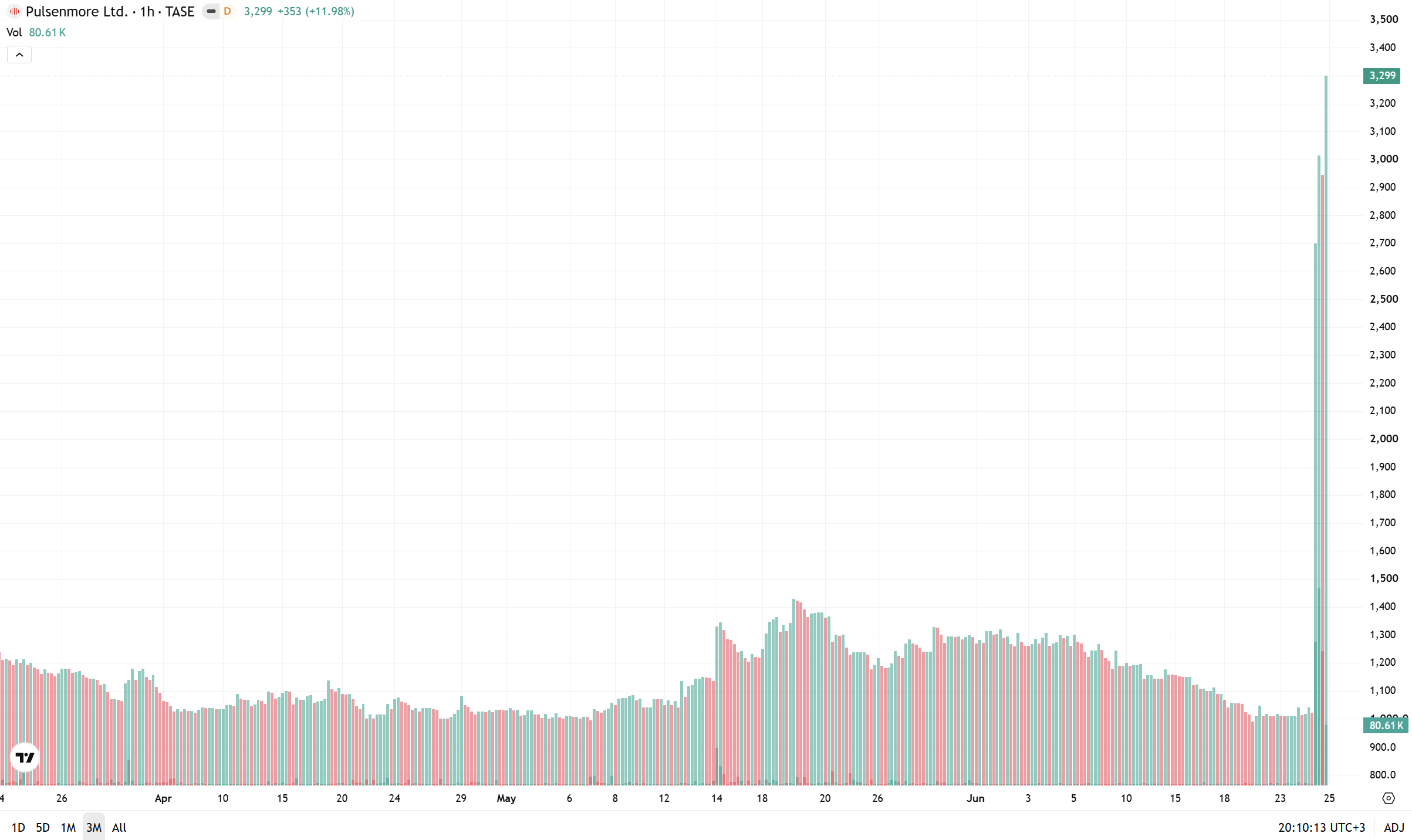
Conversely, Globrands (TASE:GLRS) suffered a 46.02% collapse after terminating its core distribution agreement with Japan Tobacco International (JTI), a move expected to wipe ₪35 million off its net profit.
Elsewhere, institutional capital rotation was evident among legacy tech and defense names. Camtek plunged 7.74%, followed by Tower Semiconductor (-5.22%), Ashot Ashkelon (-5.88%), and Nova (-4%).
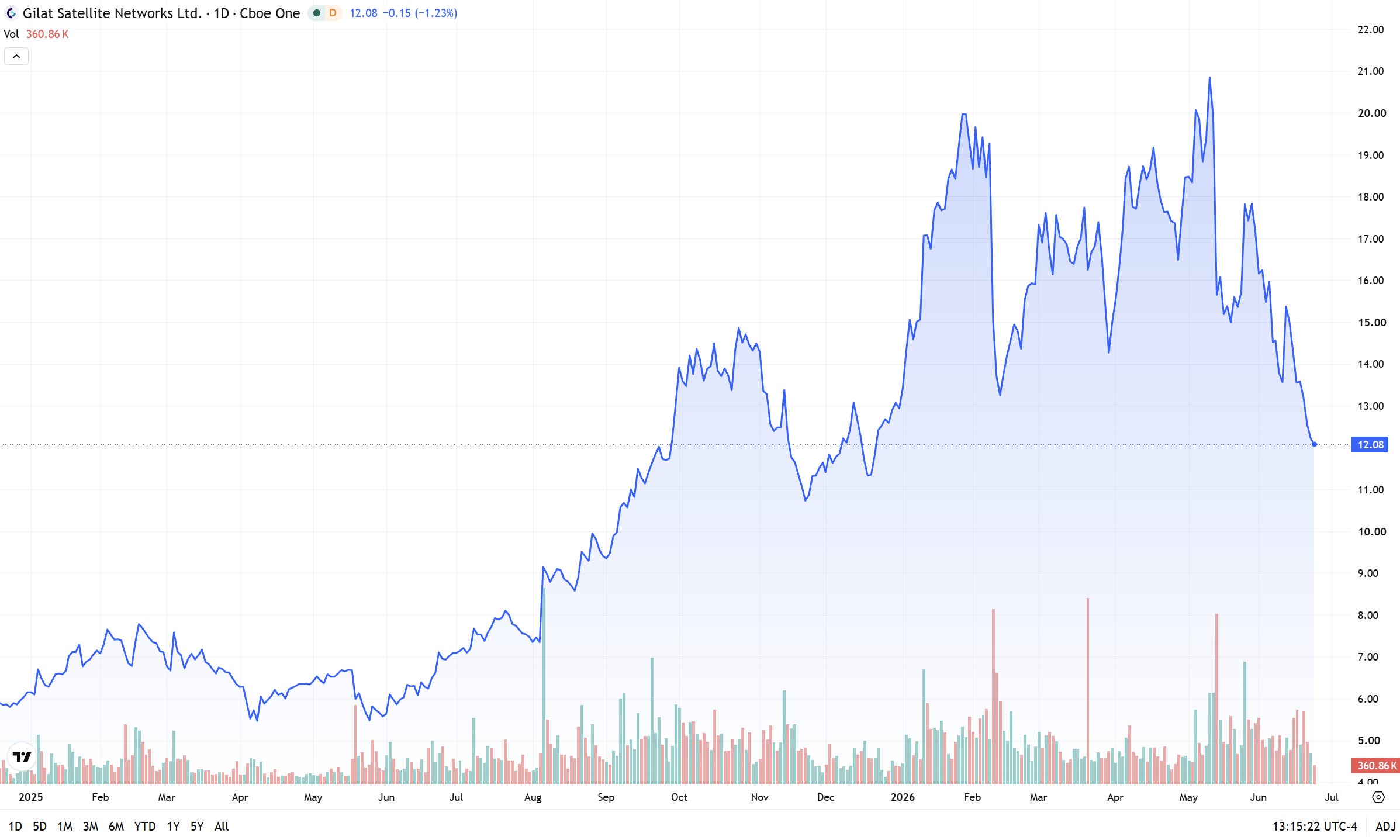
Even positive operational news failed to halt the tech sell-off. Gilat Satellite Networks (TASE:GILT) landed a multi-million dollar SATCOM order from a European defense ministry but still saw its equity drop 2.81%. In the forex markets, the shekel continued to strengthen, pushing the dollar down 0.28% to ₪2.98 and the euro down 0.63% to ₪3.38.
Our take: The extreme volatility observed in Wednesday’s session, specifically Pulsenmore’s 225% surge and Globrands’ 46% collapse, highlights the profound illiquidity and structural concentration risk characterizing the TASE’s mid-cap tier. When a single contract cancellation can instantly vaporize nearly half of a distribution conglomerate’s market capitalization, it exposes a domestic economy precariously dependent on narrow oligopolies and exclusive import agreements. Globrands is colliding with the reality of lost cartel pricing power.
Conversely, Pulsenmore’s massive yield was generated entirely by bypassing the domestic healthcare matrix and plugging directly into the heavily capitalized US telehealth infrastructure. This reinforces a recurring macro theme: the TASE increasingly functions as a barbell market. Institutional investors are aggressively rotating out of domestic-facing legacy tech (evidenced by the sharp drawdowns in Camtek and Tower) and rewarding companies that successfully utilize the domestic exchange merely as a launchpad to execute high-margin, export-driven arbitrage in the United States.
Aerospace and Defense

The Israeli government is aggressively exploring Wall Street IPOs or dual-listings for state-owned defense contractors Israel Aerospace Industries (IAI) and Rafael Advanced Defense Systems. Senior Finance and Defense Ministry officials will meet with US underwriters in July to structure the sale of up to 30% stakes by year-end. Valued internally at approximately ₪100 billion and ₪60 billion respectively, the entities are seeking to utilize US national security reporting exemptions, bypassing the stringent transparency mandates of the domestic market. The multi-billion-shekel liquidity event is intended to offset Israel's surging fiscal deficit, which the Bank of Israel projects will hit 5.3% of GDP this year.
Concurrently, on the micro-cap spectrum, Cando Drones, backed by retail magnate Rami Levi, has filed a draft prospectus for a TASE IPO. Operating with a ₪24.45 million accumulated deficit and negative equity of ₪5.26 million, Cando is offering equity-and-warrant bundles (yielding an effective ₪4.13 share price) to raise the minimum ₪8 million required to list, relying on "small corporation" exemptions to reduce ongoing reporting friction.
Our take: These simultaneous IPO strategies expose the intense structural friction embedded within Israel’s capital markets. For defense titans like IAI and Rafael, the domestic exchange presents insurmountable institutional resistance; local transparency mandates simply cannot accommodate classified, multi-billion-dollar system assets. By pivoting to the Nasdaq or NYSE, the state is executing a classic regulatory arbitrage, accessing a deeper, more liquid global market of defense investors while securing the confidentiality required for national security.
Conversely, the Cando Drones offering highlights the residual risk profile left on the Tel Aviv Stock Exchange. Unable to tap international markets, early-stage hardware developers must engineer heavily diluted warrant structures to secure capital. While IAI circumvents the TASE entirely, Cando is forced to leverage specialized domestic regulatory exemptions to survive a deeply negative ROE environment.
If you enjoyed this update, forward it on.
TV10 Global | Israel for Investors
Bringing you the top stories from the Israeli business community, by Israel’s only business and finance network.
Share your thoughts with us via: global@tv10.co.il or the Newsroom WhatsApp: +972-55-994-5851.
📧 Subscribe to this newsletter! And follow the daily conversation on 𝕏 @tv10global.
Disclaimer: This brief is for informational purposes only and does not constitute investment advice. All data current as of publication date.