


Quick Takes:
Macro: The Dollar is down to a 4-year low of ₪3.087; ICL agrees to transfer Dead Sea assets to the state in 2030 for $2.54B; Knesset committee approves ₪15M grants for every "Tkuma" regional council; Innovation Authority survey reveals only 13% of tech layoffs are AI-driven.
Cyber: MemCyco raises $37M Series A to stop account takeovers before they happen; Rein Security emerges from stealth with $8M Seed.
Energy: Enlight inks a €500M deal for ‘Project Jupiter’ in Germany, featuring one of the world's largest battery storage facilities; BIRD Energy program invests $4.4M in US-Israel green tech ventures.
Capital Markets: Tadiran secures ₪190M in bond demand; Top Gum founders sell ₪60M in shares to Menora and Schestowitz.
Macro
The shekel has strengthened significantly, pushing the dollar exchange rate down to ₪3.087 and the euro to ₪3.707, the lowest levels in over four years.
ICL Group (TASE:ICL) and the Ministry of Finance have signed a historic agreement to settle the contested future of the Dead Sea mining rights. ICL will transfer all operational assets to the state upon the expiration of its rights in 2030 in exchange for a fixed sum of $2.54 billion. Crucially, the company has waived its ‘Right of First Refusal’ for the upcoming tender, a move Finance Minister Bezalel Smotrich says will ensure a truly competitive bidding process for the next decade of extraction rights.
The "Tkuma" Grants. The Knesset Economic Committee, led by MK David Bitan, approved a bill to transfer a one-time grant of ₪15 million to every local authority in the Gaza Envelope (Tkuma) region. The decision passed unanimously despite opposition from the Ministry of Finance, which argued there was no binding government promise to fund the grants and that the move constitutes a budgetary breach.
A new survey by the Israel Innovation Authority and Zviran debunks the narrative that AI is causing mass unemployment in tech. Despite deep AI integration across 52% of firms, only 13% of Israeli employers cited AI as a factor in 2025 layoffs. The primary driver remains operational efficiency (75%). Innovation Authority CEO Dror Bin noted the market is undergoing a “gradual adjustment, not a shock,” with the focus shifting to upskilling rather than replacement.
Cyber
Cybertech Global 2026. The annual conference opened in Tel Aviv with stark warnings. Bob Flores (ex-CIA CTO) said, “The bad guys innovate faster than we do,” while Oron Noah, VP Product at Wiz, highlighted the emerging threat of hackers manipulating autonomous AI agents. A panel including Team8 and Hetz Ventures emphasized that while AI is a “must-have,” the industry lacks talent with genuine AI backgrounds. Investors also noted rising defense budgets in Europe as a prime opportunity for Israeli startups.
MemCyco secured a $37M Series A (bringing total funding to $47M) led by NAventures (National Bank of Canada) and Steve Pagliuca’s Pags Group. The startup focuses on preventing Account Takeover (ATO) fraud at the ‘pre-attack’ stage, identifying impostors before damage is done. CEO Israel Mazin noted the company tripled its ARR in 2025 as ATO attacks spiked by 250%, causing billions in damages.
Rein Security emerged from stealth with an $8 million Seed round led by Glilot Capital. Founded by Unit 8200 alumni, the company focuses on real-time application security (AppSec) in production environments. Clients include Lemonade and HiBob.
Energy
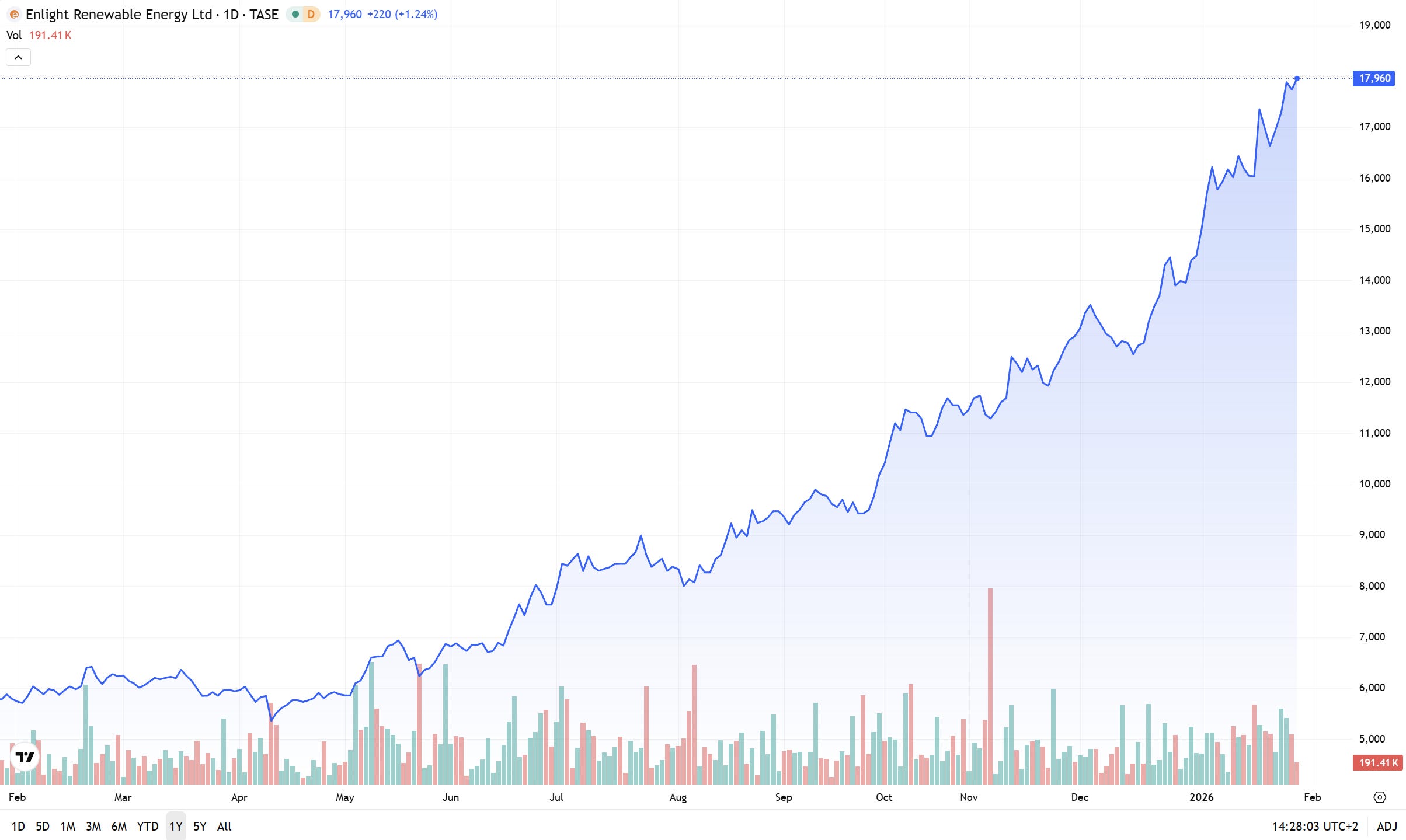
Enlight Renewable Energy (TASE:ENLT) has signed a major agreement with German asset manager Prime Capital to acquire a majority stake (51-60%) in ‘Project Jupiter,’ a solar-plus-storage venture in Brandenburg, Germany. The project combines 150MW of solar capacity with a colossal 2,000 MWh storage facility, considered one of the largest in the world. Total investment is estimated at €470-500 million, with Enlight projecting average annual revenues of €85-90 million and EBITDA of €70–80 million for the first five years.
The BIRD Energy program (a joint initiative of the US and Israeli energy ministries) announced a $4.4 million investment in three collaborative projects, leveraging a total of $9.7 million including private funding. The approved ventures include: CaPow and Peer Robotics developing a continuously charged autonomous pallet cart, EVA and Bayshore Recycling creating low-energy cement from waste and IDE Water Technologies partnering with Northwestern University on advanced wastewater treatment.
Capital Markets
Tadiran Group (TASE:TDRN) successfully closed the institutional stage of its Series 5 bond issuance, seeing demand of ₪565 million. The company accepted ₪190 million at a 2.5% interest rate (unlinked), rated A+ by S&P Maalot. The issuance includes warrants exercisable at ₪200 per share, signaling management’s confidence in future stock appreciation.
Top Gum (TASE:TPGM) continues to attract heavy institutional backing. Menora Mivtachim (TASE:MMHD) and the Schestowitz family exercised options to purchase ₪60 million worth of shares from founders Hai Hayon and Roi Lusternik at ₪10.02 per share. This follows a strong performance report projecting 115% revenue growth for Q4. The stock rose 4.3% on the news.
TASE snapshot for Wednesday, Jan. 28, 2026
TA-35 Index (TASE:TA35): 🔴 -0.72%
TA-90 (TASE:TA90): 🔴 -1.43%
TA-125 (TASE:TA125): 🔴 -0.87%
If you enjoyed this update, forward it on.
TV10 Global | Israel for Investors
Bringing you the top stories from the Israeli business community, by Israel’s only business and finance network.
Share your thoughts with us via: global@tv10.co.il or the Newsroom WhatsApp: +972-55-994-5851.
📧 Subscribe to this newsletter! And follow the daily conversation on 𝕏 @tv10global.
Pings available via WhatsApp Channel.
Disclaimer: This brief is for informational purposes only and does not constitute investment advice. All data current as of publication date.