


Editor’s note:
For two years, Israel operated under a “war discount” that kept global capital at bay. That’s changing. With the Iranian threat waning, investors are re-pricing Israeli risk.
Governor Amir Yaron declared the strategy successful this week: Israel’s risk premium has returned to “near pre-war levels.” The Bank of Israel cut rates to 4% and projected 5.2% GDP growth for 2026 - a V-shaped recovery.
The evidence is clear. Israel’s $6B bond raise drew $36B in demand. The shekel strengthened 3.1% despite rate cuts. The TA-Real Estate index jumped 8% in one week.
Corporate balance sheets are shifting from preservation to deployment - El Al distributed $100M in dividends. Mobileye acquired Mentee for $900M.This week’s edition explores how hard-won stability is fueling aggressive growth across the Israeli business community.
— Sophia Tupolev, TV10 Global Editor
The Tel Aviv Stock Exchange closed the week sharply higher on Friday, the first week of the new Monday-Friday trading schedule.
TA-35 Index (TASE:TA35): 🟢 +4.40%
TA-90 (TASE:TA90): 🟢 +5.58%
TA-125 (TASE:TA125): 🟢 +4.67%
Israel rate cut validates two-year hawkish stance
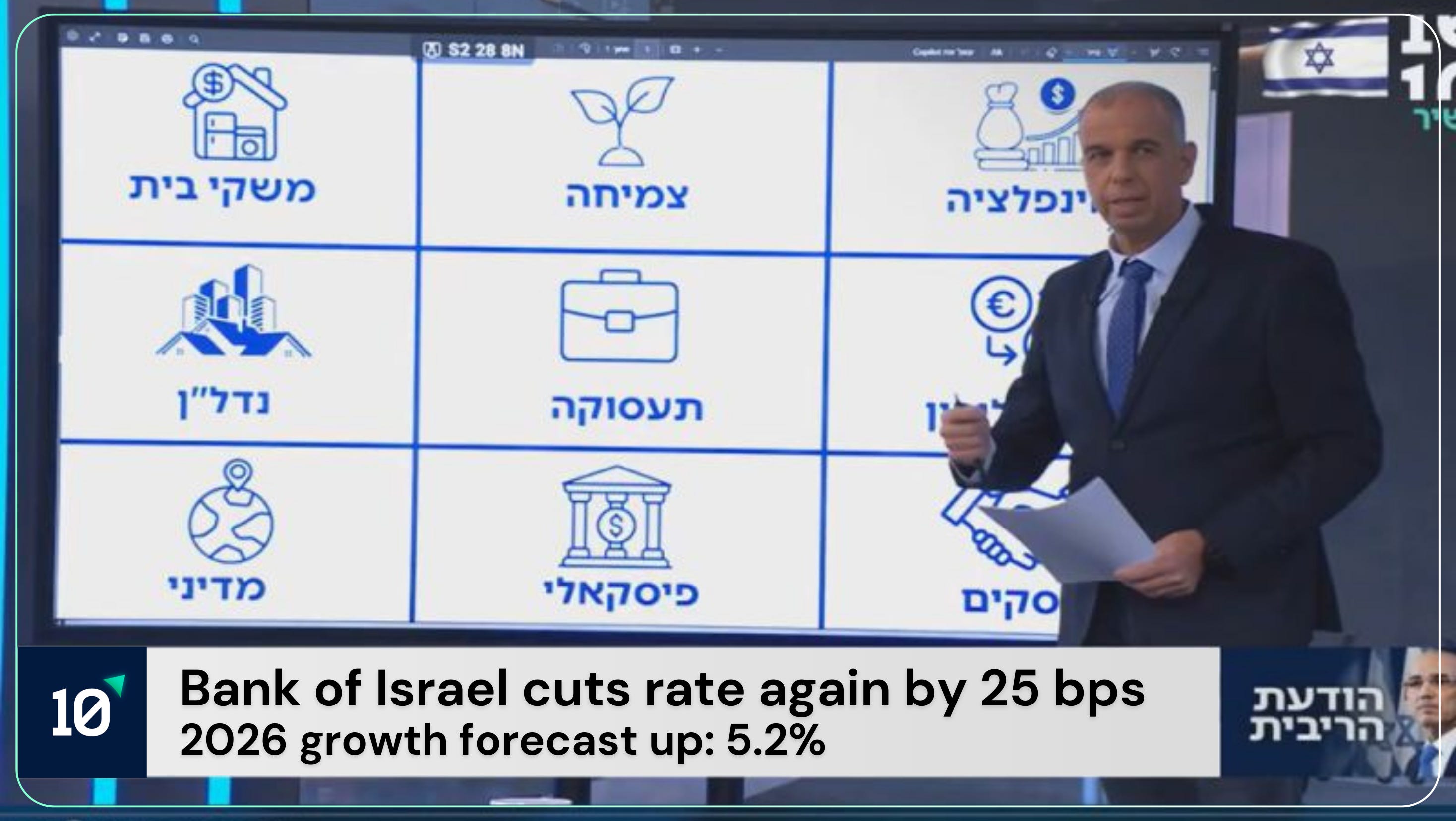
The Bank of Israel lowered the key rate to 4% Tuesday, the second consecutive 25-basis-point cut, while sharply raising its 2026 growth forecast to 5.2%.
The move validates Governor Amir Yaron’s decision to maintain elevated rates throughout two years of war despite calls for monetary easing. Inflation now sits at 2.4%, within the central bank’s 1-3% target range, while the shekel has appreciated 3.1% against the dollar over the past month - unusual for a rate-cutting cycle.
The BoI’s Research Division’s upward GDP revision from 2.8% to 5.2% signals confidence in a V-shaped recovery. Sovereign risk spreads have compressed to pre-war levels, reflecting renewed investor confidence in Israeli assets.
The central bank’s Monetary Committee cited three factors supporting the cut: inflation control, currency strength, and cooling real estate prices. The shift marks an end to emergency monetary policy and the start of an expansion-focused cycle.
Next Vision leads 2025 market rally
✉️ Notes by Moshe Maimon, Head of TV10 Capital Markets
Driven by global geopolitical tensions and regional conflict, 2025 marked a record-breaking year for Israeli defense stocks. While established giants like Elbit Systems saw significant gains of 93%, the sector’s standout performer was Next Vision (TASE:NXSN), a developer of stabilized cameras for drones, which saw its stock surge by over 250%.
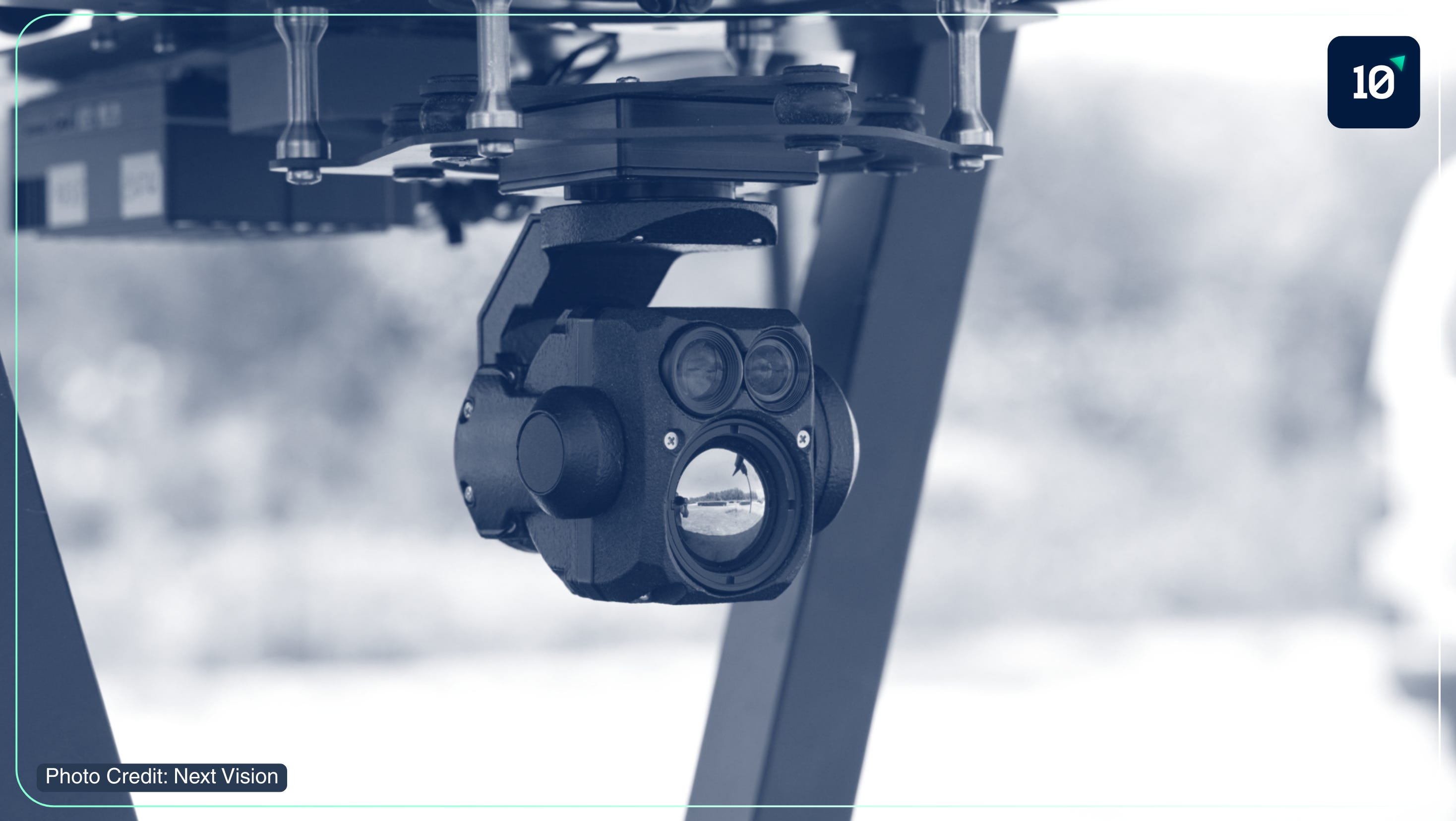
By early January 2026, Next Vision’s market cap reached approximately 21.8 billion NIS - a staggering rise from its 2021 IPO valuation of just 407 million NIS. The company reported preliminary 2025 revenues of $168 million, a 46% year-over-year increase that beat initial targets. Uniquely, the firm maintains an exceptionally lean operation, boasting net profit margins of roughly 60%.
Looking ahead, the industry is transitioning from immediate wartime demand to sustained long-term growth. Next Vision has set an aggressive revenue target of $275 million for 2026, representing a projected 64% growth. This optimism is anchored by a historic $76.8 million deal signed in December 2025 - the largest in the company’s history - which significantly bolstered its order backlog.
Despite the potential de-escalation of local conflicts, analysts note that global rearmament trends and the dominance of drone warfare ensure that Israeli defense technology remains a critical export.
Capital markets react to rate cut - sector rotation, yield compression
The market’s reaction to the rate cut reflects a classic “risk-on” rotation, supported by specific local tailwinds.
Real estate deleveraging:
The real estate sector, highly sensitive to the cost of debt, is the immediate beneficiary. While asset prices continue a healthy correction, the reduction in financing costs provides critical relief to leveraged developers. We could see an uptick in transaction volume as mortgage rates adjust downward. The TA-RealEstate Index (TASE:TEREAL) is up the week 8.03%.
Banking sector clarity:
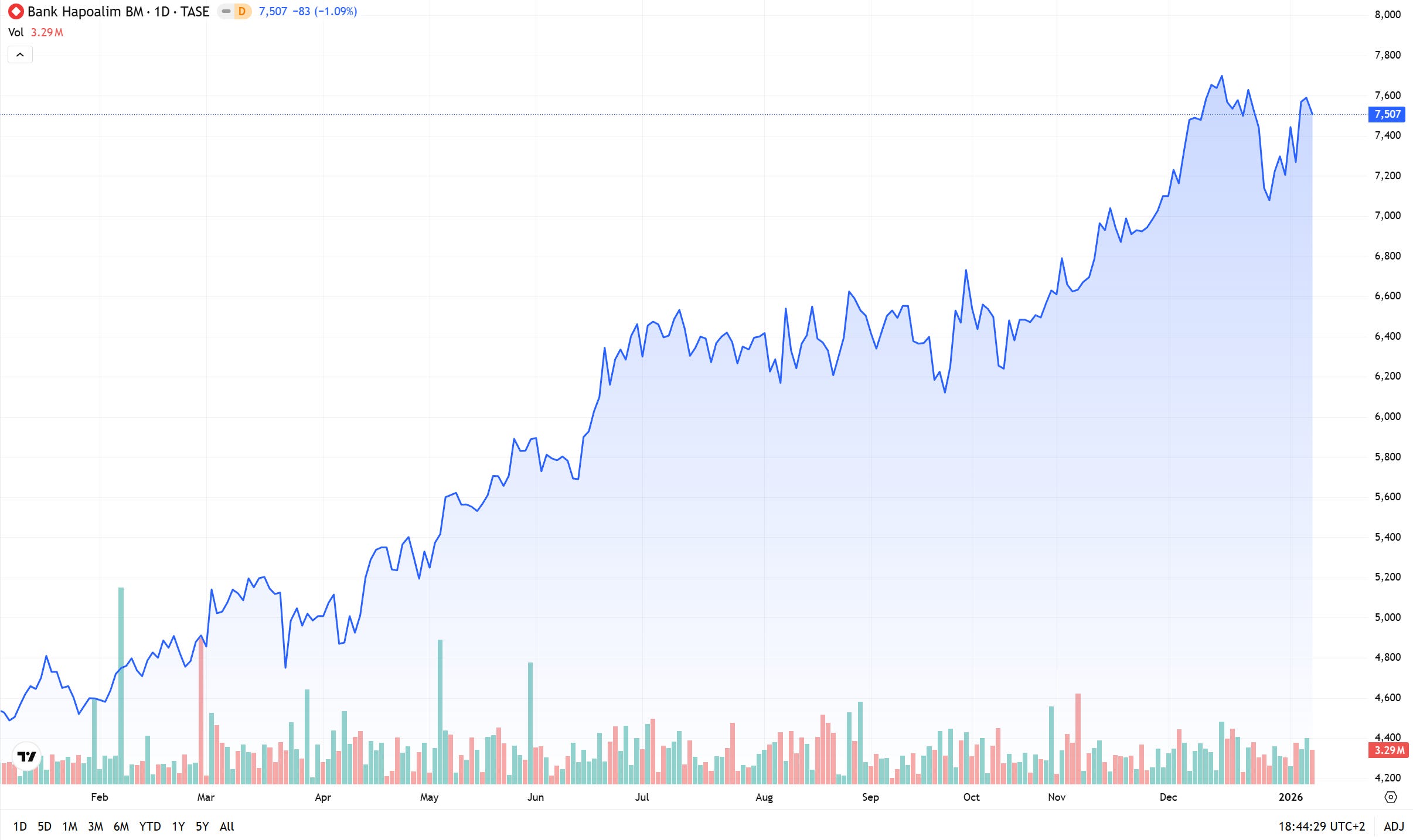
Governor Yaron voiced opposition to sector-specific windfall taxes on banks. This regulatory relief is being matched by capital market confidence. Bank Hapoalim (TASE: POLI) completed a $2 billion international debt issuance Thursday, attracting $7 billion in demand from US and European institutions. Pricing at just ~35 basis points over the new sovereign curve, the deal confirms robust global appetite for Israeli credit. Despite these tailwinds, the TA-Bank index (TASE:TABANK) rose only 1.44% this week, lagging behind the broader market.
The currency anomaly:
Typically, rate cuts exert downward pressure on a currency. However, the Shekel’s appreciation suggests that foreign inflows are outweighing the yield differential. Investors are buying Israeli growth, not just Israeli yield.
Governor Yaron signals central bank independence is non-negotiable
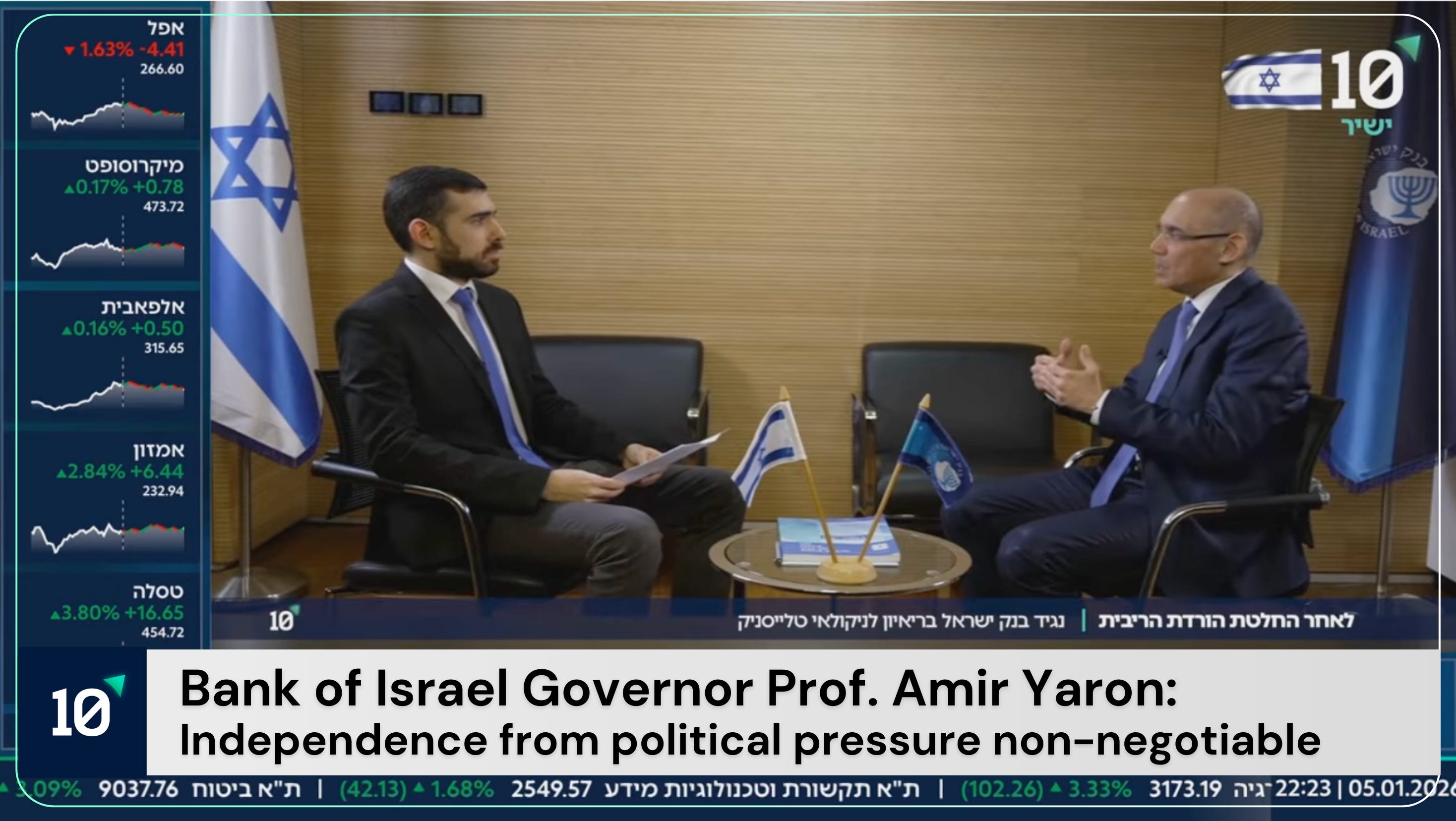
In an exclusive interview with TV10’s Nikolay Taleisnik this week, Bank of Israel Governor Prof. Amir Yaron sent a clear message to global investors: the central bank’s independence from political pressure remains non-negotiable.
On fiscal discipline:
Yaron emphasized the Bank’s decisions are purely data-dependent, brushing off political pressure regarding the budget. For sovereign credit ratings, this independence matters more than any specific policy choice.
On gold reserves:
When pressed on the Bank’s lack of gold holdings, Yaron defended the current diversified portfolio’s performance but left the door open for future changes. For institutional investors, however, the Governor’s ability to say “no” to the government is more valuable than physical gold. It ensures the shekel remains a hard currency managed by technocrats, not politicians.
Private cybersecurity decacorn Cyera soars to $9 billion on Blackstone-led Series F
Cyera raised $400M at a $9B valuation, tripling in 12 months. Blackstone led the round with Sequoia, Accel, Lightspeed, Cyberstarts, and Greenoaks participating. The company has raised $1.7B so far.
The valuation reflects a critical problem: companies deploying autonomous AI agents need to give them access to sensitive data without exposing intellectual property. Cyera’s platform maps where sensitive data lives and blocks unauthorized access in real-time. The company now secures 20% of the Fortune 500.
Revenue multiplied 3.4x year-over-year. Headcount hit 1,100 across 15 countries. CEO Yotam Segev, who founded the company in 2021 with Tamar Bar-Ilan, said, “AI security is a fundamental condition for how organizations operate.”
Blackstone doesn’t typically lead venture rounds -its participation signals Cyera has graduated to essential infrastructure.
Next week:
January 13th: Trade Balance (Dec) Previous: NIS -3,247.2M.
January 15th: CPI (MoM) (Dec) Previous: -0.5%. CPI (YoY) (Dec) 2.4%.
Plus, we’ve got a new Comment section here on our site, which you can subscribe to separately. If you’d like us to consider your comment for submission to the site, please email us using the contact information below.
That’s our letter, folks. If you enjoyed this Weekly, please forward it to a friend.

The English TV10 newsletter is edited by Sophia Tupolev. We love to hear from you.
TV10 Global | Israel for Investors
Now in English: Bringing you the top stories from the Israeli business community, by Israel’s only business and finance network.
Please share your thoughts with us via: global@tv10.co.il or the Newsroom WhatsApp: +972-55-994-5851.
📧 Subscribe to this newsletter! And follow the daily conversation on 𝕏 @tv10global.
Pings with new editions are also available via our WhatsApp Channel.
Disclaimer: This brief is for informational purposes only and does not constitute investment advice. All data is current as of publication date.