


Editor’s note - when looking good is dangerous
In global economic indices, Israel looks exceptional right now. Israel’s 63 capital market records, billions in energy deals, and surging foreign investment appear extraordinary. But there’s a catch - we look good mainly because our reference countries look terrible. And there’s a historical reference, too - medieval Venice, a city that chose economic freedom, becoming a magnet for talent and capital (especially for Jewish merchants fleeing persecution). It thrived for centuries, until it reversed course, expanded bureaucracy, and strangled its economy.
— Eran Bar Tal, Editor-in-Chief, TV10

The Tel Aviv Stock Exchange closed the week deep in the red on Thursday, erasing recent weeks’ gains, as a direct collision between the Finance Ministry and the banking sector rattled investors.
TA-35 Index (TASE:TA35): 🔴 -1.59%
TA-90 (TASE:TA90): 🔴 -1.42%
TA-125 (TASE:TA125): 🔴 -1.55%
TASE breaks records 63 times in 2025 - but a sour end to this trading week
✉️ Notes by Moshe Maimon, Head of TV10 Capital Markets
The Israeli capital markets shattered all-time highs for the 63rd time this year (the most record-breaking sessions in history). Multiple sectors participated in the rally, but the momentum stalled Thursday as major indices sold off sharply, despite no significant news.
Defense stocks led the charge. The Israeli operational prowess displayed during the October 7 war translated into massive foreign contracts. Germany awarded Elbit Systems (TASE:ESLT) a multi-billion-dollar deal, while Rafael and Israel Aerospace Industries secured significant agreements across Europe and Asia.
Financials capitalized on economic tailwinds. Insurance companies benefited from market gains that bolstered their portfolios, alongside changes in accounting and reporting standards, which unlocked significant value for the sector. Banks thrived on interest rate margins and rebounding business activity as war intensity subsided.
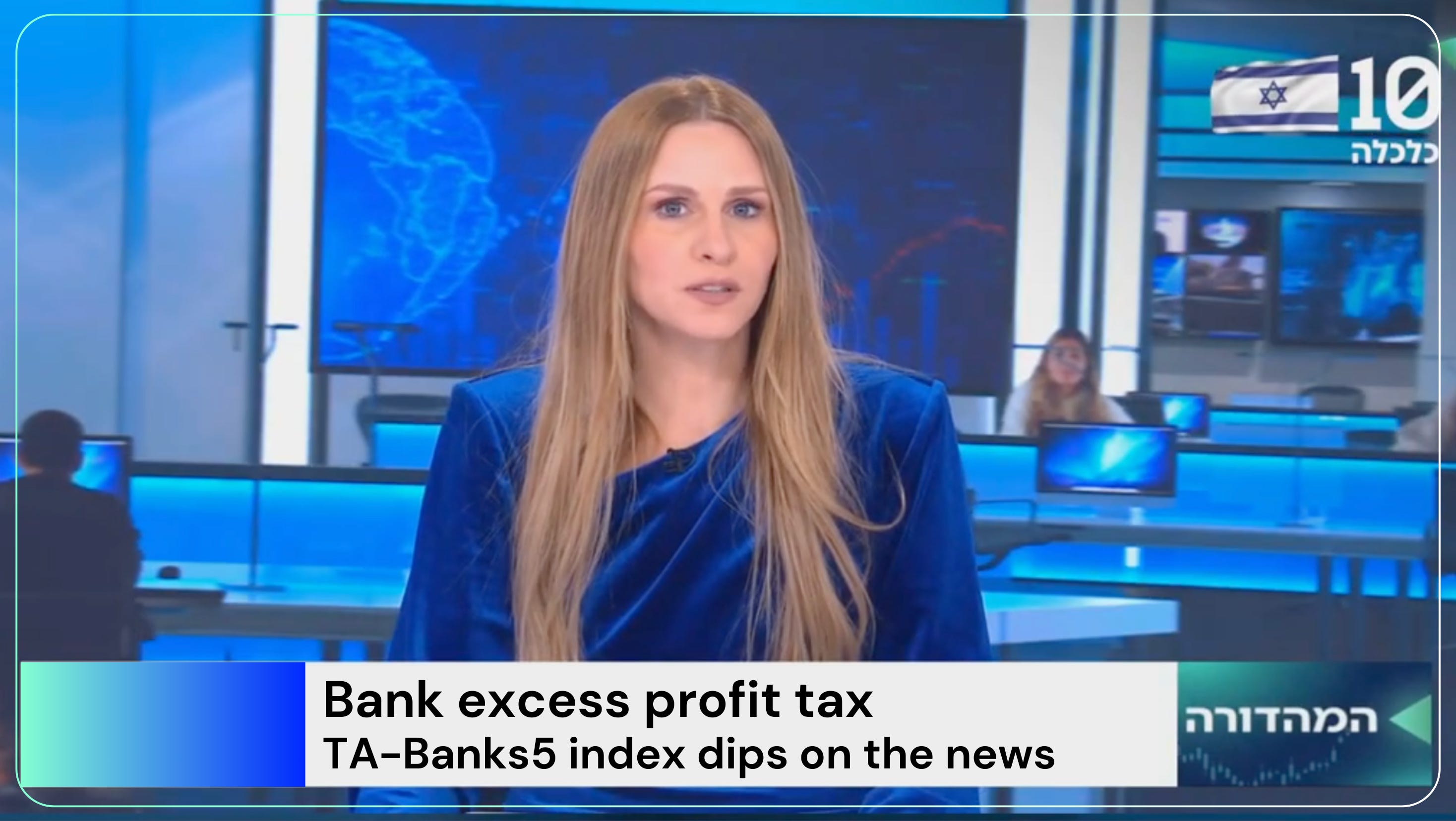
Then came the selloff. Minister of Finance Bezalel Smotrich rejected his own committee’s recommendation for a 7-9% excess profit tax on banks, instead doubling it. In response, the TA-Banks5 index dipped by approximately 1.5%, accelerating to 4.5% by Thursday’s close.
Thursday’s broader selloff across major indices, absent any news catalyst, fueled speculation of year-end position management by a major local institutional investor.
This year, record-breaking momentum has been interrupted by policy uncertainty and technical selling. A question for 2026 is whether fundamentals (defense contracts, economic recovery) can overcome headwinds (excess profit taxes, institutional profit-taking).
Power dynamics: Egypt energy deal, grid hardening, battlefield takes power ‘to go’
The Israeli energy market delivered three major developments in 72 hours: a $35B gas export deal with Egypt, a ₪1B infrastructure overhaul, and a defense-civilian technology partnership.
The Egypt gas deal: ₪112B through 2040
As has been extensively reported, the government approved a ₪112B deal to export natural gas from the Leviathan reservoir to Egypt through 2040. For Prime Minister Netanyahu and Energy Minister Eli Cohen, this is a dual victory - cementing the strategic alliance (de facto security-for-stability deal) with Cairo while injecting massive liquidity into the national budget. This also funds Phase 2 of Leviathan’s development, theoretically boosting supply reliability.
But the approval sparked fierce debate over Israel’s energy future.
Who’s bearish - Dr. Amit Mor, a leading energy economist, issued a sharp warning: “Without new discoveries, Israel risks depleting its reserves and could become a net importer of gas by the late 2030s.” Advocacy group Lobby 99 was even harsher, accusing the government of capitulating to tycoons and selling off the public’s emergency reserves.
Who’s bullish - BDO Consulting Chief Economist Chen Herzog estimates Israel’s reserves are sufficient to power the domestic economy through 2060, even with increased export quotas. BDO argues the export deal is actually a safety mechanism: by guaranteeing revenue, it incentivizes developers to invest in extraction infrastructure.
Grid hardening and off-grid innovation
Israel is rewriting its energy doctrine with a synchronized push to harden national infrastructure while developing off-grid tactical capabilities. Energy Minister Eli Cohen approved a ₪1B pilot to bury high-voltage power lines, the first step in a ₪40B initiative. The move insulates the national grid against extreme weather and aerial threats while unlocking prime real estate previously blocked by safety buffers around overhead pylons.
Meanwhile, while the state secures the central grid, the defense sector is innovating to decouple from it. Rafael (maker of Iron Dome) signed a deal to adapt civilian micro-turbines from Turbogen (TASE:TURB) for battlefield use. The tactical value here lies in Turbogen’s multi-fuel engine, which runs on gas, diesel, or hydrogen. This converts a commercial energy-efficiency tool into a military asset for logistics-constrained environments.
Our take: The dual tracks of hardening the central grid and developing off-grid tactical capacity are about Israel’s future readiness for scenarios where traditional infrastructure becomes a liability. The Turbogen deal is particularly clever: leveraging civilian R&D to solve military problems while creating a commercial export opportunity - other militaries face the same logistics constraints.
Institutional validation for healthcare stocks

Teva’s credit rating upgrade
Teva Pharmaceuticals (NYSE:TEVA) received a major vote of confidence as S&P Global upgraded its long-term credit rating to BB+. The stock hit an 8-year high on the news. The move validates CFO Eli Kalif’s turnaround strategy of cutting the company’s leverage ratio to 4.4x while returning the giant to revenue growth. For investors, a higher credit rating lowers the cost of future debt, freeing up cash flow that was servicing interest payments that can now fund R&D.
Jeen.ai surged 8.5% after securing major hospital contract
Jeen.ai (TASE:JEEN) surged 8.5% after securing a three-year exclusivity deal with one of Israel’s top three healthcare organizations to manage the provider’s gen AI infrastructure. This signals that healthcare AI has moved beyond the experimental “chatbot phase” into the critical reality of compliance, security, and model management. Capturing a highly regulated client like a major hospital network may validate Jeen’s platform as an operating system for enterprise AI.
Israel creates 30k new EU jobs during a 5-year high in Israeli SMB closures
As the Israeli tech export sector expands its workforce abroad, the domestic businesses are getting wiped out and fighting for survival, particularly in the north of the country. Two reports paint this picture -
EIT Hub, Planven, and KPMG revealed this week that Israeli firms now employ over 30,000 people across Europe, a workforce growing at 4.8% annually. Mature Israeli companies (mostly 8-12 years old) increasingly leverage European engineering talent in hubs ranging from Germany to Poland.
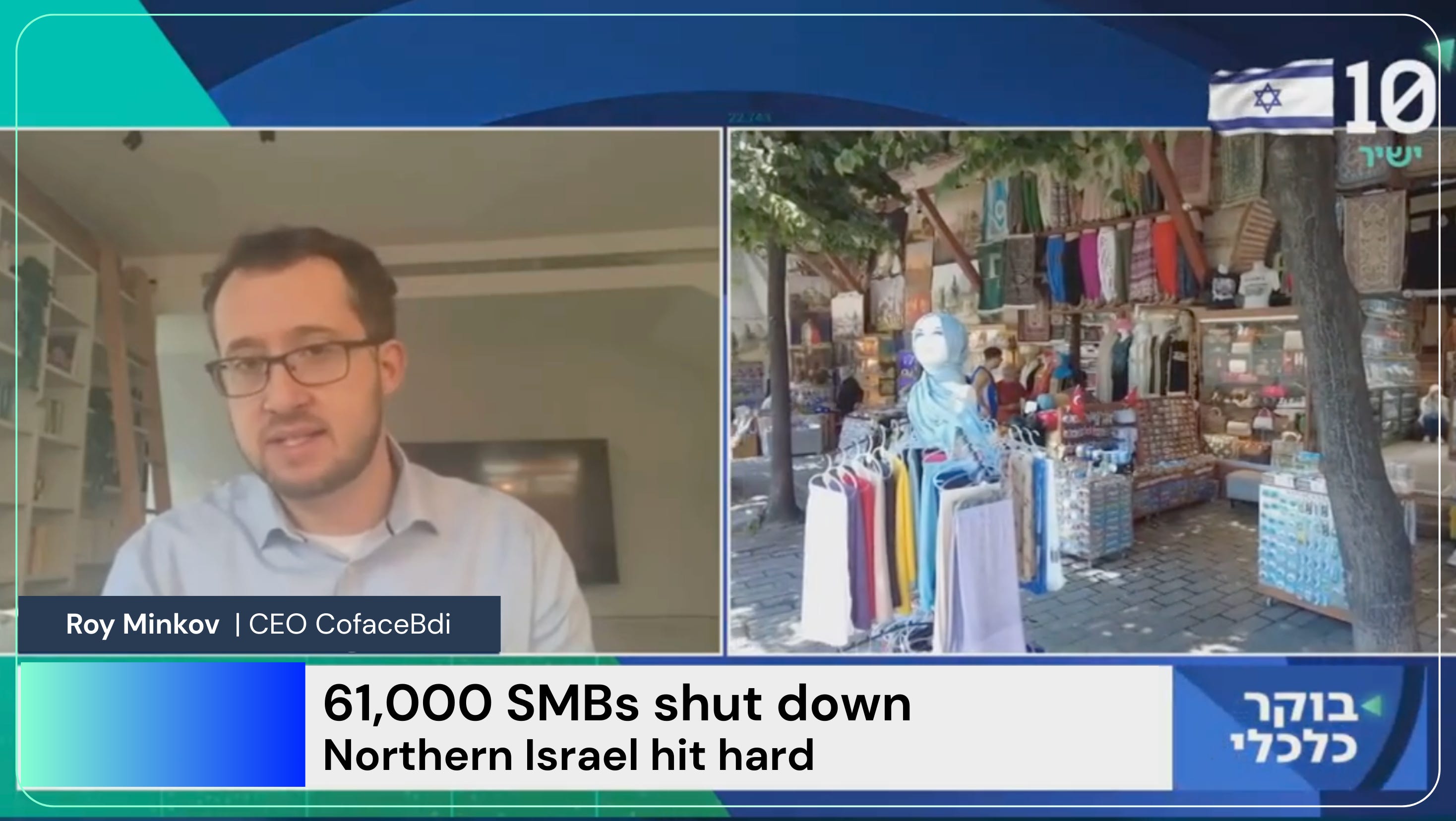
At the same time, an audit by CofaceBdi shows approximately 61,000 Israeli businesses ceased operations in 2025, a five-year high resulting in a net decline of nearly 24,000 active firms. The northern region accounted for 35% of closures.
On TV10, CofaceBdi CEO Roy Minkov described the figures as a “painful testimony to the heavy economic price exacted by the fighting,” noting that “many small and medium businesses simply could not survive the combination of demand destruction and cash flow instability.” However, Minkov pointed to a potential pivot: “If there is no worsening of the security situation, the expectation is that 2026 will be a year of rehabilitation.”
Our take: The dichotomy is stark. Tech and defense sectors, buoyed by global demand, expand abroad while domestic SMBs absorb the full shock of labor shortages, interest rates, and war. This creates a dangerous political dynamic: the export sector (tech, defense) thrives while the domestic economy (restaurants, retail, services) struggles. The 61,000 closures represent real people losing livelihoods, even as TASE hits records. If 2026 doesn’t deliver the promised “rehabilitation,” the political backlash against the tech sector’s success could intensify.
Next week:
We’ll look at Israeli R&D spending as we see the first decline in years, though still among the highest per capita in the OECD.
Plus, we’ve got a new Comment section here on our site, which you can subscribe to separately. If you’d like us to consider your comment for submission to the site, please email us using the contact information below.
That’s our letter, folks. If you enjoyed this Weekly, please forward it to a friend.

The English TV10 newsletter is edited by Sophia Tupolev. We love to hear from you.
TV10 Global | Israel for Investors
Now in English: Bringing you the top stories from the Israeli business community, by Israel’s only business and finance network.
Please share your thoughts with us via: global@tv10.co.il or the Newsroom WhatsApp: +972-55-994-5851.
📧 Subscribe to this newsletter! And follow the daily conversation on 𝕏 @tv10global.
Pings with new editions are also available via our WhatsApp Channel.
Disclaimer: This brief is for informational purposes only and does not constitute investment advice. All data is current as of publication date.