

For more details on the top daily stories, you can read our daily editions from Monday to Wednesday - and now, get our video and audio updates on Spotify Monday-Thursday!

Editor’s note:
In the Cold War, military strategists understood a grim economic truth: a standing army was far more than a physical deterrent. It was a staggering, ceaseless anchor on a nation’s wealth. Game theorists realized that a besieged state had to bleed fiscal resources daily, absorbing a permanent economic toll simply to maintain the baseline architecture of its own survival. Today, that very same geopolitical doctrine has moved from the halls of the Bank of Israel directly to the vanguard of the IAF.

This week, the ‘shadow’ of Iran finally materialized into the kinetic reality of Operation Roaring Lion (Israel name) / Epic Fury (U.S. name). As Israeli and U.S. forces targeted the structural heart of the Iranian nuclear and military apparatus, the Bank of Israel’s earlier decision to bring its easing cycle to a jarring halt has been retroactively validated as a masterstroke of defensive positioning. By choosing to hold the benchmark rate at 4.0%, Governor Amir Yaron effectively pre-funded the independence premium required for a nation entering a regional realignment.
In any other Western capital, a 1.8% inflation rate and slowing consumption would demand immediate, aggressive rate cuts. But Israel does not enjoy the luxury of a neoliberal vacuum; it operates in the immediate aftermath of a paradigm-shifting strike.
What we are witnessing is the ultimate evolution of modern statecraft: the weaponization of the risk premium. The central bank has transitioned from managing domestic inflation to anchoring a Liquidity Fortress capable of absorbing the shocks of active, high-intensity conflict.
By fortifying the shekel ahead of the first sorties over Tehran, the BOI sent a resolute signal to global capital markets: in the calculus of the Middle East, sovereign financial resilience will always eclipse the fleeting political comforts of cheap domestic credit. For a nation now in the opening days of Roaring Lion, the 4.0% rate is the baseline cost of national survival.
— Sophia Tupolev, TV10 Global Editor
TASE weekly snapshot
The Tel Aviv Stock Exchange ended last week in the red amid escalating regional tensions.
TA-35 Index (TASE:TA35): 🔴 -2.45%
TA-90 (TASE:TA90): 🔴 -4.92%
TA-125 (TASE:TA125): 🔴 -3.04%
The cost of the geopolitical premium
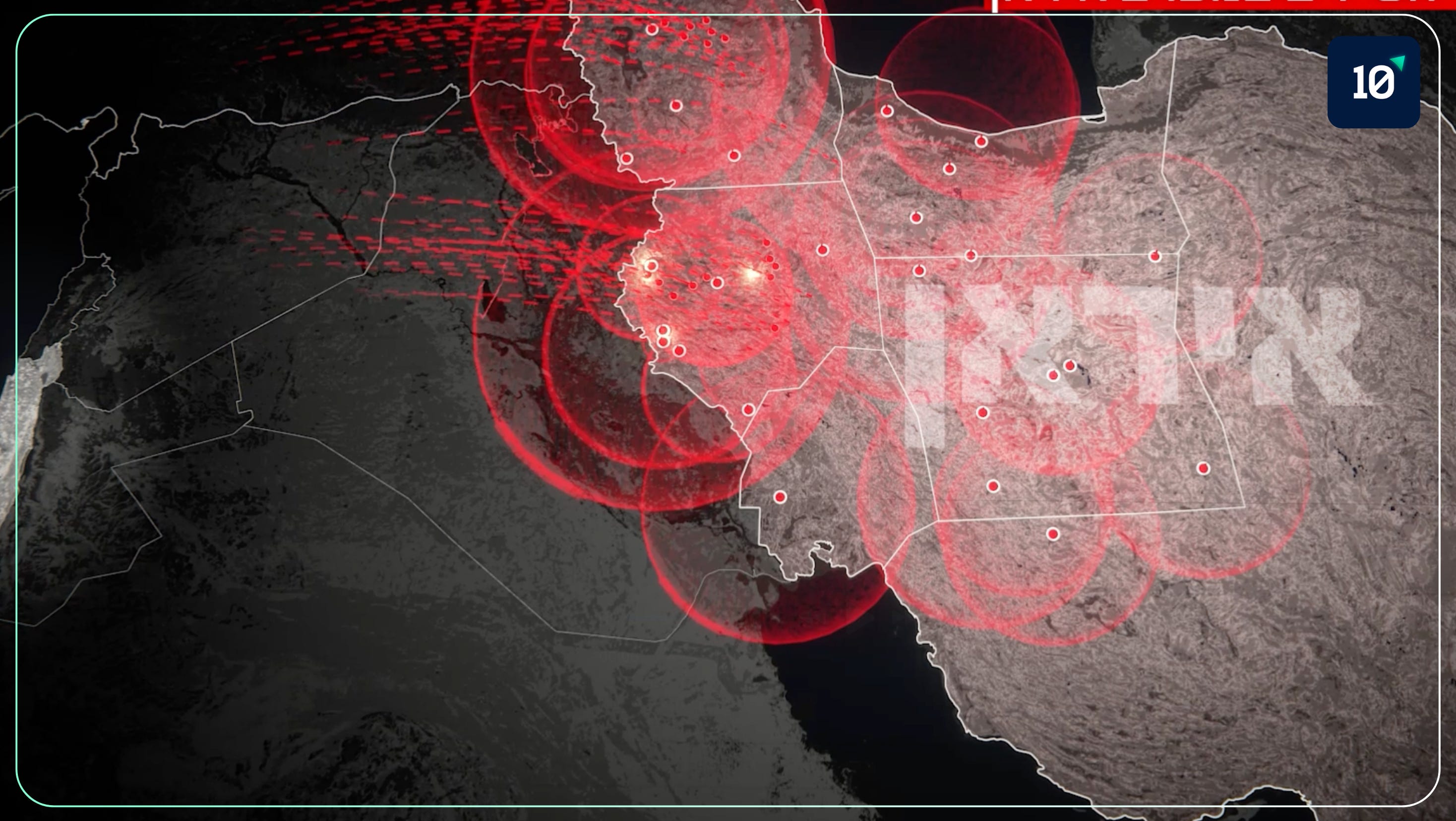
The launch of Operation Roaring Lion has effectively ended the debate between domestic market efficiency and sovereign risk mitigation. On paper, the macroeconomic indicators, prior to the first sorties over Tehran, screamed for a rate cut.
With the CPI at 1.8% and the shekel exhibiting remarkable resilience, pure data suggested that the tightening cycle of the past two years had successfully strangled inflation. Yet, the Bank of Israel’s decision to maintain the 4.0% rate now reveals itself as a masterstroke of forward-looking defensive positioning.
By holding the line, Governor Yaron successfully mitigated the agency risk inherent in the government’s fiscal posture. As Israel enters a high-intensity kinetic phase with a trailing 12-month fiscal deficit already at 4.9% of GDP, the central bank has prevented a devastating inflationary whiplash. The 4.0% rate ensures that commercial titans like Bank Leumi (TASE:LUMI) and Bank Hapoalim (TASE:POLI) possess the net interest margins and capital buffers necessary to weather the inevitable sovereign risk re-pricing that accompanies a regional strike of this magnitude.
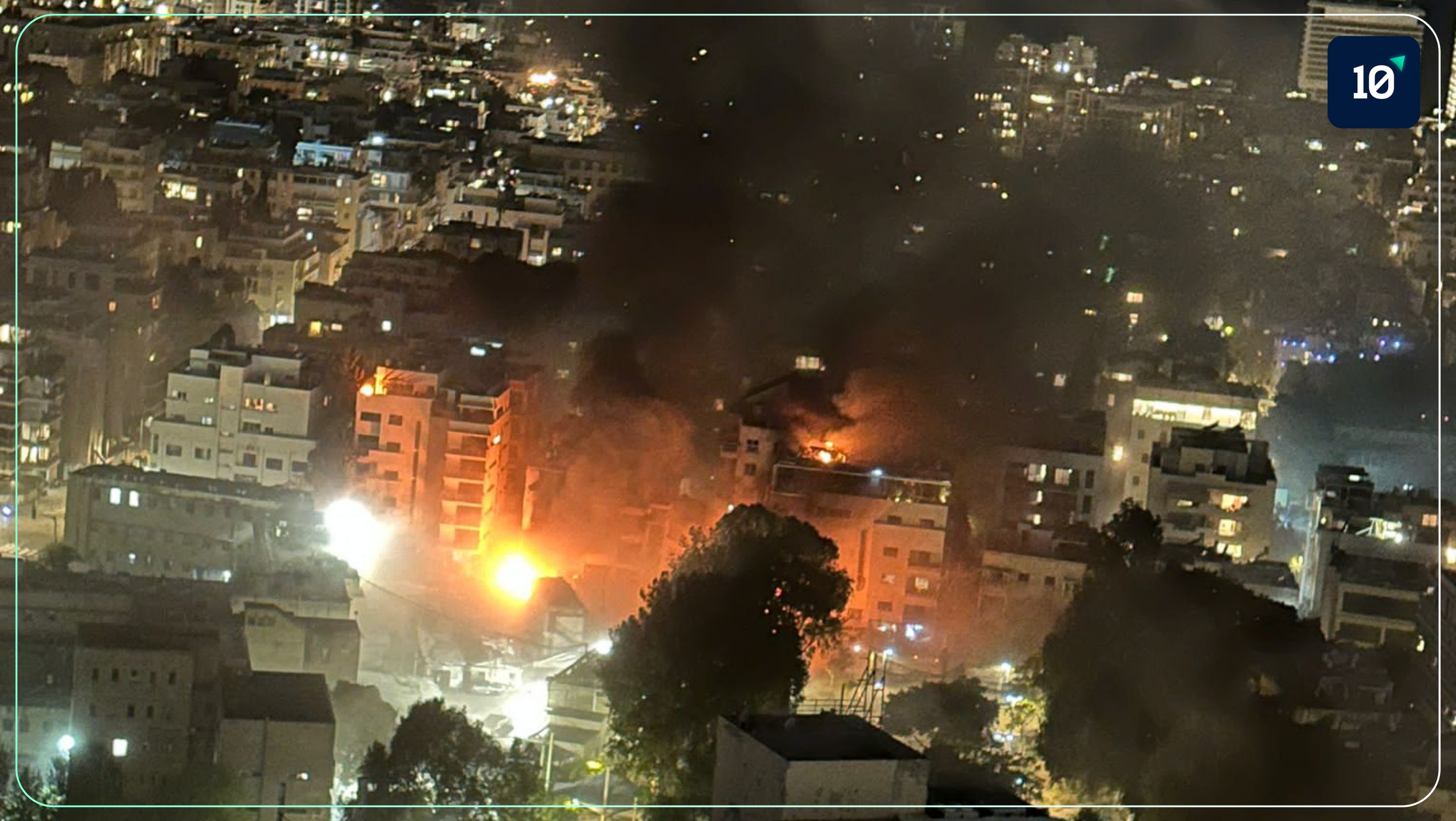
Furthermore, the real estate market continues to present a paradox that defies standard interest rate mechanics. Despite the highest borrowing costs in a decade, housing prices rose 0.8% at year-end, underpinned by a structural supply-side labor shortage. While developers like Shikun & Binui (TASE:SKBN) and Israel Canada (TASE:ISCN) sit on massive unsold inventories, the current military mobilization will only deepen the labor deficit, placing an even firmer floor under asset prices. In this environment, the BOI is refusing to subsidize fiscal expansion with cheap money, instead enforcing a harsh discipline to keep the shekel on a short leash as the geopolitical shadow turns into a storm.
In the lexicon of global debt and currency markets, the risk premium has shifted from a theoretical spread to a kinetic reality. This is the excess yield international investors demand to hold assets in a jurisdiction facing Black Swan events such as the regional missile exchange currently unfolding. Unlike standard credit risk, this geopolitical premium acts as a gravitational pull on the shekel.
If the Bank of Israel had narrowed the yield differential with the US Federal Reserve last week, the launch of Roaring Lion would have likely triggered a catastrophic capital flight. By keeping rates elevated, the BOI is essentially paying global investors a ‘preemption dividend’ to keep their capital parked in Israel. In the opening hours of this new regional reality, that yield advantage is the only thing standing between a manageable transition and a currency-driven inflationary spiral.
The game theory of Central Bank independence
In the traditional school of neoliberal economics, central banks are viewed as emotionless algorithms, cutting rates the moment the CPI touches the 2.0% threshold. The textbook argument was that holding the rate at 4.0% was an unnecessary chokehold on an economy that had just posted 3.1% annual growth. However, as Operation Roaring Lion transitions from a strategic contingency to a reality, that textbook has been set ablaze.
Applying standard Discounted Cash Flow (DCF) logic to a nation engaged in the most significant regional preemption in its history is intellectual malpractice. The true Alpha of the Israeli economy today is not quarterly GDP growth or consumer spending; it is absolute sovereign readiness. Lowering the interest rate last week would have been a massive, unhedged high-beta trade. It would have rested on the delusional assumption that the geopolitical situation would remain static.
Furthermore, a domestic debate over ‘shadow discounts’ in the real estate sector has been rendered moot by the necessity of creative destruction. If developers were indeed propping up valuations while secretly hemorrhaging margin, the market was dangerously mispricing risk. A rate cut now would merely re-inflate a localized housing bubble, allowing over-leveraged zombie contractors to survive at the expense of national liquidity. In a time of war, capital must be allocated to the most resilient sectors, not used to bail out those who gambled on a low-interest-rate environment that no longer exists.
Ultimately, true market efficiency in Israel must price in national survival. The Bank of Israel’s mandate is not to guarantee cheap mortgages or to ensure that incumbent politicians hit their growth targets ahead of an election. Its mandate is to ensure that the Israeli economy possesses the liquidity, the currency strength, and the foreign reserves to withstand a systemic, existential shock.
The 4.0% rate is the correct, albeit painful, price of money in a high-intensity geopolitical theater. As the smoke rises over Tehran, the independence premium we paid last week has become a hedge that matters.
That’s our letter, folks. If you enjoyed this Weekly, forward it to a friend.

The English TV10 newsletter is edited by Sophia Tupolev. We love to hear from you.
TV10 Global | Israel for Investors
Now in English: Bringing you the top stories from the Israeli business community, by Israel’s only business and finance network.
Please share your thoughts with us via: global@tv10.co.il or the Newsroom WhatsApp: +972-55-994-5851.
📧 Subscribe to this newsletter! And follow the daily conversation on 𝕏 @tv10global.
Pings with new editions are also available via our WhatsApp Channel.
Disclaimer: This brief is for informational purposes only and does not constitute investment advice. All data is current as of publication date.