

🍿 Get the Daily on Spotify, too
Quick takes:
Geopolitics: Iran's blockade of the Strait of Hormuz following a US strike on Kharg Island has driven Israeli gas prices up to ₪7.02 per liter.
Macro: The ongoing Operation Roaring Lion has pushed 18,328 new job seekers into the market; National housing prices slipped 0.1%.
Regulation: The Israel Tax Authority is accelerating liquidity for war-impacted businesses; Finance Committee approves to expanded income tax brackets.
Editor’s Note
The macroeconomic fallout of Operation Roaring Lion is exhibiting textbook symptoms of localized stagflation. A sharp contraction in labor demand, evidenced by over 18,000 new job seekers, coupled with a 5.8% surge in new lease premiums, points to severe supply-side shocks and structural market friction.
Jerusalem’s response is a heavy-handed deployment of countercyclical fiscal policy. By intentionally absorbing a ₪4.5 billion revenue hit to widen tax brackets and bypassing bureaucratic bottlenecks via the Tax Authority’s formula-based Green Track, the Ministry of Finance is signaling a clear pivot away from orthodox deficit reduction.
This is a calculated bet against Ricardian equivalence. Policymakers are gambling that structural tax relief will translate directly into immediate consumption rather than precautionary savings, effectively propping up the velocity of money. The mandate is now singular: inject liquidity into the highest-yielding tax brackets, mitigate human capital flight, and maintain the private-sector engine as the ultimate macroeconomic shock absorber through a multi-front war.
Geopolitics
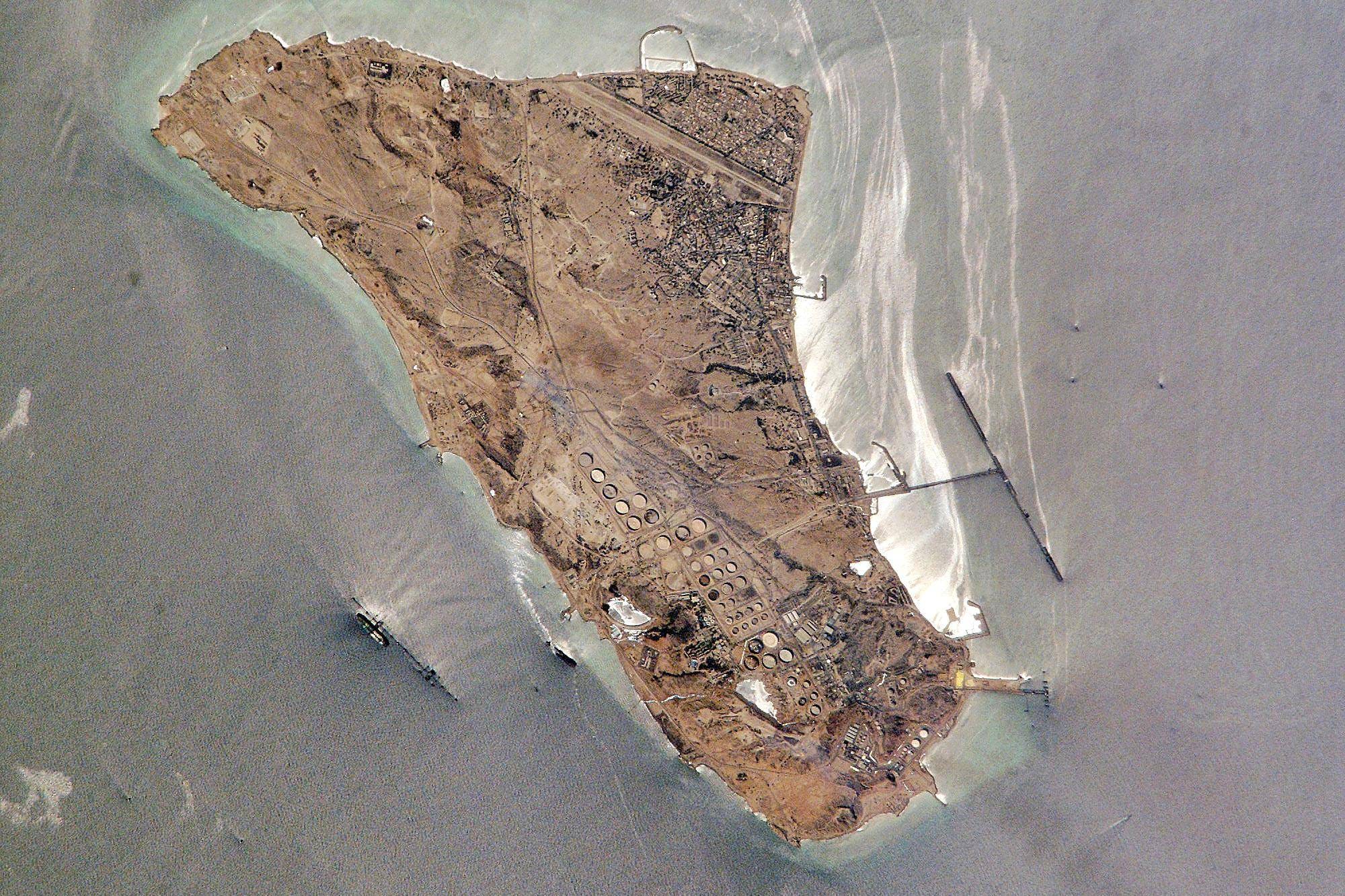
Two weeks into the conflict, Washington finally targeted the Ayatollahs’ golden goose: Kharg Island. Handling 90% of Iran’s oil exports, roughly 1.5 million barrels a day, this hub is the regime’s sole economic oxygen line. The US delivered a strictly proportional blow, dismantling the island’s defense grid while deliberately sparing its 30 million-barrel storage capacity.
However, Tehran’s highly irrational retaliation, blocking the Strait of Hormuz, which facilitates 20% of global oil transit, has triggered a massive supply shock.
Compounded by preemptive OPEC production cuts from Kuwait, the UAE, and Iraq, global crude crossed the $115 per barrel last week, with WTI and Brent both surging over 13%.
Our take: Washington just stripped the armor off Tehran's economic engine without detonating it, but the Ayatollahs' suicidal blockade of Hormuz is doing the geopolitical damage for them. By choking off a fifth of the world's oil, Iran is forcing crude past $115, guaranteeing a severe April price shock at Israeli pumps. The Bank of Israel can anchor core inflation at 2% on paper, but imported energy inflation is about to rip through the domestic supply chain, evidenced by a 3% bump in diesel and an 8.3% spike in industrial fuel oil. Markets are now pricing in a stark binary: a US-enforced unblocking of the strait, or a regional Samson Option that drags global crude to $130 and domestic transport costs into uncharted territory.

The macroeconomic blowbacks immediately hitting the Israeli consumer. The Ministry of Energy’s pricing formula, reflecting a 7% spike in international gasoline prices and a 0.3% strengthening of the dollar, already pushed the maximum March price for 95-octane to ₪7.02 per liter.
Macro
The macroeconomic friction of Operation Roaring Lion is accelerating. The Employment Service logged 18,328 new job seekers since the operation began, with a sharp spike of 10,430 registrations just last week. The demographic breakdown shows 10,892 women and 7,436 men seeking work, with the Dan region absorbing the heaviest hit (5,179 new job seekers).

Simultaneously, the Central Bureau of Statistics reported a 0.2% rise in February’s CPI, locking annual inflation at 2%. Notable drops were seen in clothing (-3.3%), while fresh fruit spiked (3.6%).
Despite steady inflation, real estate asset prices continue a slight contraction. Housing prices dropped 0.1% between December 2025 and January 2026, landing at a 0.9% year-over-year decrease. New apartment prices fell 0.1%, and when stripped of government-subsidized deals, the drop deepens to 0.4%. Regional divergence is stark: Jerusalem prices surged 5.4% and the North rose 3.2%, while Tel Aviv and the Central district fell 2.8% and 3.9%, respectively. Conversely, the rental market is heating up. Rent for renewing tenants climbed 2.7%, while new lease agreements jumped 5.8%.
Our take: The widening gap between soaring rents and contracting asset prices signals a strictly defensive market. The sharp spike in Dan region job seekers shows businesses aggressively shedding payroll to preserve runway amidst the war.
This employment insecurity is sidelining prospective homebuyers, pushing demand entirely into the rental market and driving new lease premiums up 5.8%. Despite the Bank of Israel anchoring headline inflation at 2%, underlying mechanics point to localized stagflation: capital is frozen, prime center asset prices are correcting, and core living costs are spiking. Policymakers are now boxed in, forced to support a cooling labor market without reigniting inflation.
Regulation

The Finance Committee has greenlit the Tax Bracket Spacing chapter of the Economic Efficiency Bill, effective January 1, 2026. Designed to incentivize employment by targeting marginal rather than effective tax rates, the move will cost the state ₪4.5 billion in 2026 and ₪5.5 billion annually thereafter.
The 20% tax bracket expands to cover monthly income up to ₪19,000 (previously capped at ₪16,150).
The 31% bracket shifts to cover incomes between ₪19,001 and ₪25,100.
The 35% bracket will now kick in at ₪25,101.
To mitigate the economic fallout of the current security situation, the Israel Tax Authority is shifting eligible businesses into a new ‘Green Track.’ Unlike the statutory ‘Red Track’, which requires exhaustive accounting, detailed documentation, and individual assessments to prove exact economic damages, the Green Track relies on a standardized, formula-based approach tied to revenue drops. This fast-tracks compensation for businesses that previously received advances during the Swords of Iron war, allowing them to bypass severe bureaucratic bottlenecks. The state has already received nearly 11,000 claims under the current operation, led heavily by Tel Aviv (5,614) and Ashkelon (4,022).
Our take: The Treasury is intentionally absorbing a ₪4.5 billion revenue hit to inject liquidity into the upper deciles, who shoulder over 90% of the income tax burden. Paired with the Green Track's rapid capital deployment, the state is actively prioritizing operational continuity over immediate deficit reduction. Policymakers are betting that an annual ₪5,000 tax break for professionals will prevent talent flight and act as a macroeconomic shock absorber to sustain the private sector through the war.
TASE snapshot for Wednesday, March 16, 2026
TA-35 Index (TASE:TA35): 🔴 -0.01%
TA-90 (TASE:TA90): 🔴 -0.59%
TA-125 (TASE:TA125): 🔴 -0.07%
If you enjoyed this update, forward it on.
TV10 Global | Israel for Investors
Bringing you the top stories from the Israeli business community, by Israel’s only business and finance network.
Share your thoughts with us via: global@tv10.co.il or the Newsroom WhatsApp: +972-55-994-5851.
📧 Subscribe to this newsletter! And follow the daily conversation on 𝕏 @tv10global.
Pings available via WhatsApp Channel.
Disclaimer: This brief is for informational purposes only and does not constitute investment advice. All data current as of publication date.