

🍿 Get the Daily on Spotify, too
Quick takes:
Macro: The Knesset advances a sweeping budget featuring an emergency defense injection; Tax burden on the lowest income decile hits 45%; The domestic economy faces a simultaneous squeeze from new job seekers.
Credit & Infrastructure: Total non-financial private sector debt surged to a historic ₪2.5 trillion; The Tax Authority is overwhelmed by a wave of property damage claims from Operation Roaring Lion.
Capital Markets: Israir Group reported record 2025 revenue but swung to a net loss as kinetic and currency headwinds threaten H1 2026 margins; Prime Energy reported a revenue surge in Q4; FOX Group saw a record annual revenue in 2025.
Editor’s Note
This week’s data suggests that Operation Roaring Lion is no longer just a kinetic event, but an immediate stress test on Israel’s economy.
Look at the numbers crossing our desk in just the last 72 hours. The Knesset Finance Committee is rushing an ₪850 billion budget to the plenary to plug a sudden ₪30 billion defense crater. But the real crisis is unfolding in the labor market. Over 12,700 Israelis registered for unemployment in the last seven days alone - a staggering acceleration that heavily targets the female-dominated retail, hospitality, and service sectors.
Simultaneously, the Tax Authority is processing over 14,000 property damage claims. The fact that Tel Aviv, the beating heart of our corporate and real estate markets, accounts for the highest volume of structural impacts completely shatters the illusion that the central business district is insulated from the fallout. Add a record ₪2.5 trillion in private sector debt to the mix, and the immediate picture is a harsh Q1 reality for any domestic-facing equity.
But panic is rarely a profitable strategy.
If history teaches us anything, it’s that the Israeli economy is uniquely engineered to absorb kinetic shocks. The speed at which the state is deploying capital, from the defense budget approvals to the fast-tracked compensation funds, shows a system designed to keep the commercial gears turning. Corporate Israel is already adapting: highly leveraged sectors are aggressively managing cash reserves, while the tech ecosystem rapidly pivots to meet surging, inelastic demand in defense, cyber, and autonomous systems.
Balance sheets will undoubtedly take a hit this quarter, and the transition will be painful for the domestic workforce. But the foundational resilience remains intact. The economy might be temporarily bending, but it is far from breaking.
Macro
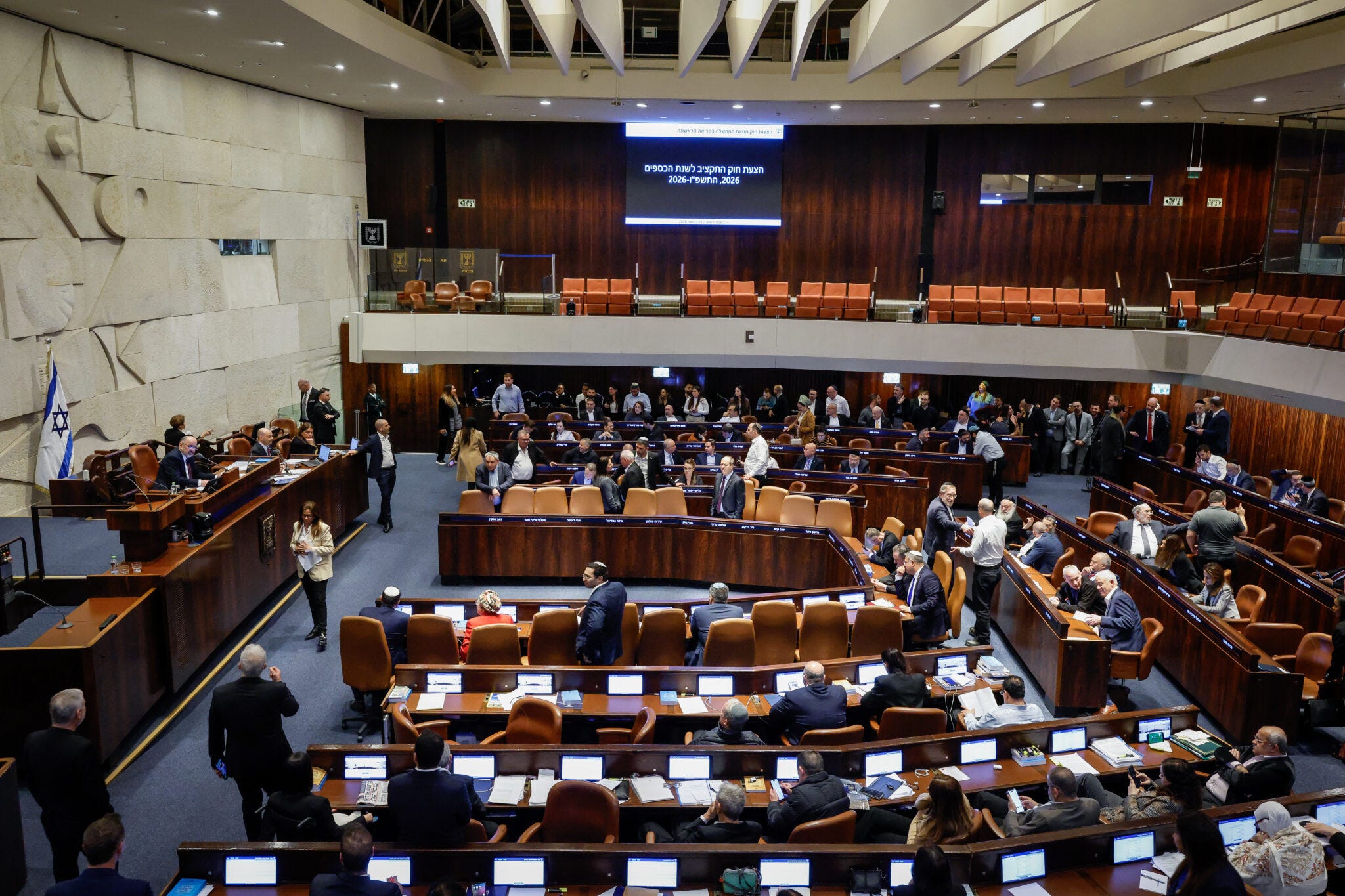
The Knesset Finance Committee has greenlit the 2026 State Budget for its final plenary readings, finalizing a massive ₪850.59 billion spending package. Reflecting the stark realities of Operation Roaring Lion, the Defense Ministry's allocation swelled to over ₪142 billion following an emergency ₪30 billion injection.
In parallel, the Chief Economist released a sobering tax burden analysis for 2023, showing the bottom income decile parts with 45% of its gross income, largely due to a heavy reliance on regressive indirect taxes (VAT), while the top decile pays 48%, accounting for 42% of all direct tax revenues collected. Despite this skewed tax burden, broader economic inequality has slightly narrowed over the past decade. Israel's Gini index ticked down from 0.478 in 2014 to 0.470 in 2023.
The Employment Service published bleak data reflecting the immediate microeconomic toll of the conflict. Since February 28, 31,122 new job seekers have registered, with 12,794 registering in the last week alone. The Dan district led the surge with 8,465 newly unemployed. Demographically, women are bearing the brunt of the shock, comprising 61.5% of the new job seekers.
Our take: The Treasury is cornered by its own math. Funding the ₪30 billion emergency defense injection would traditionally point to a VAT hike, but the Chief Economist’s data proves the lower deciles are already suffocating under a 45% tax burden. Couple that structural exhaustion with a sudden, severe labor shock in the female-dominated retail and service sectors across the Dan region, and a grim picture emerges for the domestic economy.
Consumer spending is effectively tapped out. Investors should brace for a deep freeze in retail and consumer-facing equities and expect the state to rely heavily on sovereign debt issuance, and potentially targeted corporate taxes, rather than broad consumer tax hikes to fund the war effort.
Credit & Infrastructure
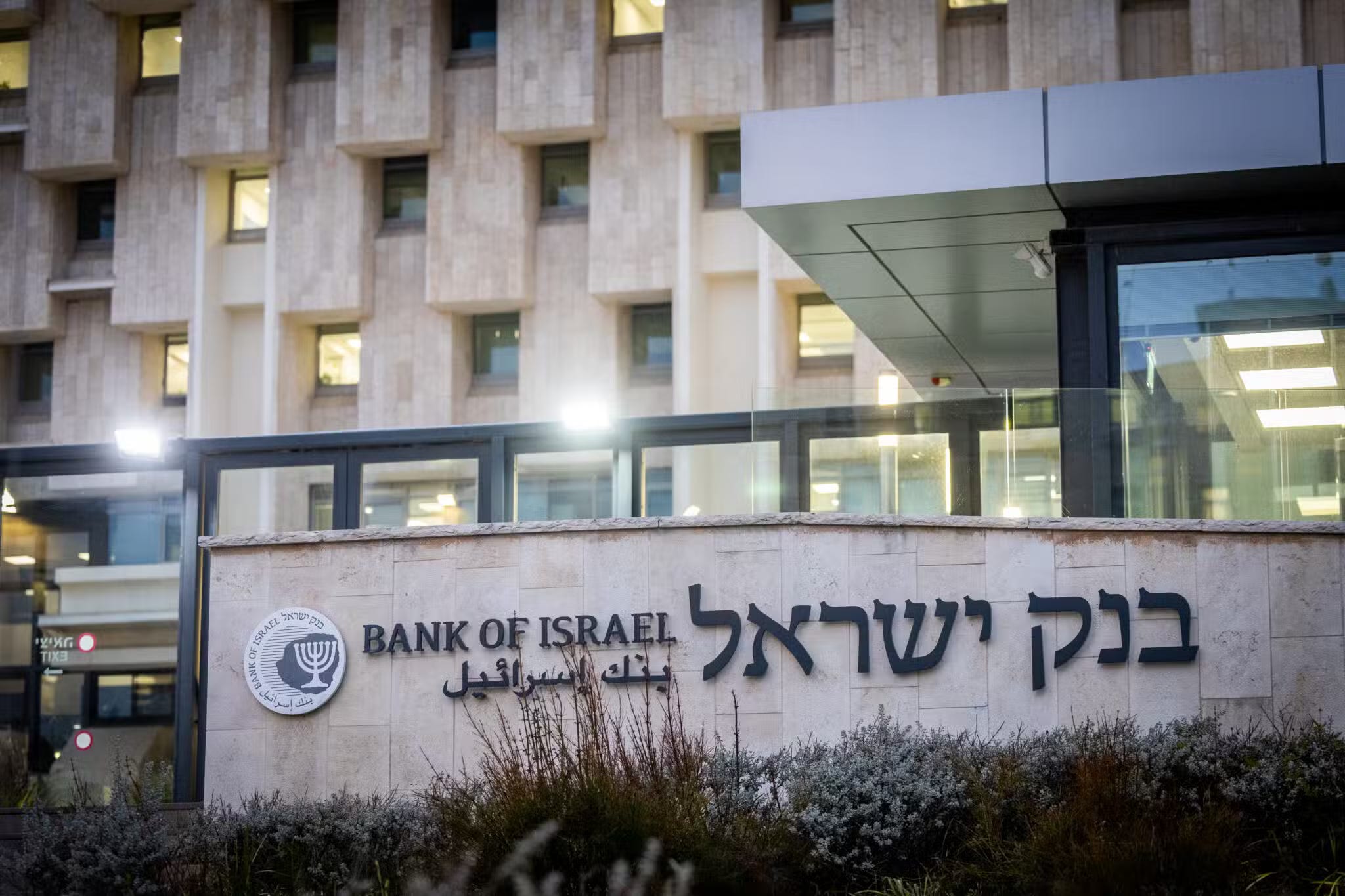
The Bank of Israel reports that the non-financial private sector's debt balance rose 2.8% in Q4 2025 to approximately ₪2.5 trillion. The business sector accounted for ₪1.5 trillion of this total (+3.6%), fueled by ₪65 billion in net debt raising, primarily from domestic lenders like Bank Leumi (TASE:LUMI) and Bank Hapoalim (TASE:POLI), as well as overseas sources. Household debt also ticked up to ₪903 billion, driven by an additional ₪9 billion in new mortgages.
Our take: Corporate Israel is actively front-loading debt to build defensive liquidity buffers against geopolitical tail risks. However, the widening corporate bond spreads noted in early 2026 suggest credit markets are finally pricing in prolonged operational disruptions, signaling painful refinancing costs ahead for highly leveraged real estate developers.
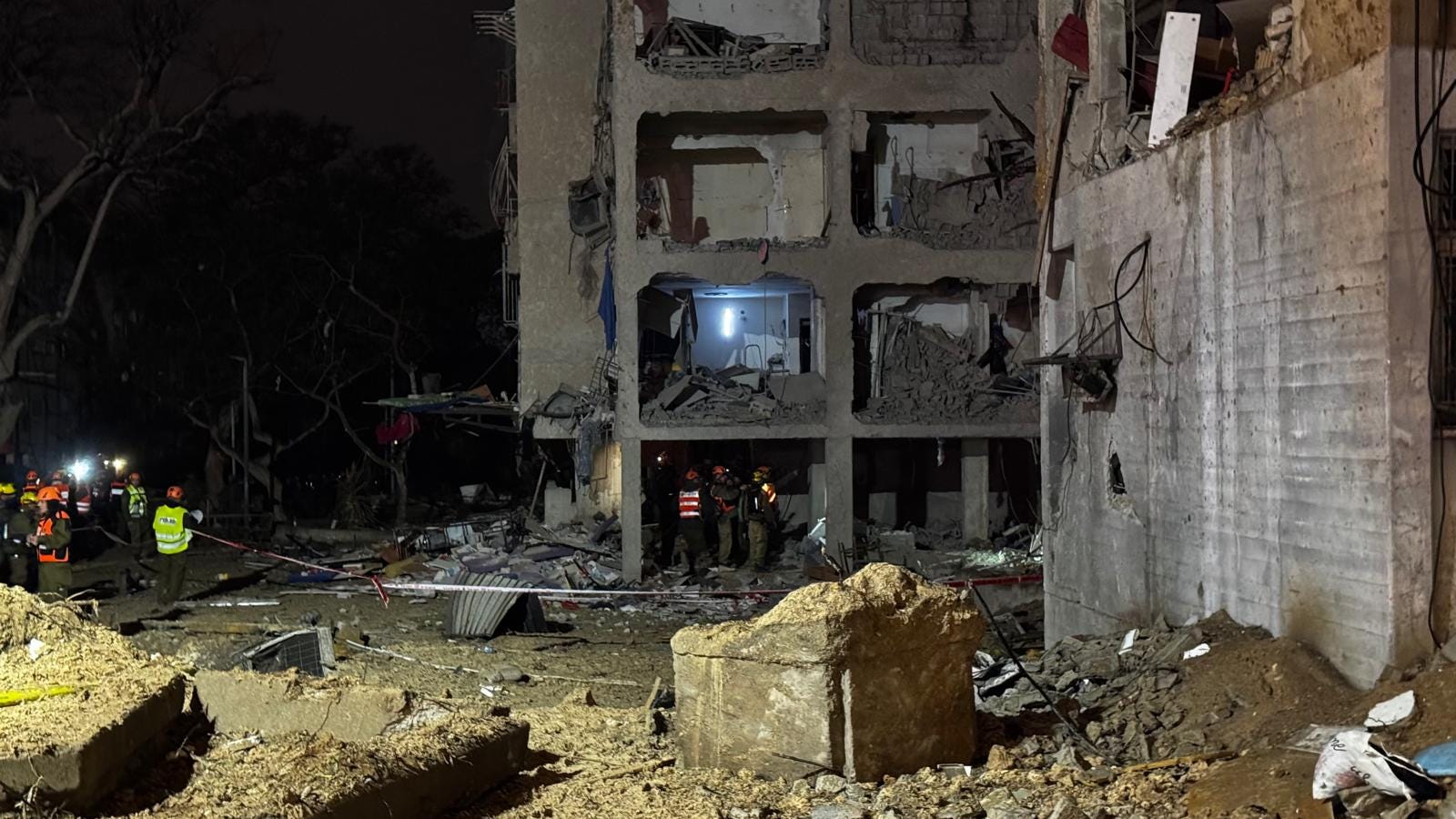
The Israel Tax Authority’s compensation fund reported an unprecedented 14,344 property damage claims filed since the onset of Operation Roaring Lion. The breakdown is severe: 9,511 claims for structural damage, 3,086 for vehicles, and 1,436 for equipment and contents. Crucially, these figures do not yet capture the full scope of damages following last night’s strikes in Dimona and Arad, nor do they account for the newly reported physical impacts on critical energy infrastructure in the Haifa Bay area.
The geographic concentration underscores the immediate economic disruption. The Tel Aviv area leads the country with roughly 7,370 claims, followed by Ashkelon with 4,670 and Jerusalem with 360. To process the backlog, the state has deployed 74 property tax and appraisal teams nationwide, including specialized units at evacuee hotels, with 12,048 claims already assessed or pushed through a fast-track approval system.

Our take: The heavy concentration of structural damage in the Tel Aviv district presents a dual threat to state liquidity and commercial continuity. Compounding this is the direct hit to Haifa’s energy infrastructure, which introduces acute operational risks for the national petrochemical supply chain.
Investors should closely monitor traditional energy mainstays as they navigate immediate repair costs and uncertain production downtimes, while major developers like Shikun & Binui will likely pivot their national project backlogs to meet emergency municipal rebuilding efforts.
Capital Markets
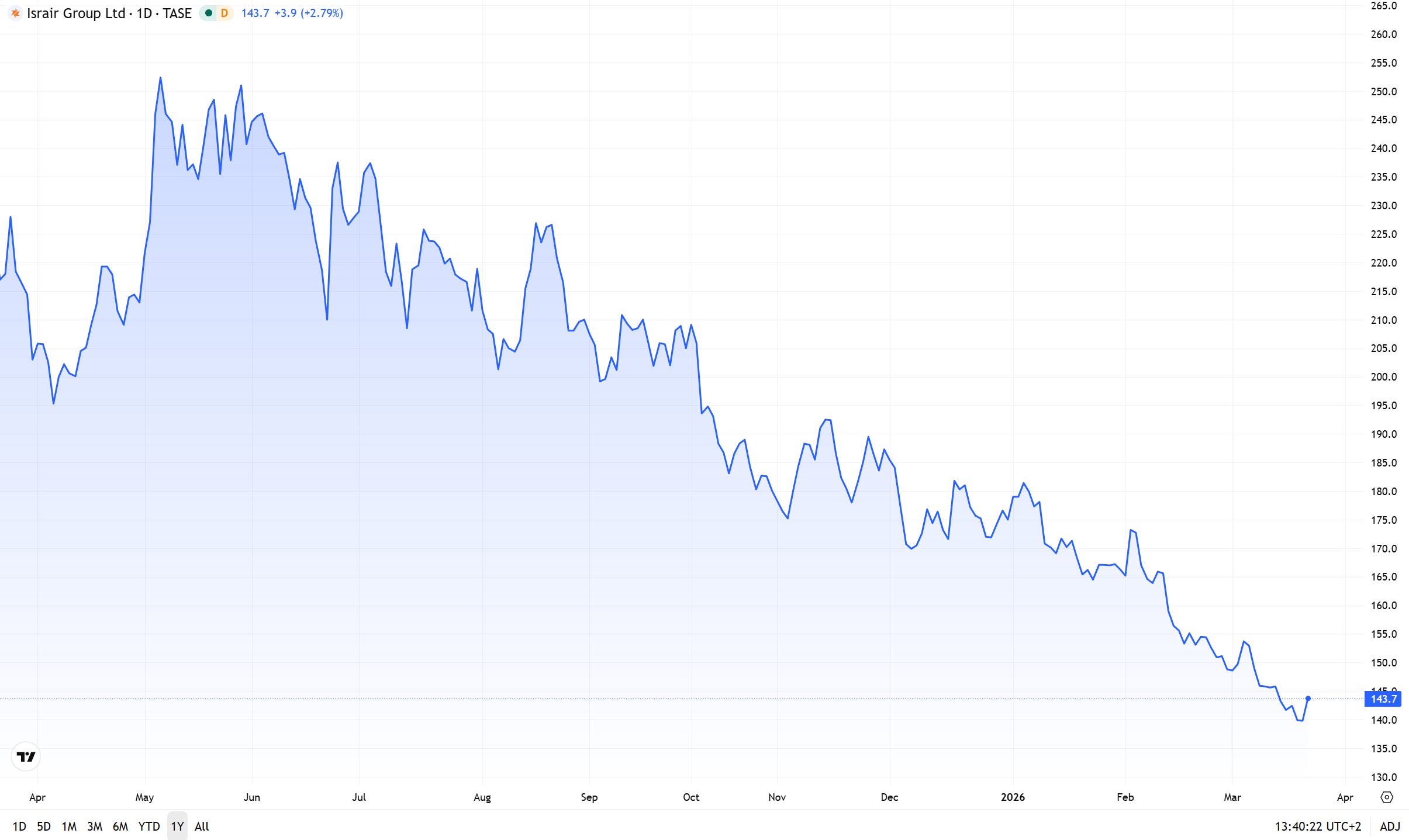
Israir Group (TASE:ISRG) closed out a volatile 2025 with record revenues of $690 million, a 50% year-over-year jump, driven largely by Israel's prolonged aviation blockade which kept average ticket prices artificially high.
However, currency headwinds (weak shekel against the dollar and euro) eroded operating margins, dragging operating profit down 13.88% to $26 million and pushing Q4 into a $1.29 million net loss.
Management noted that a previous military campaign wiped out $7.5 million in profit, and they expect the current Operation Roaring Lion, combined with rising jet fuel costs, to negatively impact H1 2026 results. Despite immediate headwinds, the carrier is pushing forward with aggressive expansion, allocating $74 million to acquire two wide-body Airbus A330s for transatlantic routes by Q2 2026.
Prime Energy (TASE:PRIM) released its Q4 2025 results, highlighting the volatility inherent in Israel's renewable transition during wartime. Quarterly revenue from electricity sales skyrocketed 160.5% year-over-year to ₪8.48 million, up from ₪3.25 million in the same period last year. However, the surge in activity failed to reach the bottom line: the company swung to a quarterly gross loss of ₪625,000, a 469% decline from the previous year’s modest profit, while quarterly operating losses climbed by 83%.
Retail giant FOX Group (TASE:FOX) reported robust top-line growth for 2025, with annual revenue climbing 10% to ₪7.1 billion. Gross profit reached ₪4.1 billion, reflecting a slightly improved gross margin of 57.6%. Despite the revenue surge, net profit contracted to ₪320 million (down from ₪400 million in 2024), impacted by the broader macroeconomic climate and security-related disruptions. The Group maintains a formidable liquidity position, reporting cash flow from operations of approximately ₪900 million.
TASE snapshot for Monday, March 23, 2026
TA-35 Index (TASE:TA35): 🟢 +0.10%
TA-90 (TASE:TA90): 🔴 -2.57%
TA-125 (TASE:TA125): 🔴 -0.49%
If you enjoyed this update, forward it on.
TV10 Global | Israel for Investors
Bringing you the top stories from the Israeli business community, by Israel’s only business and finance network.
Share your thoughts with us via: global@tv10.co.il or the Newsroom WhatsApp: +972-55-994-5851.
📧 Subscribe to this newsletter! And follow the daily conversation on 𝕏 @tv10global.
Pings available via WhatsApp Channel.
Disclaimer: This brief is for informational purposes only and does not constitute investment advice. All data current as of publication date.