

🍿 Get the Daily on Spotify, too
Quick takes:
Regulation: The Ministry of Labor moves to fast-track emergency laws to protect displaced workers from dismissal.
Capital Markets: TASE hits record highs as the UAE’s frictionless reputation is taking a hit as Dubai and Abu Dhabi markets crater.
Banking: Bank Leumi signals a defiant business as usual with record-breaking profits.
Editor’s Note
For years, the Gulf Dream was built on the idea of a frictionless, futuristic sanctuary, a place where capital could grow far above the fray of regional friction. But this morning, as the tickers in Dubai and Abu Dhabi bled red, that glass ceiling shattered.
It is a surreal moment for any global investor watching this unfold. While the secure hubs of the UAE grapple with the reality of kinetic strikes on their data centers and airports, Tel Aviv a city that has lived in the eye of the storm for decades, is seeing its flagship indices record-breaking.
We are witnessing a fundamental repricing of regional risk. In this new landscape, resilience is becoming a more valuable currency than tranquility.
Regulation
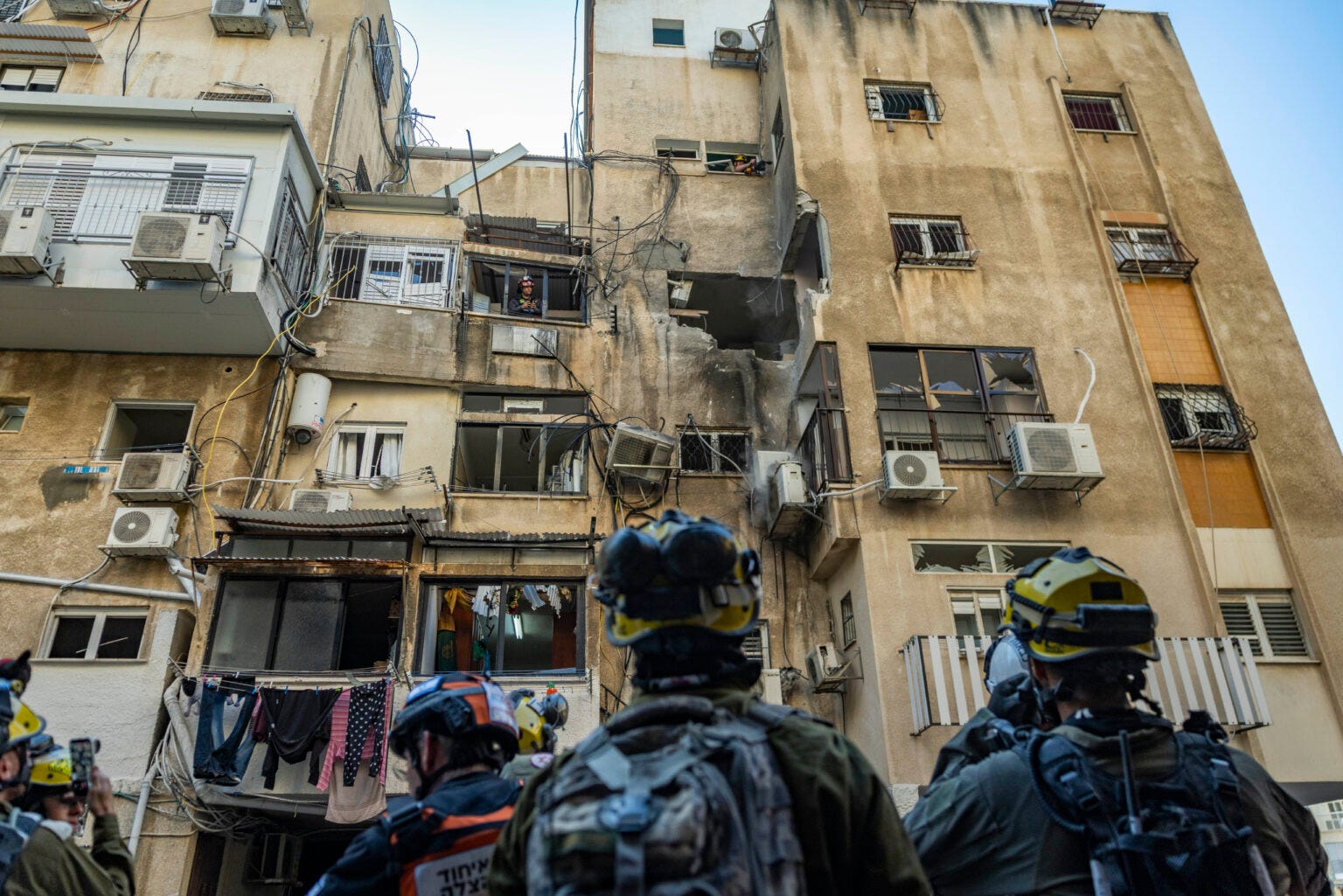
As the home front absorbs the physical impact of Operation Roaring Lion, the government is moving to prevent an economic collapse for its most vulnerable citizens. Minister of Labor Yariv Levin has fast-tracked a critical amendment to the Emergency Labor Protection Law, designed to shield employees who have literally lost the roof over their heads.
The legislation addresses a grim new reality: thousands of Israelis who aren’t just displaced by evacuation orders, but whose homes have sustained direct hits. The amendment mandates a 90-day immunity from dismissal for any worker forced to stay home due to structural damage to their residence. To activate this Employment Iron Dome, workers simply need an official displacement certificate from their local municipality. Additionally, the Ministry is slashing the bureaucracy for collective bargaining, reducing the window for the Labor Minister to expand workplace agreements from 30 days to just 7 days.
Our take: This is the social backstop required to maintain the resilience re-rating we see in the markets. By ensuring that a missile strike doesn’t result in a pink slip, the state is protecting the labor force’s long-term continuity. For the macro investor, this is a calculated trade-off. While it places a temporary burden on employers, it prevents a cascade failure in consumer solvency that would otherwise trigger the very non-performing loans Bank Leumi is currently successfully avoiding. The state socializes the risk of displacement to preserve the integrity of the broader economy.
Capital Markets
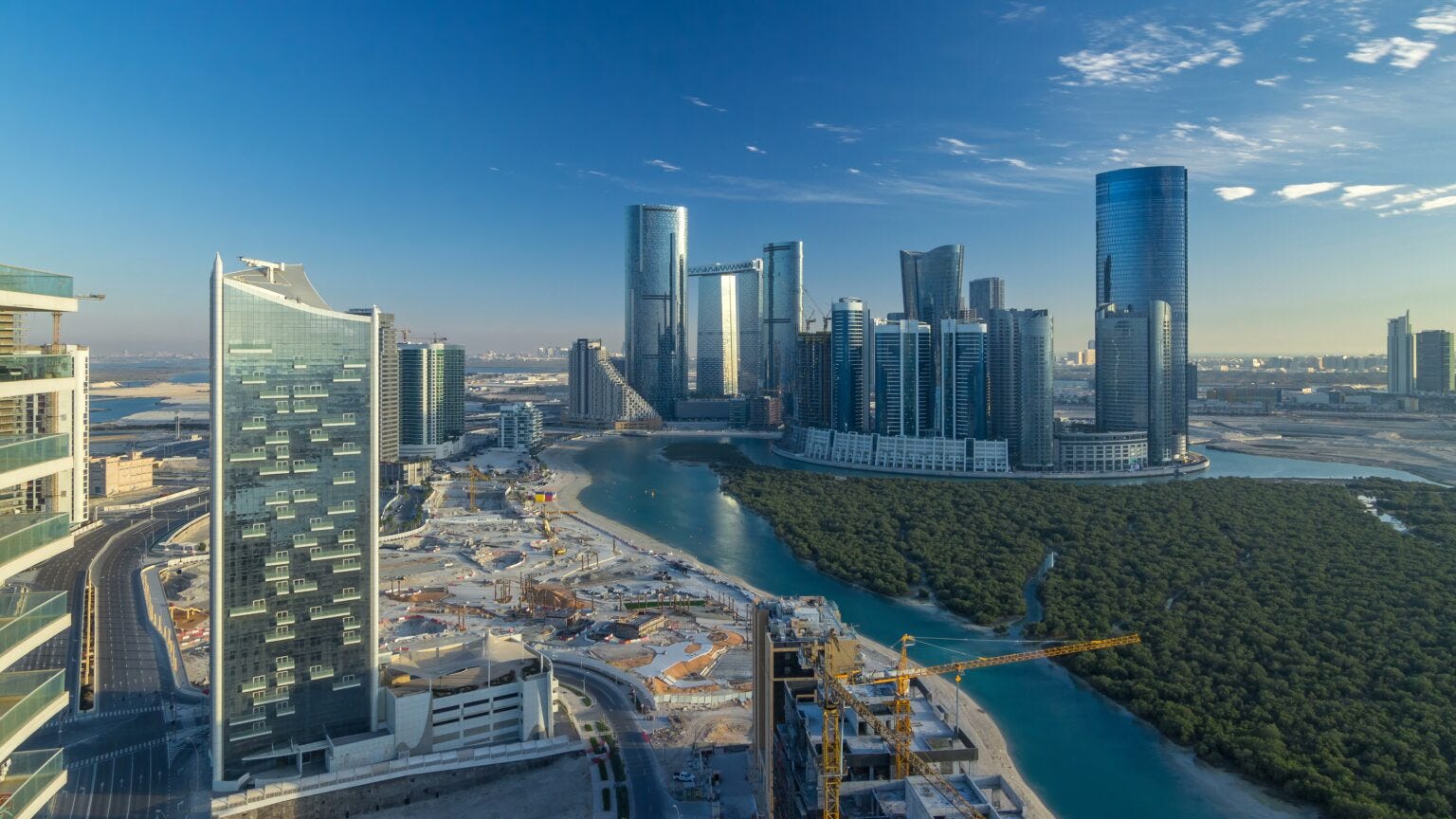
For a generation of investors, the Gulf was the ultimate beta play on regional stability. You bought into the high-gloss skyscrapers of the UAE as a proxy for a frictionless future, a sanctuary of capital insulated from the friction of the Levant. But as Operation Roaring Lion transitions from a tactical strike to a strategic pivot, the market’s Safe Haven map is being violently redrawn.
This morning, the divergence was jarring. As the Dubai Benchmark Index plummeted 4.9% and Abu Dhabi dropped 3.0%, the S&P 500 also saw a jittery 1.2% slide yesterday as global funds priced in the closure of Hormuz. Yet, in the heart of the kinetic theater, the TASE hit record-breaking levels yetserday. It is the ultimate macroeconomic paradox: the perceived peace of the Gulf is currently more volatile than the battle-tested resilience of Israel.
In sophisticated economic terms, we are witnessing the collapse of the tranquility premium. For years, Dubai traded at a premium because it offered the illusion of total safety. But by targeting Amazon data centers and civilian logistics hubs, Tehran has turned that premium into a massive liability. Investors are realizing that a hub without a missile defense shield is essentially a high-beta trade with no hedge.
Paradoxically, even a potential regime changes in Iran, long considered the ultimate bull case for the region, carries a hidden sting for its neighbors. While a transition in Tehran would fundamentally reduce Israel's long-term risk premium by cutting off funding to proxies like Hezbollah, it injects a massive dose of instability-driven risk into the countries surrounding Iran. The potential for a chaotic power vacuum, refugee flows, and internal civil strife means the Gulf's risk premium could remain elevated for years, even as Israel begins a resilience re-rating.
Our take: We might be witnessing a fundamental asymmetric re-rating. In a world where the Iranian shadow is being physically dismantled, Israel is shedding its decades-old geopolitical discount while its neighbors are inheriting an instability regional tax. Institutional capital is moving from the hubs that avoid risk to the hub that manages it. While the S&P 500 struggles with the inflationary ghost of $100 Brent, the TASE is pricing in a future where Israel is not just a participant in the regional architecture, but its only battle-hardened, high-tech anchor.
Banking
In the quiet, wood-paneled halls of Bank Leumi (TASE:LUMI), the numbers tell a story that defies the roar of the jets overhead. While the regional map is being redrawn by fire, Leumi’s 2025 balance sheet reads like a manifesto of economic stability. The bank reported a record-breaking ₪10.3 billion net profit, a signal to the world that the Israeli consumer and corporate sector aren’t just surviving this conflict, they are expansionary.
The narrative within the data is one of aggressive efficiency. Leumi’s efficiency ratio hit a lean 29.3%, powered not by austerity, but by a rapid pivot to AI-driven infrastructure and cloud migration. But the real headline for institutional capital lies in the dividend: a massive ₪5.9 billion payout for the year, representing a 58% profit distribution. Leumi is effectively acting as a massive liquidity pump for its shareholders.
Our take: Look past the headline profit and focus on the 0.40% NPL (Non-Performing Loan) ratio. In a year of unprecedented security tension, Leumi’s bad debt actually shrunk. This is the ultimate validation of the resilience re-rating we discussed in capital markets. By projecting profits of up to ₪12 billion for 2026-2027, the bank is betting that the Israeli business sector, which grew its credit appetite by 20.5% this year, is ready to sprint the moment the strategic pivot in Iran is finalized. Leumi isn't just a bank right now; it’s a high-yield bet on the day after.
TASE snapshot for Wednesday, March 4, 2026
TA-35 Index (TASE:TA35): 🔴 -0.20%
TA-90 (TASE:TA90): 🟢 +0.52%
TA-125 (TASE:TA125): 🔴 -0.02%
If you enjoyed this update, forward it on.
TV10 Global | Israel for Investors
Bringing you the top stories from the Israeli business community, by Israel’s only business and finance network.
Share your thoughts with us via: global@tv10.co.il or the Newsroom WhatsApp: +972-55-994-5851.
📧 Subscribe to this newsletter! And follow the daily conversation on 𝕏 @tv10global.
Pings available via WhatsApp Channel.
Disclaimer: This brief is for informational purposes only and does not constitute investment advice. All data current as of publication date.