

For more details on the top daily stories, you can read our daily editions from Monday to Wednesday, our Sector Thursdays, and now, get our video and audio updates on Spotify!

Editor’s note:
In the tense, heavily guarded halls of the Knesset Finance Committee this week, the most significant buy signal for Israeli sovereignty in a decade was delivered with profound institutional humility. Dr. Shmuel Abramzon, the Chief Economist, looked at the books and admitted: “I am not ashamed to say that we don’t know how to explain everything.”
Far from a concession of incompetence, this was a clinical admission that the textbooks are burning. Traditional macroeconomic models are failing to capture the structural evolution of the Israeli economy. By acknowledging that the Treasury cannot mathematically explain a ₪10.3 billion revenue breakout in the shadow of a multi-front war, Dr. Abramzon officially confirmed the birth of the Digital Fortress economy.
What the state categorizes as unexplained, institutional allocators recognize as asymmetric resilience. We are witnessing a real-world stress test of Endogenous Growth Theory. Paul Romer’s Nobel-winning model dictates that long-term growth is driven primarily by technological innovation and human capital, not physical assets. Israel’s revenue base has successfully decoupled from the physical geography of conflict.
Within the 2026 landscape of Operation Roaring Lion, the Israeli balance sheet is no longer a hostage to regional kinetic friction; it is a hardened, weightless asset that generates liquid alpha precisely when traditional models predict a collapse.
Global capital allocators have fundamentally mispriced the mechanics of modern conflict. While legacy frameworks assume that prolonged friction inevitably triggers capital flight, Israel has engineered a bifurcated system. The high-value R&D core is entirely insulated from the instability tax plaguing the broader Middle East.
Preparing for war is no longer simply about stockpiling munitions; it is about balance sheet hardening and the socialization of localized tail risks. By absorbing employment friction onto the sovereign ledger while simultaneously generating record organic revenues, the Israeli financial ecosystem has achieved an unprecedented asymmetric re-rating. The state has effectively merged fiscal policy with kinetic defense, proving that the national fighting spirit is not just a cultural sentiment, but also a battle-hardened, quantifiable economic asset.
— Sophia Tupolev, TV10 Global Editor
TASE weekly snapshot
The Tel Aviv Stock Exchange ended last week in the red amid escalating regional tensions.
TA-35 Index (TASE:TA35): 🔴 -2.45%
TA-90 (TASE:TA90): 🔴 -4.92%
TA-125 (TASE:TA125): 🔴 -3.04%
The Ricardian Shield: defying historical debt traps
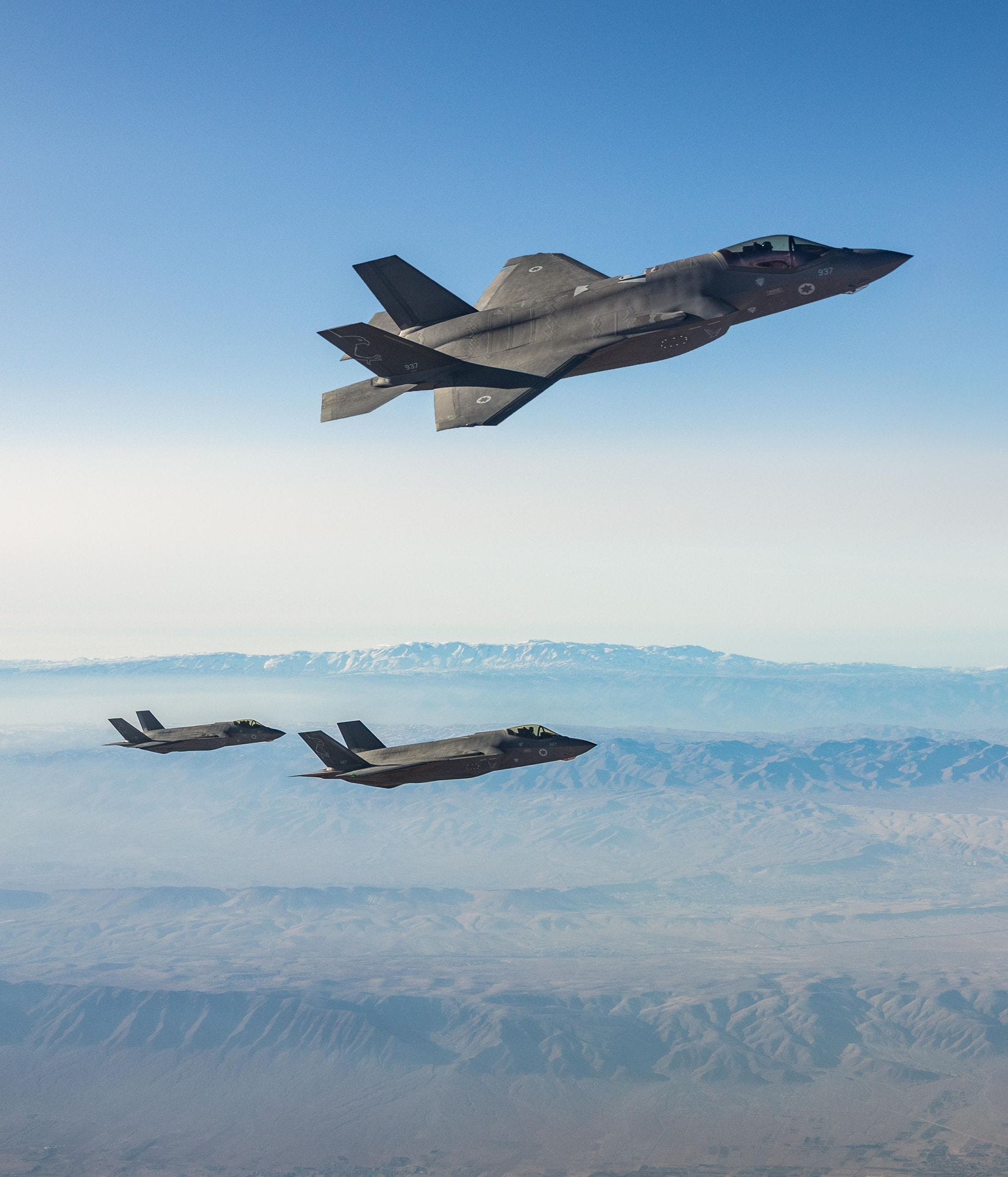
This week, Chief Economist Dr. Shmuel Abramzon delivered a macroeconomic shock to the Knesset Finance Committee: despite the paralyzing effects of a multi-front war, the state recorded a staggering ₪10.3 billion surplus in projected revenues. This revenue blowout might not be an accident of resilient tech exports but a dividend of aggressive, preemptive armor-building. Preparing a sovereign economy for a multi-front war requires deliberate structural intervention long before the first siren wails.
Historically, sovereign wartime financing relied on massive deficit monetization that inevitably crushed the purchasing power of the currency. Israel explicitly rejected this trap. By adhering to strict Ricardian principles on the fiscal side, the Ministry of Finance quietly deleveraged its wartime deficit during peacetime, creating the exact fiscal headroom necessary to absorb today’s shocks. By establishing a structurally sound ledger, the state protected its sovereign credit rating, ensuring that when the conflict erupted, it could tap international debt markets without triggering the punitive, distressed-asset yields that typically cripple besieged nations.
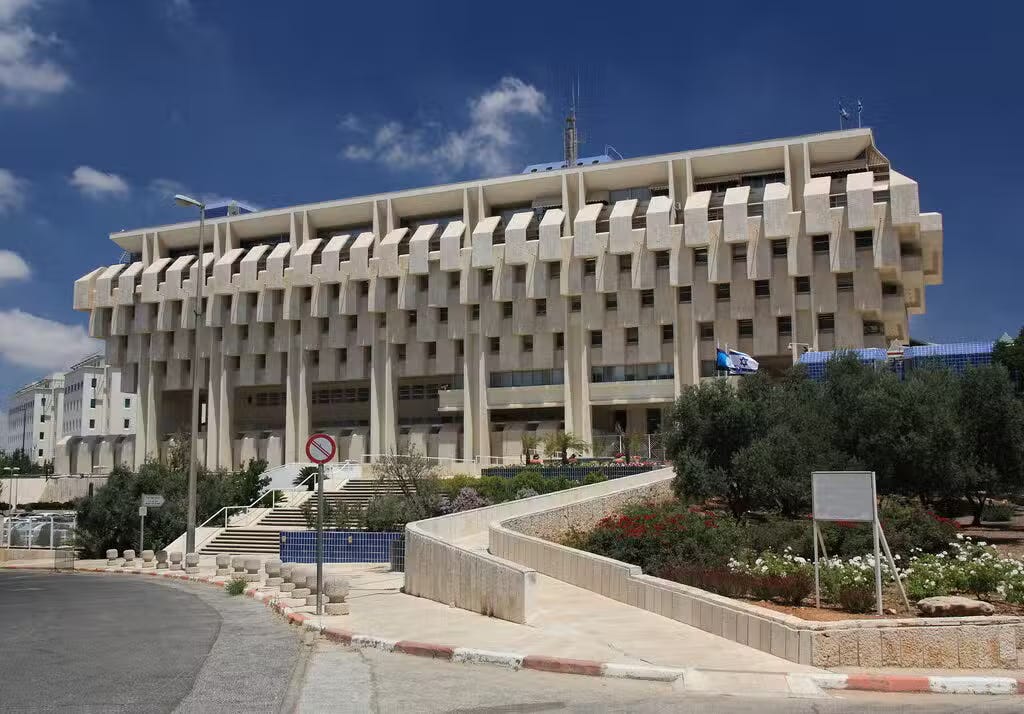
Simultaneously, the Bank of Israel (BOI) engineered a critical macroprudential buffer. Operating within the constraints of the Mundell-Fleming Trilemma, the BOI strictly held interest rates elevated, prioritizing a hawkish monetary floor and exchange rate stability over the political comfort of cheap domestic credit. This enforced a lucrative yield premium that locked in domestic capital and deterred foreign institutional flight.
Together, the Ministry of Finance and the BOI built a synchronized fortress balance sheet, a pre-active defense matrix ensuring that the sheer cost of war would not translate into a currency collapse.
Institutional capital must recognize this as peak sovereign risk management. Tel Aviv has demonstrated that the true preparation for war occurs on the balance sheet. By merging strict fiscal discipline with hawkish monetary policy before the conflict began, Israel completely insulated its domestic credit markets from regional volatility.
Wartime execution: a radical expansion of Bagehot’s Dictum

Once the missiles strike, macroeconomic strategy must instantly shift from pre-active hardening to proactive shock absorption. To maintain domestic continuity under fire, the Israeli government had to prevent a cascade failure in consumer and corporate credit. The Ministry of Finance acted by deploying a highly calculated regulatory liquidity pump.
Minister of Finance Bezalel Smotrich deliberately positioned the Treasury as the insurer of last resort this week. The state overhauled the unpaid leave (‘Chalat’) framework, slashing the minimum period to just 14 days and waiving accrued vacation deductions to ensure rapid, unhindered capital distribution to displaced citizens. Concurrently, the state activated Business Continuity Grants targeting mid-market enterprises experiencing a 25% operational drop.
This is a radical, fiscal expansion of Bagehot’s Dictum. Instead of a central bank merely lending freely to banks to stem a panic, the Treasury is acting as the ultimate liquidity backstop to the real economy. By executing a hyper-targeted Keynesian stabilizer, where businesses in northern kinetic zones receive 100% indemnification, the government is absorbing the absolute geographic tail risk onto its own shoulders. Because the digital export sector continues to clear global transactions seamlessly, the government can fund this massive domestic liquidity injection purely through organic cash flow, avoiding unchecked inflationary money printing.
Yet, every fortress has its cracks, and here it lies in political survival. The limits of this macroeconomic defense are strictly bounded by entrenched domestic interest groups. This week, the government officially stripped the sweeping Dairy Reform from the Economic Arrangements Law.
Pushed by the Finance Ministry to dismantle legacy production quotas and open the sector to foreign imports, the reform was designed to structurally suppress domestic food inflation. Facing intense pushback from the agricultural lobby during a period of national vulnerability, the political echelon balked, choosing to preserve a legacy cartel rather than risk fracturing the domestic consensus.
The day after: testing the Phillips Curve

The ultimate test of the Digital Fortress thesis will not be its capacity to absorb kinetic friction, but its ability to execute a seamless transition back to normality. When Operation Roaring Lion officially concludes, the Israeli economy will face massive, instantaneous positive shocks, such as the sudden demobilization and re-entry of tens of thousands of reservists into the workforce, and the removal of the Iranian existential risk.
This sudden surge in human capital represents a massive productivity delta. The state must immediately pivot from funding a multi-front war to executing a historic domestic mandate, rapidly rebuilding the physical kinetic zones in the North and South while scaling national infrastructure to meet deeply suppressed, pent-up real estate demand.
However, if the Iranian risk is truly taken off the table, a profound new challenge emerges: where will Israel reallocate its capital? Is the mandate of a hyper-inflated defense budget over? Government and domestic institutions face a historic reallocation dilemma. Will Israeli capital flow toward other emerging regional threats, such as Turkey, Egypt, or the Palestinian Authority? Or will the focus remain strictly internal, triggering fierce debates over how much of the budget to redirect toward ‘Building Back Better’ for healthcare, education, and civilian infrastructure?
The critical question for institutional allocators is how Israel will execute this massive structural pivot and whether the political apparatus has the agility to actually pull it off.
Ultimately, the terminal phase of the Digital Fortress is not a regression to the status quo ante, but the structural integration of crisis-period velocity into permanent civilian governance. The existential risk facing the day after is not a liquidity crunch but rather a reversion to the bureaucratic calcification that traditionally hampers frontier growth.
For institutional allocators, the primary signal will be whether the political apparatus can translate its kinetic agility into aggressive supply-side reforms, specifically regarding housing deregulation and large-scale infrastructure deployment. Israel has demonstrated it can self-finance and execute a multi-front campaign while maintaining fiscal integrity; the next mandate is to prove it can out-build its own domestic constraints. The sustainability of the resilience premium now depends on the state’s ability to pivot its operational intensity from border defense to the radical liberalization of its internal civilian economy.
That’s our letter, folks. If you enjoyed this Weekly, forward it to a friend.

The English TV10 newsletter is edited by Sophia Tupolev. We love to hear from you.
TV10 Global | Israel for Investors
Now in English: Bringing you the top stories from the Israeli business community, by Israel’s only business and finance network.
Please share your thoughts with us via: global@tv10.co.il or the Newsroom WhatsApp: +972-55-994-5851.
📧 Subscribe to this newsletter! And follow the daily conversation on 𝕏 @tv10global.
Pings with new editions are also available via our WhatsApp Channel.
Disclaimer: This brief is for informational purposes only and does not constitute investment advice. All data is current as of publication date.