

For more details on the top daily stories, you can read our daily editions from Monday to Wednesday, our Sector Thursdays, and now, get our video and audio updates on Spotify!

Editor’s note:
“In a difficult and complex year of war, Israel is breaking an all-time record in defense exports,” stated Defense Minister Israel Katz upon reviewing the latest data from the International Defense Cooperation Directorate (SIBAT). He added a crucial geopolitical footnote to the raw data: “The world sees Israeli strength and wants to be a partner in it.”
This is not merely an evolution of the arms trade but could potentially trigger the weaponization of the defense-industrial base as a primary macroeconomic lever for peace. Historically, institutional allocators have viewed Israeli defense expenditure through a binary lens: a necessary, albeit inflationary, drain on GDP designed to manage localized kinetic friction.
Today’s reality dictates an entirely different paradigm. Defense tech has transformed into an endogenous growth engine capable of engineering sovereign normalization. SIBAT’s figures for 2024 might confirm this structural shift: a staggering record of $14.795 billion in total defense exports. Crucially, $1.77 billion of those exports flowed directly to Abraham Accords nations, representing a sharp rebound from just $444 million the prior year.
By exporting cutting-edge air defense algorithms, autonomous border infrastructure, and critical cyber architecture, Jerusalem is aggressively socializing its security dividend. This creates profound lock-in effects. When neighboring states integrate Israeli technology into their most sensitive national security infrastructure, they establish a macroprudential buffer against regional shocks while simultaneously making physical conflict mathematically unviable.
Institutional capital is actively mispricing the mechanics of these modern peace treaties. Agreements are no longer sustained solely by political sentiment but by the hardened, highly illiquid reality of shared security architecture. Israel might be proving that its defense sector is not just a kinetic deterrent, but a battle-tested, high-yield diplomatic asset that enforces regional stability through sheer balance sheet integration.
— Sophia Tupolev, TV10 Global Editor
TASE weekly snapshot
The Tel Aviv Stock Exchange ended last week in the red amid escalating regional tensions.
TA-35 Index (TASE:TA35): 🔴 -2.45%
TA-90 (TASE:TA90): 🔴 -4.92%
TA-125 (TASE:TA125): 🔴 -3.04%
Monetizing the Iron Dome: The economics of asymmetric interoperability
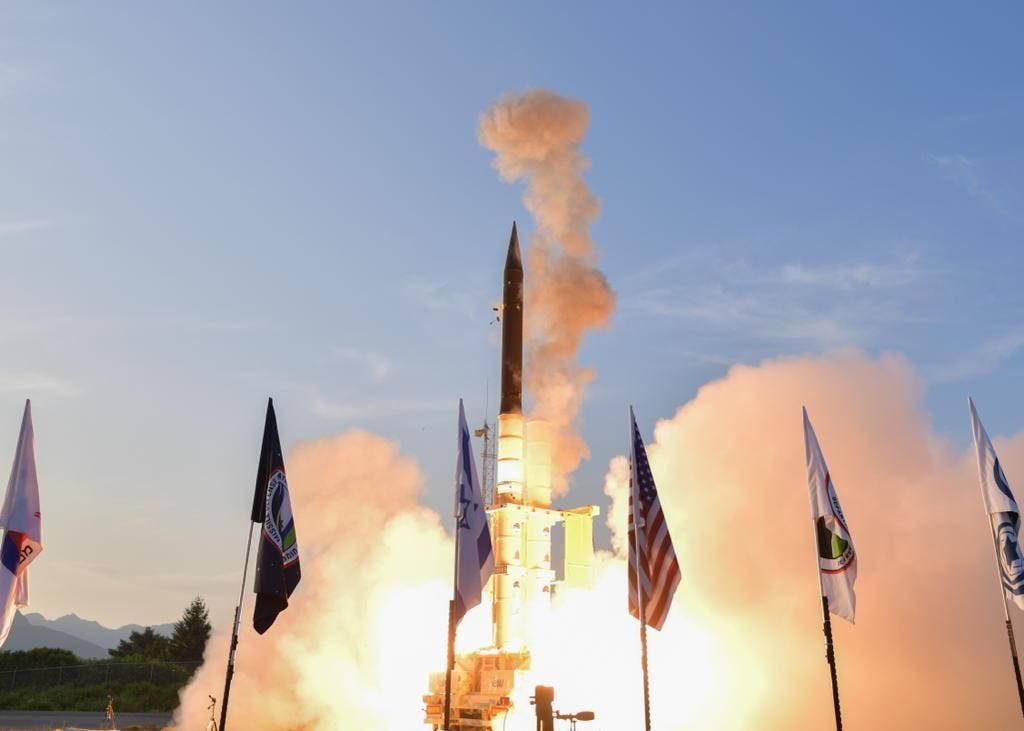
The structural shift from bilateral treaties to technological integration marks a permanent re-rating of Middle Eastern diplomacy. Diplomatic alliances have evolved from traditional written treaties to the deep technological integration of shared radar APIs. The deployment of Israeli early-warning architecture effectively syndicates the cost of regional kinetic friction. Jerusalem no longer shoulders the sole financial burden of airspace stabilization. According to SIBAT, air defense systems, missiles, and rockets accounted for a massive 48% of all Israeli arms sales in 2024, up from 36% in 2023.
For governments in the Middle East and Europe, the decision to buy these systems comes down to strict pragmatism. Purchasing an Israeli air defense system offers two massive benefits: it immediately protects their airspace, and it creates an unspoken security alliance with Jerusalem. This creates a lock-in effect that is almost impossible to break.
Once a country wires systems like IAI’s Barak MX or Rafael’s David’s Sling into its national defense network, walking away from Israel becomes far too expensive. Cutting diplomatic or economic ties would leave their multi-billion-dollar defense grids useless and increase their risk premium.
The hardware requires constant firmware updates, operator training, and algorithmic optimization, creating a multi-decade dependency loop. As Ministry of Defense Director General Maj. Gen. (res.) Amir Baram explicitly noted,
“More countries want to protect their citizens with Israeli weapons.”
Consequently, the Israeli defense sector generates a new class of diplomatic alpha, smoothing out the cyclicality of traditional defense contracting and insulating the sovereign ledger from isolated regional volatility.
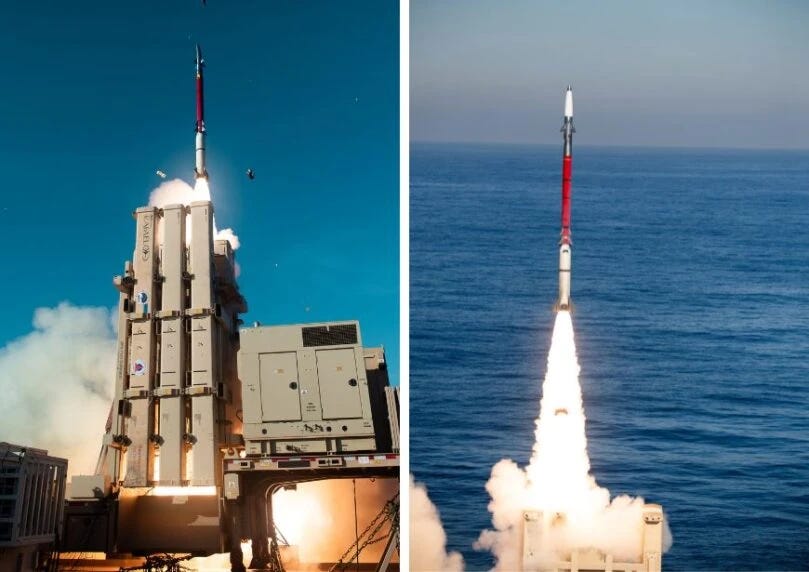
Ultimately, this technological umbilical cord means that Jerusalem controls far more than regional airspace; it actively holds the macroeconomic stability of its partners on its own servers. This digital defense lock-in serves as the capstone to a broader, tripartite dependency matrix of security, energy, and resources.
Just as Cairo’s industrial output and export revenues are structurally tethered to continuous natural gas flows from Israel’s Leviathan field, and Amman’s baseline hydrological survival is dictated by Israeli desalinated water quotas, regional kinetic security is now similarly outsourced to Jerusalem. By providing the algorithms that defend foreign critical infrastructure Israel underwrites the safety of those nations’ physical assets.
In this new paradigm, the Israeli state acts as a shadow underwriter of regional sovereign debt. Should an integrated nation attempt a political pivot away from Jerusalem, it immediately jeopardizes not only the operational firmware defending its borders but the baseline resources powering its economy. The resulting security and resource vacuum would trigger a catastrophic spike in their sovereign risk premium and precipitate massive capital flight.
By maintaining the digital keys to these multi-billion-dollar defense grids, layered atop critical energy and water lifelines, Israel holds the ultimate geopolitical trump card: the sheer economic survival and sovereign bond yields of its neighbors.
The Dual-Use Dividend: Socializing the CapEx of algorithmic supremacy
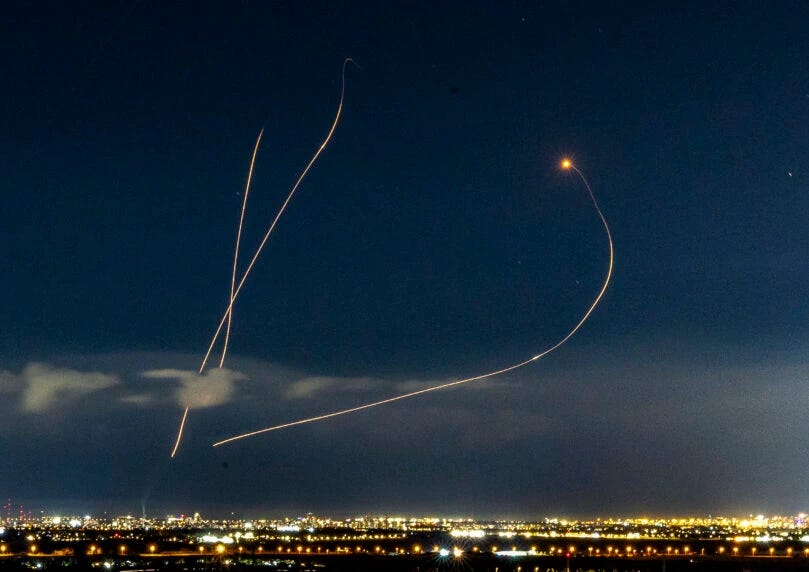
To understand the sheer velocity of the Israeli economic engine, institutional allocators must recognize that the wall separating the defense-industrial base from the civilian tech sector has completely collapsed. We are no longer looking at two distinct ecosystems but rather observing a singular, highly optimized macroeconomic machine that executes what can be termed the ‘Dual-Use Dividend.’
When the Ministry of Defense funds the development of autonomous drone swarms or next-generation computer vision for target acquisition, the state is effectively socializing the massive, high-risk Capital Expenditure (CapEx) required for frontier R&D. Once the algorithms are battle-tested and validated in kinetic environments, the intellectual property invariably bleeds into the commercial sector via the founders emerging from elite intelligence and R&D cadres like Unit 8200, Unit 81, and the Talpiot program.
The direct lineage from the sovereign defense budget to commercial decacorns is undeniable. The offensive cyber architecture developed for national security directly spawns cloud-defense giants like Wiz and legacy titans like Check Point. The precise electro-optics and signal processing utilized to track incoming projectiles are commercialized into LiDAR for autonomous vehicles by Unit 81 veterans at Innoviz Technologies. Even the deep-learning models built for battlefield reconnaissance are rapidly repurposed into AI-driven diagnostics and medical imaging by Talpiot alumni at Aidoc.
This pipeline creates an unmatched economic moat. By recycling defense CapEx into commercial Total Addressable Markets (TAM), the state continuously manufactures highly liquid, scalable tech unicorns. The military apparatus thus functions not as a drag on the national GDP, but as the world’s most aggressive, battle-tested sovereign venture incubator.
The Superpower Thesis: Engineering systemic global indispensability
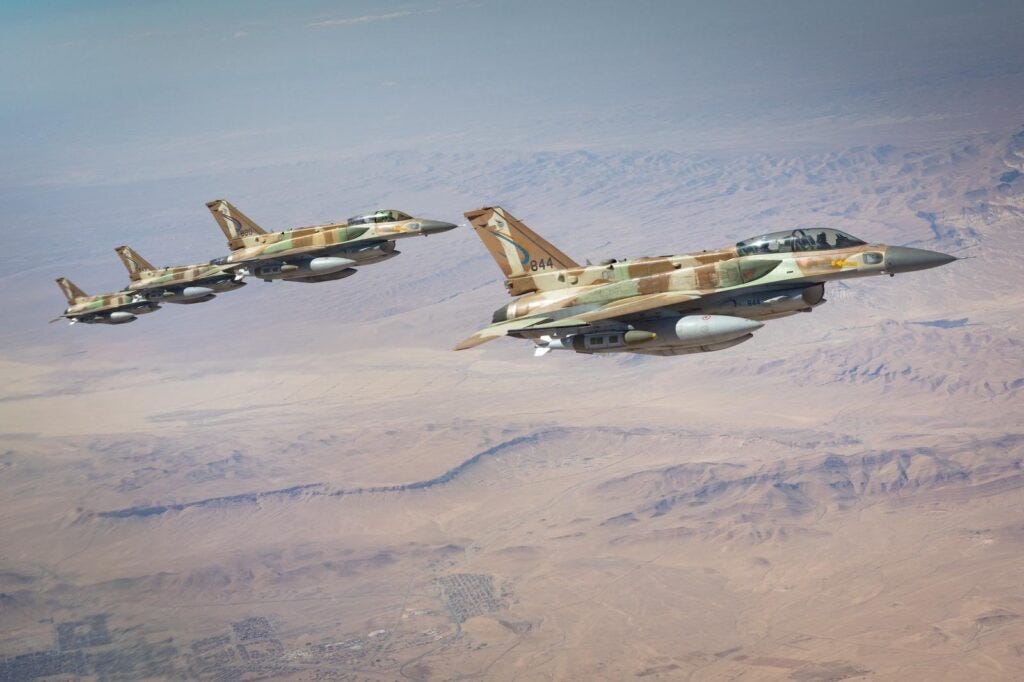
For decades, the geopolitical ceiling for Israel was widely understood to be regional hegemony, the dominant kinetic and economic force of the Middle East. However, the data now points toward a far more radical trajectory.
The recent export of the Arrow 3 exoatmospheric hypersonic defense system to Germany in a historic €3.1 billion ($3.5 billion) deal was not merely a lucrative transaction; it signaled a potential structural pivot. By deploying the Arrow 3 to protect German airspace, Jerusalem has taken its first steps toward underwriting the kinetic security of NATO and the largest economy in Europe.
This forces a fundamental recalculation of what defines a global superpower in the 21st century. Legacy frameworks dictate that superpower status requires massive geographic depth, millions of active-duty personnel, and carrier strike groups. The emerging Israeli model threatens to render this obsolete. In an era defined by cyber warfare, autonomous systems, and hypersonic threats, future superpower status will be derived from asymmetric technological monopoly and systemic global indispensability.
Israel is uniquely positioned to achieve exactly that. From the microprocessors designed in Haifa that power global AI data centers, to the cyber architecture protecting Wall Street, to the air defense APIs shielding European capitals, Israel is aggressively maneuvering to place itself at the absolute chokepoints of the global future.
To capitalize on this, Jerusalem can no longer afford to simply defend its own borders. By scaling the export of the technological scaffolding that keeps the Western world online, secure, and operational, Israel has the capacity to engineer a reality where its own sovereign survival becomes a non-negotiable prerequisite for global macroeconomic stability. It must evolve beyond being just a Middle Eastern fortress. Through the sheer, unapologetic weaponization of its intellectual capital, Israel now holds the structural blueprint to ascend to the rank of a 21st-century global superpower.
That’s our letter, folks. If you enjoyed this Weekly, forward it to a friend.

The English TV10 newsletter is edited by Sophia Tupolev. We love to hear from you.
TV10 Global | Israel for Investors
Now in English: Bringing you the top stories from the Israeli business community, by Israel’s only business and finance network.
Please share your thoughts with us via: global@tv10.co.il or the Newsroom WhatsApp: +972-55-994-5851.
📧 Subscribe to this newsletter! And follow the daily conversation on 𝕏 @tv10global.
Pings with new editions are also available via our WhatsApp Channel.
Disclaimer: This brief is for informational purposes only and does not constitute investment advice. All data is current as of publication date.