

Editor’s note:
The smoke from Operation Roaring Lion is beginning to clear, and the Ministry of Finance has presented us with the bill. It is a staggering sum, but the true cost of this conflict is not merely measured in the sheer volume of capital incinerated by the state over the last month. It is measured in the silent, ongoing suffocation of the domestic market.
While politicians take victory laps and marvel at the seemingly invincible, paradoxically strong Israeli Shekel, a brutal wealth transfer mechanism is operating right under our noses. The roaring success of our defense apparatus has created a golden cage: a macroeconomic environment that looks pristine on sovereign balance sheets and currency exchanges, but is actively devouring the very citizens, exporters, and small businesses tasked with funding it. The lion has roared, but the domestic economy could be bleeding out in the den. This story is developing.
— Sophia Tupolev, TV10 Global Editor
TASE weekly snapshot
The Tel Aviv Stock Exchange closed the week deep in the green.
TA-35 Index (TASE:TA35): 🟢 +6.06%
TA-90 (TASE:TA90): 🟢 +3.35%
TA-125 (TASE:TA125): 🟢 +5.55%
For more details, read our daily editions from Monday to Wednesday - and now, get our video and audio updates on Spotify.
The 35 billion shekel bite
The Ministry of Finance released its preliminary damage assessment this week, confirming that the direct fiscal cost of Operation Roaring Lion has hit roughly ₪35 billion. Unsurprisingly, the absolute lion’s share (sorry) of this capital, ₪22 billion, was gobbled up by the defense establishment, covering immediate IDF operational costs, munitions replenishment, and the sweeping mobilization of the reserve forces.
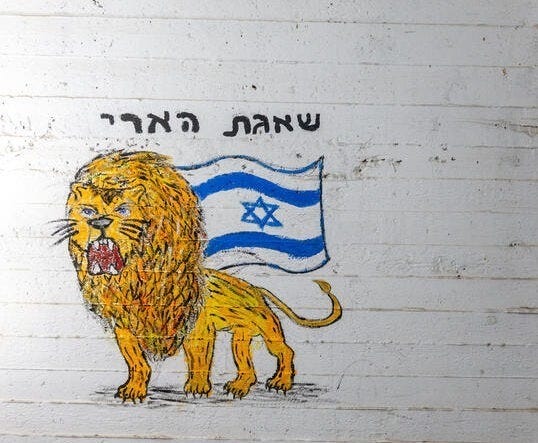
The remaining ₪13 billion was effectively deployed as a domestic tourniquet. Approximately ₪12 billion has been allocated to business compensation pipelines and state-funded furloughs (‘Chalat’), while a further ₪1 billion was directed toward emergency health and welfare protocols. Finance Minister Bezalel Smotrich was quick to claim credit, stating that the Treasury’s “responsible management of the state’s economy was a critical factor in the great operational success.”
However, framing a ₪35 billion deficit injection as an economic triumph is a dangerous misdiagnosis of the facts on the ground. A direct government bailout of businesses suffering a 25% drop in revenue is not a sign of economic resilience; it is a desperate attempt to put a frozen economy on life support. The real-time data betrays the Treasury’s optimism: in a single week, the number of new job seekers surged by an alarming 18%. The kinetic war may have been brief, but the supply-side shock to the labor market is deep, structural, and ongoing.
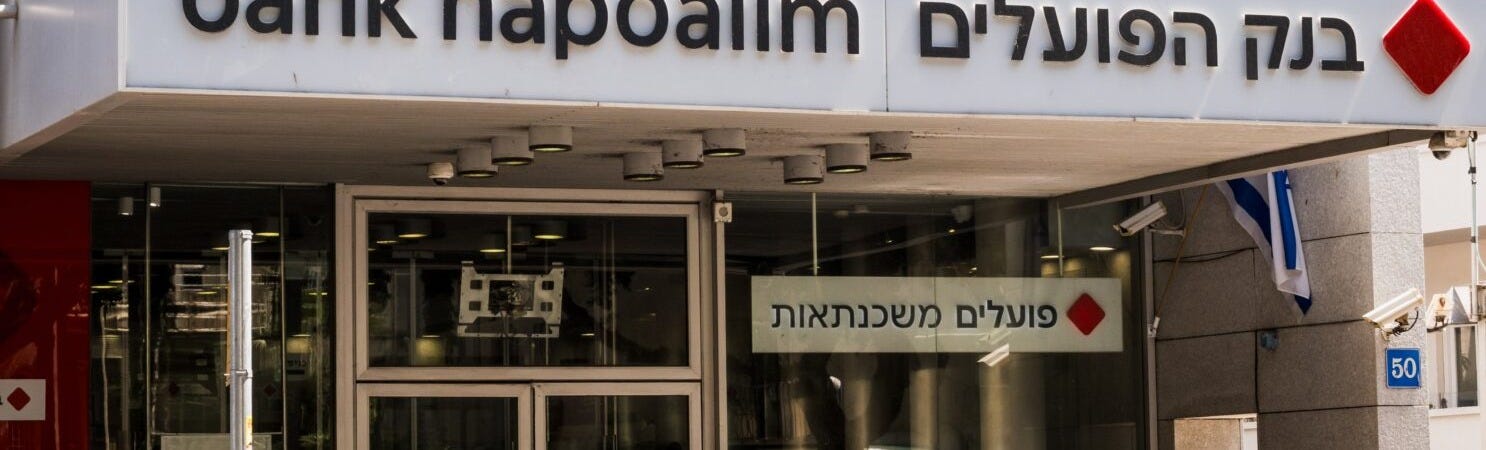
This fiscal reality is far darker than the Treasury is willing to admit. According to new macroeconomic scenarios published this week by Bank Hapoalim (TASE:POLI), the state is careening toward a severe deficit breach.
While the Ministry of Finance clings to an optimistic 3.8% growth forecast, Hapoalim projects growth will stagnate at roughly 3% even in the best-case ceasefire scenario. The defense budget is stretched to its absolute breaking point, with the Ministry of Defense estimating the kinetic phase of Operation Roaring Lion burned through nearly ₪1 billion a day.
Compounding the crisis, the anticipated economic slowdown will inevitably crater state tax revenues, driven by plummeting capital gains (bleeding businesses) and a frozen real estate market. The government is attempting to finance a ₪1 billion-a-day war while the very tax base required to pay for it is bleeding out.
Before you say ‘…but the strong shekel’

The most jarring macroeconomic anomaly of this conflict has been the behavior of the Israeli currency. In any standard emerging market, a sudden geopolitical shock and a multi billion shekel deficit expansion would trigger a severe currency devaluation. Instead, the shekel has remained stubbornly strong - artificially.
This strength is not a miracle; it is a meticulously engineered illusion. Bank of Israel data reveals that foreign exchange reserves plummeted by a massive $6.3 billion in March alone. The central bank is burning through its war chest to defend the currency, effectively creating a massive subsidy for the local oligopoly.
In a captive market characterized by a lack of price-discovery, a strong shekel acts as a highly efficient wealth transfer mechanism from the public to the gatekeepers.
Massive food importers like Diplomat (TASE:DIPL) and Schestowitz utilize the strong currency to purchase foreign goods at a heavy discount. Do they pass those currency-adjusted savings down to the Israeli consumer currently suffocating under inflation and wartime uncertainty? Absolutely not.
Shielded by high barriers to entry and a complete lack of foreign competition, these cartels maintain their exorbitant pricing power, absorbing the margin difference as pure, unadulterated profit.
Squeezing the domestic producer
While the strong shekel heavily subsidizes the importing cartels, it acts as a structural chokehold on Israel’s domestic producers and exporters. Outside of the booming, hyper-insulated defense-tech supercycle, traditional Israeli exporters are being crushed.
A strong domestic currency makes their goods significantly more expensive and less competitive on the global market, precisely at the moment they are grappling with a decimated labor force and logistical supply chain chaos.
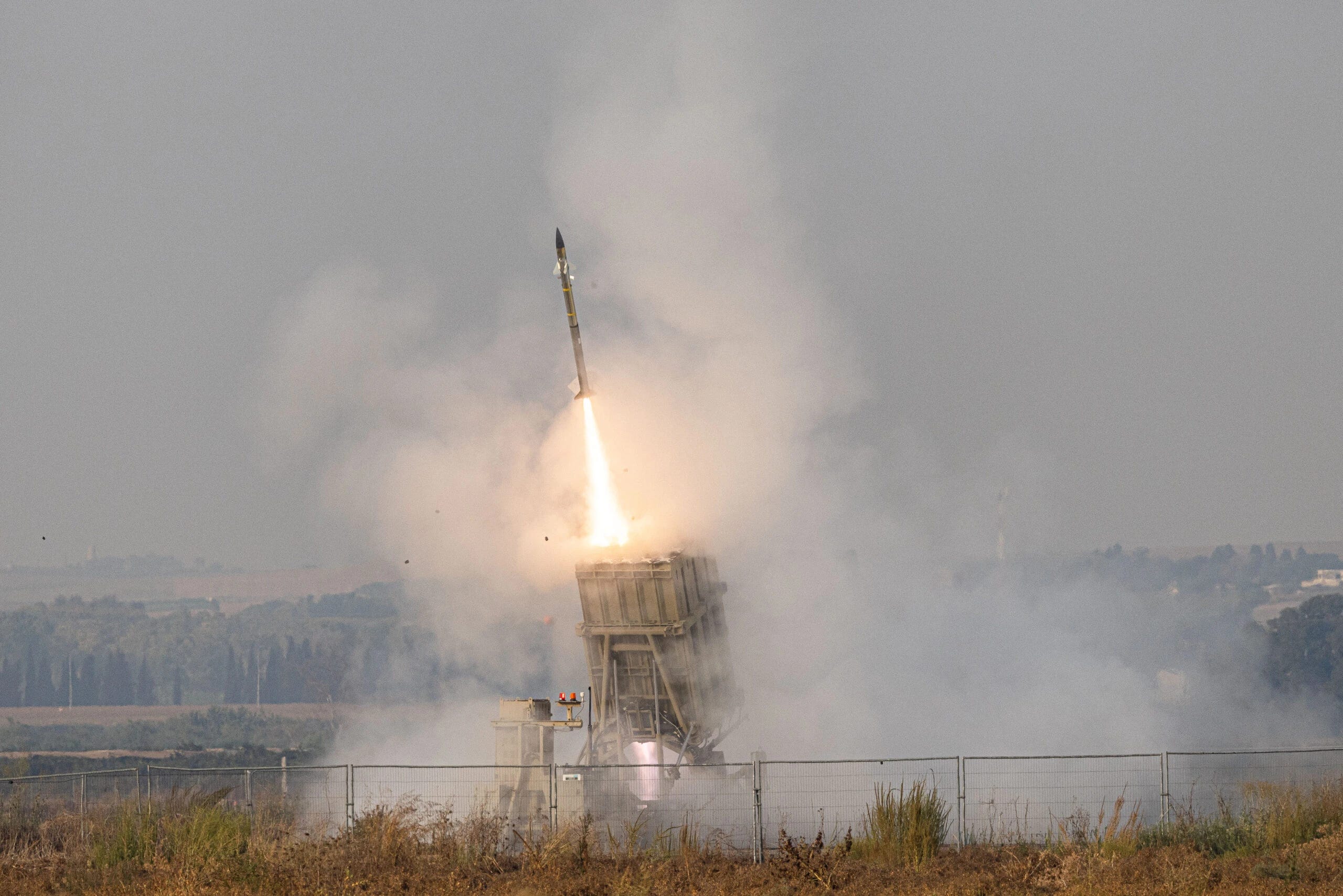
However, there is a cynical, yet highly effective macroeconomic paradox at play here: the strong shekel is quietly helping to finance the war machine precisely because Israel exports a massive volume of its defense technology and munitions. Global demand for combat-proven Israeli defense systems is incredibly inelastic; foreign militaries pay in US dollars and euros, entirely unbothered by the shekel’s exchange rate.
As state-owned defense titans like IAI and Rafael rake in record-breaking foreign currency from these massive export deals, the state can leverage this capital influx to replenish its dwindling dollar reserves.
Simultaneously, the strong shekel drastically increases the government’s purchasing power when it turns around to import the raw materials, jet fuel, and foreign hardware necessary to sustain Operation Roaring Lion.
In this twisted loop, the global appetite for exported Israeli munitions provides the dollars, and the strong shekel stretches those dollars into a heavily subsidized war chest, completely isolating the defense apparatus from the friction crushing the rest of the economy.
Furthermore, the domestic business sector is being aggressively squeezed by the banking oligopoly. The high-interest-rate environment required to keep the shekel strong provides an ongoing windfall for the financial gatekeepers.
As small businesses scramble for expensive bridge loans to survive the wait for state compensation, institutions like Bank Leumi (TASE:LUMI) and Bank Hapoalim (TASE:POLI) continue to lock in historically high net interest margins. The cost of capital is effectively drowning the middle class while padding the dividend yields of the financial elite.
Safe(r) from external predators, starving from within
When the Ministry of Finance views the economy strictly through the lens of sovereign credit ratings and a stable currency, it willfully ignores the rot inside the foundation. Conflating the monopolistic extraction of a few importing cartels and banks with the macroeconomic health of the whole is a lethal policy error.
The roaring success of our military operations against Iran must not serve as a macroeconomic smokescreen for political complacency. The government cannot continue to point to a stabilized shekel as proof of a V-shaped economic renaissance while simultaneously placing over 116,000 citizens on unpaid leave and starving the small and medium enterprise (SME) sector of affordable credit.
To survive the aftermath of the ‘Lion’s Roar,’ policymakers must execute radical, structural reforms. This means forcibly dismantling the importing oligopolies, tearing down the geopolitical walls that prevent foreign competition from entering the supermarket aisles, and unblocking the financial sector’s chokehold on local credit.
Until the state decides to prioritize the financial breathing room of the citizen over the survival of the cartels, the Israeli public will remain trapped inside a golden cage, safe(r) from external predators but slowly starving within.
That’s our letter, folks. If you enjoyed this Weekly, forward it to a friend.

The English TV10 newsletter is edited by Sophia Tupolev. We love to hear from you.
TV10 Global | Israel for Investors
Now in English: Bringing you the top stories from the Israeli business community, by Israel’s only business and finance network.
Please share your thoughts with us via: global@tv10.co.il or the Newsroom WhatsApp: +972-55-994-5851.
📧 Subscribe to this newsletter! And follow the daily conversation on 𝕏 @tv10global.
Pings with new editions are also available via our WhatsApp Channel.
Disclaimer: This brief is for informational purposes only and does not constitute investment advice. All data is current as of publication date.