

🍿 Get the Daily on Spotify, too
Quick takes:
Macro: Israel and Argentina deepened economic ties announcing the Isaac Accords, plus an export credit line and direct flights; Bank of Israel Governor Prof. Amir Yaron signaled that further rate cuts are on the table; Central Bureau of Statistics data revealed a sharp contraction in March job vacancies; Retail chain sales climbed 2.6% through February.
Tech: Ichilov Hospital partnered with AWS to become the first major Israeli medical center to fully migrate its IT systems to the cloud and deploy proprietary generative AI clinical tools.
Capital Markets: The Israel Electric Corporation raised ₪3 billion in CPI-linked bonds; A new Israel Securities Authority report revealed that domestic institutional investors bought the dip during the recent geopolitical escalation.
Editor’s note:
Tonight at 8:00 PM, the sirens will sound across Israel, marking the beginning of Yom Hazikaron, Memorial Day for the Fallen Soldiers of the Wars of Israel and Victims of Acts of Terrorism.
In the cold calculus of economics, theorists often rely on the Value of a Statistical Life (VSL), a utilitarian metric used by governments to weigh the cost-benefit of regulations, infrastructure, and even war. But Israel’s entire national and social contract is built on the explicit rejection of this philosophy.
Embedded deep within Jewish thought is the profound Talmudic principle: “Whoever destroys a single life is considered to have destroyed an entire world, and whoever saves a single life has saved an entire world.” In Judaism, the value of human life is infinite.
This ethos explains why Israel goes to such agonizing, disproportionate lengths to protect and retrieve its citizens. It is why the security agencies operate globally, often deep behind enemy lines, to protect Jews, rescue hostages and recover the fallen. It is why, the moment war breaks out, and foreign airlines immediately cancel their routes, the state mobilizes the national carrier to bring stranded citizens home.
In this newsletter, we spend our days covering geopolitical risk premiums and macroeconomic data. But tomorrow (starting tonight in Israel) the data and the tickers pause for a few hours. Following the recent toll of Operation Roaring Lion, the weight of this day is deeply felt across the entire Israeli business community, from the trading floors to the R&D labs. The empty chairs are not statistics; they are our colleagues, our founders, our friends, and our family.
We take a moment to honor the fallen. May their memories be a blessing.
— Sophia Tupolev, TV10 Global Editor
Macro
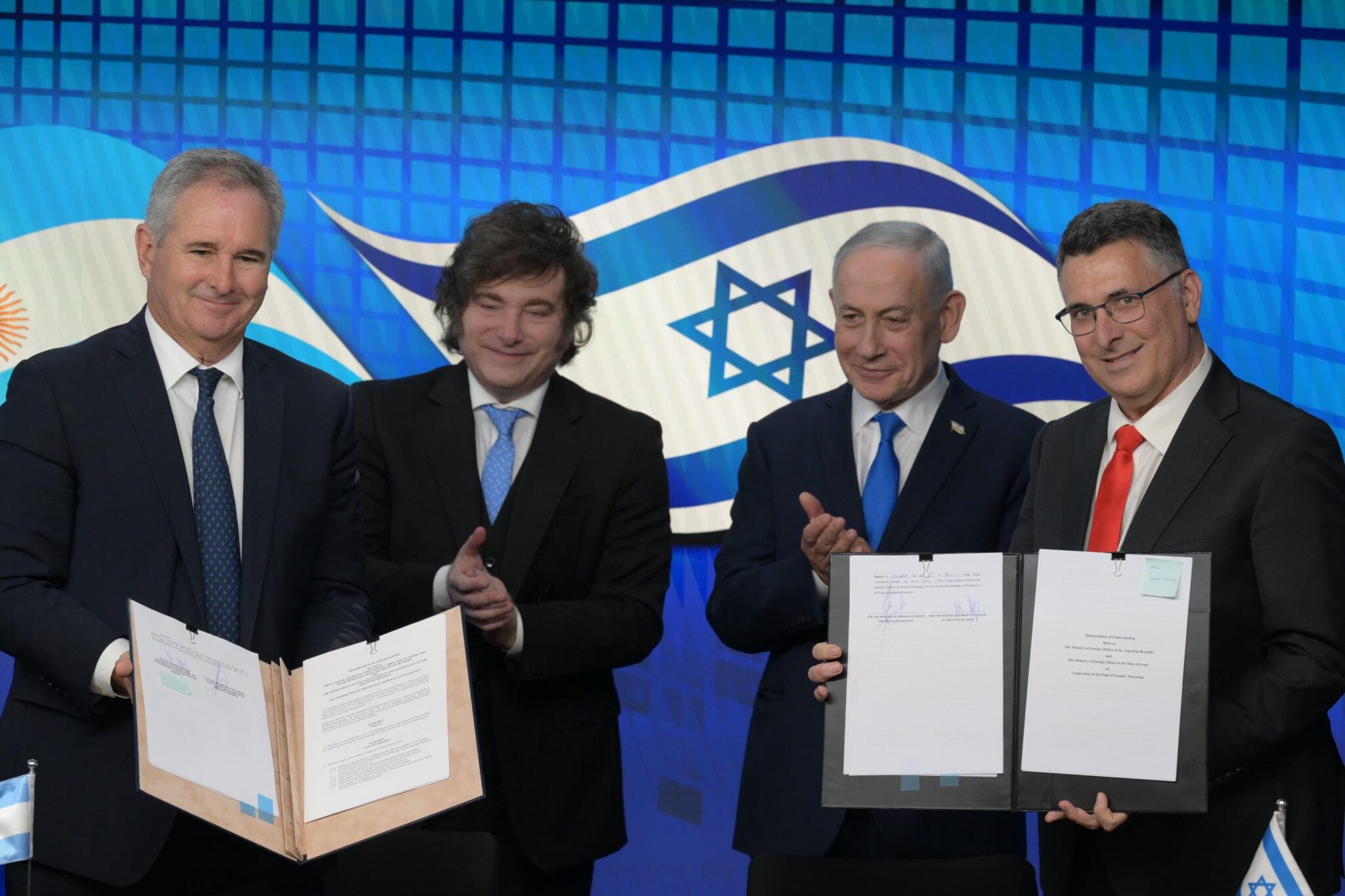
Argentine President Javier Milei’s state visit to Israel is anchored by the unveiling of the Isaac Accords and Milei’s upcoming ceremonial Independence Day torch-lighting. Meanwhile, the two nations are rapidly deepening their economic footprint. The Ministry of Finance and the ASHRA government insurance corporation launched a $150 million export credit line for Argentina. The framework offers Israeli exporters medium-to-long-term credit facilities extending up to 15 years, significantly de-risking Latin American expansion.
This financial infrastructure coincides with a comprehensive diplomatic pact signed by Foreign Minister Gideon Saar, focusing on joint AI development and counter-terrorism intelligence sharing (specifically targeting terror finance and global jihad), alongside a state-supported initiative to launch direct El Al (TASE:ELAL) flights between Tel Aviv and Buenos Aires.
Our take: This sweeping bilateral package represents a calculated, strategic hedge by Jerusalem to aggressively diversify its export markets amidst shifting geopolitical headwinds in Europe. By deploying ASHRA to absorb the sovereign and currency risks traditionally associated with Latin American markets, the Ministry of Finance is effectively subsidizing the entry of Israeli cyber, defense, and agritech firms into a massive, resource-rich economy.
Tying this state-backed financial de-risking directly to Milei’s ideological alignment, and pairing it with the logistical backbone of direct El Al routes and deep-state intelligence sharing, creates a highly secure corridor for B2B capital. This is far more than ceremonial diplomacy; it is the deliberate construction of a financial and infrastructural bridgehead intended to position Buenos Aires as the primary anchor for Israeli enterprise across the broader South American continent.
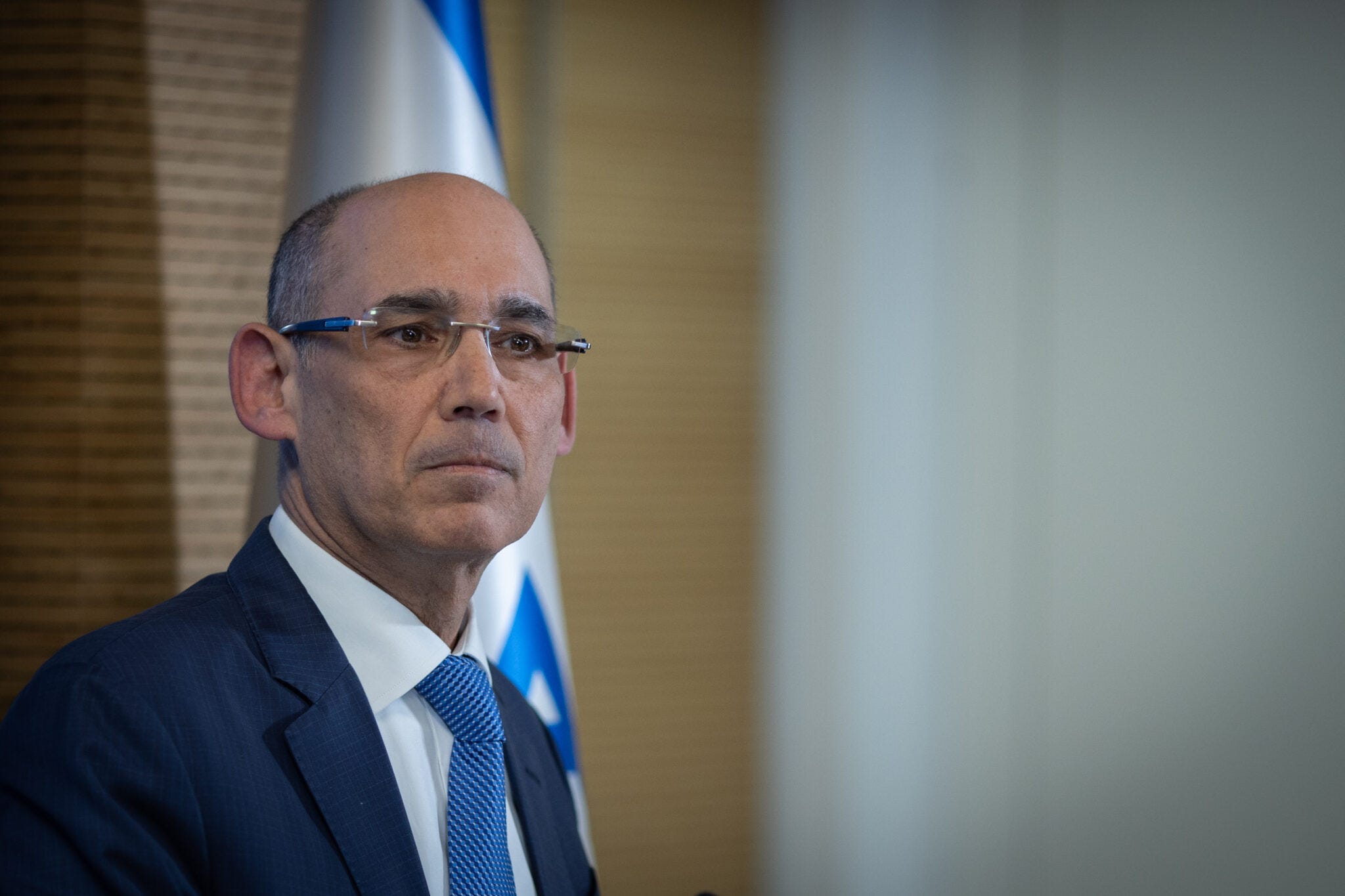
Bank of Israel Governor Prof. Amir Yaron signaled that monetary easing remains firmly on the table, provided the security environment stabilizes. Speaking to Bloomberg, Yaron indicated that if Operation Roaring Lion concludes and inflation drops to the low 2% range by late 2026, the central bank could execute one or two additional rate cuts from the current 4% benchmark.
While acknowledging that short-term GDP has been dented by widespread reserve mobilization and reduced private consumption, Yaron suggested the baseline 3.8% growth forecast for the year could see an upward revision if ceasefires hold. Crucially, he emphasized that the soaring debt-to-GDP ratio will require strict fiscal convergence to balance ballooning defense expenditures with necessary investments in growth engines.

The Interior Ministry published its updated municipal property tax (Arnona) discount regulations for 2026, officially closing a longstanding loophole. Moving forward, income-based eligibility will be calculated strictly on a 12-month average, after the Attorney General rejected Ministry Director General Yisrael Ozan’s request to extend a temporary order that allowed citizens to use a 3-month income snapshot.
The new income test is explicitly pegged to the national minimum wage and household size, allowing for discounts of up to 90% for low-income demographics. However, the national framework remains non-binding. Local municipal councils retain the final authority to dictate actual discount rates and set secondary eligibility tests based on their individual municipal budgetary constraints.
Central Bureau of Statistics (CBS) data released today revealed a sharp month-over-month drop in national job vacancies for March, falling from roughly 148,000 to under 120,000. The damage was highly localized: while industrial manufacturing remained largely insulated with a minor 1.4% dip, the hospitality and food services sector absorbed a devastating 41% contraction. White-collar and construction hiring also cooled, with software engineering and builder vacancies sliding 10% and 18%, respectively.
However, this labor market freeze contrasts sharply with resilient consumer behavior. Separate CBS data tracking December 2025 through February 2026 showed retail chain sales climbing 2.6%, led by a 2.9% increase in supermarket and food chain revenues. As a leading indicator for private consumption, the data suggests that while corporate HR departments are hitting the brakes on hiring, household wallets have not yet snapped shut.
Tech

In a landmark move for Israeli digital health, Ichilov Hospital has signed a strategic agreement with AWS (NASDAQ:AMZN), officially becoming the first major medical center in the country to fully migrate its core clinical and operational IT systems to a hyper-scale public cloud.
The partnership extends beyond data storage. Led by Ichilov's I-Next Data unit, the joint venture has already deployed proprietary generative AI models that actively assist physicians by rapidly processing patient data, automating complex medical summaries, and generating data-driven treatment recommendations in real-time.
According to Ichilov CEO Prof. Eli Sprecher and AWS regional head Harel Ifhar, this architectural shift is highly strategic: the new infrastructure is engineered to guarantee absolute operational continuity during national emergencies while drastically reducing the friction required to scale future health-tech applications.
Capital Markets
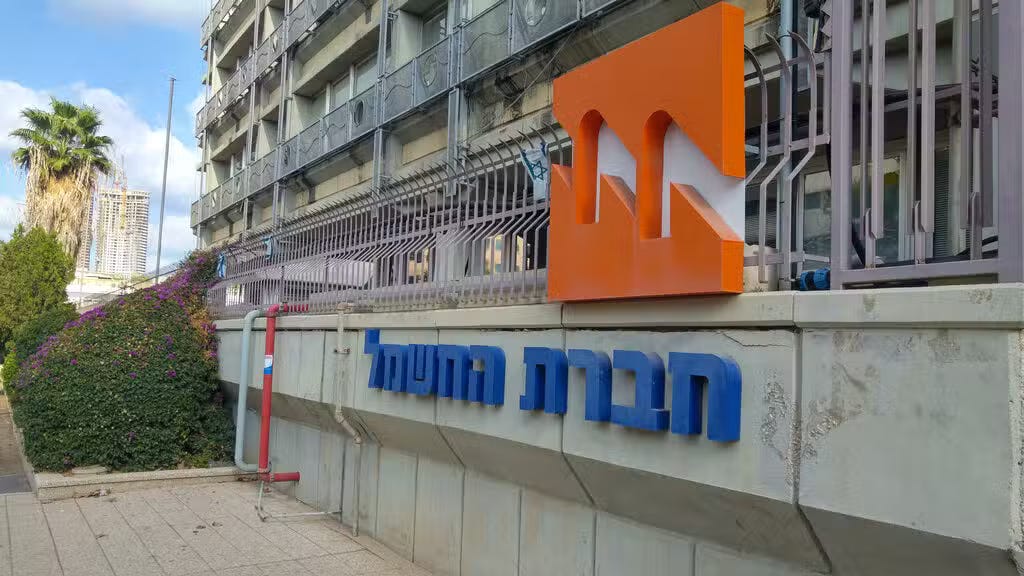
In the domestic debt markets, the Israel Electric Corporation (IEC) successfully raised ₪3 billion via two CPI-linked bond series, drawing unprecedented institutional demand that peaked at a massive ₪5.8 billion. The issuance featured a historic 30-year tranche (Series 39) which secured ₪2.2 billion at a 3.26% yield, locking in a tight spread of 96 basis points over comparable government bonds. The shorter 9-year tranche (Series 38) raised ₪800 million at a 2.7% yield with a 61 bps spread. Both series carry an ilAAA rating from S&P Maalot.
Concurrently, the Israel Securities Authority (ISA) published a post-mortem analysis of equity market performance during the recent geopolitical escalation. The Tel Aviv Stock Exchange demonstrated significant resilience, posting a 4.4% gain following the ceasefire, outpacing the S&P 500 by 5%.
The ISA data revealed a fascinating institutional divergence: while local corporations panic-sold a net ₪1.6 billion, domestic institutional investors heavily bought the dip, accumulating ₪2 billion in equities. Foreign investors, who were net sellers in the early days of the conflict, reversed course by late March to become net buyers. Furthermore, Israel’s 5-year sovereign USD CDS spreads, which initially spiked 3%, have fully normalized to pre-escalation levels.
Our take: Read together, the IEC’s historic debt issuance and the ISA’s equity post-mortem reveal a profound structural reality about the Israeli capital markets: smart money is aggressively fading the geopolitical risk premium. The massive oversubscription for a 30-year utility bond, a duration previously considered highly speculative in a volatile security environment, proves that institutional capital is looking past transient kinetic conflicts to lock in long-term yield.
This debt-market confidence mirrors the equity tape. While corporate treasuries panicked and liquidated assets to protect short-term cash flows, domestic institutions weaponized the wartime volatility, treating the selloff as a generational buying opportunity to accumulate ₪2 billion in discounted equities. The rapid normalization of sovereign CDS spreads and the swift reversal of foreign capital outflows confirm the thesis: Israel’s financial plumbing is exhibiting extreme shock resistance, and sophisticated capital is relentlessly exploiting the disconnect between headline fear and fundamental value.
This domestic resilience stands in sharp contrast against the rest of the Middle East. Over the weekend, Moody’s slashed the credit outlooks for both Bahrain and Iraq to Negative, citing the severe economic paralysis caused by Iran’s closure of the Strait of Hormuz.
While Israel’s diversified economy absorbs the geopolitical shock, neighboring petrostates are buckling; Iraq’s oil production collapsed by 80% due to transit bottlenecks, and Bahrain’s already fragile fiscal metrics (boasting a 147% debt-to-GDP ratio) are deteriorating further.
The takeaway for global allocators is that the regional risk premium is not distributed equally. Smart money is recognizing that while the Gulf’s core economic arteries remain highly vulnerable to kinetic disruption, Israel’s capital markets remain a highly functional, shock-absorbent harbor.
TASE snapshot for Monday, April 20, 2026
TA-35 Index (TASE:TA35): 🔴 -0.50%
TA-90 (TASE:TA90): 🔴 -0.73%
TA-125 (TASE:TA125): 🔴 -0.56%
If you enjoyed this update, forward it on.
TV10 Global | Israel for Investors
Bringing you the top stories from the Israeli business community, by Israel’s only business and finance network.
Share your thoughts with us via: global@tv10.co.il or the Newsroom WhatsApp: +972-55-994-5851.
📧 Subscribe to this newsletter! And follow the daily conversation on 𝕏 @tv10global.
Pings available via WhatsApp Channel.
Disclaimer: This brief is for informational purposes only and does not constitute investment advice. All data current as of publication date.