
🍿 Get our coverage on Spotify, and Youtube, too. Want to join the conversation? We’re on X
Quick takes:
Macro & Trade: Israel and Albania signed a milestone bilateral agricultural pact to boost high-tech exports and secure seasonal foreign labor; the cabinet approved a ₪125 million capital allocation to fund zoning and preliminary infrastructure for dozens of new rural and peripheral communities.
Shipping & Logistics: Maritime giant ZIM appointed former Adama CEO Dr. Chen Lichtenstein as its new President and CEO; the Israel Airports Authority launched a free terminal pickup lot while introducing a ₪500 roadside parking fine to clear airport congestion.
Aviation: Israir reported a heavy $13.97 million Q1 net loss due to war-related terminal closures and fleet grounding, but posted a historic $60 million sales peak in May as demand sharply rebounded.
Macro & Trade

In a significant expansion of peripheral trade and sovereign development, the government has executed parallel international and domestic growth strategies.
Internationally, Israel and Albania signed a milestone bilateral agricultural and food security pact, their first major treaty revision in 25 years. Spearheaded by Israel’s Ministry of Agriculture Director General Oren Lavi and Albanian Minister Anila Denaj, the Memorandum of Understanding (MoU) establishes an institutional framework for the export of advanced Israeli ag-tech, precision irrigation systems, and veterinary technologies into Albania’s massive, family-farm-dominated agricultural economy.
Crucially, the agreement includes a specialized framework with the Population and Immigration Authority to bring structured, seasonal Albanian labor into Israel to stabilize domestic farm production.
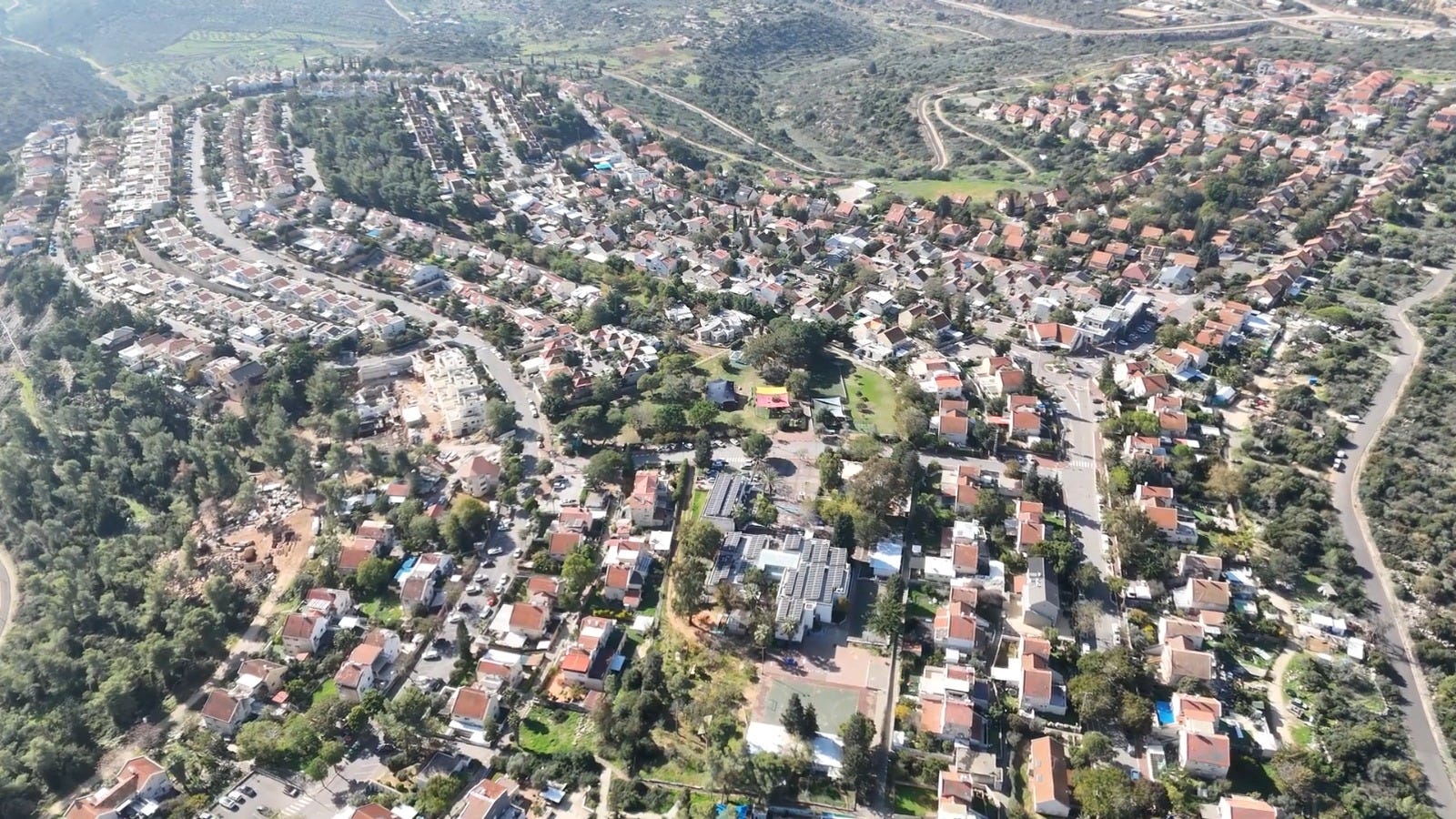
Domestically, the cabinet approved a ₪125 million budgetary allocation pushed by Finance Minister Bezalel Smotrich and Housing Minister Yitzhak Goldknopf. The capital injection is explicitly ring-fenced to fund regional master plans, comprehensive zoning reviews, and preliminary ground infrastructure for dozens of new rural and peripheral communities across the Negev, Galilee, Arava, and Judea and Samaria.
Government data reveals that over the past three years, preliminary planning was advanced for 64 new communities in Judea and Samaria and 21 in additional peripheral districts, with this new allocation serving to transition these projects into actionable development pipelines.
Our take: The Israel-Albania treaty represents a brilliant cross-border arbitrage of input factors. Israel is effectively trading its high-margin, intellectual ag-tech property to unlock a highly secure, friction-free stream of seasonal foreign human capital. This directly relieves the severe, war-induced labor shortages currently bottlenecking domestic crop yields and threatening national food security.
Domestically, the ₪125 million capital injection for peripheral planning is a clear macroeconomic manifestation of political economy prioritizing sovereign territorial presence over immediate fiscal restraint. For global institutional investors, while this intensive rural capitalization creates an immediate pipeline of high-yielding infrastructure and civil engineering contracts for local developers, it also deepens the state’s structural deficit.
Shipping & Logistics
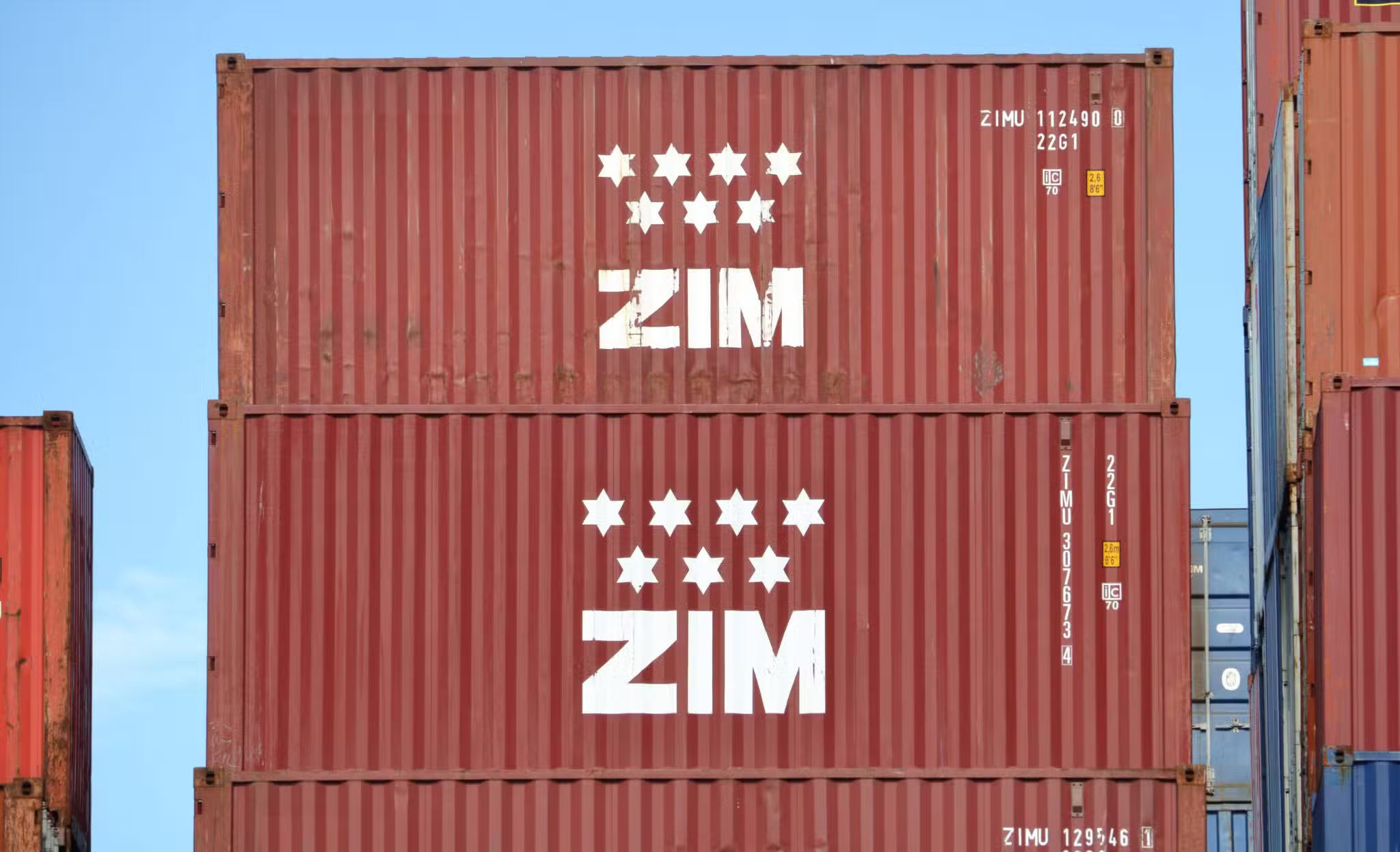
Global shipping flagship ZIM announced the appointment of Dr. Chen Lichtenstein as its new President and CEO, succeeding Eli Glickman. Lichtenstein brings extensive international financial pedigree, having served as CFO of Syngenta Group and CEO of Adama, where he engineered its structural integration with ChemChina and subsequent listing on the Shenzhen Stock Exchange. His early career included leading large-scale M&A transactions at Goldman Sachs in New York and London. Chairman Yair Seroussi stated that Lichtenstein’s profound financial depth and history of managing complex global integrations make him uniquely qualified to pilot ZIM through the current cyclical volatility characterizing global freight markets.
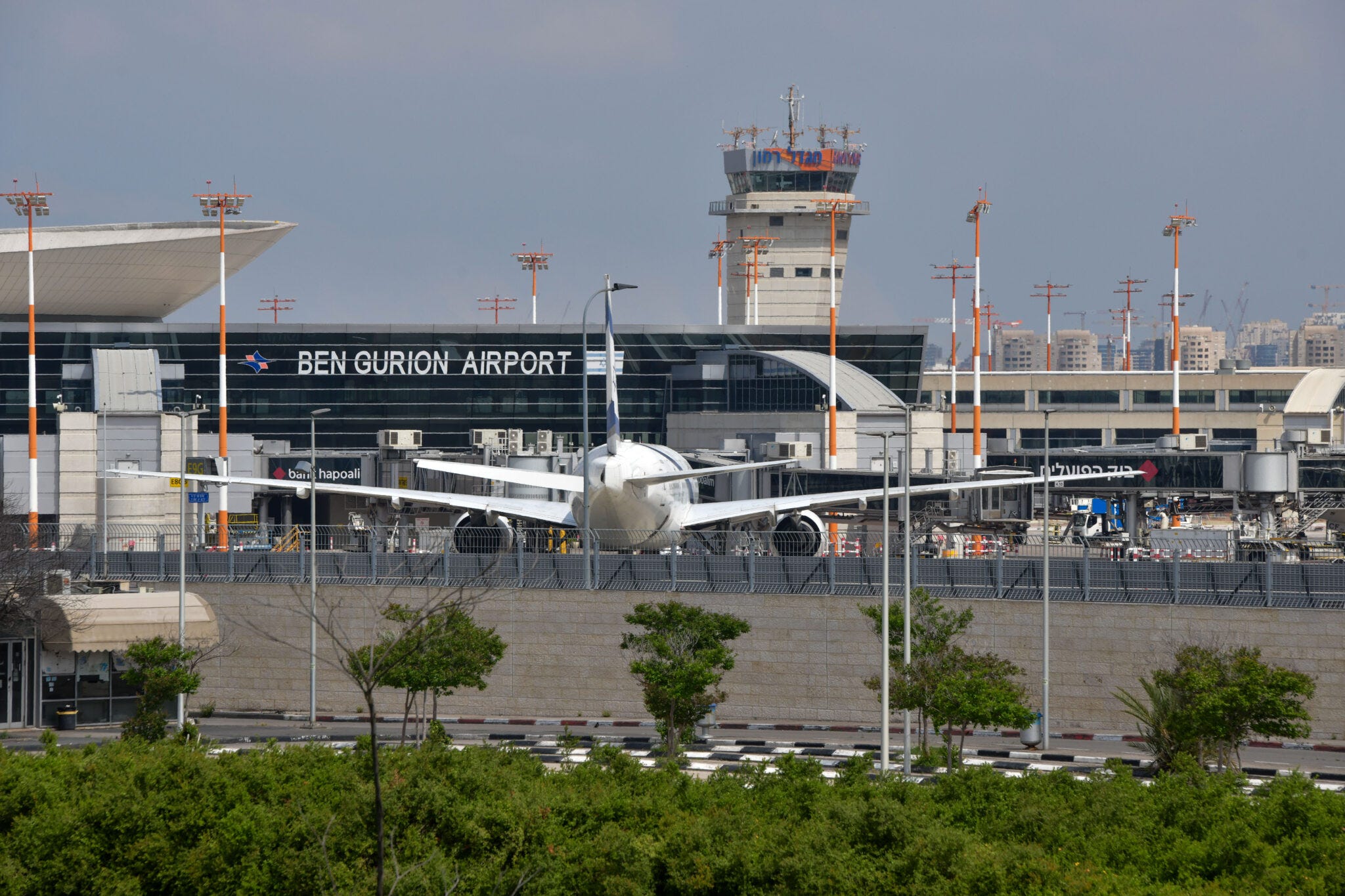
Simultaneously, domestic transit nodes are upgrading infrastructure to reduce localized operational bottlenecks. The Israel Airports Authority (IAA) officially launched a dedicated, complimentary one-hour waiting lot at Ben Gurion International Airport (Ben Gurion Airport) to streamline passenger pickup traffic. To combat terminal congestion and roadside hazards, the IAA is deploying an advanced, automated camera network to strictly enforce a zero-tolerance policy against shoulder-parking, leveraging a ₪500 fine against non-compliant drivers.
Our take: The appointment of Dr. Chen Lichtenstein is a highly strategic play for ZIM as it navigates structural headwinds in global trade. Lichtenstein’s deep execution experience with Chinese state enterprises (ChemChina) and global investment banks indicates that ZIM is positioning itself for sophisticated capital restructuring and potential alliance re-alignments to counter global freight rate stagnation.
On a domestic operational level, the IAA’s terminal optimization strategy addresses clear economic friction. Roadside congestion at primary aviation gateways acts as a minor but persistent tax on business mobility. By creating a free-use arbitrage zone (the one-hour complimentary lot) while simultaneously escalating the cost of non-compliance to ₪500, the IAA is successfully modifying consumer behavior via economic incentives, clearing logistics corridors without requiring extensive, multi-billion-shekel infrastructure overhauls.
Aviation
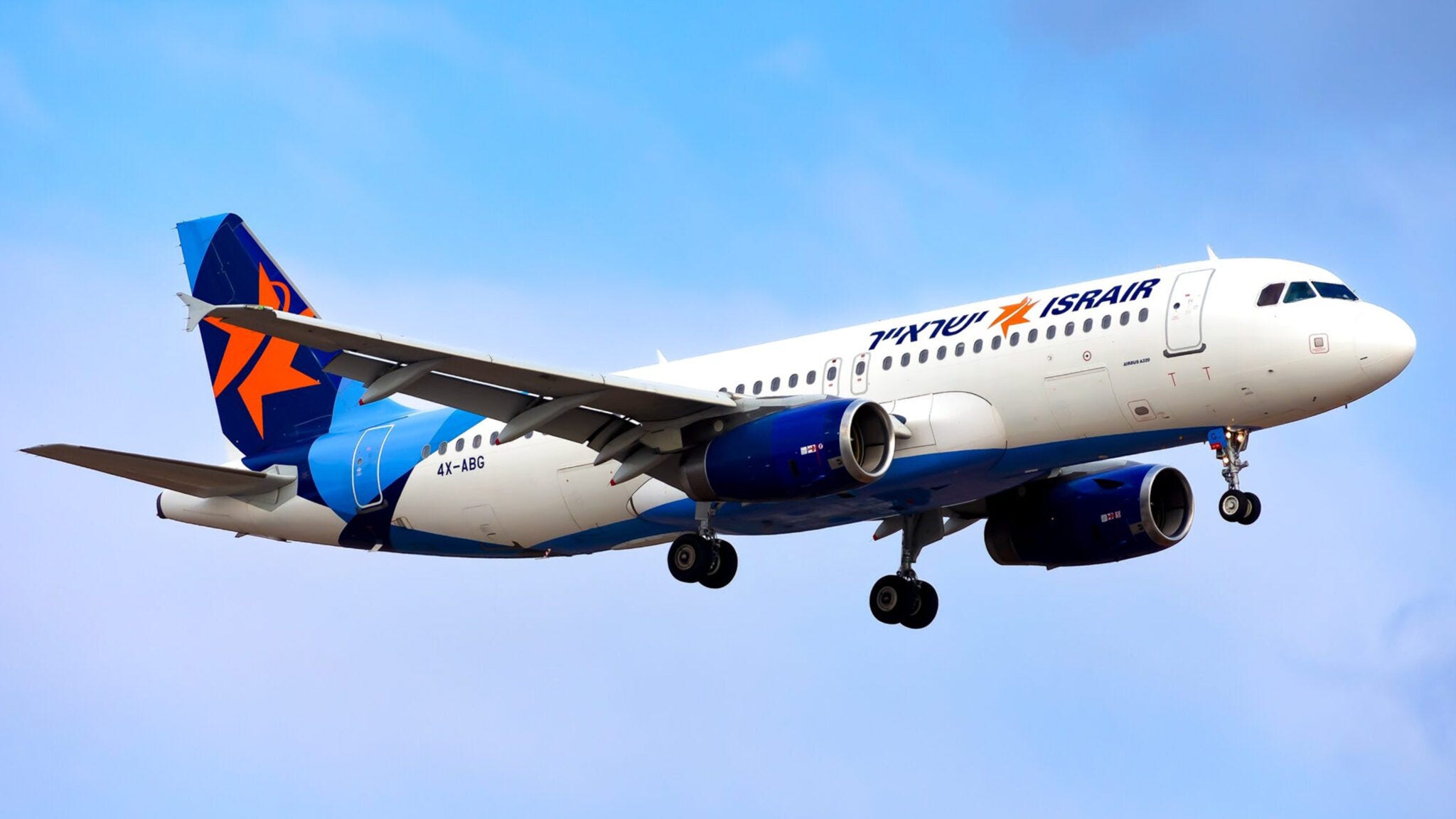
Israir (TASE: ISRG) published a severely bruised Q1 2026 financial report, quantifying the acute economic damage inflicted by the geopolitical friction of ‘Operation Roaring Lion.’ The airline sustained a $26 million total loss from the campaign, with $14 million hitting Q1 and $12 million bleeding into Q2, driven by temporary Ben Gurion Airport closures, foreign fleet groundings, and a collapse in forward bookings.
Quarterly revenues contracted 20% to $108 million, while gross profit plummeted 73.6% to $2.56 million, pressured by surging jet fuel costs and a strong Shekel eroding dollar-denominated yields. The operational squeeze resulted in a deep $13.97 million net loss for the quarter.
Despite the dismal Q1 print, Israir reported a historic operational turnaround in May, logging an all-time monthly sales record of over $60 million, a 25% surge over its previous peak.
To drive long-term structural recovery, the carrier invested $1 million to prepare for transatlantic commercial service to New York (scheduled for August) utilizing two newly purchased Airbus A330 aircraft valued at $76 million, financed via a $41 million bank loan and a $35 million seat-advancement deal with Issta. Additionally, Israir secured an 8-year, 10% equity stake in the ‘SUPERFLY’ credit card loyalty club alongside Isracard and Rami Levy.
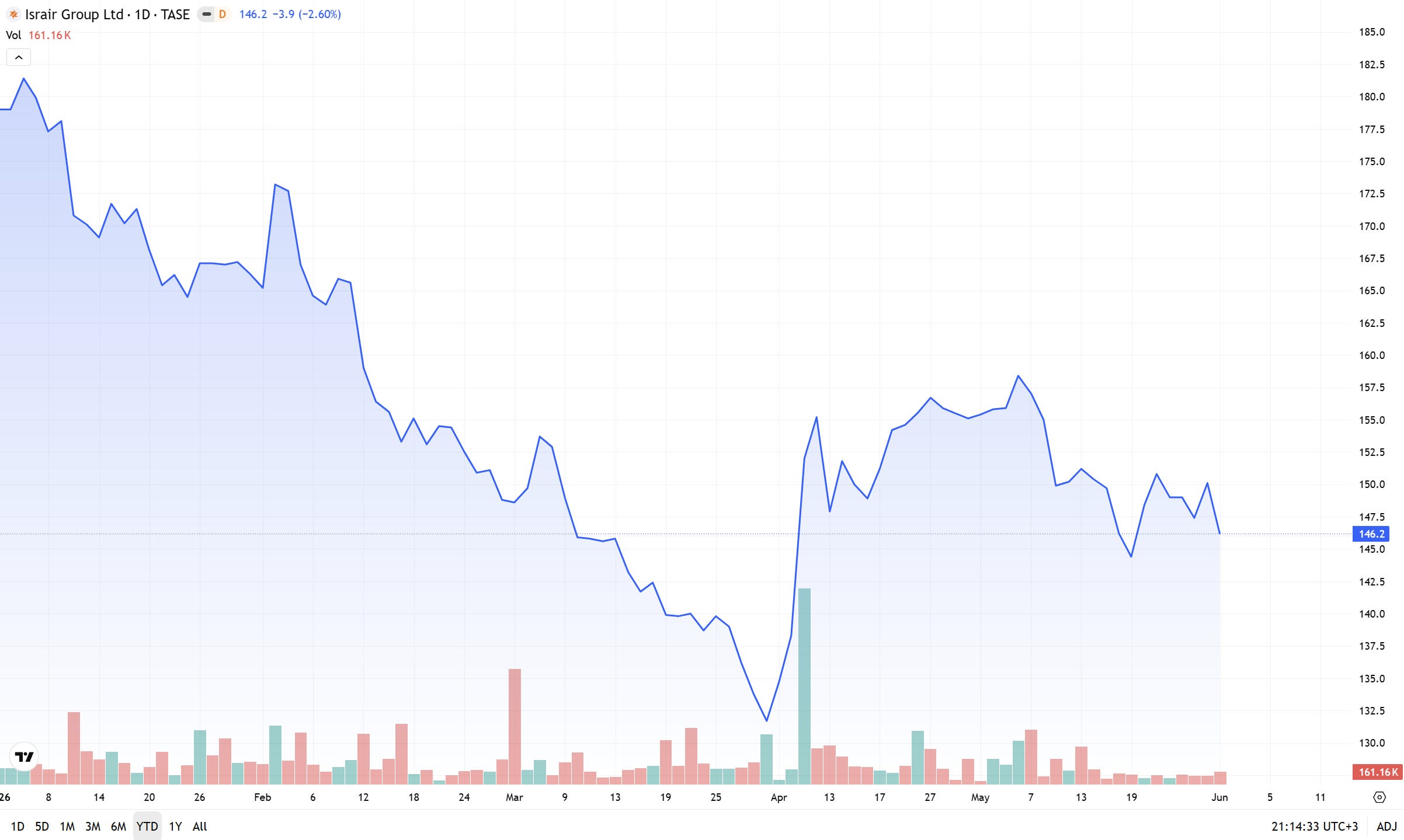
Our take: Israir’s Q1 results are a textbook example of asymmetric macro shocks pounding fixed-cost transportation networks. Airline profitability is hyper-sensitive to load factors and asset utilization; hence, the forced grounding of aircraft and asymmetric currency headwinds (a strong shekel crushing dollar-denominated revenues) quickly flipped positive operating margins into deep net losses.
However, the historic $60 million May sales print reveals powerful, coiled-spring consumer elasticity. The swift demand rebound proves that domestic consumption trends remain robust once immediate security friction is removed.
Israir’s aggressive capital allocation toward wide-body Airbus A330s represents a direct structural assault on El Al’s lucrative transatlantic monopoly. By leveraging pre-funded corporate seat sales (the Issta arbitrage) and embedding itself within the high-velocity SUPERFLY retail credit ecosystem, Israir is shifting away from standard low-cost point-to-point tourism toward high-yield, captive consumer banking lines, constructing a resilient long-term moat against future regional shocks.
TASE snapshot for Tuesday, June 2, 2026
TA-35 Index (TASE:TA35): 🟢 +0.96%
TA-90 (TASE:TA90): 🔴 -0.19%
TA-125 (TASE:TA125): 🟢 +0.62%
If you enjoyed this update, forward it on.
TV10 Global | Israel for Investors
Bringing you the top stories from the Israeli business community, by Israel’s only business and finance network.
Share your thoughts with us via: global@tv10.co.il or the Newsroom WhatsApp: +972-55-994-5851.
📧 Subscribe to this newsletter! And follow the daily conversation on 𝕏 @tv10global.
Disclaimer: This brief is for informational purposes only and does not constitute investment advice. All data current as of publication date.