Elections for the 26th Knesset are expected to be held on October 27, against a backdrop of political, security and economic uncertainty. An analysis by the Tel Aviv Stock Exchange (TASE) research unit, which examined 10 Israeli elections since 2003, raises the question of whether the relative weakness recently recorded on the TASE reflects investor concern that the election will not result in the formation of a stable government.
However, market performance cannot be attributed solely to the election, because it is also affected by the interest rate, inflation, the security situation and trends in global markets.
TASE data point to an average return of about 16.4% for the TA-125 in the 12 months following the 10 elections examined, compared with an annual average of about 11.5% over the entire period. But the gap does not necessarily indicate a positive election effect: Some of the gains were recorded during periods of recovery from crises, while international markets also posted positive trends.
The TASE stresses that the data should not be viewed as proof that elections lead to gains in stocks. Some of the elections included in the examination were held close to major economic crises, including the bursting of the dot-com bubble, the global financial crisis and the COVID-19 crisis. The recovery that followed them contributed to market gains, making it difficult to isolate the effect of the elections themselves.
Wall Street Also Enjoyed High Returns After Elections
The comparison with Wall Street also points to a relatively positive year after elections, not only on the local exchange. The TA-125 delivered an average return of about 16.4% during this period, while the S&P 500 posted an average return of about 13.1% in shekel terms, including dividends. By comparison, the long-term annual averages were 11.5% for the TA-125 and 8.4% for the US index.
The gap between the markets also changed over the period: Before elections, the Israeli stock market underperformed the US market, but in the 12 months afterward, the picture reversed. According to the TASE, relative weakness ahead of voting does not necessarily indicate weak performance later on.

When Elections End Without a Decisive Outcome
The most notable difference was found in TASE performance ahead of elections that ended without a decisive outcome. In the 3 months before such elections, the TA-125 fell by an average of 5.3%, compared with a decline of just 0.2% in elections that led to the formation of a government. The data point to significantly greater weakness in the local market during periods when concerns about political uncertainty intensified.
But the weakness ahead of the elections did not continue with the same intensity afterward. One month after elections without a decisive outcome, the TA-125's cumulative return stood at 2.3%, compared with minus 0.7% in elections that led to the formation of a government. After 3 months, the gap narrowed to 0.6 percentage point, and after 5 months, returns were almost identical: 6.7% in elections without a decisive outcome, compared with 6.5% in elections in which a government was formed.
The period of repeat elections in 2019-2020 illustrates the difficulty of analyzing the market's response to prolonged political uncertainty. Israel held 3 elections in April 2019, September 2019 and March 2020, with the first 2 failing to lead to the formation of a government. The short interval between votes limits the time frames that can be examined, but the data indicate that the gaps in index performance between elections with a decisive outcome and those without one narrowed within a few months.
Does the Current Weakness Reflect Concern About an Inconclusive Result?
Does the recent weakness in Tel Aviv also reflect concern that the upcoming election will be inconclusive? TASE officials say this is one possible scenario, but stress that the effect of the political situation cannot be isolated from the other factors affecting the market. The interest rate, inflation, growth, financial reports and the security situation may also affect stock prices. According to the historical data, concern about political uncertainty tends to be reflected mainly in the period before elections.
The Shekel Changes the Picture
The study also examines the effect of the exchange rate on the return received by Israeli investors. In 2000-2025, the TA-125 delivered an average annual return of about 11.5%, compared with about 9.9% for the S&P 500 in dollar terms. However, after adjusting the return to shekels, it amounted to only about 8.4%, partly because of the strengthening of the Israeli currency over the period. The data emphasize that comparing an investment in Israel with an investment in the US also requires taking the change in the exchange rate into account.
A difference was also found in the foreign exchange market between the period before elections and the period afterward. In the year preceding elections, the shekel strengthened against the currency basket by an average of 1.4%, compared with an average annual appreciation of 2.3% over time. In the year after elections, the average appreciation reached 2.5%.
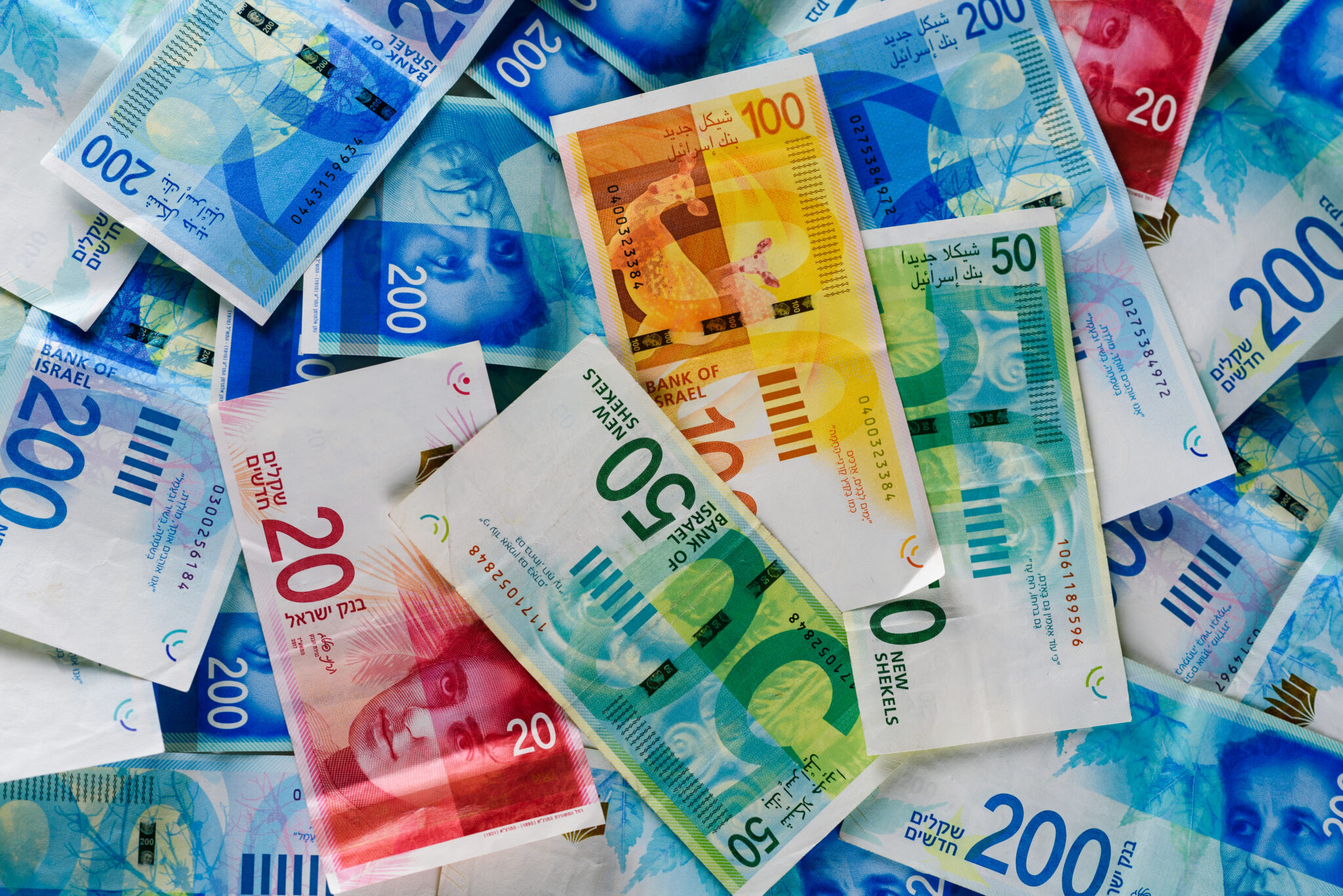
TASE officials suggest that uncertainty surrounding the composition of the government and economic policy may moderate the shekel's strengthening before elections. After the vote, when the political picture becomes clearer, this effect may weaken. For Israeli investors, this means that currency movements may affect shekel-denominated returns from investments abroad.
The Market Reacts to Uncertainty, Not Only to Results
The main conclusion from the examination is that the market reacts not only to election results, but also to the level of uncertainty ahead of them. In elections where concern about the lack of a decisive outcome intensified, relative weakness was recorded even before the vote, but within a few months, the gaps compared with elections that led to the formation of a government had nearly disappeared.
Based on past experience, a lack of political resolution does not necessarily translate into prolonged damage to the TASE. However, election results alone do not determine the market's direction: Company performance, the interest rate, growth, the security situation and global trends will also continue to influence investors.