
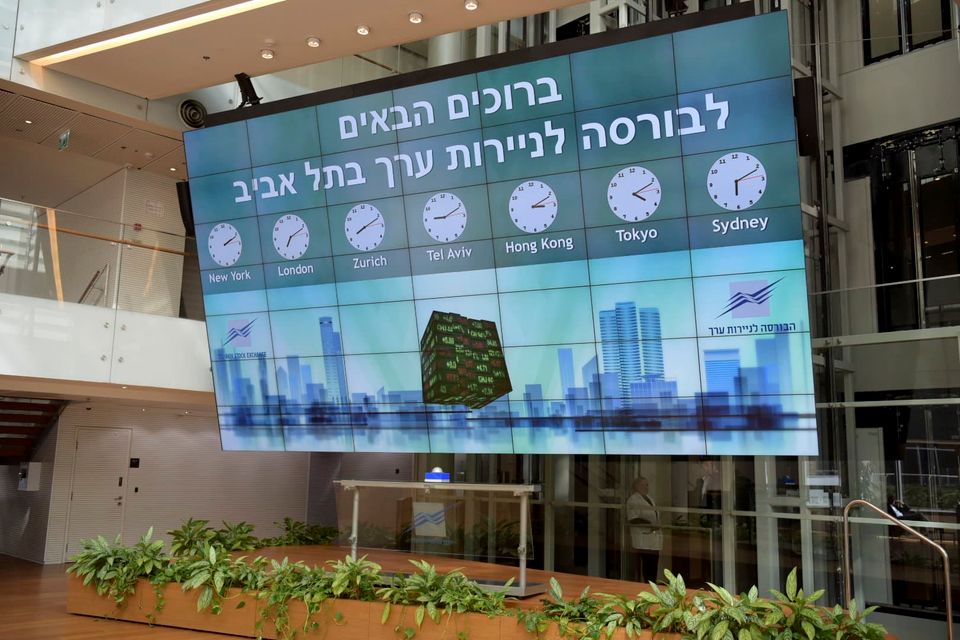
The Tel Aviv Stock Exchange (TASE) today (Thursday) published the new composition of its indices, which will take effect at the end of trading on November 5. The update is expected to bring significant changes to the flagship indices, both in the identity of the companies and in investors’ sector exposure.
El Al and Doral are expected to join TA-35, while Y.H. Dimri, Shufersal and Kenon will move to TA-90. At the same time, 15 companies that went public this year are expected to enter TASE indices for the first time. Trading turnover on the update day may reach about NIS 18 billion, nearly four times the daily average since the beginning of the year.
15 new companies enter the indices
Of the 21 companies that conducted an initial public offering (IPO) from the beginning of the year through the end of September, 15 are expected to enter the indices for the first time in the upcoming update. Together, the companies raised about NIS 6.9 billion, and their post-IPO value totaled about NIS 28.7 billion.
Among the companies expected to join TA-90 and TA-125 are Tidhar Group, Avisror and Bagira. Alpha Tau, which was listed for trading through a dual listing, is also expected to join the indices.
TA-35 entry threshold surged 235%
The entry threshold for the TA-35 index stands at about NIS 14.3 billion, compared with about NIS 4.27 billion in February 2017 — an increase of about 235%. In TA-90, the threshold rose from about NIS 823 million to about NIS 2.6 billion.
The increase reflects the growth in the value of listed companies and the competition for a place in the leading indices. Alongside market capitalization, entry into the indices also depends on the free float, liquidity and TASE rules.
More technology in TA-35, more real estate in TA-90
The technology sector’s weight in TA-35 is expected to rise from about 31% to about 32.2%, partly following an increase in Palo Alto’s weight. The weight of biomed is expected to decline from about 9.5% to about 6.9%, while the insurance sector’s weight is expected to rise from about 13.3% to about 14.3%.
The weights of existing stocks are also changing: Palo Alto’s weight in TA-125 is expected to rise from about 1.54% to about 2.45%, while Teva’s weight is expected to decline from about 6.87% to about 4.89%. According to estimates ahead of the update, the increase in Palo Alto’s weight is expected to generate passive buying of about NIS 900 million, while the adjustment to Teva’s weight is expected to generate selling of about NIS 1.3 billion.
In TA-90, the weight of technology is expected to decline from about 20.4% to about 17.1%, while the weight of real estate and construction will rise from about 25.4% to about 26.7%. The weight of the energy, oil and gas sector is also expected to rise.
Trading turnover may reach NIS 18 billion
The value of assets tracking the three flagship indices totals about NIS 84 billion, while all assets tracking TASE indices stand at about NIS 103 billion, as of October 26.
Average daily trading turnover in stocks since the beginning of the year stands at about NIS 4.7 billion, but on the day of the upcoming index update it may reach about NIS 18 billion. In the previous update, in May 2026, turnover reached about NIS 24.5 billion, of which about NIS 19.1 billion was during the closing phase.
The changes in the composition of the indices require exchange-traded funds and tracking products to adjust their holdings. However, a stock’s entry into an index does not guarantee demand: The impact also depends on its new weight relative to its weight in the previous index and on the value of assets tracking each index.
The upcoming update reflects the expansion of the local capital market, the entry of new companies into the indices and the growing weight of technology in the flagship index. For investors, the question is not only which stocks are entering and leaving, but also how their weights and the indices’ sector exposure are changing.