

Ormat Technologies ended the third quarter of 2026 with growth in revenue and profit, mainly due to a surge in its energy storage operations. The company reported its results yesterday (Wednesday), after trading ended on Wall Street, posting revenue of $275.1 million, up 10.2% from $249.7 million in the corresponding quarter last year.
Net income attributable to shareholders totaled $31.9 million, compared with $24.1 million in the corresponding period — an increase of 32.2%. Fully diluted earnings per share reached $0.51, compared with $0.39 last year. At the same time, adjusted EBITDA rose 11.1% to $153.8 million.
The energy storage operations that drove growth recorded a 145.2% surge in revenue to $49.9 million, compared with $20.4 million in the third quarter of 2025. The increase resulted from a combination of high availability at the company’s facilities, high merchant rates in the PJM electricity market and contributions from new storage facilities added to the portfolio over the past year. The segment’s gross margin reached 62.1%, compared with 39.4% in the corresponding quarter.
By contrast, revenue in the electricity segment fell 2.1% to $163.7 million. The company said the decline was mainly due to reduced generation at the Puna plant following an unplanned shutdown caused by a hurricane. The impact was partially offset by the start of commercial operations at the 10-megawatt geothermal power plant in Dominica and improved performance at the Olkaria plant in Kenya. The product segment also recorded a 1.2% decline in revenue, which totaled $61.5 million.
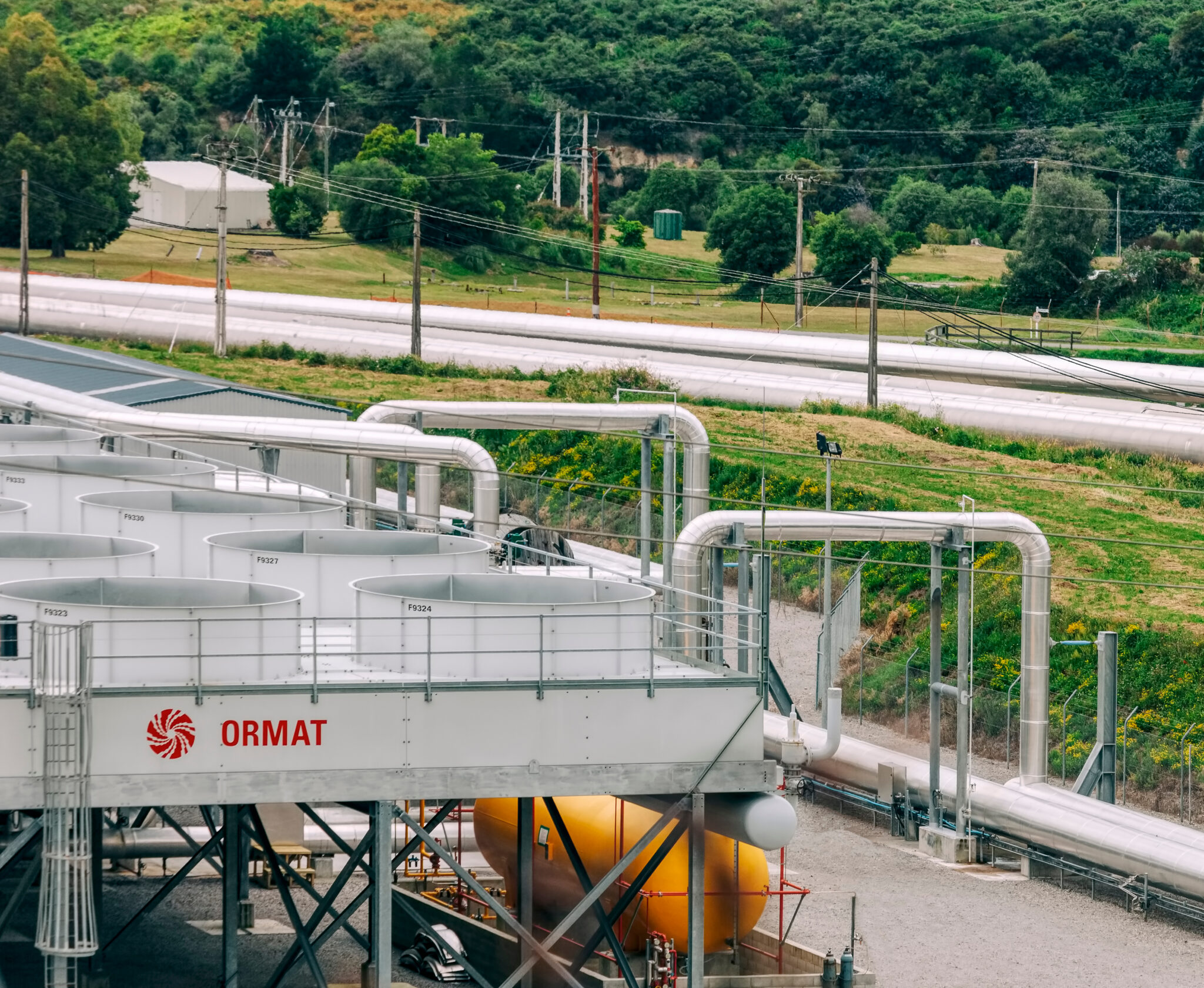
Against the backdrop of the results since the beginning of the year and expectations for the fourth quarter, Ormat raised the midpoint of its annual guidance. The company now expects revenue of $1.17 billion-$1.2 billion in 2026, alongside adjusted EBITDA of $640 million-$650 million. The revenue forecast includes $700 million-$710 million from the electricity segment, $310 million-$320 million from the product segment and $160 million-$170 million from energy storage operations.
Doron Blachar, CEO of Ormat, said the results reflect the high profitability of the energy storage operations, which benefited from additional facilities, high availability and high rates in the PJM market. Referring to the company’s plans for the coming years, he said: “By the end of 2030, we plan to double our generation capacity compared with the end of 2025 and reach an annual revenue run rate of more than $1.5 billion and an annual adjusted EBITDA run rate of more than $1 billion.” Blachar emphasized that the targets do not include a potential contribution from EGS technology.
Alongside its ongoing operations, Ormat is expanding its investments in advanced geothermal energy (EGS). The company is advancing two pilot projects in collaboration with SLB and Sage, where drilling is expected to begin in late 2026 or early 2027. In addition, it is negotiating long-term power purchase agreements for the Dixie Valley project in Nevada, which is expected to be its first commercial project in the field.

Ormat expanded its land reserves designated for EGS development from approximately 283 thousand dunams to approximately 688 thousand dunams. The company estimates that the land could enable future development totaling 5-6 gigawatts, compared with a previous estimate of 3-4 gigawatts. In September, the company, together with SLB and the University of Utah, was selected to receive up to $35 million in funding from the U.S. Department of Energy to advance projects in the field in Nevada and Utah.
In addition, the company’s board approved a quarterly dividend of 12 cents per share. The payment is expected to be made on December 2 to shareholders of record as of November 18.