
In the third quarter of 2026, ICL sold more potash at a higher price. India and Brazil led the growth in sales, and the average price rose to $370 per ton. These figures increased revenue in the potash segment to $469 million, but segment operating profit fell from $104 million to $94 million. Revenue grew 3% to $1.91 billion, while operating profit fell from $230 million to $225 million.
The report shows how little remained from the price increases. According to ICL’s calculation, higher selling prices added $171 million to adjusted operating profit compared with the corresponding quarter. Three items nearly erased that entire increase. More expensive raw materials, mainly sulfur and fertilizers, reduced it by $103 million. The impact of exchange rates reduced it by $43 million, partly because the strengthening of the shekel and the Brazilian real made operating expenses more expensive in dollar terms. Ocean and overland transportation reduced it by another $21 million.
The price increases did reach the bottom line in the Industrial Products segment, which includes bromine operations, where operating profit jumped from $52 million to $84 million. The company sold more bromine-based flame retardants and also received a higher price for them. At the same time, it increased sales of brine fluids, mainly in North and South America. The $32 million increase in operating profit in this segment helped offset the decline in potash and weakness in the group’s other operations.

On the bottom line, ICL reported an increase in net income attributable to shareholders from $115 million to $120 million, in a quarter when financing and tax expenses were lower. Operating activities generated $256 million, $52 million less than last year, while investments increased. After investments, free cash flow totaled $66 million, compared with $128 million in the corresponding quarter.
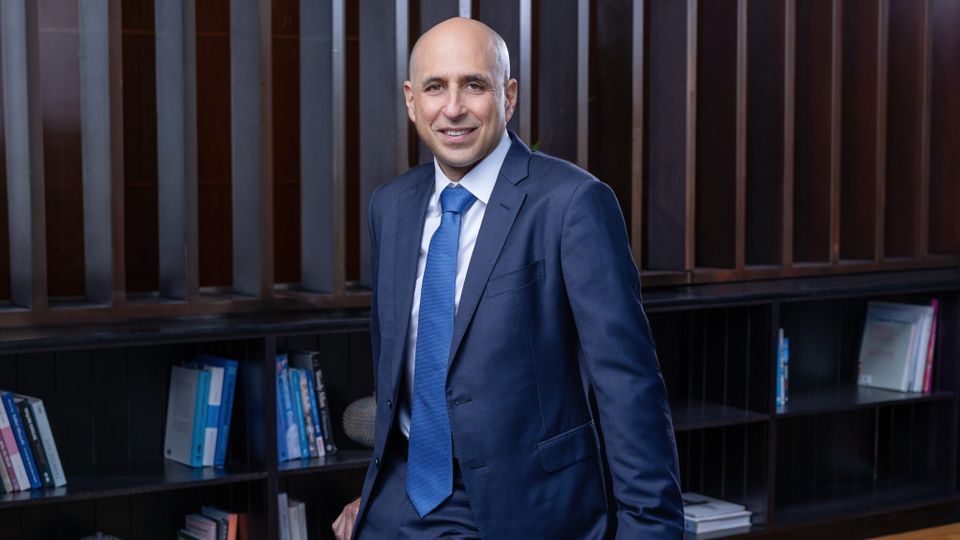
ICL reaffirmed its adjusted EBITDA guidance for the full year, in a range of $1.5 billion-$1.7 billion. Elad Aharonson, president and CEO of ICL, said: “ICL recorded another quarter of growth in sales, net income and adjusted EBITDA while contending with record-high raw material prices, high shipping and logistics costs, and the impact of exchange-rate fluctuations. Alongside targeted price increases in key target markets, each segment acted proactively to manage the factors under its control and took advantage of its unique market conditions.”
“We expect to enter 2027 from a position of strength. Our diverse product portfolio serves a broad range of target markets, and our solid balance sheet provides a stable foundation. The new segment structure will sharpen the focus on our core operations, growth engines and customers, while the ELEVATE program is expected to begin generating significant cost savings. Together, these measures will enable ICL to improve performance and grow as market conditions return to normal,” he said.
ICL shares, which have fallen 17.5% since the beginning of the year, are currently trading up about 1.5%.