
The Israel Employment Service reported today (Monday) that the number of job seekers fell in August to about 172.5 thousand, compared with about 173.5 thousand in July — a decline of about 1,000 people, or 0.6%. The Employment Service said that after adjusting for the seasonal impact of the "summer layoffs," the trend of returning to normal and moving closer to the labor market characteristics that preceded the war is continuing.
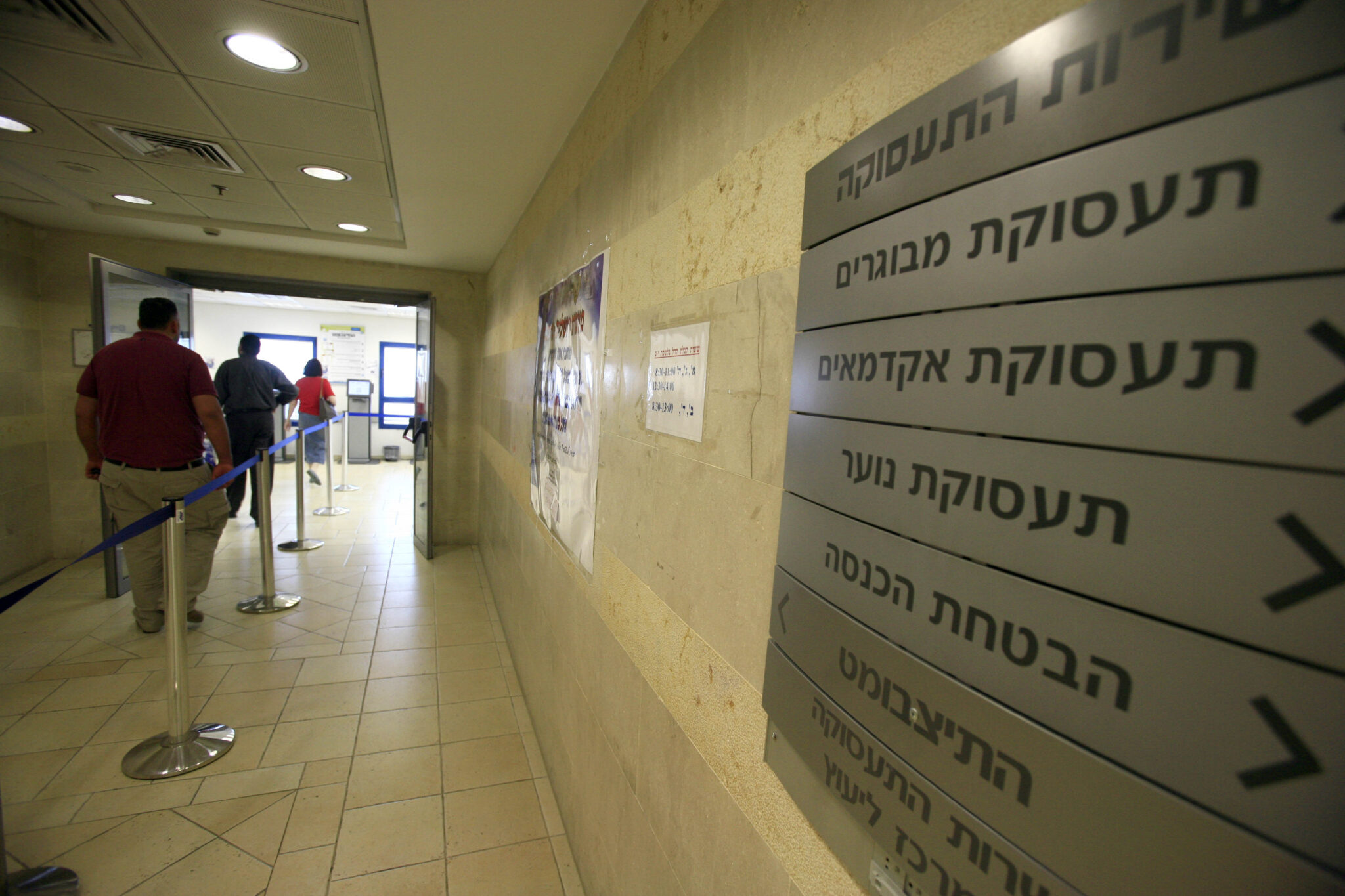
Alongside the decline in the number of job seekers, a significant shift in their composition continued. The share of job seekers in academic occupations reached 20.5% in August, compared with 20.3% in July, 19.7% in June and 18.6% in May. This is a continuing upward trend, with their share standing at 14% four years ago.
The number of job seekers in high-tech professions also continues to rise. The number of software developers and application analysts registered as job seekers reached about 8.9 thousand in August — an increase of 6.4% compared with June. The Employment Service said the figures reflect a shift in the composition of job seekers, with a higher share of people who have a strong connection to employment.

The average number of job seekers rose from about 95 thousand in the period before Swords of Iron to about 122 thousand today. The Employment Service said that, considering the "Lion's Roar" and "Swords of Iron" military operations, the pace of the increase is relatively moderate, with a significant portion of the growth attributed to unemployment claimants from the high-tech sector.
At the same time, the number of unemployment benefit claimants rose in August to about 132.8 thousand, while the number of income support claimants fell to about 33.8 thousand, compared with about 35.5 thousand in July. This is a long-term trend: Among people ages 35-54, the share of income support claimants fell from 40.8% in 2019 to 18.9%, amid regulatory changes, the removal of barriers to entering employment and shifts in the labor market.

The impact of the "summer layoffs" is also evident in the breakdown by gender and sector. The number of women registered as job seekers rose from about 96.2 thousand in July to about 97.9 thousand in August, and they accounted for 56.8% of all registrants and 58.5% of new registrants. The number of Haredi job seekers rose by 7.9%, from about 15 thousand to about 16.1 thousand, while the Arab community recorded a decline of 4.3% and the number among non-Haredi Jews remained stable.
Demand for workers also strengthened. According to the Central Bureau of Statistics (CBS), the number of job vacancies reached about 152.4 thousand in July, an increase of about 2.6 thousand from the previous month, and totaled about 148 thousand after seasonal adjustment. The ratio of job vacancies to job seekers stood at 0.81, meaning about four vacancies for every five job seekers — a ratio similar to the level recorded before the war.

Demand for workers is concentrated mainly in the construction, manufacturing, sales and service sectors, which were significantly affected during the war and are now showing a recovery. At the same time, gaps between localities remained pronounced: Bnei Brak led with a 13.8% increase in the number of job seekers, followed by Modi'in Illit with 9%, Elad with 8.8% and Beitar Illit with 6.8%. Conversely, Nazareth recorded a decline of 7.6%, Shefa-Amr 7.5%, Karmiel 6.6%, Bat Yam 4% and Acre 3.6%.
Israel Employment Service Director-General Inbal Mashash said that alongside the resilience of the labor market, significant changes are taking place in the needs of job seekers and the structure of the employment landscape. She said the increase in the share of academics and people in academic occupations among job seekers reflects a new reality that requires preparations for expected changes in the labor market and stronger connections between workers and employment opportunities.
Mashash said: "The labor market is tight and continues to demonstrate resilience, but at the same time, we are witnessing profound changes in the needs of job seekers and the nature of the employment landscape. The increase in the share of academics and people in academic occupations among job seekers is part of a new reality that requires us to prepare today for the world of work of tomorrow."
According to the Employment Service, the August data indicate gradual and positive stabilization that is leading to a return to normal, but the full picture of the labor market will become clear only after the holiday season, when the seasonal effects weaken.