
After the prime minister said in an interview with TV10 Economics that blockchain could serve as an alternative in the event of financial sanctions on Israel, adding that he had already requested that a plan be prepared on the matter, the Bank of Israel clarified that cryptocurrencies cannot be used to bypass sanctions.
Following remarks by Prime Minister Benjamin Netanyahu in an interview with Roy Katz on TV10 Economics, and in light of numerous inquiries from journalists during Shabbat, the Bank of Israel issued a response addressing the possibility of using cryptocurrencies to contend with economic and banking sanctions against Israel.
In the interview, Netanyahu said he was concerned about the possibility of sanctions being imposed on Israel, adding that the country must prepare for the possibility of restrictions on the banking system. Asked whether blockchain could serve as an alternative in the event of economic sanctions, he replied: “One of them. Certainly. And I have already asked that a plan be prepared for this.”
In response, the Bank of Israel clarified: “Cryptocurrencies cannot be used to bypass sanctions.”
The bank stressed that Israel’s economic interest is to preserve its ties with its key trading partners, rather than rely on solutions intended to circumvent financial restrictions.
“The right course for Israel’s economy is to preserve our economic relations with our main trading partners and focus on preventing sanctions and their negative impact on the economy,” the response said.
The Bank of Israel also noted that the issue falls under the responsibility of the political leadership and that action should be taken to advance it.
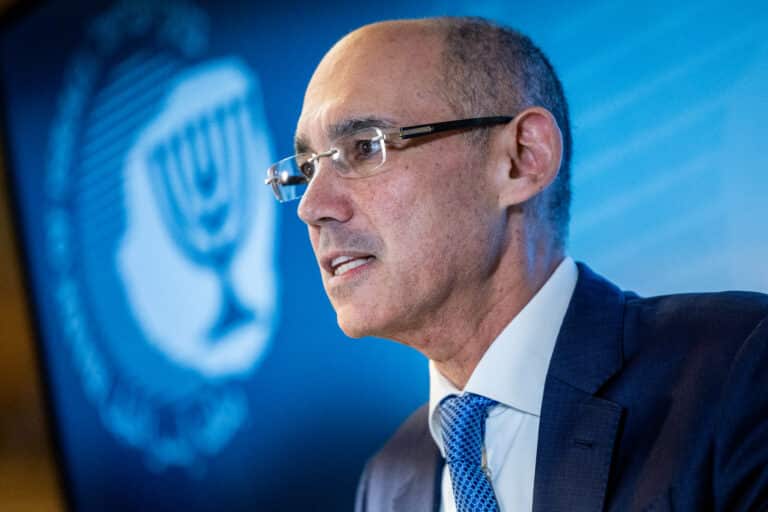
The response underscores the gap between the possibility Netanyahu raised in the interview and the Bank of Israel’s position: While the prime minister presented blockchain as one of the possible alternatives for contending with financial sanctions, the bank stressed that cryptocurrencies cannot be used to bypass sanctions and that the focus should be on preventing them and preserving Israel’s international trade ties.