
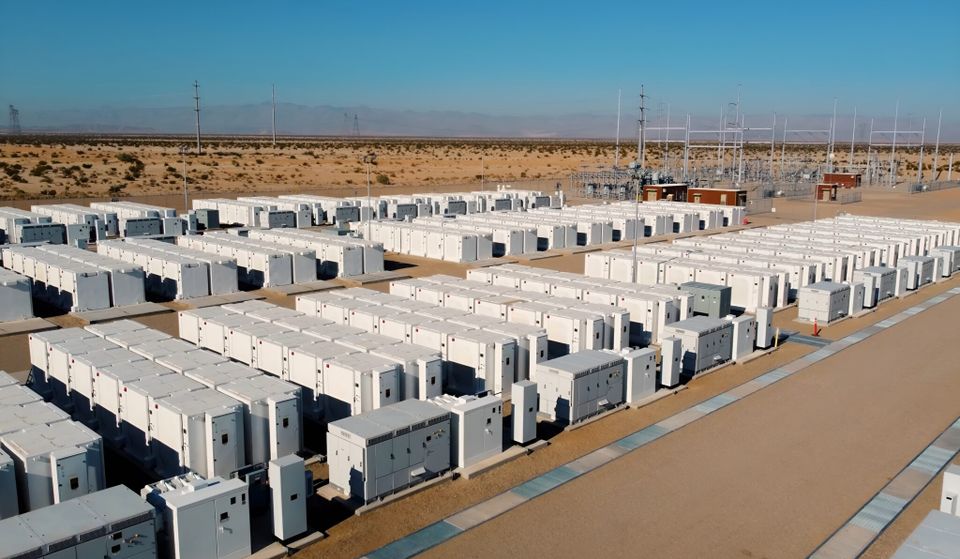
The Israel Land Authority approved today (Monday) a regulated mechanism for establishing standalone electricity storage facilities in agricultural communities, in a move intended to advance green energy targets and ease congestion on the national power grid.
The move provides planning and economic certainty for developers and rural communities, and enables existing land to be used to strengthen energy infrastructure.
Background to the Move and Its Alignment With National Planning
The decision was formulated following Amendments 19 and 19/1 to National Outline Plan 1, which allow direct building permits to be issued for storage facilities that are not large, with capacity below 16 megawatts.
Under the plan, these facilities can be established in areas designated for a variety of uses, including industry, employment, commerce, hotels, storage and farm buildings.

Beyond the fast-track planning solution, placing storage facilities on agricultural plots is seen as a vital component in decentralizing the power grid, increasing its reliability and improving its capacity to absorb additional renewable energy generation.
Allocation Model and Period of Use
Under the new rules, the plot allocation transaction will be conducted for a period of 49 years in accordance with the valid planning designation, with payment determined based on an appraisal of the full rights under the detailed plan. In cases where the allocation covers part of a planned plot, building rights are calculated in proportion to the size of the area.
Alongside the long-term lease of the land, the decision establishes a separate component for operating the storage facility: use of the facility will be limited to a period of only 24 years, and payment will be collected according to a uniform rate based on storage capacity in megawatt-hours, in accordance with Management Decision 5605.
Dedicated Arrangement for Farm Buildings
A unique pricing arrangement was established for plots designated for farm buildings, under which no additional payment will be collected for the general land component, but only for the storage component itself, according to the uniform price list established by the authority.
This mechanism is intended to make it easier for agricultural communities to integrate energy facilities into existing farm areas.
Conditions for Transitioning to a Lease Agreement
To ensure that the projects are implemented and prevent land from being held without use, defined conditions were established for transitioning from the initial development agreement to a long-term lease agreement. Developers will be able to complete the lease stage in one of two ways: actual utilization of at least 40% of the plot area or 80% of the approved building rights, whichever is lower, or alternatively, presentation of official confirmation from the Israel Electric Corporation showing that the storage facility has been connected to and is operating on the grid.

The Israel Land Authority emphasizes that the new policy creates a balance between efficient use of land resources and incentivizing private investment in strategic infrastructure, which is expected to accelerate the pace of development of Israel’s electricity sector and advance Israel’s green energy targets.