
The Central Bureau of Statistics (CBS) reported today (Thursday) that its Business Tendency Survey for October 2026 points to stability in managers’ assessments of their companies’ economic condition across most sectors of the economy. The balance remained positive in every sector except hotels, where the negative assessment persisted. At the same time, activity data point to weakness in manufacturing, construction and services, while retail trade recorded a positive sales balance.
In manufacturing, the balance for companies’ economic condition in October stood at 26.4%, compared with 27.7% in September. Activity data for September compared with August indicated a shift to negative balances in production volume, sales and the number of employees, which stood at -1.9%, -1.7% and -1.6%, respectively. However, the forecasts for November point to an expected improvement, with positive balances in orders for the domestic market and exports, output and the number of employees.
The construction sector also joined the moderate improvement trend, with the balance rising to 14.8%, compared with 14% in September. By contrast, current activity and the volume of new work recorded negative balances of -7.4% and -6.5%, respectively. Looking ahead to November, company managers expect an improvement in the volume of current activity, with a balance of 6%, alongside expectations of an increase in the number of employees.

Retail trade saw a decline in the balance, which stood at 17.2% in October, compared with 21.2% the previous month. The sales balance in September remained positive at 7.5%. The forecasts for November point to a continued positive sales trend, with an expected balance of 2.9%. At the same time, however, negative expectations were recorded for orders from suppliers and the number of employees, with balances of -1.8% and -3.6%, respectively.
The services sector also showed some weakness. The balance for companies’ economic condition fell to 20.2%, compared with 21.6% in September. Activity data show a shift to negative balances in domestic market sales, exports and the number of employees. However, the forecasts for November point to an expected improvement in domestic sales and employment. By contrast, export sales are expected to continue posting a negative balance.
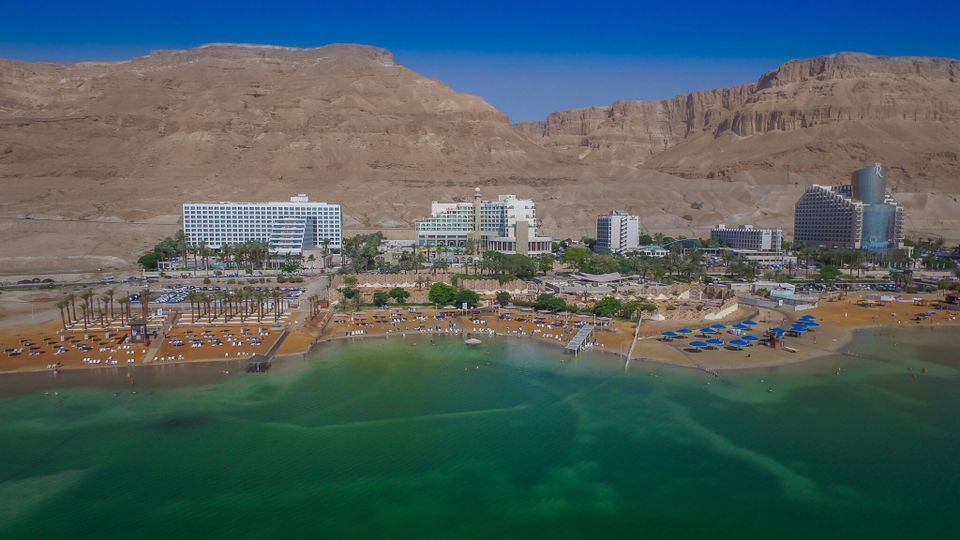
The hotel sector remained the notable exception in the survey. Although the balance for companies’ economic condition improved to -8.1% in October, compared with -12.1% in September, it remained negative. Indicators concerning activity in the sector also presented a negative picture: The balance for overnight stays by Israelis stood at -11.3%, the balance for overnight stays by tourists at -7.9%, the balance for the number of employees at -13.6% and the revenue balance at -14.1%.
The forecasts for November do not point to a significant change in the picture. The expected balance for the number of overnight stays by Israelis stands at -13.6%, for overnight stays by tourists at -4.3% and for the number of employees at -3.6%.

Alongside the sectoral data, the survey also examined the main constraints affecting companies’ operations, including the security situation and the labor shortage, compared with the period preceding the Swords of Iron War. The data show that in every sector, the share of companies defining the security situation as a severe constraint on their operations increased. The highest rates were recorded in the hotel sector, where 77% of companies reported a severe constraint, and in food and beverage services, which includes restaurants and event halls, at 28%.
The labor shortage appears to have become a more severe constraint compared with the prewar period in nearly every sector of the economy. The information and communications sector, which is part of the high-tech sector, was an exception in this respect because it recorded a decline in the share of companies reporting severe difficulty with the issue.
Looking broadly at the performance of companies in the economy, the overall balance for September indicated an improvement compared with August.