The construction industry continues to operate at significant volumes, but behind the activity lies an increasingly burdensome financial reality. A CofaceBDi survey for 2026, conducted among approximately 190 contractors and construction companies, points to rising business risk, higher construction costs and damage to profitability. At the same time, an analysis of the financial statements of listed companies shows that pre-tax profit was cut by more than half in two years.
One of the clearest signs of the industry's distress is the number of companies that collapsed. During 2026, the number of construction and infrastructure company collapses reached 815, compared with 795 in 2025, 730 in 2024 and 441 in 2022. This represents an increase of approximately 85% in four years. The industry's risk index also remained high relative to the economy as a whole: In the third quarter of the year, it stood at 7.11, compared with 6.52 for the overall economy.

Daniela Raz-Weinreb, vice president of data and product at CofaceBDi, said: "The construction industry finds itself in a paradoxical situation. On the one hand, it is an active industry with a high level of construction starts, a large housing inventory, a significant volume of permits, long-term demographic demand and urban renewal that continues to grow. But on the other hand, the companies are operating under heavy pressure that includes eroding profitability, a growing financing burden, long completion times, a severe labor shortage and business risk that remains high amid a challenging business environment and security uncertainty."
Worker shortage drives up project costs
The main difficulty identified by contractors is workforce availability: 85% of the companies reported a worker shortage, and 72% defined it as one of the three main challenges in their operations. The shortage is felt mainly in finishing work, cited by 59% of respondents, and in structural and wet trades, cited by 57%.
Bringing in new foreign workers helped some of the companies, but it did not resolve the shortage. A total of 65% of the companies reported integrating foreign workers, of which 49% experienced improved performance, while 39% reported a deterioration. At the same time, 56% of contractors cited high wage costs and 52% cited the prices of raw materials and inputs as factors weighing on operations.
The price increases are already being reflected in project budgets: 93% of contractors reported an increase in construction costs, with 57% of them experiencing an increase of more than 15%. A total of 68% of the companies that experienced higher costs were forced to absorb them themselves, damaging profitability.
Concern about the industry grows, but investment plans continue
Contractors' forecasts indicate growing pessimism regarding the industry. A total of 34.6% of respondents said they were less optimistic than last year, while 30.7% reported an improvement in their outlook. However, when it comes to their own companies, the picture is different: 45% expect growth in activity, of whom 19% estimate that it will be significant and 26% expect a moderate increase.
The gap is also evident in forecasts for the industry as a whole: 44% of contractors estimate that activity in the industry will contract, with 28% expecting a moderate decline and 16% expecting a significant decline. Despite this, the companies do not appear to be rushing to freeze their plans. A total of 44% of contractors plan to increase their investments in 2027, compared with 22.6% who intend to reduce them.
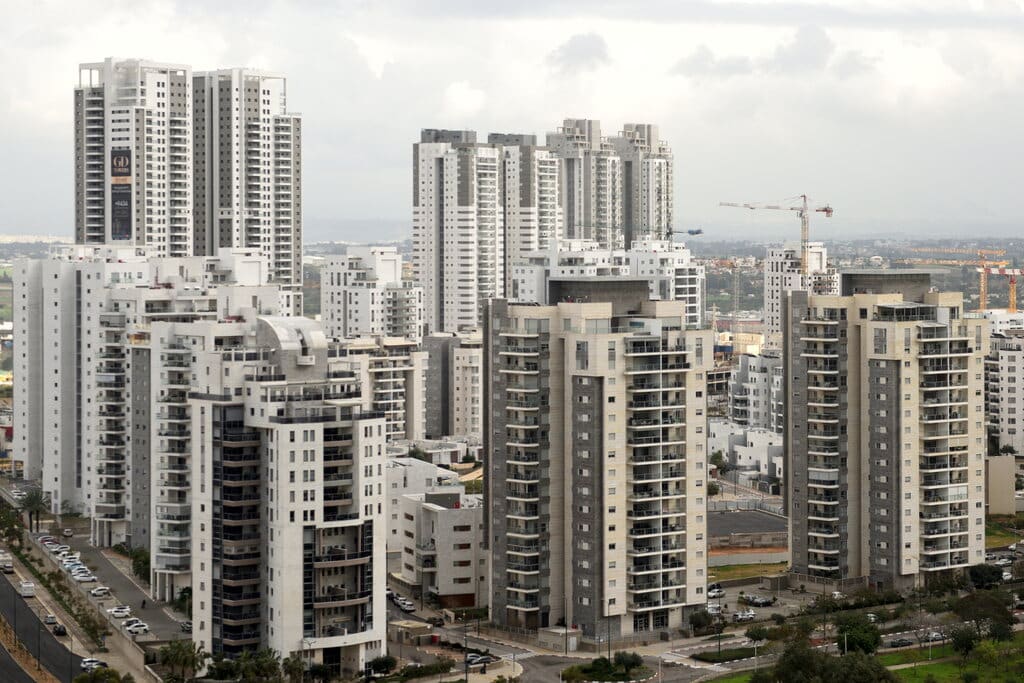
Regarding home prices, 83% of respondents estimate that they will continue to rise. This is the same rate recorded in the 2025 survey.
Buyers examine the stability of construction companies
The survey also points to the importance homebuyers place on the strength and reputation of the company from which they purchase a property. A total of 65% of buyers check the contractor's background before completing a transaction. The main considerations in the review are previous experience and projects completed by the company, along with its reliability and fulfillment of commitments — the two parameters each received a rate of 77%.
Additional considerations are the company's reputation and recommendations or negative publicity concerning it (68% each), its financial stability (64%) and its financial backing (55%). From the contractors' perspective, the gap between the promises made to customers and the actual outcome is the main factor that harms the brand, according to 31% of respondents. Another 23% cited negative publicity.
Pre-tax profit cut by more than half
The pressure in the industry is also reflected in the financial results of public companies. An analysis of the reports of listed construction companies shows that the gross profit margin fell from 17.7% in the first half of 2024 to 15.3% in the first half of 2026. The decline was even sharper in the pre-tax profit margin, which contracted from 7.7% to just 3.4% over the same period.
At the same time, the companies are required to contend with higher financing expenses and short-term bank liabilities. Short-term liabilities to banking corporations reached 20.6% of the total balance sheet, and net financing expenses climbed from 4.2% of total revenue in the first half of 2024 to 6.7% in the first half of 2026.
The data paint a picture of an industry in which activity volumes do not necessarily translate into an improvement in companies' condition: Higher construction costs, the worker shortage and high financing expenses are narrowing margins and increasing financial risk.