

Defense technology company Elbit Systems today (Tuesday) reported its financial results for the third quarter of 2026, which ended September 30, showing continued rapid growth and improved profit margins across all major segments.

The company reported quarterly revenue of $2.25 billion, reflecting an increase of approximately 17% compared with revenue of $1.92 billion in the corresponding quarter last year.
Sharp Jump in the Bottom Line and Cash Flow
Alongside revenue growth, the company reported a significant improvement in operating and net profitability. Non-GAAP operating income jumped 30.7% to $244.1 million (10.8% of revenue), compared with $186.7 million (9.7% of revenue) in the third quarter of 2025. On a GAAP basis, operating income rose to $232.5 million from $171.4 million last year.
Non-GAAP net income attributable to shareholders climbed 31.4% to $210 million ($4.36 per fully diluted share), compared with $159.8 million ($3.35 per share) in the corresponding quarter. On a GAAP basis, net income totaled $177.9 million ($3.70 per share), an increase of 33.4% from $133.4 million last year.

A particularly notable figure in the reports is cash flow: In the first nine months of 2026, the company generated $862.5 million in cash flow from operating activities, nearly double the $461 million generated in the corresponding period last year.
Free cash flow in the third quarter totaled $276 million, representing cash conversion of more than 150%. In light of the results, the company’s board declared a dividend of $1.00 per share, to be paid on January 4, 2027.
Growth Drivers: Strong Demand in Israel and Growth in Laser and Munitions Systems
The breakdown of revenue by business segment points to broad-based growth, led by the Intelligence, Surveillance, Target Acquisition and Reconnaissance and Electronic Warfare segment (ISTAR and EW), whose revenue jumped 32% compared with the corresponding quarter.
Growth in this segment was driven primarily by increased sales of high-power laser systems (airborne and ground-based), electronic warfare and naval systems in Asia-Pacific, alongside sales of electronic warfare and electro-optics systems in Israel.
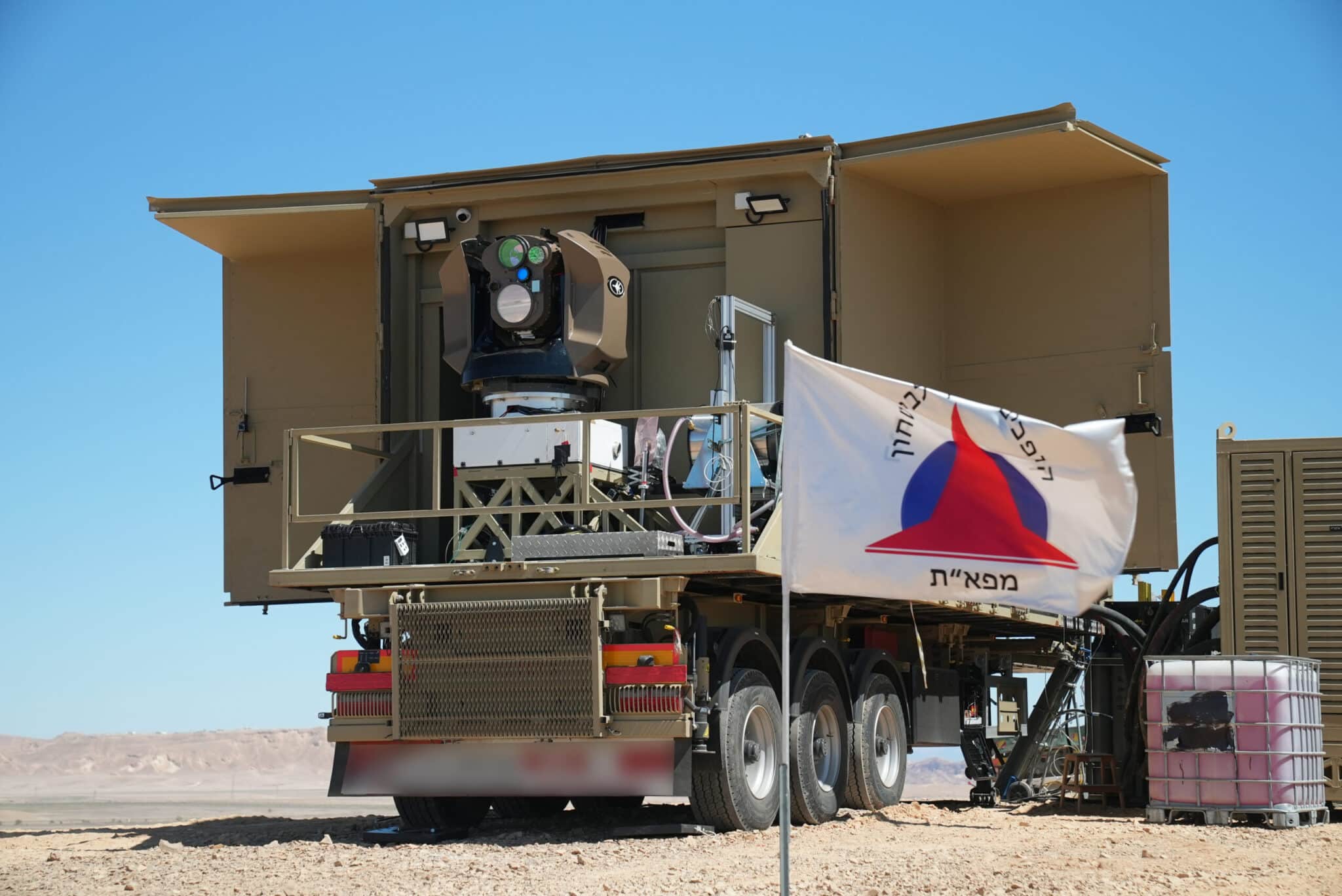
The Land and Munitions segment recorded a 28% jump in revenue, thanks to continued high demand for ammunition and munitions in Israel. The C4I and Cyber segment grew 11% due to increased sales of command-and-control systems in Europe, U.S. operations (TSDEF) grew 10% thanks to projects for U.S. Customs and Border Protection, and the Aerospace segment grew 4% as a result of UAV sales in Israel, partially offset by a decline in sales of precision-guided munitions in Asia-Pacific.
Geographically, the Israeli market accounted for 37.5% of total quarterly revenue ($845.4 million), Europe contributed 24.7% and North America 20.2%.
Record $33 Billion Backlog and Optimistic Outlook for 2027
Elbit Systems’ order backlog reached an all-time high of $33.0 billion at the end of the third quarter. Most of the increase in the backlog during the quarter came from orders in Europe, and approximately 74% of the total backlog is attributable to orders from outside Israel. Approximately 35% of the order backlog is scheduled to be fulfilled during the remainder of 2026 and throughout 2027.
In addition, the company disclosed that in November 2026 it signed an agreement with the Israeli Ministry of Defense under which it will be compensated for payment delays by the ministry since October 2023. Looking ahead, the company’s management estimates that revenue will continue to grow at a high-teens rate (High-teens) in 2027, alongside a continued expansion in profit margins compared with full-year 2026.

Elbit Systems President and CEO Bezalel (Butzi) Machlis said upon the release of the reports that the company continues to invest in technologies that will shape the future battlefield, noting that during the quarter the company presented new autonomous combat capabilities based on artificial intelligence (AI) that enable real-time synchronization of aerial and ground systems.
According to Machlis, the company is expanding production capacity and integrating artificial intelligence into internal work processes to improve productivity, streamline processes and ensure fulfillment of its enormous order backlog.