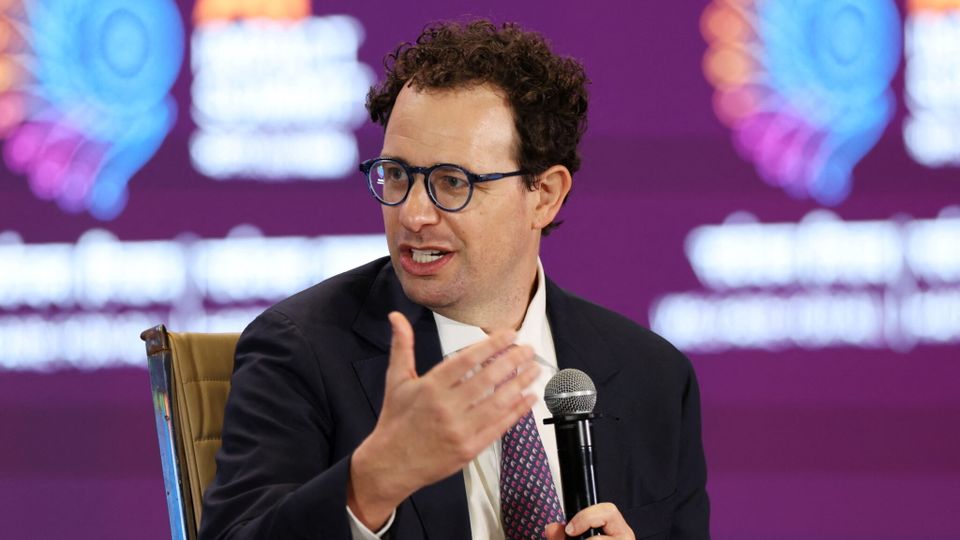
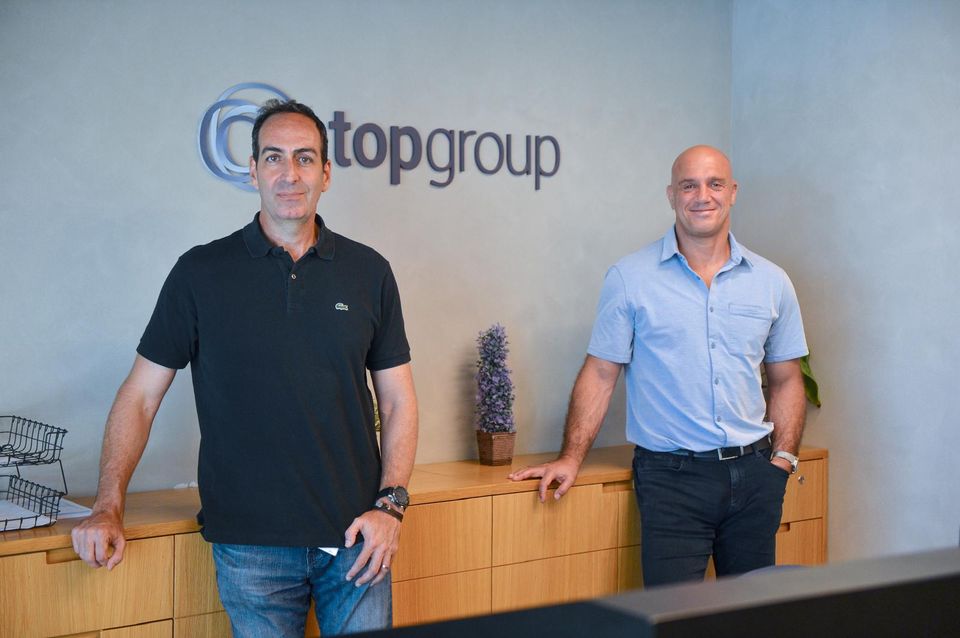
At Top Group, about 95% of the code is already written using artificial intelligence. Nevertheless, Shmulik Milner, the company’s co-CEO, does not believe programmers are on their way out or that the era of enterprise software is about to end. “AI will require programmers,” he says. “It will not replace them; it is changing the way they work.”
From a stock market shell to 750 employees
In 2008, Milner and his partner Gilad Har-Oz, who also serves as co-CEO, acquired Ramdor, a small public company that he said was “somewhere between a shell and a company,” with revenue of NIS 11 million to NIS 12 million and 35 employees. Today, the group employs about 750 people after completing more than 20 acquisitions. In 2025, it reported revenue of NIS 292 million. According to Milner, its actual volume of activity is far higher because, in some business segments, the company recognizes only the margin in its financial statements rather than the full sale amount.
In the first half of 2026, revenue grew by only 3.8%, but operating profit rose by 5.8% and net profit increased by 11%. The company’s stock, by contrast, has lost 22.3% since the beginning of the year and is trading at a valuation of about NIS 204 million and a price-to-earnings ratio of about 12.5.
Milner and Har-Oz each hold 27.62% of the company’s shares, and both purchased shares on the market during the year. In April, each bought about NIS 30 thousand worth of shares at a price of about NIS 11.8 to NIS 12 per share. In July, the two made 2 additional purchases: On July 1, each purchased about NIS 48 thousand worth of shares at a price of about NIS 10.3 to NIS 10.5 per share, and on July 13, each purchased about NIS 40 thousand worth of shares at a price of NIS 9.9 per share.
In total, each has invested about NIS 118 thousand in purchases of the company’s shares since the beginning of the year. Although these are relatively modest amounts, all the purchases were made at prices above the stock’s current price.
“We are the contractor’s ERP”
Top Group sells enterprise software to thousands of organizations, almost all of them in Israel. These are systems for managing finances, procurement, projects and human resources. The company developed some of the systems itself, while others are imported in its capacity as the representative of foreign manufacturers. Construction and infrastructure is its largest business segment, accounting for 16% to 17% of operations. Its customers include the Defense Ministry, Israel Railways, Ayalon Highways, Clalit, Bank Leumi, Bank Hapoalim, Elbit Systems and Israel Aerospace Industries.

Does the crisis in the real estate sector, reflected in part by a record inventory of unsold homes, also affect the company? Milner explains that most of its operations focus on infrastructure and government construction, rather than working with contractors. Even among contractors, the situation is not dramatic: “We are the contractor’s ERP. Taking us out means it is closing up shop. We are among the last to be affected.” He acknowledges that there is stagnation among contractors but defines its impact on the company as “not significant.”
“The cost of living in Bulgaria is half”
Top Group made its latest acquisition in Bulgaria and Romania, buying 70% of AppGreat. The company has about 100 developers operating under Israeli management, who will be rebranded under the TopShore brand. “The prices are about 50%,” Milner says. Regarding output, he cautions that it is difficult to be precise but estimates that “certainly today, with all the AI development tools, the output is very similar.”
Regarding the impact on the number of developers in Israel, Milner emphasizes that the move is intended to add personnel rather than replace existing employees: “The goal is to add to what already exists,” he says. “We are growing both in Israel and there.”

“Pricing by user? They will simply change the metric”
Asked how much revenue currently comes from products customers buy because of AI, Milner replies, “It is still not significant.” AI is being introduced as an add-on layer above core systems, and it is now also being introduced in the form of agents: “If, in collections, I can move from a unit of 5 people to 3, plus agents, there are significant savings here.” Within the company’s own development teams, he estimates that the use of AI tools has led to an increase of about 30% in output.
Concerns about the collapse of the SaaS model, in which customers pay according to the number of users, do not trouble Milner. He says that even if the number of users declines, companies will simply change the metric, and prices will not change dramatically. He also sees no decline in demand in the technology staffing services segment, which is responsible for about one-quarter of the group’s revenue: “I do not see any decline in demand.”
Deal or dividend? “A good deal”
Top Group regularly distributes dividends and has distributed a total of about NIS 40 million over the past 7 years. However, when Milner is asked which would take priority, a dividend distribution or another acquisition, he replies without hesitation: “A good deal. A good deal that will allow me to distribute twice the dividend afterward.” Regarding the preference for distributing a dividend over a share buyback, which is considered more tax-efficient, he explains: “Investors prefer a dividend,” and acknowledges that taxation is also a consideration.

In an era when artificial intelligence is shortening development processes, Top Group is no longer focused on acquiring technology but is looking for customers and systems that are difficult to replace. Selling the company is also not on the agenda for the controlling shareholders: “At our age, we are not planning to sell the company. We receive various offers from time to time.” Asked whether there was an acquisition he regretted, he replied: “Fortunately, not at the moment.”
He identifies the group’s next growth engine as PayEm, which was acquired in July and issues virtual credit cards to employees at organizations. Beginning in the first quarter of 2027, the company plans to start issuing Israeli cards, a move for which Milner has high expectations: “It will be a game changer.”
“Everyone likes the story”
Regarding why the company’s stock did not participate in the rally in software shares, Milner points to low trading volumes: “Our challenge as a relatively small stock is trading volume,” Milner says. “We meet with many investors, and everyone likes the story and relates to the valuation.” According to him, the main problem is liquidity, which characterizes second-tier stocks. The company previously tried using a market maker, but he says, “It did not make a major difference.”
Milner’s proposed solution is growth. The company aims to deliver annual growth of 15% over the next 3 years, mainly in operating profit and cash flow. “If we increase profitability by another 50%, I hope that will have a direct impact on the valuation.” The assessment is that improved profitability, alongside a recovery in trading volumes, could also allow larger investors to enter the stock.

Who is at risk, and who will continue to grow
“There was an overreaction across the software sector,” Milner says, “including on Wall Street.” He says shares of IT services companies such as Matrix and ONE also declined, even though these companies “will have a lot of work” implementing AI. Another field he identifies as having potential is cybersecurity, particularly the security of AI agents, which he defines as “an unregulated field” because of AI’s dual nature, as it can be used both as a defensive tool and as a source of risk.
Milner distinguishes between point software tools intended for departments and small teams and complex enterprise systems. The first type of tools, he says, are “fairly interchangeable,” because employees can use AI to develop solutions themselves. By contrast, organization-wide systems such as ERP, PLM and complex project management “are in a much stronger position.” He sums up the difference this way: “Word can be replaced. A product that designs a bridge and has been tested for 20 years, less so.”