
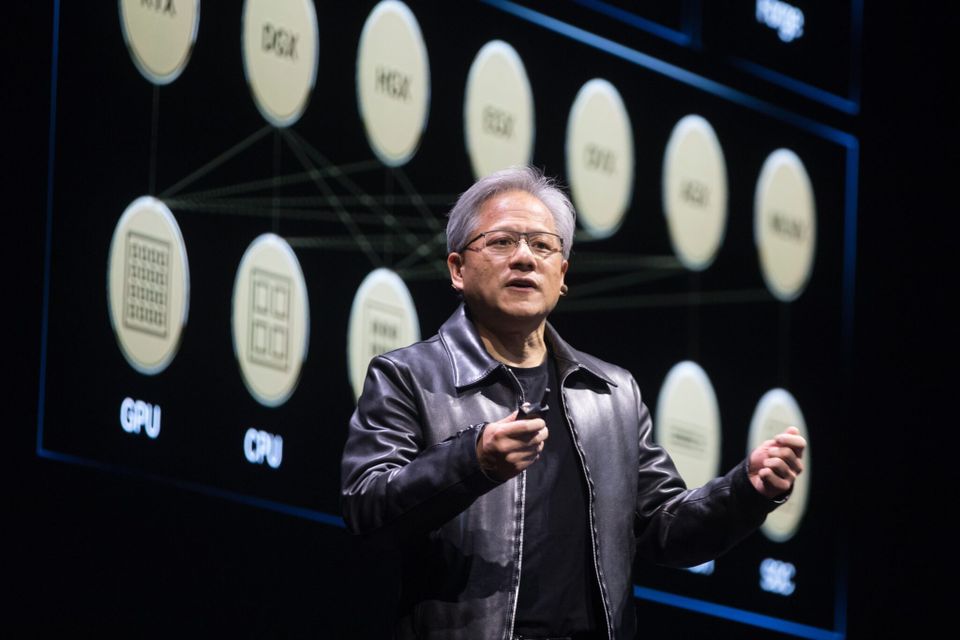
Nvidia CEO Jensen Huang is pushing back against the position of Dario Amodei, CEO of artificial intelligence company Anthropic, who is calling for a sweeping ban on sales of advanced AI chips to China. In an interview with CBS published today (Sunday), Huang made clear that he supports giving American companies priority in accessing the most advanced technologies but opposes closing the Chinese market to American companies.
“I completely disagree that China should be banned from all American products,” Huang argued. He added that American companies should possess the most advanced capabilities, but after that, they should continue serving global markets, competing and capturing market share.
The remarks come amid growing disagreements in Silicon Valley over chip export policy toward China. While companies developing advanced AI models, including Anthropic, are seeking tighter restrictions on technology transfers to the country, hardware companies fear that blocking the market will hurt their ability to compete globally.
Huang made clear that he supports a policy under which American companies would be the first to gain access to Nvidia’s advanced technologies. He said: “We need to ensure that technology developed in America gives America an advantage. Every country would do that. Every company does that, every parent does that, every industry and every nation.”
Huang noted that the US decided to give domestic companies first access to Nvidia’s advanced technologies and added that he supports the decision. He said the company’s next generation of chips, Vera Rubin, is already in commercial-scale production. “We are several years ahead of China with this technology, and it is already available to Dario, Sam, and American labs and industries,” he said, referring to Anthropic CEO Dario Amodei and OpenAI CEO Sam Altman.
However, the chip giant’s CEO believes that America’s technological advantage does not require a complete withdrawal from international markets. “America is built on competition. We need to go out and compete, and not give up entire markets. Our market is not Amodei’s to give up. We need to compete for the global market,” he argued.
Not Just Chips: Every Layer of the AI Industry
Huang went on to broaden the discussion beyond the battle over chips and artificial intelligence models. He said the AI industry consists of five main layers: energy, chips, models, data and applications. For the US to maintain its position, it must lead in each one.
“We want to lead in energy, lead the world in chips and ensure that every company developing applications succeeds,” he said. Huang emphasized that the technological revolution is not limited to companies developing advanced models but is also expected to transform traditional companies in other industries.
As examples, he cited retail giant Walmart and shipping company FedEx, which he said are themselves becoming AI companies. “We need every company in America to become an artificial intelligence company, not just one or two companies,” he added.

The debate over export restrictions is taking place while China still has limited access to some of Nvidia’s advanced chips, including B300 models, which are subject to US export restrictions. However, research by Israeli cybersecurity company Lava identified 32 such chips through monitoring systems connected to China Telecom’s network. The chips’ physical location and how they reached the network are unknown, and it cannot be determined whether this constitutes a violation of the export restrictions.
Huang’s remarks illustrate the divide between two approaches in the American artificial intelligence industry: on one hand, concern about transferring advanced technological capabilities to strategic rival China; and on the other, the desire to preserve the market share, revenue and global influence of American companies.