As the Israeli public groans under a wave of price increases, the housing market is frozen and the deficit is breaking records, the political system prefers to discuss everything except our money. A brief review of the parties’ platforms reveals an almost surreal reality: Some parties did not even bother to prepare an economic platform, based on the implicit assumption that Israeli voters vote with their gut rather than their pocketbook. Meanwhile, those that did make the effort to present plans are making sweeping promises ranging from old-fashioned socialism and an unrestrained free market to magic solutions for the cost of living.
We examined what the parties are actually offering for the 26th Knesset. Some are settling for deafening silence, while others promise to lower VAT, break up monopolies or distribute land by lottery. This is what awaits your wallet the day after the election.
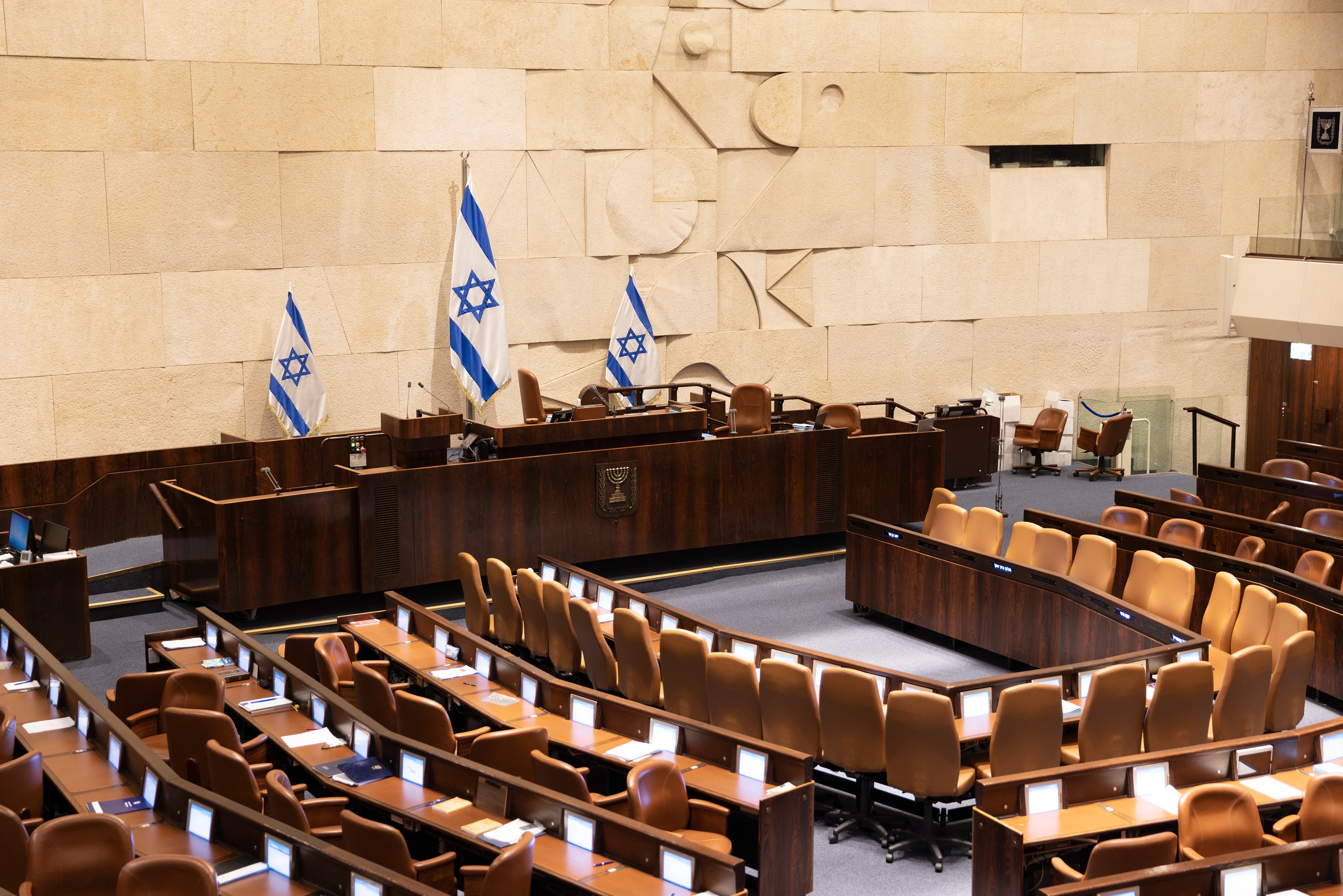
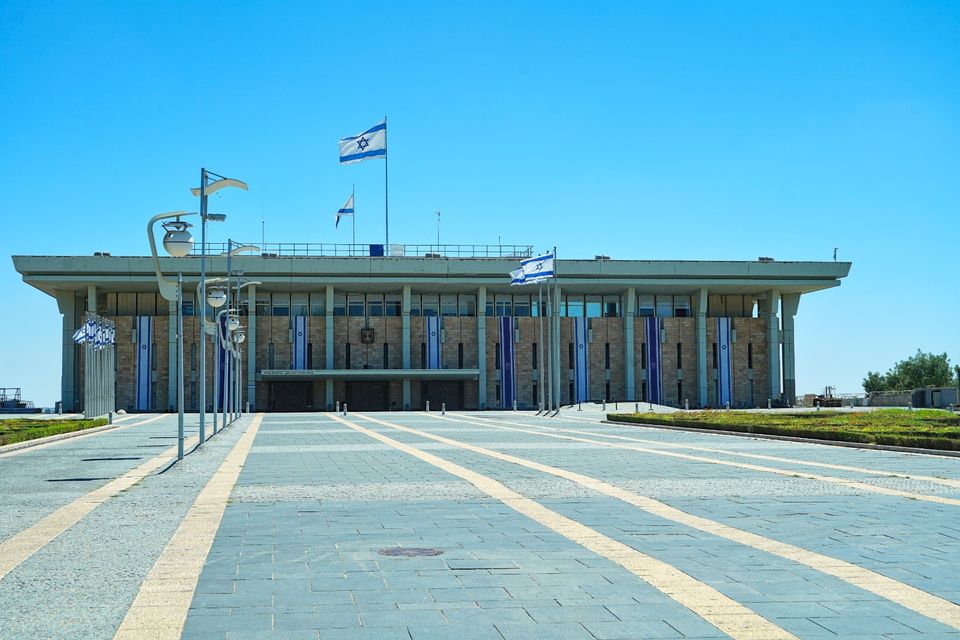
On paper, the current election campaign was supposed to be the economy’s moment in the spotlight. In practice, however, Israeli tradition prevailed once again: The television studios and election campaigns have been dominated almost exclusively by political battles, security debates and questions of personality, while economic platforms have been pushed aside and left neglected in a corner. Almost no one is talking about them out loud.
But this is a dangerous act of willful blindness. Behind the smokescreen of the headlines, the various parties have drafted work plans and position papers reflecting a deep ideological divide over how the country should be rescued from the crisis. Does the answer lie in radical free-market treatment, breaking up cartels and removing all import barriers?
Does it lie in redistributing state land and freeing construction from suffocating bureaucracy? In establishing a new alliance based on an “economy for those who serve” that would turn off the taps for those who do not share the burden? Or perhaps in strategic fiscal expansion and the rehabilitation of public services and rural areas?
We took an in-depth look at the plans, figures and interests that will shape the next state budget.
The first front: An all-out war on the cost of living — free market or agricultural suicide?
The most prominent provision shared by most parties on the right and in the economic center is a declaration of total war on concentration, exclusive importers and government regulatory mechanisms, which they accuse of creating an “island of exorbitant prices” at the expense of Israeli consumers.
The most aggressive line is led by the “Reservists and Economic Party” slate headed by Prof. Yaron Zelekha. Zelekha’s plan does not propose cosmetic changes, but rather major surgery at maximum intensity: the immediate, sweeping elimination of all tariffs and import quotas on food and consumer products, along with the complete dismantling of all production boards, from dairy and eggs to honey. In Zelekha’s view, these boards are archaic organizations that coordinate prices and set quotas through centralized methods that harm the public.

The plan seeks to dismantle the vertical integration of Israel’s food monopolies; prohibit a domestic manufacturer from also serving as a competing importer; eliminate exclusive importer status and define every exclusive importer as a monopoly; ban exclusivity agreements to allow 10 importers to compete over the same product; and enshrine the prohibition on charging excessive prices as a “Basic Law” to circumvent Supreme Court decisions that emptied the law of its substance.
An uncompromising open-market approach is also presented by the Zehut party, headed by Moshe Feiglin, which is running in this election as part of a technical bloc within the Religious Zionism slate. Under the heading “A Free Economy and Abundance,” Feiglin sets out a vision of “Israel as a Jewish-Israeli power,” in which economic freedom is a fundamental condition for citizens’ independence.
Zehut’s platform calls for completely eradicating state involvement in the market, which it says is the main factor making every product more expensive. The plan calls for fully opening the market to free imports, eliminating tariffs across the board, abolishing unnecessary Israeli standards that serve as trade barriers, removing monopolies and fully dismantling agricultural regulatory boards. The overarching goal is to reduce bureaucracy and cut taxes, based on the view that economic abundance is not a luxury but the foundation of individual freedom and the condition needed for a family’s salary to go much further.
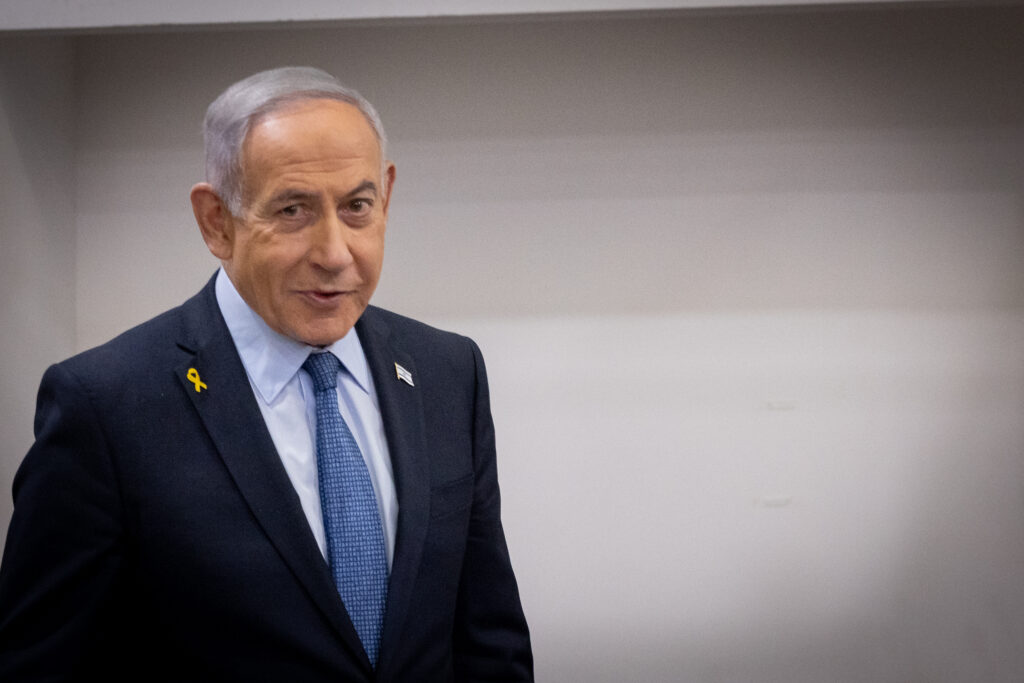
These ideas are also clearly reflected in the plan of the Beyachad party headed by Naftali Bennett. Bennett has set an ambitious goal of bringing food prices in Israel in line with the OECD average within three years, for estimated savings of about NIS 8,000 a year per family. Beyachad’s mechanism focuses on reducing the power of exclusive importers, preventing a single player from exercising cross-control over several anchor brands or different consumer categories, and broadly adopting the principle that “what is good for Europe is good for Israel.” One of the highlights of Bennett’s plan is a revolution in kosher certification: opening the kosher certification market to free competition under the slogan “What is kosher for an ultra-Orthodox Jew in Brooklyn is kosher in Israel,” a move intended to shatter one of the most significant barriers to imports.
Alongside Zelekha, Zehut and Bennett, several other parties present a united front against concentration in the economy. Avigdor Liberman’s Yisrael Beytenu emphasizes opening the market to foreign players. The party pledges to break up monopolies and production boards, abolish the institution of the exclusive importer and incentivize international retail chains to enter Israel directly. At the same time, Religious Zionism proposes reining in food and retail giants through legislation that would limit the maximum market share and number of brands each player may hold. The Amcha Yisrael party shares this position, making the dismantling of monopolies one of the basic conditions for lowering the cost of living.
But this free-market front is opposed by a diametrically different position. The Democrats, headed by Yair Golan, warns that blindly and indiscriminately opening the market to unrestrained imports would spell disaster for Israeli agriculture and rural areas. In the Democrats’ view, the events of October 7 proved that agriculture and working the land are no longer merely a component of the Consumer Price Index (CPI), but a critical element of national security, maintaining control over state land and safeguarding food security during war and blockades. Instead of breaking down local production mechanisms, the Democrats demands direct government support for farmers, curbs on imports from countries with hostile interests and a massive infusion of funds to rehabilitate communities along the northern and southern confrontation lines as a first-class border defense.

The second front: The tax and deficit paradox — how can revenue be cut while state coffers are bleeding?
One of the most explosive and contentious issues concerns Israel’s tax policy in the postwar era. While the Bank of Israel and economists in the Budget Department warn of the need for painful tax increases to curb the ballooning deficit and growth of the national debt, some parties propose the exact opposite: aggressive tax cuts as an engine of growth.
The Economic Party and Prof. Zelekha present a dramatic target here: a gradual reduction in VAT by 1% each year until it reaches just 12%. To answer the question, “Where will the funding come from?” Zelekha presents defined budgetary sources: the complete abolition of the VAT exemption in the city of Eilat, alongside the imposition of a designated tax on sugary drinks and fattening food products. At the same time, the plan proposes lowering the maximum income tax rate to just 40%. Zelekha proposes financing the loss of revenue by eliminating historic exemptions for corporations: fully repealing the Law for the Encouragement of Capital Investments, eliminating tax benefits on mergers, repealing the Trapped Profits Law and abolishing the surtax.

In Moshe Feiglin’s Zehut platform, the approach to taxation is part of a vision of “absolute freedom”: across-the-board tax cuts, an end to an economy of cronyism and government benefits for insiders, and a reduction in the tax burden on industrialists, farmers and entrepreneurs to turn Israel into an “economic-technological power” that does not rely on government favors.
Likud, by contrast, is careful to preserve the traditional principles of the economic right: avoiding tax increases whenever possible and implementing targeted relief such as tax credit points for working parents and subsidies for early-childhood day care, based on the assumption that economic growth will generate revenue to balance the budget. Critics of the policy, however, argue that in the absence of deep structural reforms, this approach passes the deficit on to future generations in the form of chronic inflation and high interest rates.
On the other hand, the center-left parties, led by the Democrats and Gadi Eisenkot’s Yashar!, argue that the real problem is not only the level of taxes, but the poor value citizens receive in return. According to Eisenkot, the Israeli economy suffers from low productivity and deep disparities caused by decades of neglect in physical infrastructure, the education system and higher education. In their view, populist tax cuts would severely damage the health, education and welfare systems — public services that have collapsed under the strain and now require an unprecedented infusion of government capital.
The third front: The housing crisis — between a state land lottery, dismantling the Israel Land Authority and benefits for those who serve
Housing remains one of the most burdensome economic pressures on the middle class and young couples. In this area, the parties present solutions at opposite extremes, ranging from radical structural revolutions in land management to sweeping preferences for those who serve
Zehut’s land and planning freedom revolution. Feiglin and Zehut are putting the most extreme plan on the table: the complete dismantling of the Israel Land Authority to break the government monopoly over land and dramatically accelerate planning procedures. According to Zehut’s platform, under the slogan “Free construction, not suffocating bureaucracy,” state land would be distributed by direct lottery to every Jewish family in Israel.

Zehut argues that taking management out of the hands of planning committees, bureaucrats and insiders would enable a thriving real estate market in which families could purchase land and build homes throughout the country at reasonable prices, without being strangled by enormous mortgages.
Removing barriers and land for those who serve in Amcha Yisrael and Religious Zionism. Amcha Yisrael demands the large-scale release of state land earmarked for direct allocation to reservists and security forces. At the same time, the Religious Zionism slate is advancing the enactment of a “Basic Law: Those Who Serve,” which would grant reservists absolute priority and preference in housing allocations, land and real estate benefits.

Beyachad’s housing and rental revolution. Naftali Bennett and his party present 2 central pillars: initiating the construction of 100 thousand long-term rental housing units intended for reservists, young people and working families. In addition, an unprecedented direct grant of NIS 1 million to purchase a first home for an active reservist.
“Rent-to-own” in Yisrael Beytenu. Avigdor Liberman is promoting long-term institutional rental projects under a unique model: accumulation of up to 30% of rent payments as future equity toward purchasing the property, the option of a mortgage of up to 90% for couples who serve, and a cap on land prices in the Negev and Galilee derived directly from the length of reserve service.
The fourth front: An “economy for those who serve” versus sectoral budgets
The upheaval created by the war has turned the issue of sharing the burden and the budget into a point of social combustion, which is now being translated into proposed legislation and ultimatum demands from right-wing and centrist slates.
Turning off the taps for those who do not serve. Naftali Bennett and Beyachad state clearly: “We will turn off the money taps for draft dodgers. Anyone who does not serve will not receive a single shekel from the state.” This approach completely rejects government funding for populations that do not share the security and civic burden.
Eliminating coalition funds and freezing budgetary pensions. Yisrael Beytenu demands the complete elimination of all coalition funds in favor of the defense budget and promoting employment. The Economic Party proposes even more far-reaching measures: eliminating child allowances from the fourth child onward, sharply reducing allowances for draft dodgers and immediately freezing budgetary pensions for existing state employees.
Priority in law and reforming teachers’ pay. Religious Zionism demands that priority for those who serve in housing, education and civil service employment be enshrined in a Basic Law. In education, the party proposes a direct confrontation with teachers’ organizations, a shift to employment under individual contracts and excellence-based compensation, arguing that breaking the power of teachers’ organizations would allow the salaries of good teachers to be raised immediately by 30%.
Core curriculum studies as a condition for funding. Eisenkot’s Yashar! party sets a clear condition: requiring a full core curriculum in every educational institution funded by the state, based on the understanding that integrating ultra-Orthodox society into the economy and technology is an existential condition for the economy’s future productivity.
On the other side stand the ultra-Orthodox and religious-conservative parties. From their perspective, these plans constitute a blatant attempt to economically starve the ultra-Orthodox sector and harm Torah students. Their position completely rejects making budgets, child allowances, income support or day care subsidies conditional on military service. They view social security for large families and funding for educational institutions and yeshivas as a fundamental right that is not subject to negotiation, and they will fight to protect them in any future coalition arrangement.
The fifth front: Outsourcing the state
Beyond the cost of living, the Economic Party’s platform presents a unique model for addressing Israel’s infrastructure shortage, based on transferring megaprojects to private concessionaires under BOT and PFI arrangements.
Transferring all major infrastructure projects, particularly the Tel Aviv metropolitan area’s metro project, for construction and operation under the BOT model. BOT tenders for the construction and operation of high-speed trains to Kiryat Shmona and Eilat, a tender for a private operator at Hatzor Airport, and privatization of operations at Ramon Airport.

Building 20,000 new classrooms under the PFI model, constructing 2 new hospitals in the north and south under the BOT model, and establishing a new bank under the PPP model to increase competition in the banking system, as well as dismantling the gas cartel and reducing export permits to preserve a strategic reserve sufficient for 20 years for the Israeli economy.
According to the plan, placing infrastructure in the hands of international concessionaires would bypass government inefficiency and corruption, ensure deadlines are met and save the state treasury tens of billions.
The economic platforms may have remained on the sidelines of media discourse, but when Israeli citizens go to the polls, they will decide not only questions of security and identity, but also what their bank accounts will look like, how much of their salaries will remain at the end of the month, and whether the State of Israel will succeed in recovering from the greatest economic crisis in its history.
Sharli Shitrit contributed to the reporting for this article.