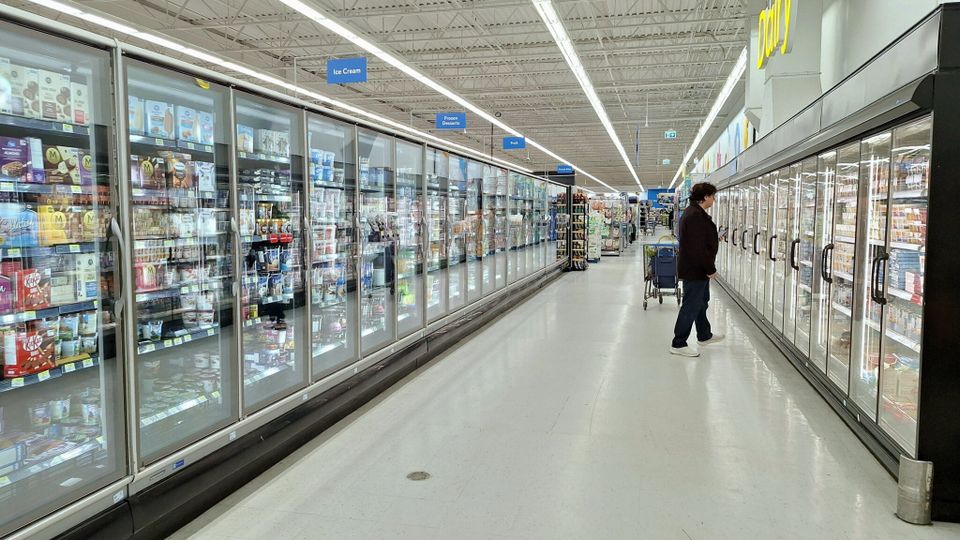
Hundreds of supermarkets across Europe were forced to contend over the past month with an unusual phenomenon: Their refrigeration systems changed their operation following a remote intrusion, switched the refrigeration units to defrost mode and caused food products to spoil. Now, a new study by Unit 42, the research arm of cybersecurity company Palo Alto Networks, points to the broader scale of the risk: More than 5,000 devices made by manufacturers linked to the affected systems were found to be directly exposed to the internet worldwide.
The first wave of attacks occurred overnight between October 11 and 12, 2026, and focused mainly on France. About 700 supermarkets were affected after attackers managed to gain access to the controllers responsible for regulating temperatures in the refrigeration systems. By changing the settings, the systems were switched to defrost mode, and food inventories were damaged at many stores. Fires were also reported in some cases.

The incident did not end in France. Overnight between November 1 and 2, another wave occurred, spreading to at least 10 additional European countries and affecting more than 100 businesses. According to reports, in some cases the temperature in the refrigeration systems was raised to as high as 50 degrees Celsius — a level that could render the goods stored in them unusable.
On November 3, one day after the second wave of attacks, two hacker groups associated with Russia, NoName057(16) and Z-Pentest, posted messages on Telegram claiming responsibility for the incidents. However, Unit 42 researchers emphasize that the claims have not been verified at this stage and that the identity of those behind the intrusions and where they operated remain a mystery.
Thousands of devices exposed worldwide
To assess how vulnerable similar systems might be, the company’s researchers scanned the internet on November 5 and 6 using Cortex Xpanse, a tool for identifying digital assets exposed to the internet. The examination focused on devices made by manufacturers mentioned in an alert from CERT-FR, France’s government cybersecurity service, following the attacks.
The results showed that more than 5,000 such devices are directly accessible via the internet. The U.S. topped the list with 740 devices, followed by China with 625 and Italy with 370. They were followed by Germany with 262 devices, France with 234, Spain with 220, Greece with 177, Turkey with 153 and Brazil with 137.
However, exposure to the internet does not in itself prove that the devices contain exploitable vulnerabilities or have already been affected by an attack. The researchers clarified that the examination was intended to identify systems that can be reached via the internet, not to determine whether attackers can actually take control of them.
At the same time, France recorded a sharp decline in the number of exposed devices detected. In the first half of October, the researchers identified 1,853 such devices, compared with 558 in the second half of the month and just 316 in the first 6 days of November. This represents a decline of about 83% within roughly a month. The reason for the change is unknown, and the researchers did not determine whether the decline resulted from protective measures taken following the attacks or from other factors.
Concern extends beyond supermarkets
The incidents are raising concerns not only in the retail sector. French authorities said that refrigeration systems at medical institutions were also affected. On November 5, the U.S. Cybersecurity and Infrastructure Security Agency (CISA) warned about risks to industrial refrigeration systems and temperature-monitoring equipment throughout the supply chain. Among other things, the agency pointed to the possibility of exploiting weak authentication mechanisms, bypassing identity verification mechanisms and injecting malicious code.
The consequences of compromising systems of this kind could be especially severe when medical facilities are involved. While an intrusion into a supermarket’s refrigeration controllers could lead to the destruction of food, temperature control in systems used by blood banks is essential for preserving blood products intended for transfusion. According to the information published so far, no evidence has been found that blood products spoiled as a result of the incidents.
Unit 42 said the initial method of intrusion into the systems has still not been determined. One possibility under examination is the use of outdated software versions or default passwords installed by manufacturers that were not changed. However, these remain only hypotheses and not verified findings.
In addition, the researchers recommend that organizations operating industrial systems and IoT devices examine which of their components are accessible from the internet, review their security settings and reduce external access to controllers and management interfaces as much as possible. The recent attacks illustrate how an intrusion into an operational system that appears routine, such as refrigerator temperature control, can become an incident with significant economic and operational consequences.