

The renewed surge in bond yields worldwide has caused short-term losses for investors who already held these securities, but for investors now reviewing their portfolio allocations, it is a positive development, according to UBS economists.
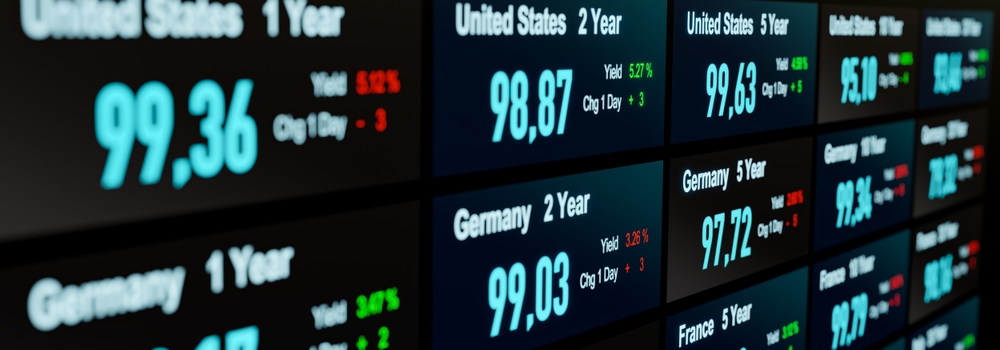
According to a review they published, amid evolving expectations for the interest rate, geopolitical concerns and renewed appetite for stocks, the yield on 10-year U.S. Treasury bonds climbed to 5.14%, while the 2-year yield stands at 4.86%, with sharp increases in yields also recorded in Germany and Japan.

They now estimate that the high starting point is restoring the appeal of the classic investment model.
An Income Engine and a New Safety Cushion
For many years following the global financial crisis, the zero-interest-rate environment left the bond market with negligible current yields and very limited protection against stock market declines.
Now, higher yields are changing the picture, providing investors with a meaningful income stream alongside a broader safety cushion against losses in the event of further interest rate hikes.
Moreover, if inflation moderates, economic growth slows or central banks decide to cut the interest rate in the future, high-quality bonds are also expected to generate significant capital gains while retaining priority over stocks in companies' capital structures.
The 60/40 Portfolio Is Strengthening but Is Not Completely Immune
The recovery in yields is once again reinforcing the rationale behind the traditional balanced investment portfolio, comprising 60% stocks and 40% bonds.
While stocks provide a long-term growth engine, bonds help preserve capital and diversify risk. However, UBS emphasizes that this model does not provide absolute insurance against every market downturn.

High-quality bonds are particularly effective at absorbing shocks during periods when growth weakens and inflation is stable or declining, but when inflation remains high and interest rates continue to rise, the stock and bond markets may fall simultaneously.
Expanding Diversification Through Complementary Assets
Given macroeconomic uncertainty, geopolitical risks and different scenarios regarding fiscal policy and energy prices, UBS recommends not relying solely on the basic portfolio, but incorporating complementary assets.
Hedge funds can provide alternative sources of return when stocks and bonds are under pressure simultaneously, while real assets and commodities help preserve purchasing power during periods of high inflation or supply constraints.

In addition, investments in private infrastructure may generate inflation-linked income and expose the portfolio to long-term trends such as data centers, power grids, energy security and more resilient supply chains, while taking into account the liquidity risks associated with private investments.
Investment Discipline and Rebalancing
In conclusion, UBS currently rates high-grade and investment-grade bonds as attractive, with a preference for short- to intermediate-term duration and caution regarding the longest-term bonds because of fiscal concerns and high issuance volumes.
At the same time, the bank emphasizes that constructing the portfolio is only half the work, and maintaining investment discipline is equally important.
A U.S. 60/40 portfolio constructed in 2020 and left unadjusted would by now have drifted to an exposure of about 80% stocks and only 20% bonds because of the stock market's outperformance. Therefore, regular rebalancing is essential to return the portfolio to the level of risk originally intended for it and prevent excessive concentration.
The website's content does not constitute investment advice
The information appearing on this website, including articles, reviews, analyses, data and any other content, is intended solely for general, informational and educational purposes and should not be viewed as a recommendation, opinion, advice or substitute for personal investment advice and/or investment marketing tailored to the specific needs of a particular person.
The information does not constitute an offer or invitation to buy or sell securities or any other financial asset. Anyone wishing to undertake investment activities must evaluate the information independently, taking into account their financial situation, personal needs and appropriate level of risk.
Use of the information published on the website is solely at the user's own risk.
The editorial staff and the operating company are not responsible for any loss or damage caused, directly or indirectly, as a result of using the information, relying on it or taking any action based on it.
Before making any investment decision, a qualified investment adviser holding the appropriate license should be consulted.