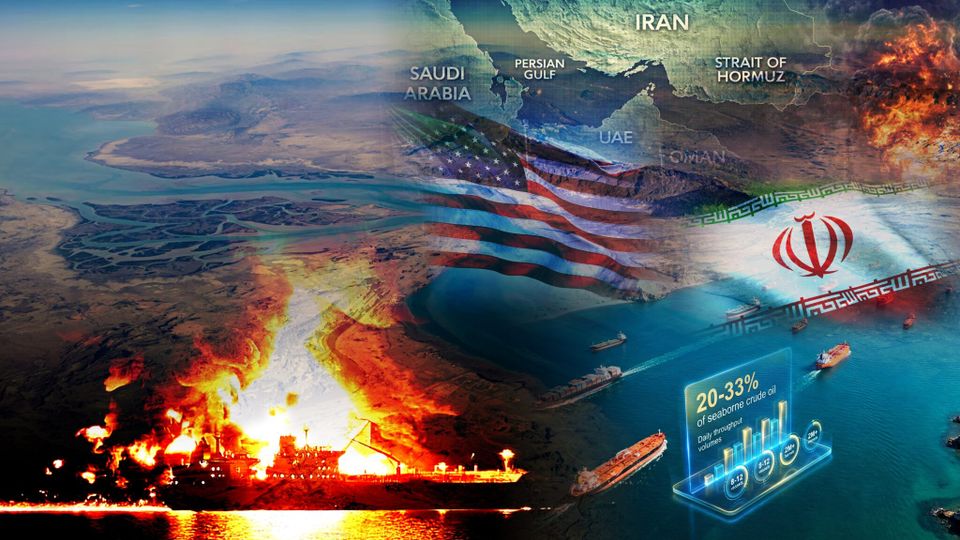
The U.S. military carried out new strikes today (Tuesday) against targets in Iran near the Strait of Hormuz, after two oil tankers were attacked along the strategic shipping route, according to a report by U.S. Central Command (CENTCOM) in a post on X.
The strikes were intended, among other things, to prevent Iran from restoring radar and missile capabilities that could be used to attack ships in the Strait of Hormuz area.
Today at 12 p.m. ET, U.S. forces began striking Islamic Revolutionary Guard Corps (IRGC) targets in Iran. The strikes follow recent attempted attacks by the IRGC against commercial shipping in the Strait of Hormuz and against American service members deployed to the region.
— U.S. Central Command (@CENTCOM) September 1, 2026
The Impact on Oil
The escalation in the Strait of Hormuz area is pushing oil prices higher amid concerns about disruptions to the global oil supply.
In other words, the concern is that the escalation in the Strait of Hormuz area will disrupt the global oil supply, prompting markets to react with higher oil prices, which could also heighten concerns about inflation. The price of WTI crude reached its highest level since July following the latest U.S. strikes against Iran.
The price of U.S. crude oil, WTI, rose by about 4.3% to $89.4 per barrel, while Brent crude rose by about 3.7% to $93.8 per barrel.
The Impact on Markets
The escalation in the Middle East is heightening concerns about renewed inflation and weighing on stock and bond markets following the rise in oil prices and yields.
The new U.S. strikes against targets in Iran follow the attacks on tankers in the Strait of Hormuz. Beyond the military aspect, the concern is that the escalation will disrupt the oil supply, raise energy prices and renew inflationary pressures — which could also affect the interest rate and markets.
U.S. Central Command wrote on X: “Today at 12:00 p.m. Eastern Time, U.S. forces began striking Islamic Revolutionary Guard Corps (IRGC) targets in Iran. The strikes follow attempted attacks by the IRGC against commercial shipping in the Strait of Hormuz and against American service members deployed to the region.”