
Just 10 months after its founding and based on a self-funded investment of only NIS 20,000, Israeli startup GoShine was sold to global giant Yext, which is traded on the New York Stock Exchange at a market capitalization of about $630–650 million and has annual revenue of more than $440 million.
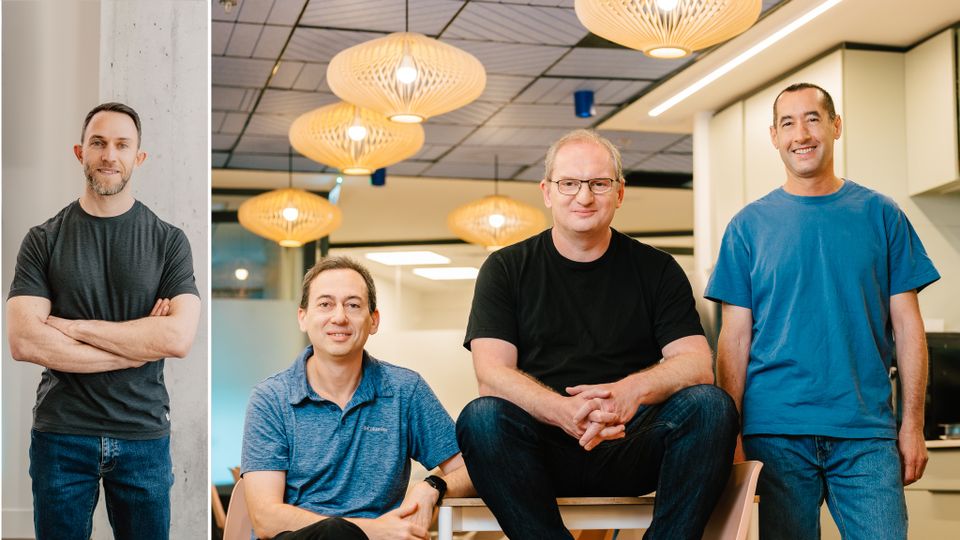
While most companies in the AI market rush to raise tens of millions of dollars, the founders — Tamir Malink (CEO), Yinon Haddad (CTO) and Omer Eliaz (CMO) — demonstrated a combination of a pure bootstrap model, rapid profitability and operational innovation. The transaction amount was not disclosed.

Lean Economic Model and Accelerated Growth
The company was founded in July 2025 with an especially modest initial investment of NIS 10,000 paid out of pocket by each of the founders, Malink and Haddad. According to Malink, the investment was fully recouped after just two months thanks to a precise financial model: rapid profitability. The company reached the break-even point and became profitable within just two months of its founding.
Recurring revenue: GoShine grew rapidly to dozens of paying customers among major global players, including Domino’s, Deloitte and Osem, with an average deal value of tens of thousands of dollars a year.
Operational efficiency: The intensive use of artificial intelligence agents (AI Agents) eliminated the need to build large and expensive development teams, giving a small team of three people the operational capabilities of an entire global organization.

Value Proposition and a Competitive Advantage in the AI Market
GoShine’s business activity focuses on the core economy of the artificial intelligence era: the shift of billions of users from link-based answers to direct conversations with AI engines such as ChatGPT, Gemini and Perplexity, which created a new category called GEO (Generative Engine Optimization).
The system analyzes why AI engines choose to recommend a particular brand over its competitors and can complete the full cycle: It creates a precise content strategy, both for the customer’s website and for third-party websites, and measures the business impact on AI answers in real time.
This advantage enabled the company’s customers, including small startups in the U.S., to stand out in a competitive market against industry giants and become leading players in their sectors. As Malink noted: “We proved that the bootstrap model is not a compromise; it is a strategic advantage.”
Exit Strategy and the Connection to Yext
Negotiations with Yext began in early 2026 and continued for several months. According to Malink, the decision to sell the company was made because Yext provided an exact strategic complement to their operations, alongside an excellent connection between the teams and favorable terms that matured into a deal.
The company’s entire team is expected to remain and integrate into the giant’s global operations in the U.S. and Europe, with the goal of setting the international standard for how companies manage their narratives in the new search engines as part of the Brand Scout solution.
From the Command Battlefield to Global Innovation
On a personal and managerial level, Malink emphasizes that the early experience he gained as a combat officer and company commander at Bahad 1, where he developed a worldview of decisive execution and strategic discipline under the fog of war — together with his entrepreneurial background, including founding an AdTech startup and registering a U.S. patent in 2019, and leading AI products at Moovit for four years — formed the basis of his success.
Alongside the rapid success, Malink seeks to highlight the price paid behind the scenes: “Many times, people hear about impressive successes and achievements, but behind them are sleepless days and nights. The most important thing in my view is to believe in what you are doing, not give up, and know how to turn the ‘no’ you received today into tomorrow’s ‘yes.’”
Malink sums up this outlook with an eye to the future: “I would bootstrap again if I could go back,” emphasizing that in the current era, entrepreneurs who know how to adopt AI tools can generate enormous economic value without relying on external venture capital.