Israeli cybersecurity company Brava Security is emerging from stealth with a $15 million seed round led by venture capital firms F2 Venture Capital and Pitango, with participation from private investors, including senior executives at Anthropic, Microsoft and Check Point.
The company developed an artificial intelligence-based platform designed to identify blind spots in organizations’ security systems. The technology simulates the traces of activity that a cyberattack would leave in an organization’s systems without carrying out the attack itself. In this way, it can identify in advance which threats defense systems will fail to detect, fix the gaps and help security teams investigate incidents.

Brava’s customers include Fortune 100 companies in the retail, energy and hospitality sectors, as well as Cushman & Wakefield and WELL Health, one of Canada’s largest health care companies.
The problem: Security systems may be blind to attacks
Even when an organization’s security systems are operating properly, they may still miss attacks. The reason may be telemetry data — records of activity in the organization’s systems — that is not collected, is not transferred to the SIEM system that centralizes security data, or is not identified by existing alert rules.
The challenge becomes even more significant in the artificial intelligence era, as organizations transfer more and more cyber incident monitoring and investigation tasks to AI agents. Even an advanced agent capable of analyzing thousands of data points and making complex decisions is limited to the evidence it receives. If defense systems did not detect the attack and did not collect the required information, the AI agent may also remain blind to it.
This is where Brava’s technology comes in. Instead of relying on traces of known attacks, the platform generates an accurate model of the telemetry an attack would leave in the organization’s specific technological environment, including scenarios that have not yet been tested or defined in its defense systems.
After creating the scenario, the platform checks whether the security systems detect it and issue an alert. When a gap is found, it helps fix the detection rules, collect the telemetry data and transfer it to the monitoring systems, and then checks that the fix actually works.

The system integrates with the organization’s existing security infrastructure without requiring its replacement. It connects, among other systems, to Splunk, Google SecOps and CrowdStrike, as well as more than 70 additional data sources and destinations. The company says initial findings are received within 10 to 15 minutes of the start of implementation.
Veterans of Unit 8200 and Microsoft founded the company
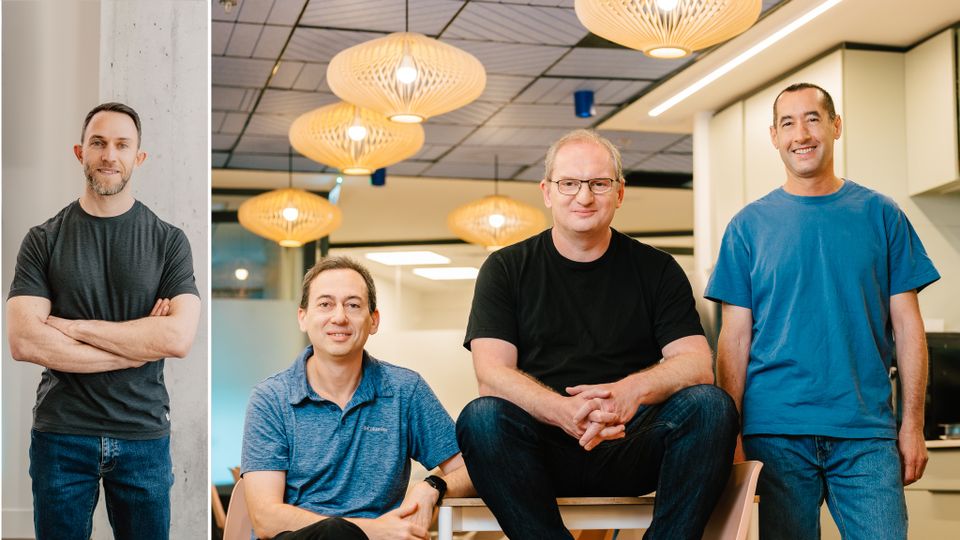
Brava was founded by Idan Batzri, the company’s CEO, and Itay Gabay, its chief technology officer (CTO). Batzri, a graduate of the Talpiot program, served for 10 years in Unit 8200 as a cyberthreat researcher. He later managed one of Microsoft Defender’s product lines, where he was exposed to the difficulties security teams face because of limited access to security data.
Gabay served for 7 years in the IDF developing artificial intelligence systems, including as part of a joint research program between Israel and the US Defense Department’s research agency, DARPA.
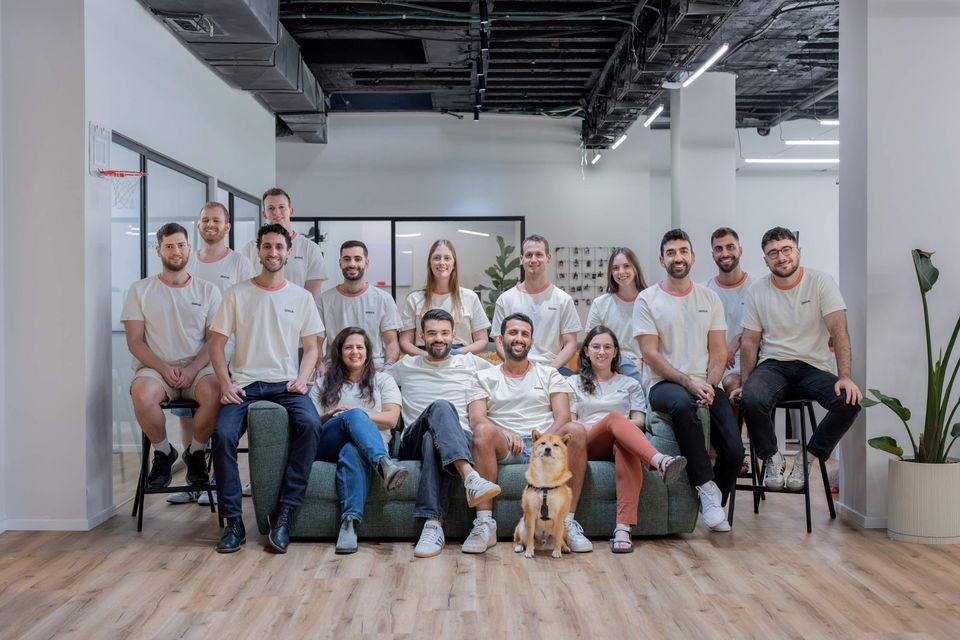
The company currently employs about 20 people, including artificial intelligence and cybersecurity researchers. Its research and development center is in Israel, while it is expanding its marketing and sales teams in the US. The funds raised will be used to accelerate development of the platform, expand commercial operations, mainly in North America, and prepare to enter the financial services and government sectors.

Idan Batzri, Brava’s co-founder and CEO, said: “Organizations are rushing to let AI manage their cybersecurity centers, but AI operating on unverified evidence may reach incorrect conclusions and act on them at machine speed. If the systems missed an attack, the AI will not know that it needs to investigate it. We check what they are missing and fix the gaps.”
Itay Gabay, co-founder and CTO, added: “When you know what to look for in the data, writing detection rules is the easy part. The real difficulty is knowing in advance, and precisely, what telemetry an attack will generate in a specific organization’s systems. Our models generate this telemetry even before the attack occurs and check whether the defenses will detect it.”
Yair Cassuto, a general partner at Pitango, noted that “AI is dramatically changing the cyberthreat landscape and the way organizations are attacked, so the way we protect them must also change.” According to him, Brava offers a new approach to cyber defense through autonomous AI capabilities that make it possible to address a wide range of threats and provide security teams with greater certainty and control.
Maor Friedman, a general partner at F2 Venture Capital, added that “most SOC teams trust their detection capabilities. As AI assumes a more central role in the SOC, this becomes a real risk because an AI agent is only as good as the evidence it relies on.” According to him, Brava makes it possible to replace reliance on existing systems with actual proof of their detection capabilities before an attacker attempts the attack.