
Data infrastructure company Edelbyte, founded by four former Microsoft engineers, is announcing that it has raised a total of $70 million within about a year of its founding. The company developed a platform for managing, searching and analyzing massive amounts of data, designed to address the growing loads and costs of enterprise data infrastructure in the AI era.
The $25 million seed round was led by Sequoia, with participation from Greenoaks and Swish Ventures, Omri Casspi’s venture capital fund. The $45 million Series A round was led by Quiet Capital, with participation from existing investors and new investors, including Gil Ofer’s QP Ventures, Startpoint Capital and Cerca Partners.
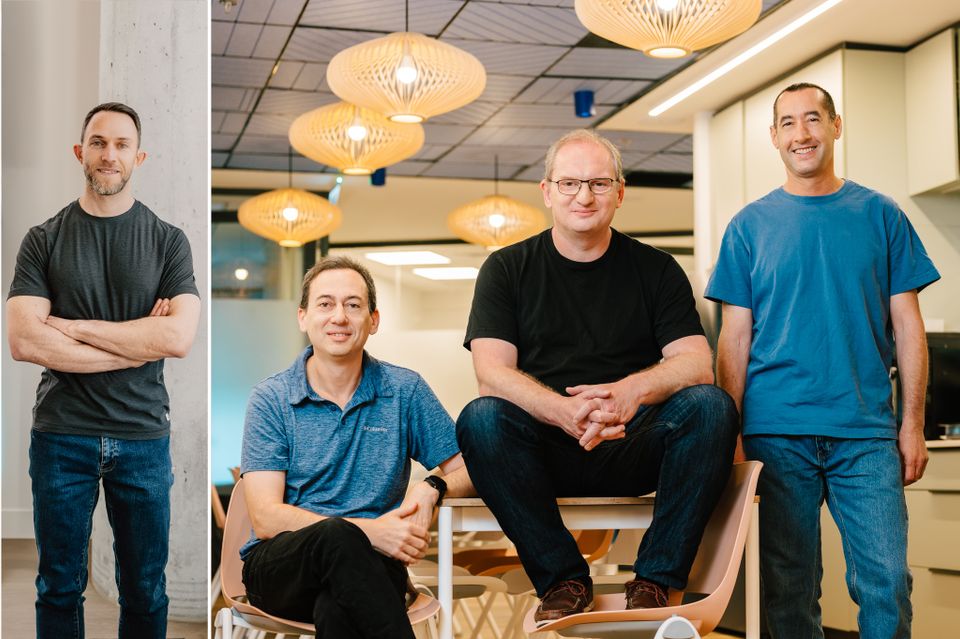
The company was founded in November 2025 by Avner Aharoni, the company’s CEO; Yevgeny Reizik, chief technology officer; Alexander Slutsky, vice president of engineering; and Yoni Leibovitz, vice president of platform engineering. The four founders worked together at Microsoft for more than a decade, and each accumulated about two decades of experience developing and operating large-scale data infrastructure.
Reizik and Slutsky were part of the original founding team of Kusto, a data platform that began as an internal Microsoft project and later became the technological foundation for products such as Azure Data Explorer and the Sentinel and Defender security systems. Aharoni and Leibovitz later joined them, and the four worked together on developing the platform, which currently processes hundreds of petabytes of data a day.
After more than a decade of working together, the four decided to leave Microsoft and establish an independent company, aiming to make the experience and technology they had accumulated accessible to additional organizations and provide solutions that would enable them to handle large amounts of data while improving performance and reducing costs.
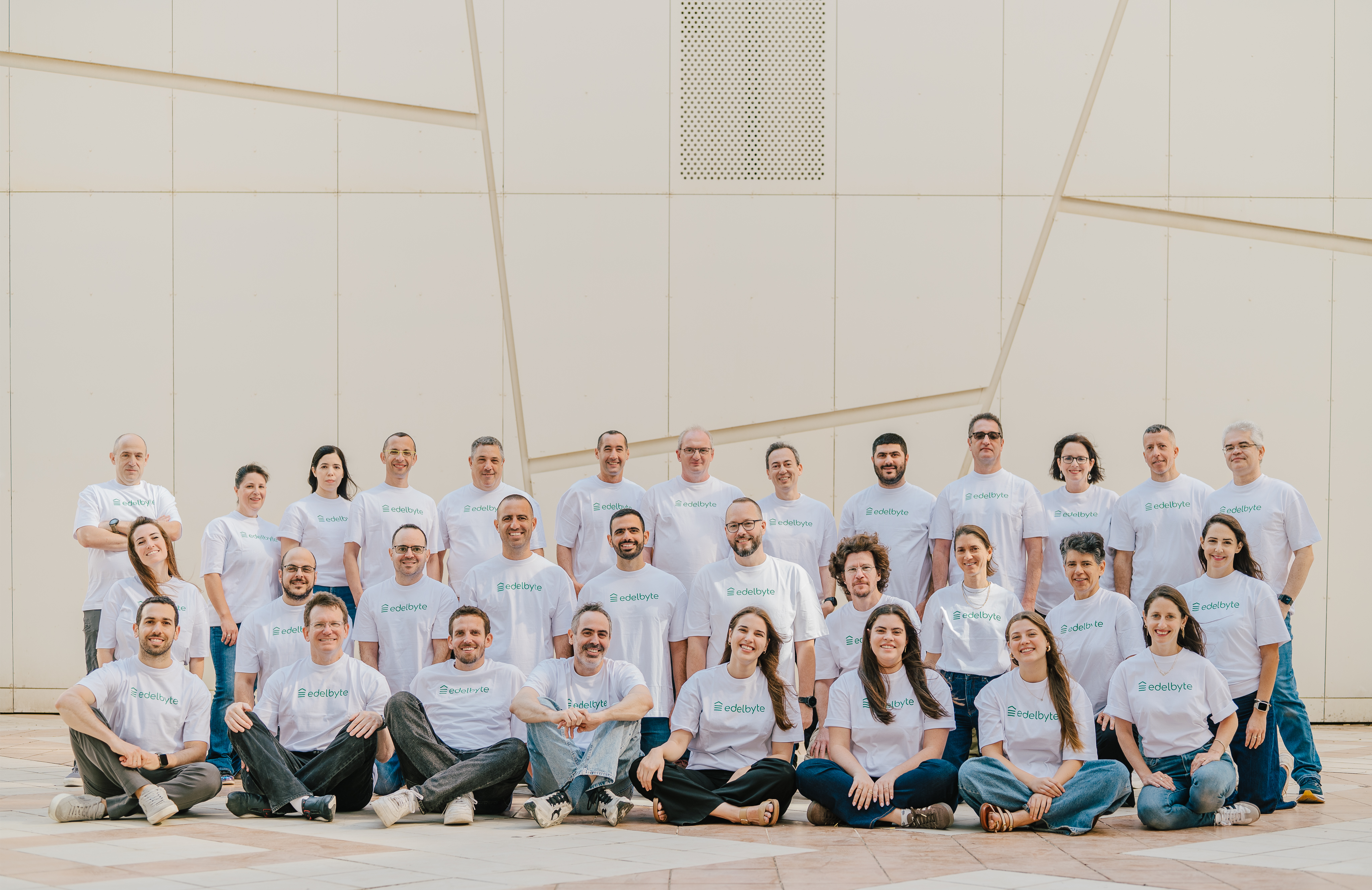
Edelbyte has about 40 employees in Israel, Europe and the U.S. According to the company, it already serves Fortune 500 companies and global organizations in information security, automotive and financial services, operating petabyte-scale data systems for them. The company also says that customers that switched to its system were able to reduce infrastructure costs and run up to 10 times as many queries within the same budget.
The funding is intended to expand the company’s technological capabilities, grow its research, development and sales teams, and deepen its activity in international markets.

The need for advanced data infrastructure is becoming more acute amid rapid growth in the big data market, currently estimated at about $300 billion and expected to reach $516 billion by 2031, according to MarketsandMarkets data. One of the main challenges organizations face is the ability to store and analyze growing amounts of data without compromising performance speeds or significantly increasing infrastructure spending.
The introduction of AI agents is intensifying the challenge. While the scope of activity by human users is relatively limited, organizations can operate dozens or even hundreds of agents simultaneously, each running numerous queries at high frequency. The result is a growing load on data systems, sometimes forcing organizations to limit the number of queries, move data to archives and even delete data to control costs. This is compounded by the fact that enterprise data is distributed among different systems, and moving it for analysis increases complexity and costs.
Edelbyte’s platform is designed to enable different types of workloads to run on a single infrastructure, including traditional analytics, text search, spatial queries and AI workloads. In this way, the company seeks to reduce the need to operate separate systems and copy data between them, thereby lowering costs and operational complexity.

According to the company, the architecture it developed makes it possible to significantly compress raw data and reduce the amount of data that must be stored and processed in each query. The system, it says, can return results within milliseconds and run thousands of queries simultaneously, including on large volumes of historical data. In addition, it creates an index for all the data, making it possible to run queries that were not defined in advance, unlike systems in which indexes are tailored mainly to fixed dashboards or recurring alerts.
The system can operate as a managed service on public clouds, in a private cloud or on local infrastructure (On-Premises). This allows organizations to choose where to store and process their data in accordance with their performance requirements, regulatory requirements and business needs, without being dependent on a single cloud provider.
Avner Aharoni, co-founder and CEO of Edelbyte: “The systems organizations currently use to search and analyze data were built long before the AI era. But as AI becomes a more central part of organizations’ operations, the number and complexity of queries are growing at a pace that existing infrastructure was not designed to handle. We believe this shift creates an opportunity to build a new leading player in data search and analysis, with technology designed from the outset for AI workloads. Our ambition is for Edelbyte to become the infrastructure on which the next generation of software applications will be built, and the progress we achieved in the first year strengthens our belief in the company’s potential.”
Bogomil Balkansky, partner at Sequoia Capital: “Developers need data infrastructure that will allow them to develop new products without compromising on performance and costs. Edelbyte combines advanced data analysis capabilities, flexibility in operating the system in different environments and an efficient architecture designed from the outset for the workloads of the AI era. The founding team has exceptional experience developing and operating large-scale data systems, and we believe they have the ability to build infrastructure that will serve the next generation of software companies.”