


Editor’s note:
Two stories converged on the Israeli cost-of-living debate this week. First, Shufersal (TASE:SAE) pulled Tnuva products off the shelves, branding the move as a stand against price hikes. Second, the Competition Authority designated the five largest banks a Concentration Group, citing 98% control of system assets. Both actions were framed as bold interventions against entrenched market power. Both are set up to fail to move prices in any meaningful way, because both target symptoms rather than the underlying cause.
The cause is trade policy. Israeli consumers are not weak, irrational, or complicit in their own extortion. They are choosing rationally from the options in front of them, and those options have been deliberately narrowed by decades of import protection, regulatory layering, and kashrut compliance economics that keep credible foreign competition out of Israeli supermarkets and banking halls.
This week’s letter walks through why retail boycotts and concentration designations both run into the same wall, and what a fix might look like.
— Sophia Tupolev, TV10 Global Editor
TASE weekly snapshot
The Tel Aviv Stock Exchange closed the week with mixed sentiment.
TA-35 Index (TASE:TA35): 🔴 -0.83%
TA-90 (TASE:TA90): 🟢 +0.10%
TA-125 (TASE:TA125): 🔴 -0.62%
For more, read our daily editions from Monday to Wednesday - and now, get our video and audio updates on Spotify.
The supermarket aisle war that was lost in 2022

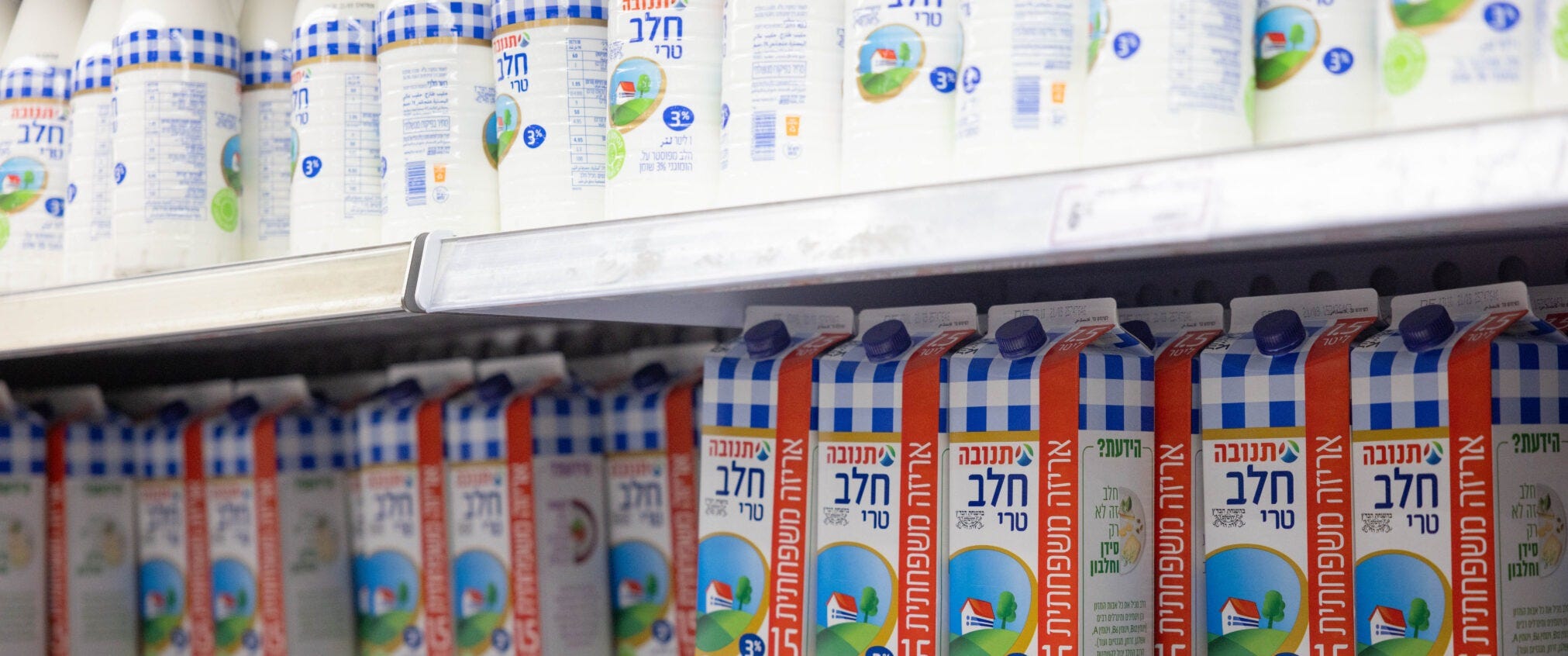
Shufersal’s playbook is straightforward. Refuse Tnuva orders, point at the empty shelf, blame the supplier, sell more private label. The retailer ran this exact sequence in 2022 and lost. Shoppers did not switch to Shufersal’s house brand - instead, they drove to Rami Levy, Yochananof, or Victory, picked up the Tnuva cottage cheese and yogurts they wanted, and went home. Tnuva revenue absorbed the disruption with minimal damage, and Shufersal quietly resumed orders a few months later.
Nothing material has changed since then. Tnuva still owns the brand recognition, still controls the country’s largest dairy supply chain, and still has zero reason to fear a single-retailer freeze. The competing supermarket chains that benefit when Shufersal posts empty shelves are happy to keep stocking Tnuva at full margin.
And the reason Tnuva can shrug off retailer pressure is that no foreign dairy brand sits on the shelf next to it as a real alternative. Israeli import quotas, tariff structures, and kashrut compliance costs make European and American dairy uneconomic at scale. Tnuva competes against Strauss, and a handful of smaller domestic players, all operating inside the same protected envelope and pricing accordingly.
The Bank of Israel vs. the Competition Authority
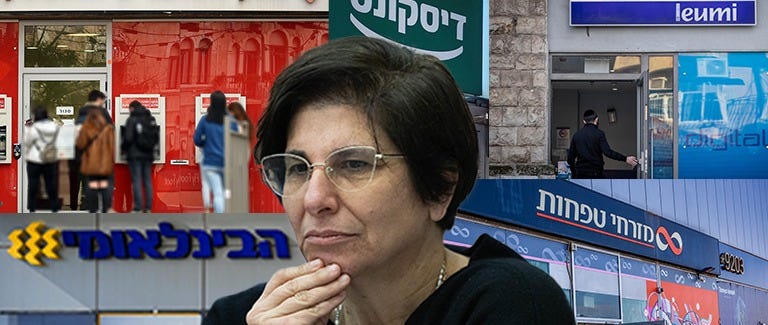
The Competition Authority’s Concentration Group designation last week covered Hapoalim (TASE:POLI), Leumi (TASE:LUMI), Mizrahi-Tefahot (TASE:MZTF), Discount (TASE:DSCT), and First International (TASE:FIBI). Authority Commissioner Michal Cohen’s audit found that the five Israeli entities control 98% of system assets, and that retail depositors absorbed roughly ₪20 billion in foregone interest between 2022 and 2024 because rate hikes flowed instantly to borrowers but sluggishly to savers.
The proposed remedies include deposit portability and interest rate parity rules, both reasonable on paper. The Bank of Israel’s response was to publicly attack the designation as disproportionate and economically unfounded. That reaction is itself the most useful data point in the story. The central bank is openly defending the structural arrangement that produced the ₪20 billion gap, which reveals how protected the current setup is.
Portability and parity rules will help at the margin. They will not produce real competitive pressure, because the same border conditions that protect Tnuva also protect the banks. Foreign retail banks face capital controls, licensing friction, and a regulatory environment built around five domestic incumbents. A depositor with full portability rights still has only five places to put the money.
If the Bank of Israel successfully blocks these mandates, the Competition Authority’s historic declaration will be reduced to mere optics.
The fix lives at the border
Both sectors share one feature. Domestic incumbents extract rent because foreign competition has been kept out by policy choice, not by market dynamics. Israeli consumers are not anchored to Tnuva yogurt or Hapoalim deposits out of habit. They are anchored because the policy environment has eliminated meaningful alternatives.
The fix here is trade policy, not retail theater or regulatory designation. Cut tariffs on dairy and consumer staples to the levels seen in comparable OECD economies. Streamline kashrut certification pathways for foreign producers willing to meet the standard rather than treating compliance as a soft trade barrier. Open the retail banking license process to foreign entrants on terms that do not require a local consortium partner. Let Lidl, Aldi, and Carrefour open stores without zoning and licensing drag.
The day a shopper in Tel Aviv can buy decent French butter at half the price of equivalent Tnuva product, cartel pricing power in dairy evaporates without any boycott required. The day a depositor can hold a checking account at a serious foreign bank operating locally, deposit rates rise without any portability mandate required. The structural friction does the work that performative interventions cannot.
What to watch
Shufersal may quietly resume Tnuva orders within the quarter, as it did in 2022. The Bank of Israel may succeed in softening or delaying the Competition Authority’s binding mandates. Neither outcome should be read as a policy failure in the narrow sense. Both are predictable consequences of fighting cost-of-living battles inside a closed competitive perimeter.
The story worth tracking is whether anyone in the coalition or opposition picks up the trade policy thread. Until that conversation starts, the Israeli consumer will keep paying the surcharge that decades of import protection have built into the price of bread, milk, and a checking account.
That’s our letter, folks. If you enjoyed this Weekly, forward it to a friend.

The English TV10 newsletter is edited by Sophia Tupolev. We love to hear from you.
TV10 Global | Israel for Investors
Now in English: Bringing you the top stories from the Israeli business community, by Israel’s only business and finance network.
Please share your thoughts with us via: global@tv10.co.il or the Newsroom WhatsApp: +972-55-994-5851.
📧 Subscribe to this newsletter! And follow the daily conversation on 𝕏 @tv10global.
Pings with new editions are also available via our WhatsApp Channel.
Disclaimer: This brief is for informational purposes only and does not constitute investment advice. All data is current as of publication date.


