

Editor’s note:
Everyone loves a good comeback story. While the horrors persist, so does the narrative of the post-war boom. The ‘day after’ sounds amazing. It’s seductive in its simplicity: geopolitical friction settles, confidence returns, and a wall of global capital (including, from the Gulf) floods into our battle-tested, tech-rich economy at a discount.
Finance Minister Bezalel Smotrich has been explicit in projecting this. Israeli defense, tech, and cyber are and will remain attractive to pragmatic capital hunting high-beta yield. But as new normalization accords are signed and new sources of capital pounce on Israel - does our ecosystem have the kinetic capacity to absorb a recovery boom?
The nation’s operating system is severely bottlenecked across multiple fronts, which we explore in this letter. If the economy cannot efficiently clear financial transactions, physically manufacture goods, or project institutional stability, the promised renaissance will not merely be delayed. It will arrive late to the most consequential geopolitical opening the region has seen in a generation.
— Sophia Tupolev, TV10 Global Editor
TASE weekly snapshot
The Tel Aviv Stock Exchange closed the week mixed.
TA-35 Index (TASE:TA35): 🔴 -4.95%
TA-90 (TASE:TA90): 🔴 -5.05%
TA-125 (TASE:TA125): 🔴 -5.22%
Catching you up on the week’s top stories in the Israeli business community
For more details, read our daily editions from Monday to Wednesday - and now, get our video and audio updates on Spotify.
Israel’s macroeconomic picture crystallized this week into a stark tale of two diverging economies. On the sovereign level, the fiscal strain is reaching historic proportions: the Knesset’s advancement of a staggering ₪850.59 billion state budget, anchored by a massive ₪143 billion defense framework, confirms a structural shift in spending priorities that has dragged the national deficit to 4.7%.
Concurrently, the Bank of Israel’s latest assessment quantifies the war’s toll at a ₪177 billion crater in lost GDP. There’s been a sudden labor market shock, with 31,122 new job seekers registering since the beginning of Operation Roaring Lion. Total private sector debt has concurrently surged to a historic ₪2.5 trillion, leaving heavily leveraged households increasingly exposed to rate volatility.
Conversely, corporate Israel’s globally integrated sectors are actively capturing premium margins. We are witnessing a ruthless reallocation of capital away from consumer-facing vulnerabilities and directly into energy and defense supercycles.
Major energy conglomerates are successfully leveraging the global AI and data-center boom to secure massive tranches of institutional debt, evidenced by Ormat Technologies upsizing a $1 billion convertible debt raise.
Meanwhile, the domestic defense ecosystem remains hyper-agile; legacy aerospace firms and nimble micro-caps alike, such as Solrom and RSL Electronics, are successfully parlaying local kinetic demands into strategic M&A and Tier-1 Lockheed Martin contracts. This bifurcation suggests that top-tier Israeli deep-tech remains highly insulated from domestic sovereign risk.
In the real estate sector, institutional-grade scale appears to be the ultimate liquidity buffer. Development titans are leveraging deep forward visibility and aggressive pre-sale backlogs to lock in profitability years in advance, partially shielding themselves from immediate interest rate headwinds.
Mivne Real Estate issued robust guidance of up to ₪950 million in 2026 NOI alongside a strategic energy storage pivot, while Africa Israel locked in ₪195.5 million in net profit with 72% of its 2027 inventory already pre-sold.
Alongside this, deep-pocketed domestic institutions injected ₪100.5 million into Lahav LR via early option exercises, signaling that domestic ‘smart money’ is actively hunting yield despite the ongoing macroeconomic noise.
Yet, while domestic institutions prop up the market today, we must ask if the highly anticipated post-war foreign investment boom is a structural reality, or simply a macroeconomic mirage.
The ground-level barrier to capital inflows
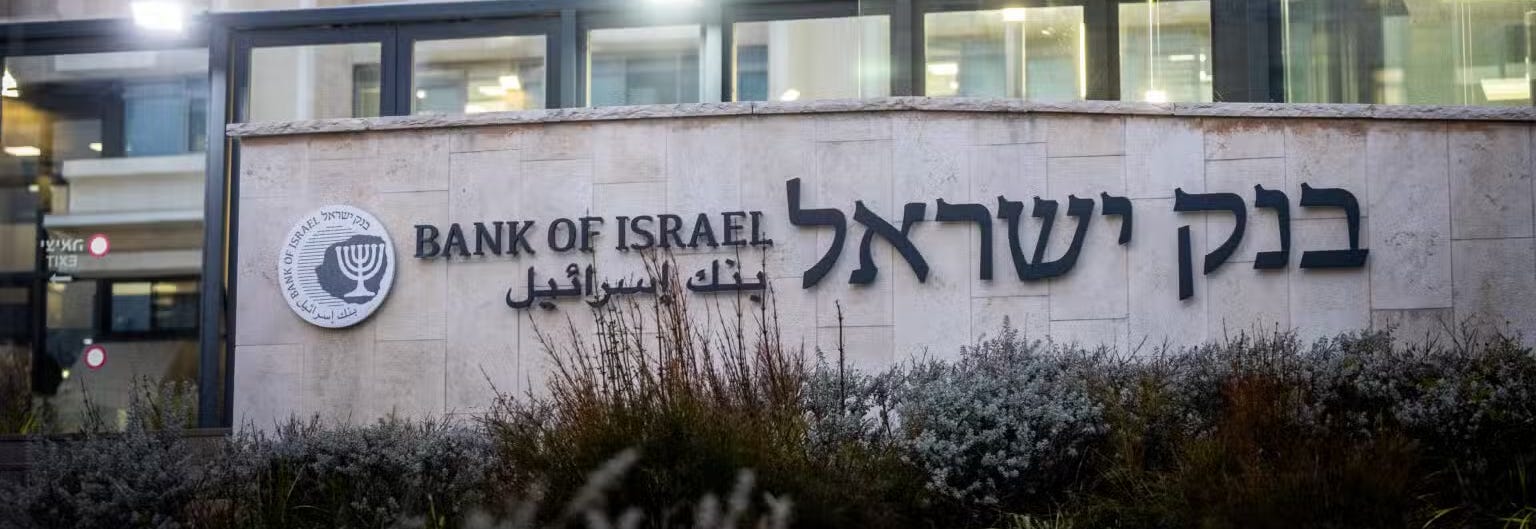
Headlines frequently ignore the friction inherent in deploying capital to Israel. The first bottleneck is the banking sector: a highly concentrated oligopoly that prioritizes absolute stability over capital velocity.
“Simply transferring capital into Israel is still fraught with red tape and lack of regulatory oversight,” says Attorney Anna Moshe, Chair of the Israeli Emerging Companies and Venture Capital Practice Group at Pearl Cohen.
The system’s capacity for self-sabotage is well documented. Foreign sourced capital is frequently blocked by a compliance posture that exists to protect the bank, not to assess actual risk. The Bank of Israel has issued no binding directive governing acceptance and rejection standards. Banks set their own thresholds for risk management, rejections cannot be challenged in court, and no one is accountable.
The Abraham Accords have generated enormous political capital and genuine diplomatic momentum. But when new peace accords are signed with Gulf countries, the established way of doing things in the Israeli banking system doesn’t change.
This is the infrastructure that Gulf capital will inherit. Signing ceremonies do not rewrite bank compliance manuals. When Saudi institutional money eventually moves toward Israeli accounts, it will meet the same system: no regulatory obligation to accept, no standardized review, no appeal mechanism, and every institutional incentive to refuse first and ask no questions later. The ministers will be photographed in Riyadh. The wire will die in a compliance queue in Tel Aviv.
Illusions of frictionless rescue
When the Ministry of Finance proclaims the Israeli economy a bulletproof powerhouse, we must be careful to separate state-sponsored optimism from structural reality. Pitching state-backed defense-tech funds to foreign investors is a necessary wartime strategy, but it risks papering over the very real ₪177 billion crater in lost GDP. The market’s heavy reliance on domestic institutional giants to prop up local equities underscores that the promised flood of global liquidity has yet to fully materialize in the broader market.
Outliers like Ormat securing $1 billion in cheap debt prove that premium assets remain highly attractive. But projecting a broad, frictionless post-war economic renaissance may be dangerously premature. A booming, isolated defense sector does not automatically heal a national economy.
A few massive aerospace contracts will not clear the severe labor shortages paralyzing the construction sector. The prevailing assumption of a frictionless, V-shaped post-war bounce relies heavily on recency bias. Specifically, the rapid recoveries following the 2006 Second Lebanon War and the 2014 Gaza conflict. But those were localized, relatively brief kinetic events. The macroeconomic parallels for today’s multi-front, multi-year conflict do not point to 2006; they point ominously to 1973.
Following the Yom Kippur War, the Israeli economy did not experience a miraculous, V-shaped renaissance. Instead, it entered a brutal lost decade. A massive, permanent expansion of the defense budget crowded out private investment. Severe labor disruptions and supply-side constraints triggered a lethal spiral of stagflation, culminating in the hyperinflation crisis of the 1980s. It took 12 years and the draconian 1985 Economic Stabilization Plan to pull the state back from the brink. Assuming that the 2026 economy will simply snap back ignores the structural reality that a ₪350 billion war deficit and a pulverized labor market take years, if not decades, to truly digest.
The greatest risk of the ‘inevitable capital flood’ myth is the domestic policy complacency it could breed. Economic history shows that Israel typically executes brilliant, necessary structural reforms only when its back is completely against the wall.
If regulators and policymakers rely too heavily on the promise of a golden parachute, they may delay the brutal deregulation required to break the banking oligopoly, unblock the labor market, and stabilize the institutional framework.
Israel will likely attract a post-war premium, but only if it can offer a compelling, politically stable, and friction-free arbitrage against the rest of the world. Expecting the capital to simply arrive without fixing the broader financial infrastructure and regulatory environment - is folly.
That’s our letter, folks. If you enjoyed this Weekly, forward it to a friend.

The English TV10 newsletter is edited by Sophia Tupolev. We love to hear from you.
TV10 Global | Israel for Investors
Now in English: Bringing you the top stories from the Israeli business community, by Israel’s only business and finance network.
Please share your thoughts with us via: global@tv10.co.il or the Newsroom WhatsApp: +972-55-994-5851.
📧 Subscribe to this newsletter! And follow the daily conversation on 𝕏 @tv10global.
Pings with new editions are also available via our WhatsApp Channel.
Disclaimer: This brief is for informational purposes only and does not constitute investment advice. All data is current as of publication date.


