


Editor’s note:
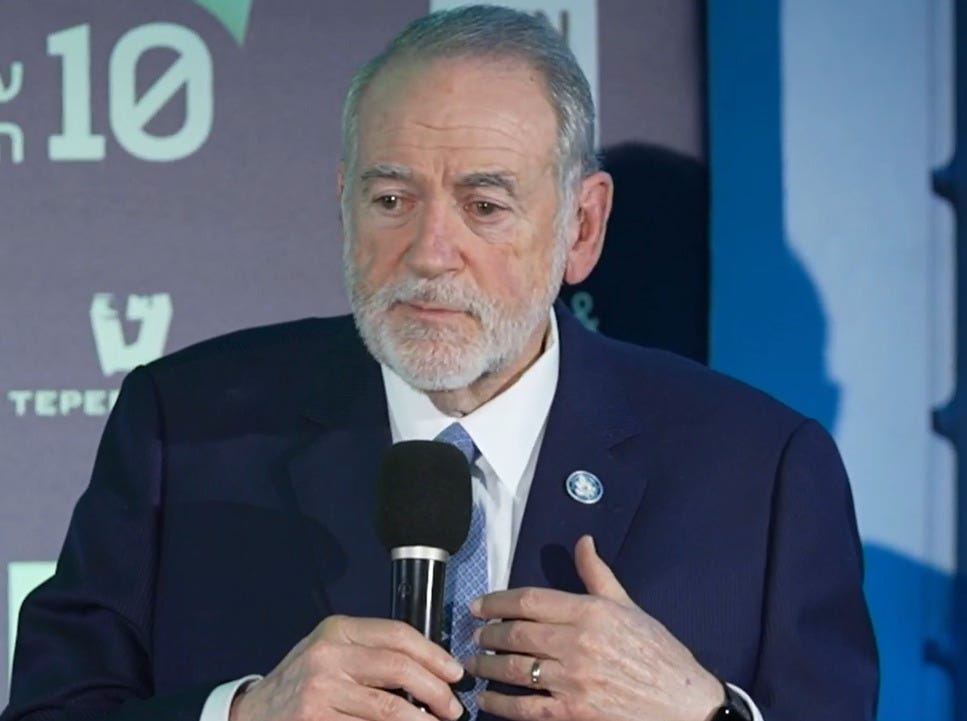
The Tel Aviv Stock Exchange hosted the 10th annual Atlas Award this week, underscoring a macroeconomic reality that continues to confound traditional geopolitical risk models: the sheer, compounding resilience of the Israeli innovation engine. As U.S. Ambassador Mike Huckabee noted from the podium, the transformation of Israel from a struggling, semi-agrarian state in 1973 into a global capital hub is a historic anomaly. While the broader market indices have surged over 100% since the October 7 lows, this is not merely a cyclical rebound but a complete structural outperformance.
To understand the magnitude of this success, one must contextualize it globally. Israel operates in a region where neighboring economies are either contracting or relying on IMF lifelines, and adjacent to a European continent that is actively fighting economic stagnation and demographic decline. Yet, Israeli tech firms continue to generate massive wealth and capture outsized global market share. The miracle is a highly engineered ecosystem built on a dense concentration of human capital, an aggressive defense-to-commercial R&D pipeline, and the creation of borderless, high-margin intellectual property.
This week’s letter examines the architecture of Israel’s innovation premium. We explore why foreign institutional capital consistently ignores regional noise to chase Israeli yield, how domestic firms are solving their own supply-side labor constraints, and why the Israeli macroeconomic model continues to dramatically outpace its OECD peers.
— Sophia Tupolev, TV10 Global Editor
TASE weekly snapshot
The Tel Aviv Stock Exchange closed the week with mixed sentiment.
TA-35 Index (TASE:TA35): 🔴 -0.83%
TA-90 (TASE:TA90): 🟢 +0.10%
TA-125 (TASE:TA125): 🔴 -0.62%
For more, read our daily editions from Monday to Wednesday - and now, get our video and audio updates on Spotify.
Israel decouples from regional gravity
The Israeli economy’s ability to generate systemic wealth while situated in a highly volatile geopolitical zone remains one of the most fascinating case studies in modern macroeconomics.
A glance across the borders provides a stark contrast: Lebanon’s financial system has effectively collapsed, Egypt is navigating severe currency devaluation and inflationary spirals, and Jordan’s GDP growth remains sluggish. Even looking north to the Eurozone, major economies are grappling with sub-1% GDP growth, burdened by heavy regulatory frameworks and a lack of disruptive tech infrastructure.
Against this backdrop, Israel stands as a structural outlier. The success celebrated at the 10th annual Atlas Awards for best Israeli startup, with firms like UVEYE dominating transportation tech and D-Fend Solutions leading in cyber, demonstrates why. The crowning of AI chipmaker Hailo as the overall 2026 Atlas Award winner, taking the top prize alongside a win in the Physical AI & Robotics category, encapsulates this.
With over 250 employees, Hailo's technology allows complex artificial intelligence to run on edge devices, like drones and cameras, without cloud dependency or high-power consumption. Alongside Hailo, the emergence of category winners like Remedio in Cyber, Navina in AI healthcare for doctors, and NexTenna in satellite communications proves that Israel's IP pipeline is aggressively expanding its footprint. Israeli companies do not export physical commodities reliant on vulnerable regional logistics; they export intellectual property. Software, artificial intelligence, and cyber defense are borderless, high-margin assets with inelastic global demand.
This decoupling from regional gravity allows the Israeli economy to scale exponentially. The 100% stock market recovery post-October 7 cited by Ambassador Huckabee is a direct reflection of this dynamic. Global capital recognizes that Israel’s economic output is insulated from its geographic coordinates.
Institutional capital ignores the noise
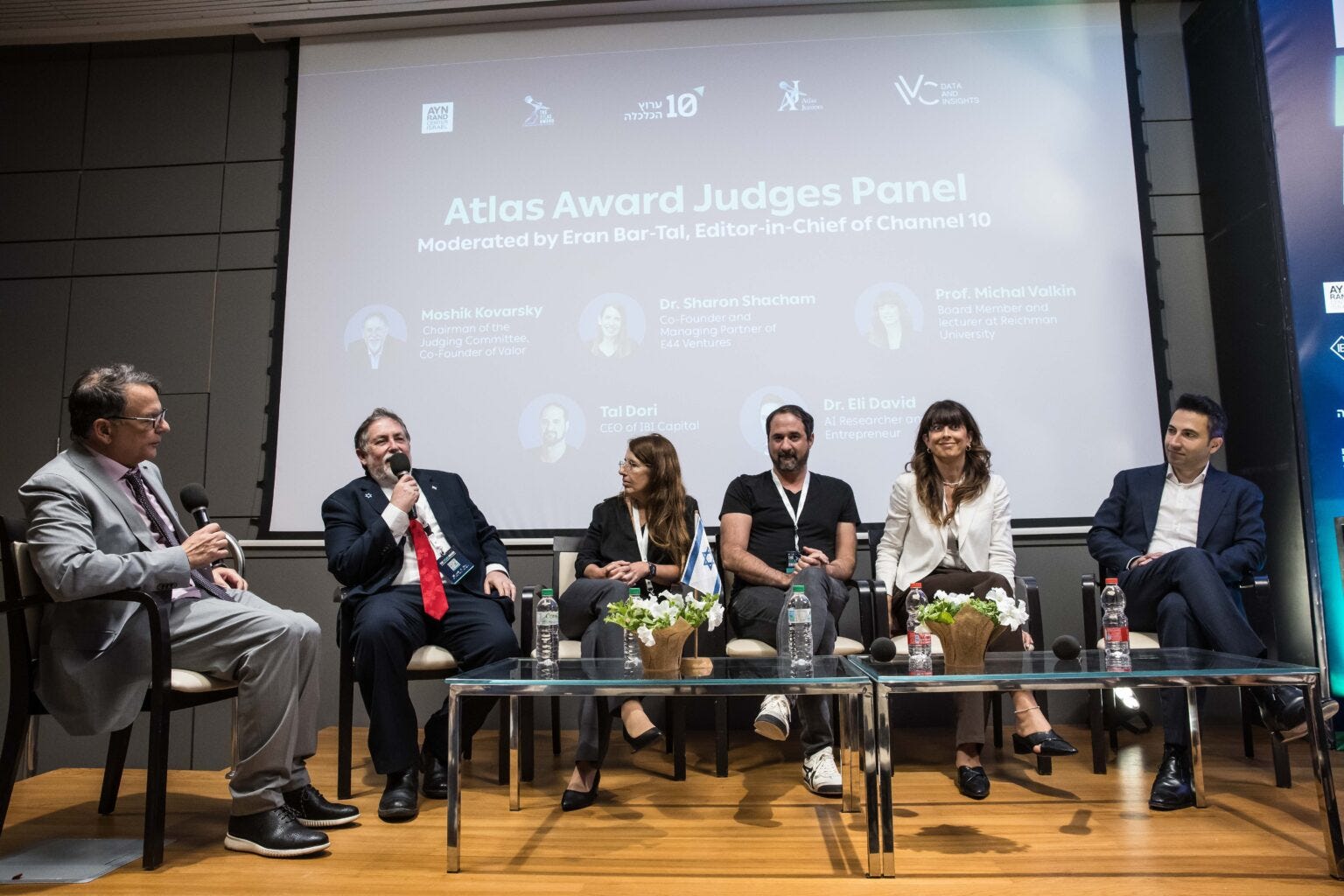
When evaluating the Israeli market, foreign institutional investors are unsentimental. The companies that reached the Atlas Award finals operate in sectors where the global appetite for innovation far outpaces supply - Healthcare, AI, and Cyber.
An Israeli firm like okoora, taking the top prize in FinTech, attracts capital because it provides a scalable solution to global financial inefficiencies. This rapid scaling was further highlighted by an Atlas panel featuring past award winners, including Moovit's Nir Bezalel, UVEYE’s Ohad Hever, Augury’s Gal Shaul, and Matteo Shapira of the pre-IPO aerospace firm XTEND, demonstrating how quickly these startups transition from local innovators to global unicorns with portability for their system assets.
European and American venture capital and private equity funds continue to deploy billions into Tel Aviv because the Return on Equity (ROE) generated by Israeli intellectual property is increasingly difficult to replicate in stagnant Western markets. Europe, in particular, is suffering from an innovation deficit, having failed to produce a comparable roster of Tier-1 tech giants.
Consequently, foreign direct investment (FDI) into Israel is not an act of charity or political solidarity. Investors are happily exchanging short-term geopolitical headlines for long-term technological dominance. Awards like this one serve as an indicator for the pipeline of disruptive, investable Israeli assets.
Talent flywheels and growing organs in space to cure cancer
A hyper-growth economy such as this one requires a relentless supply of human capital. The Atlas Juniors program takes high school students from Israel’s southern periphery and integrates them into the R&D teams of leading startups.
One such employer is SpacePharma, whose CEO Yossi Yamin told us about their 14th space mission, sending a miniature four-kilogram laboratory into space to conduct cutting-edge tissue culture experiments for Roche Diagnostics and Grenoble Hospital.
By growing tissues in microgravity, the company aims to identify biomarkers that will train AI algorithms to provide real-time, personalized treatment recommendations while a patient is on the operating table. Despite navigating a challenging funding landscape for the Israeli space tech sector, Yamin remains optimistic, leveraging European grants like Horizon Europe and anticipating a wave of fresh investments following the highly anticipated SpaceX IPO.
That’s our letter, folks. If you enjoyed this Weekly, forward it to a friend.

The English TV10 newsletter is edited by Sophia Tupolev. We love to hear from you.
TV10 Global | Israel for Investors
Now in English: Bringing you the top stories from the Israeli business community, by Israel’s only business and finance network.
Please share your thoughts with us via: global@tv10.co.il or the Newsroom WhatsApp: +972-55-994-5851.
📧 Subscribe to this newsletter! And follow the daily conversation on 𝕏 @tv10global.
Pings with new editions are also available via our WhatsApp Channel.
Disclaimer: This brief is for informational purposes only and does not constitute investment advice. All data is current as of publication date.


