


Editor’s note:
When a government attempts to manage a kinetic war zone using the tools of a central bank, the results are rarely economic. They are entirely optical. This week, the Israeli government rolled out a multi-million-shekel fiscal experiment on its battered northern border, offering localized digital wallets and relocation cash to residents under fire.
To the untrained eye, it looks like standard regional stimulus. To the behavioral economist, it represents a profound misdiagnosis of the Israeli public. By treating citizens facing existential risk as rational actors optimizing for yield, the state is inadvertently levying a regressive silent tax on captive populations.
This is not the first time Jerusalem has opted for optical statecraft over structural repair. One only needs to look back at the universal ‘helicopter money’ dispersed during the 2020 COVID-19 lockdowns, untargeted ₪750 cash dumps that inflated the national deficit while failing to save bankrupt SMEs. But while throwing un-targeted cash at a pandemic creates inflation, throwing it at a kinetic war zone creates a far more dangerous illusion.
This week, we examine the hard limits of fiscal policy and why you cannot hedge physical survival with a pre-paid credit card.
— Sophia Tupolev, TV10 Global Editor
TASE weekly snapshot
The Tel Aviv Stock Exchange closed the week with mixed sentiment.
TA-35 Index (TASE:TA35): 🔴 -0.83%
TA-90 (TASE:TA90): 🟢 +0.10%
TA-125 (TASE:TA125): 🔴 -0.62%
For more, read our daily editions from Monday to Wednesday - and now, get our video and audio updates on Spotify.
The illusion of the rational actor
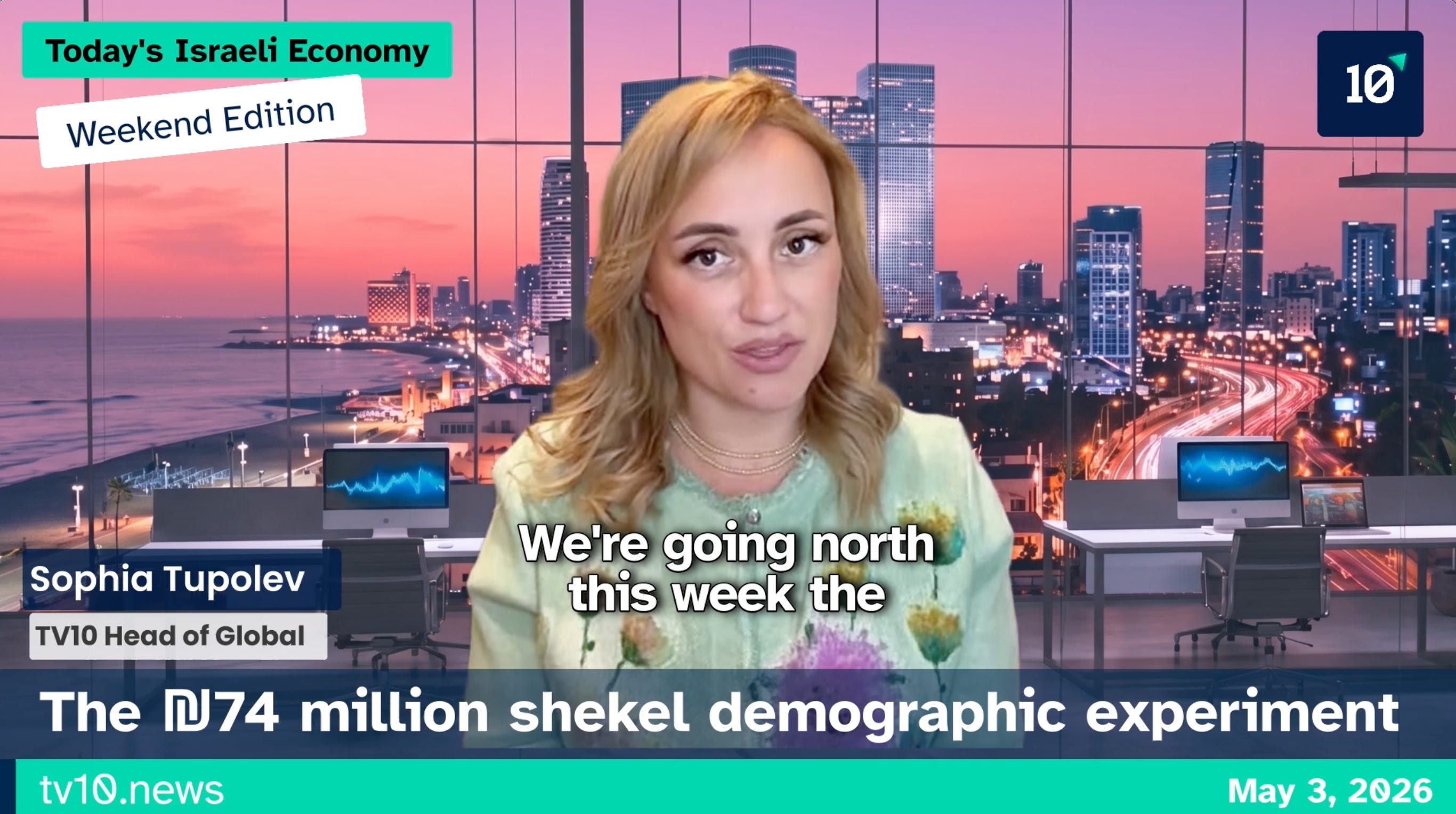
This week, Israel launched a sweeping ₪74 million shekel demographic experiment. The state deployed a ₪44 million stimulus ‘North Plus’ digital wallet program alongside a ₪30 million fund offering relocation cash to military reservists. The macroeconomic modeling behind this intervention was not published by any senior economists, and the intended outcome of this capital injection is not fully clear.
Is the Treasury attempting to engineer a genuine regional recovery? Is it simply subsidizing survival? Is the goal to anchor a battered population? To quietly bail out the failing enterprises around them?
Here, the mechanics of the policy are telling. The government is utilizing complex fiscal architecture to incentivize a demographic it fundamentally misunderstands, making any structural objective harder to achieve.
The price of safety and the frozen market
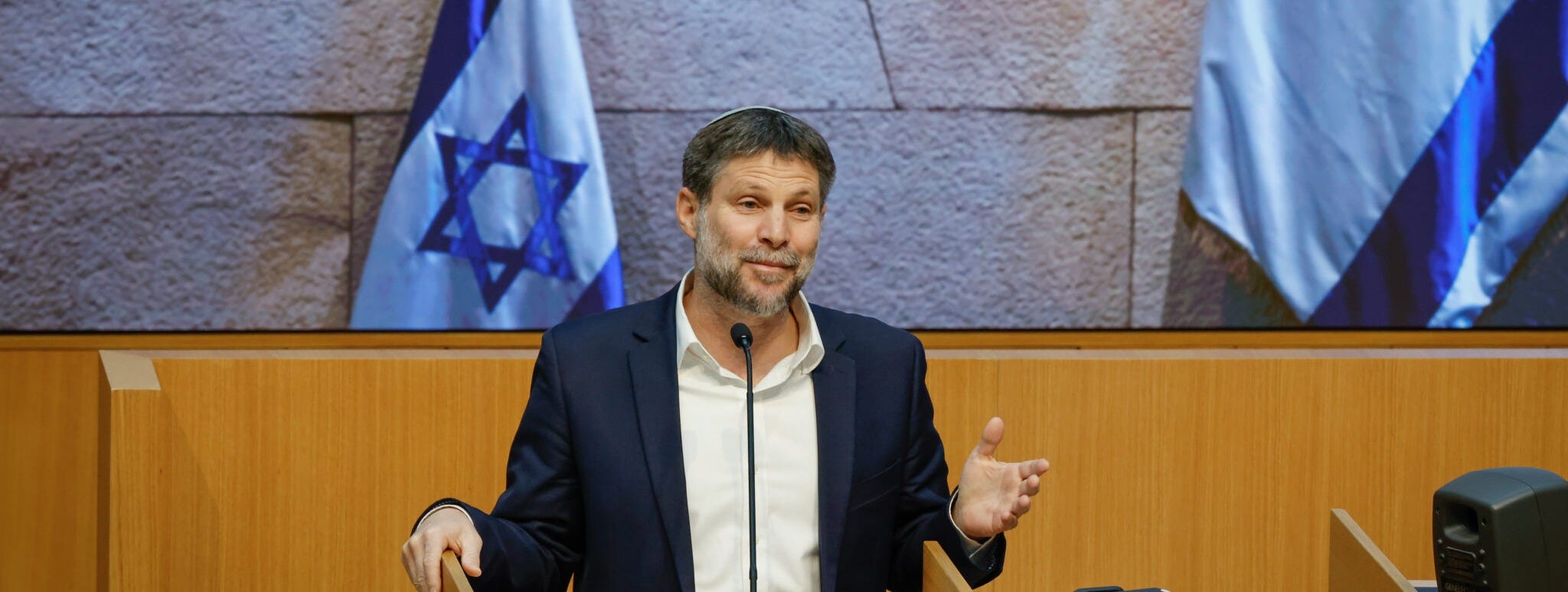
To expose why this macroeconomic tool will face challenges in creating positive effects. one must ask a fundamental behavioral question. What is the macroeconomic clearing price for human safety? This policy is working on the assumption that a one-time grant of ₪24,000 to a reservist family relocating north, or a pre-paid digital wallet to northern residents, can convince a family to live under kinetic fire.
We have seen this behavioral miscalculation fail on the southern border in the past. In early 2024, the state attempted to empty expensive evacuee hotels by offering ‘Return Grants,’ daily cash stipends to Gaza Envelope residents if they agreed to go home. The backlash was immediate. Residents argued that without rebuilt schools and absolute security, the cash was a bribe, not a solution. The state treated existential dread as a simple pricing mismatch, and the policy collapsed.
For the average citizen, no financial risk premium can adequately compensate for existential danger. The state is therefore not engineering a demographic shift. It is simply subsidizing two groups who would likely be there regardless - those with zero economic alternatives and those driven by profound ideological conviction. A retail cash injection solves the structural problem for neither. Both the financially vulnerable and the ideological pioneer ultimately require massive state investments in physical security and resilient infrastructure, neither of which can be purchased with a consumer subsidy.
Compounding this behavioral miscalculation is a complete disregard for the physical reality of the northern economy. The entire region is currently trapped in a state of suspended animation. Normal commerce has effectively ceased. Local businesses are operating on skeleton crews, supply lines are fractured, and consumer demand is paralyzed by daily uncertainty.
In classical macroeconomics, a cash stimulus is deployed to increase the velocity of money and spark a cycle of consumption. But you cannot stimulate a market that is physically constrained by warfare.
Pumping consumer liquidity into an environment where the primary barrier to growth is physical danger, rather than capital scarcity, fundamentally misunderstands how markets operate under extreme stress. When an economy is in a physical holding pattern, businesses cannot simply scale up operations to absorb new demand. Instead, the injected capital behaves erratically, ensuring the policy outcome falls entirely flat.
The geography of a silent tax

To understand why this stimulus is acting as a leaky bucket rather than an economic engine, we must ruthlessly dissect the ‘North Plus’ program. By distributing up to ₪2,500 per family via a digital credit card application strictly geo-fenced to a two-kilometer radius of the border, the political echelon claims it is engineering a localized money multiplier effect. The pitch is simple. Keep the cash in the community.
In reality, the state has engineered a spatial monopoly that functions as a regressive tax.
Israeli economic history is littered with these leaky buckets. Consider Yair Lapid’s ill-fated 2014 plan to eliminate the 17% VAT on new apartments. Because the housing market was physically constrained by a lack of land and slow permitting, subsidizing demand wouldn't have helped young couples; it would have simply allowed developers to raise prices, absorbing the state subsidy. The ‘North Plus’ program commits a similar macroeconomic sin, so to speak.
By hard-coding these funds to a devastated conflict zone, the state artificially traps consumer capital inside an environment where supply chains are shattered. Northern enterprises, facing exorbitant wartime insurance costs, logistical friction, and severe labor shortages, are forced to operate with deeply inflated pricing simply to survive.
By mandating that the northern resident spend their ₪2,500 stimulus inside this hyper-inefficient micro-economy, the state is intentionally destroying their purchasing power. Just as the 0% VAT would have enriched developers, the North Plus wallet reduces the resident to a pass-through mechanism. The resident is not necessarily the actual beneficiary of this stimulus. The government is quietly executing a bailout of northern businesses on the backs of the captive northern consumer, utilizing a digital wallet to mask a structural failure.
They stay because the equity gap required to leave is insurmountable

This apparent misunderstanding of labor mobility and capital flows extends directly to the ₪24,000 relocation grants. The Treasury models this cash as a behavioral incentive, assuming that at a certain price point, labor and capital will clear the market. But the residents remaining in the North are not exercising a free-market choice. They are trapped in a localized balance sheet recession.
Their primary vehicle for wealth creation, home equity, has a mark-to-market at zero liquidity. A working-class family cannot liquidate a home under Hezbollah fire to finance a move to the Gush Dan region, where real estate yields are breaking historic records. They do not stay in the North because a ₪24,000 grant tipped their risk-reward calculus. They stay because the equity gap required to leave is insurmountable. Their demand for physical security is perfectly inelastic, but their capital is structurally immobilized. Offering a relocation grant to populations trapped by illiquid assets is an exercise in statecraft optics that fails to alter the underlying solvency crisis.

For institutional investors and macroeconomic observers tracking Israel’s risk profile, the central theme of this week’s analysis is clear. Macroeconomic policy has an absolute ceiling. When deployed outside the realm of functioning markets and into the sphere of existential survival, it will not, and cannot, reach its intended outcome.
State capital is only effective when it accurately targets the mental models of its citizens and operates within a functioning market. The Treasury cannot arbitrage existential risk for a captive demographic via digital cash traps, nor can it buy ideological loyalty on the cheap. The Israeli government cannot financially engineer deterrence. Until the hard-power reality on the northern border shifts entirely, fiscal stimulus will remain fundamentally broken. True geopolitical risk cannot be perpetually offset by apps and grants. Eventually, the market demands that the bill be paid at the Ministry of Defense.
That’s our letter, folks. If you enjoyed this Weekly, forward it to a friend.

The English TV10 newsletter is edited by Sophia Tupolev. We love to hear from you.
TV10 Global | Israel for Investors
Now in English: Bringing you the top stories from the Israeli business community, by Israel’s only business and finance network.
Please share your thoughts with us via: global@tv10.co.il or the Newsroom WhatsApp: +972-55-994-5851.
📧 Subscribe to this newsletter! And follow the daily conversation on 𝕏 @tv10global.
Pings with new editions are also available via our WhatsApp Channel.
Disclaimer: This brief is for informational purposes only and does not constitute investment advice. All data is current as of publication date.


